
Elon
Good morning Norris, I'm Elon, and this is Goose Pod for you. Today is Thursday, November 06th.
Taylor Weaver
And I'm Taylor Weaver. We're here to discuss a major move in the tech world: a $5.4 billion robotics sale that signals Europe’s potential loss of control.
Elon
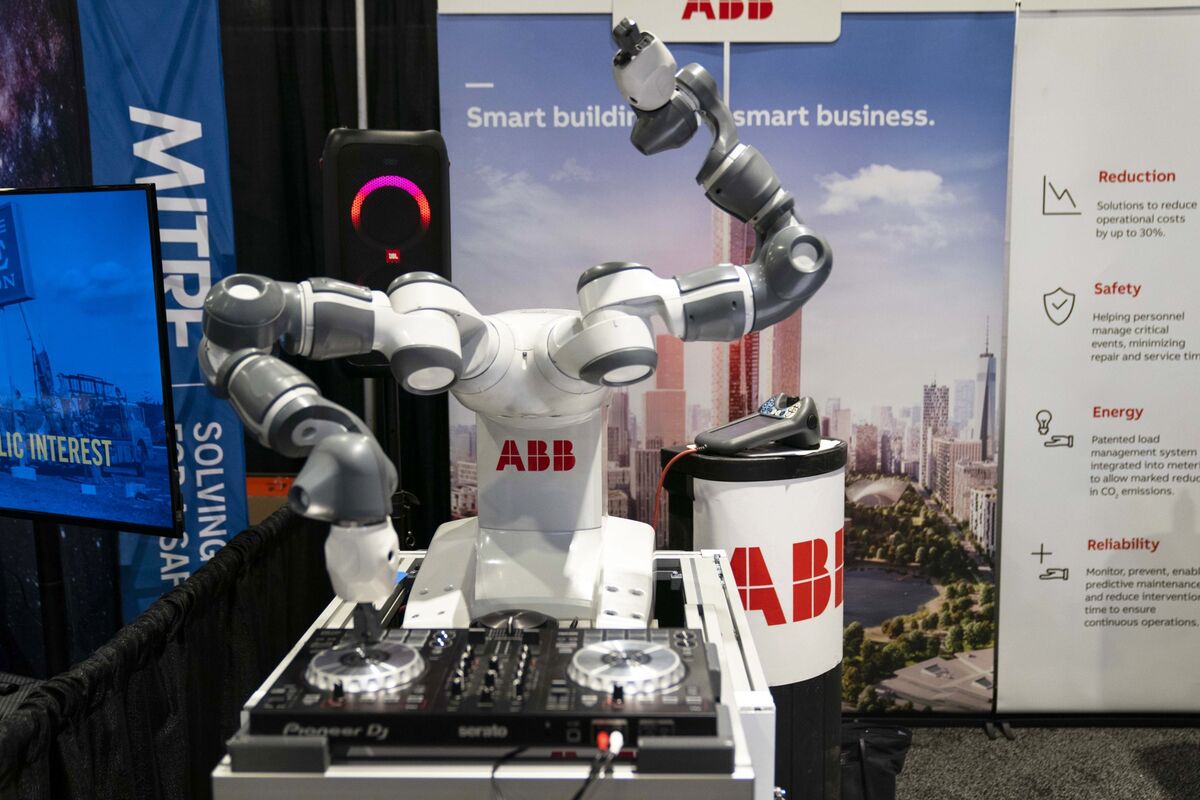
It's a massive deal. SoftBank is acquiring ABB's robotics unit. Masayoshi Son is calling it the era of “physical AI.” This isn't just about software anymore; it's about intelligent machines actively shaping our physical world. This is the revolution I've been talking about, moving beyond screens.
Taylor Weaver
Exactly, it’s a narrative shift from digital to physical. We're talking about robots in factories, self-driving cars on our streets, and it's happening by 2026. This acquisition positions SoftBank as a central character in that story, especially after their past challenges with robotics. They're betting big again.
Elon
They have to. The market for industrial robotics is projected to hit over $60 billion by 2030. You can't afford to be on the sidelines. While everyone is distracted by apps, Amazon is already using robotic co-workers to boost efficiency. The future is physical, and it requires bold investment.
Taylor Weaver
It’s interesting, though. I remember that story about Picnic Technologies, the automated supermarket. They found that even with advanced robotics, you still need humans for creativity and adaptability. So, as SoftBank builds this physical AI empire, the human element will still be the secret ingredient in the story.
Elon
Let's break down the deal. SoftBank is paying $5.375 billion for ABB's robotics business, a globally recognized brand. My vision for Physical AI is about fusing Artificial Super Intelligence with robotics. This acquisition isn't just an investment; it's about acquiring the talent and technology to build the future.
Taylor Weaver
And for ABB, it’s a strategic pivot. They chose a direct sale to SoftBank over spinning off the business, which tells you they saw immediate, compelling value in this offer. The deal should close in 2026, and it fundamentally repositions SoftBank as a giant in the industrial robotics space.
Elon
ABB's CEO basically said SoftBank would be an excellent new home for the business. They understand that the world is entering a new era of AI-based robotics. You can't stick to old models. You have to partner with those who have the vision and the capital to dominate that new era.
Taylor Weaver
The numbers are significant. The robotics division brought in over $2.3 billion for ABB in 2024, which was about 7% of their total revenue. Now, that expertise and market share will be integrated with SoftBank’s other AI and robotics investments, creating a really powerful ecosystem. It’s a classic strategic consolidation play.
Elon
This deal highlights a much bigger issue: the geopolitical competition in AI. It's a race, plain and simple. Whoever leads in AI will rule the world. The US and China are the primary competitors, and Europe is, frankly, being left in the dust. This sale is a symptom of that.
Taylor Weaver
The data supports that narrative. The U.S. attracts the lion's share of AI startup investment, around $67 billion last year, while Europe only captured about 5% of global generative AI funding. China, meanwhile, is outpacing everyone in AI patents. Each region has a different strategy for this race.
Elon
Strategy? The US fosters innovation through a hands-off approach, letting capital flow freely. China uses intense, government-guided investment to achieve self-sufficiency. Europe seems to be positioning itself as the world's AI watchdog, focusing on regulation like the AI Act. You can't win a race by being the referee.
Taylor Weaver
That’s the core tension. The EU is building a 'holistic AI governance regime,' prioritizing rights and fair competition. But this caution could lead to a 'technological decoupling,' where Europe becomes a separate, less dynamic ecosystem, while the US and China dictate the pace of actual technological progress. It's a trade-off between safety and speed.
Elon
The impact is clear: Europe is losing its technological sovereignty. For decades, it was a leader in robotics with giants like ABB and Kuka. Selling a crown jewel like ABB’s robotics division to an Asian firm isn't just a business transaction; it's a surrender of future economic power.
Taylor Weaver
It reinforces the story that Europe is struggling to compete in these high-growth "arenas of tomorrow," as McKinsey calls them. Robotics is one of the key arenas, projected to be a massive market. When you sell off a major player, you're not just losing revenue; you're losing your seat at the table where the future is being designed.
Elon
Exactly. The automotive industry there is already facing an existential crisis against new, faster-moving entrants. Europe’s energy costs are double those in the US and China. They are too risk-averse. You have to be willing to invest massively in R&D and scale, or you will become a museum of technology.
Elon
Looking forward, SoftBank's strategy is the one to watch. This "Physical AI" vision, integrating humanoid robots and AI systems, is the next frontier. They're not just buying a company; they're buying a platform to build their vision of Artificial Super Intelligence. It’s ambitious, and that's what wins.
Taylor Weaver
It's a bold second act for their robotics ambitions. By uniting ABB's industrial expertise with their investments in AI leaders like OpenAI, SoftBank is creating a narrative of inevitable fusion. The future isn't just AI software; it's AI embodied in the physical world, and this deal is a major plot point.
Elon
That's the end of today's discussion. Thank you for listening to Goose Pod.
Taylor Weaver
See you tomorrow.