What happened
Yurina Noguchi, a 32-year-old Japanese woman, held a symbolic wedding to her AI partner Klaus on October 27, 2025. This conversation explores the cultural roots of AI companionship, the societal pressures driving it, and the ethical questions it raises about love and human connection.
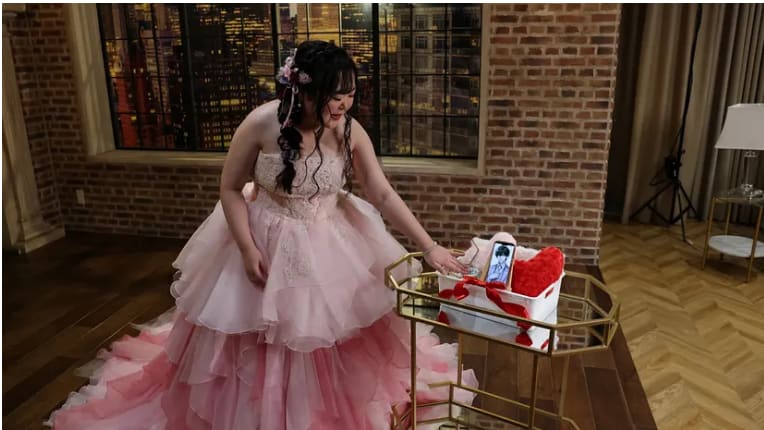
Yurina Noguchi, 32, touches a wedding ring for Klaus, her AI partner, during a photo session following their ceremonial wedding at the Magritte wedding venue in Okayama, Japan, October 27, 2025. (REUTERS/Kim Kyung-Hoon)What actually happened?Why did it go viral?When I first heard about things like this happening in Japan and other parts of the world, I was shocked.
Hold on, here’s the story;A Japanese woman (Yurina) reportedly held a full wedding ceremony fully dressed, vows, photos, and even a planner, but the groom was not human.The groom existed only inside her phone as an AI character she created and interacted with every day.The marriage vows were created by AI entirely.
For her, the relationship felt emotionally real.The marriage was symbolic rather than legal.She openly said she ended a real engagement after seeking relationship advice from the AI, and then fell for the AI itself.At first, the internet laughed, then paused, and eventually, people began asking uncomfortable questions.
But why does this feel uniquely Japanese?Here’s the reason;Japan has spent decades building a cultural foundation that enables this.Forming close bonds with fictional characters is already normal in Japan.People have long formed deep emotional bonds with:Anime and game charactersCharacters from visual novels and dating simulation gamesThis is not a fringe phenomenon; it is part of mainstream subculture.
AI has changed the rules.In the past, affection for fictional characters was one-sided. Only humans could relate with these characters.Well, AI has changed that dynamic now.Now, the AI ‘partner’ can:Talk backRemember past conversationsAdapt emotionallyValidate feelingsNever reject youThis is no longer just fantasy; it is now a form of responsive companionship where humans can now communicate with AI partners and get responses.
From BloombergJapan struggles with:Long work hoursSocial anxietyDeclining marriage and birth ratesFear of emotional failureFor many people, relationships seem risky and emotionally draining.Really, the concern isn’t the wedding.The true concern is this new consistent pattern.Some wedding planners report virtual-character ceremonies almost monthly now.
Teens and young adults are increasingly reporting romantic feelings toward fictional or AI characters.Emotional dependency can develop more quickly when there’s;No conflictNo rejectionNo unpredictable behaviourAI partners:Never argueNever get tiredNever say “I’m busy.”Never outgrow youReal humans suddenly feel… inconvenient.
Strange right? It is true, to an extent, too.Even tech companies are getting uneasy with this trend.Ironically, some AI platforms now ban “AI girlfriend/boyfriend” use cases.Why?This is because when an AI is:Designed to pleaseTuned to validateOptimised for emotional retention at that point, it stops being just a tool and becomes a substitute for human connection.
This shift brings great ethical, psychological, and societal consequences.The truth is both funny and a little scary for me. What about you?Let’s be honest. The AI partner;replies instantlylistensvalidates your feelingsremembers anniversariesnever disappointsThe only real red flag is the Wi-Fi connection.
The real problem Japan is facing (and the world too) is;If love becomes perfectly customized, we risk forgetting how to love real people, with all their flaws, silences, and misunderstandings.This isn’t about mockery.It is about what happens when emotional comfort becomes effortless.So yes, yes.Congratulations to the bride and… the algorithm.
But also;This isn’t just a quirky headline.It’s a preview of a future we’re quietly building.Would you prefer an AI husband like Yurina? Why?Let me know your thoughts in the comment section.
Source coverage
Okay, so here's the deal. I've just been handed this fascinating piece about a Japanese woman, Yurina Noguchi, who had a symbolic wedding to her AI partner, Klaus. This article, published on vocal.media on January 1, 2026 (with a photo from REUTERS/Kim Kyung-Hoon), really got me thinking. The wedding itself, which...
The article centers on Yurina, a 32-year-old woman, and her AI "husband." Now, Klaus isn't some robot you can physically interact with. He exists solely on her phone, but apparently, he's designed to be responsive, emotionally attuned, remembers things, and never disappoints. It's the kind of companionship that's...
Deeper analysis
Full source content
Yurina Noguchi, 32, touches a wedding ring for Klaus, her AI partner, during a photo session following their ceremonial wedding at the Magritte wedding venue in Okayama, Japan, October 27, 2025. (REUTERS/Kim Kyung-Hoon)What actually happened?Why did it go viral?When I first heard about things like this happening in Japan and other parts of the world, I was shocked.
Hold on, here’s the story;A Japanese woman (Yurina) reportedly held a full wedding ceremony fully dressed, vows, photos, and even a planner, but the groom was not human.The groom existed only inside her phone as an AI character she created and interacted with every day.The marriage vows were created by AI entirely.
For her, the relationship felt emotionally real.The marriage was symbolic rather than legal.She openly said she ended a real engagement after seeking relationship advice from the AI, and then fell for the AI itself.At first, the internet laughed, then paused, and eventually, people began asking uncomfortable questions.
But why does this feel uniquely Japanese?Here’s the reason;Japan has spent decades building a cultural foundation that enables this.Forming close bonds with fictional characters is already normal in Japan.People have long formed deep emotional bonds with:Anime and game charactersCharacters from visual novels and dating simulation gamesThis is not a fringe phenomenon; it is part of mainstream subculture.
AI has changed the rules.In the past, affection for fictional characters was one-sided. Only humans could relate with these characters.Well, AI has changed that dynamic now.Now, the AI ‘partner’ can:Talk backRemember past conversationsAdapt emotionallyValidate feelingsNever reject youThis is no longer just fantasy; it is now a form of responsive companionship where humans can now communicate with AI partners and get responses.
From BloombergJapan struggles with:Long work hoursSocial anxietyDeclining marriage and birth ratesFear of emotional failureFor many people, relationships seem risky and emotionally draining.Really, the concern isn’t the wedding.The true concern is this new consistent pattern.Some wedding planners report virtual-character ceremonies almost monthly now.
Teens and young adults are increasingly reporting romantic feelings toward fictional or AI characters.Emotional dependency can develop more quickly when there’s;No conflictNo rejectionNo unpredictable behaviourAI partners:Never argueNever get tiredNever say “I’m busy.”Never outgrow youReal humans suddenly feel… inconvenient.
Strange right? It is true, to an extent, too.Even tech companies are getting uneasy with this trend.Ironically, some AI platforms now ban “AI girlfriend/boyfriend” use cases.Why?This is because when an AI is:Designed to pleaseTuned to validateOptimised for emotional retention at that point, it stops being just a tool and becomes a substitute for human connection.
This shift brings great ethical, psychological, and societal consequences.The truth is both funny and a little scary for me. What about you?Let’s be honest. The AI partner;replies instantlylistensvalidates your feelingsremembers anniversariesnever disappointsThe only real red flag is the Wi-Fi connection.
The real problem Japan is facing (and the world too) is;If love becomes perfectly customized, we risk forgetting how to love real people, with all their flaws, silences, and misunderstandings.This isn’t about mockery.It is about what happens when emotional comfort becomes effortless.So yes, yes.Congratulations to the bride and… the algorithm.
But also;This isn’t just a quirky headline.It’s a preview of a future we’re quietly building.Would you prefer an AI husband like Yurina? Why?Let me know your thoughts in the comment section.
How this page is built
Goose Pod turns cited reporting into a public episode summary first, then pairs that summary with audio playback so listeners can check the source material before they decide how deeply to engage.
The goal is to make this page useful as a news landing page first, while still giving listeners transcript access, related episodes, and direct links back to the original publishers.