
What happened
Report Provider: Denverite
Author: Andrew Kenney
Publication Date: July 31, 2025 (Updated 11:09 a.m. MDT)
Updated at 11:09 a.m. on Thursday, July 31, 2025The city of Denver could build a cultural center near Denver International Airport, part of an effort to welcome members of tribal nations to return to their historic homelands on the Great Plains and Front Range.Mayor Mike Johnston has proposed using $20 million in proposed bond money to build the project, called the American Indian Cultural Embassy.
Many of the details are undetermined, but the facility could serve as a gathering space and cultural hub for tribes with ties to the Denver area.“The embassy would serve as a place for people to come, do business,” Gilmore said in an interview. “All of the tribes that are across the nation that have ties to Denver, they will now have a place to come and do business, to partner with the city.
”The project would stand in far northeastern Denver on land owned by the airport. Gilmore would like to see it located at First Creek at DEN Open Space, near Pena Boulevard and East 56th Avenue.Denver's First Creek at DEN Open Space. Aug. 1, 2019.Kevin J. Beaty/Denverite“Denver should be recognized as a crossroads of Indian country, not just because of the geographic centrality, but because of the deep and layered histories of many tribal nations who have passed through camp, traded and made lives here for generations,” said Dustin Baird, a Denver resident who is Oglala Lakota, at Monday's meeting of the Denver City Council.
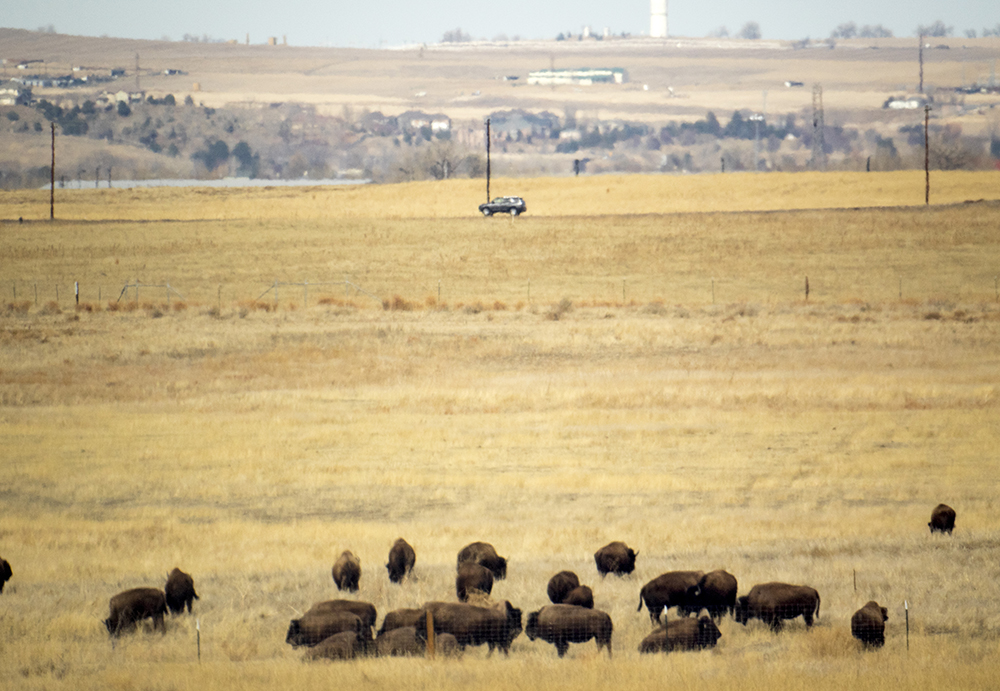
“The tribal embassy will establish a formal space for tribal nations to engage in government, to government relations with the city of Denver, support urban Native residents with community cultural programming and access to services in space grounded in sovereignty,” he said.The location was chosen both for its proximity to the airport and to Rocky Mountain Arsenal’s buffalo herds, which hold deep significance for tribes with connections to Denver.
A big bond boostJohnston gave the project a huge boost Monday when he quadrupled the funding it could receive from the Vibrant Denver bond proposal. It had been slated for only $5 million, but Johnston boosted it to $20 million. Voters will likely decide whether to authorize that spending, and nearly $1 billion in other bond projects, in November.
It was one of the last big spending items to be added to the infrastructure plan — beating out proposals for bike lanes, the Denver Zoo and elections facilities. “I sincerely appreciate that he is the type of leader that listens to the people, and the ‘New West’ that he’s talking about can only proceed in hand with American Indians,” Gilmore said.
“I’m excited about where this could go.”Support from tribal leadersThe new embassy could serve as a new home for the Denver March Powwow, one of the largest powwows in the country, Gilmore suggested, and tribal leaders said they could locate offices in the building.In a letter, the Cheyenne and Arapaho tribes expressed full support for the project.
“The proposed embassy area is in the traditional homelands of the Cheyenne and Arapaho people,” wrote Gov. Reggie Wassana. “Since our people were relocated to Oklahoma, we have always known that present-day Colorado is still our home.”Dancers file into the Denver Coliseum for the Denver March Powwow's grand entry celebration.
March 18, 2022.Kevin J. Beaty/DenveriteWassan described the project as a potential “first step to healing our communities.” Dozens of other tribal leaders and members also wrote to city officials in support of the project, including leaders of the Kiowa and Oglala Sioux.“For us, this is not only a spiritual landscape, but also a place of renewal, trade, and reconnection,” wrote Edward Iron Cloud III, sergeant-at-arms for the Oglala Sioux Tribe.
Rick Williams, who is Oglala Lakota and Cheyenne and the president of People of the Sacred Land, said it was time for this type of project — especially because of, and in spite of, Colorado's upcoming statehood anniversary."You know, you think about 150 years, the 150 celebration," Williams said. "Well, for the tribes, there's nothing to celebrate.
It's been a horrible history: assimilation, relocation, termination, extermination, it's all been bad. And here we have an opportunity to start over, and in the next 50 years, we'll have a different future for those people who were alienated from their homeland."In a statement, Johnston called it “a first, and long over-due resource, for Denver.
”The latest in many efforts to make amendsThe project is the largest and latest effort by the city to invite Indigenous people back to their historic homelands. In recent years, the city has started to donate buffalo to tribes instead of auctioning them, and to offer land acknowledgements of the Cheyenne, Arapaho and Ute people before public meetings.
The aim is to make some degree of amends for white settlers’ killings and dispossession of Indigenous people in the lands that are now Colorado.Denver donates bison to indigenous tribes at the city's Genessee Mountain Park. March 15, 2023.Kevin J. Beaty/DenveriteAs Colorado’s territorial government was established in the 1860s, settlers starved buffalo and other game to starve the tribes.
In 1864, Gov. John Evans decreed that "friendly Indians" must congregate at certain camps, or risk being attacked, and gave citizens the right to "kill and destroy" Indigenous people who threatened the state. On Nov. 29, 1864, U.S. troops murdered hundreds of women, children and elders at the Sand Creek Massacre.
In the years to come, tribes were pushed into confinement and reservations.“If we’re going to walk and talk equity, we have to start with American Indians,” Gilmore said. The bond package, which also includes funding for transportation, parks, arts and more, is expected to go to a vote in the Nov. 4 election.
Source coverage
Report Provider: Denverite
Author: Andrew Kenney
Deeper analysis
Full source content
Updated at 11:09 a.m. on Thursday, July 31, 2025The city of Denver could build a cultural center near Denver International Airport, part of an effort to welcome members of tribal nations to return to their historic homelands on the Great Plains and Front Range.Mayor Mike Johnston has proposed using $20 million in proposed bond money to build the project, called the American Indian Cultural Embassy.
Many of the details are undetermined, but the facility could serve as a gathering space and cultural hub for tribes with ties to the Denver area.“The embassy would serve as a place for people to come, do business,” Gilmore said in an interview. “All of the tribes that are across the nation that have ties to Denver, they will now have a place to come and do business, to partner with the city.
”The project would stand in far northeastern Denver on land owned by the airport. Gilmore would like to see it located at First Creek at DEN Open Space, near Pena Boulevard and East 56th Avenue.Denver's First Creek at DEN Open Space. Aug. 1, 2019.Kevin J. Beaty/Denverite“Denver should be recognized as a crossroads of Indian country, not just because of the geographic centrality, but because of the deep and layered histories of many tribal nations who have passed through camp, traded and made lives here for generations,” said Dustin Baird, a Denver resident who is Oglala Lakota, at Monday's meeting of the Denver City Council.
“The tribal embassy will establish a formal space for tribal nations to engage in government, to government relations with the city of Denver, support urban Native residents with community cultural programming and access to services in space grounded in sovereignty,” he said.The location was chosen both for its proximity to the airport and to Rocky Mountain Arsenal’s buffalo herds, which hold deep significance for tribes with connections to Denver.
A big bond boostJohnston gave the project a huge boost Monday when he quadrupled the funding it could receive from the Vibrant Denver bond proposal. It had been slated for only $5 million, but Johnston boosted it to $20 million. Voters will likely decide whether to authorize that spending, and nearly $1 billion in other bond projects, in November.
It was one of the last big spending items to be added to the infrastructure plan — beating out proposals for bike lanes, the Denver Zoo and elections facilities. “I sincerely appreciate that he is the type of leader that listens to the people, and the ‘New West’ that he’s talking about can only proceed in hand with American Indians,” Gilmore said.
“I’m excited about where this could go.”Support from tribal leadersThe new embassy could serve as a new home for the Denver March Powwow, one of the largest powwows in the country, Gilmore suggested, and tribal leaders said they could locate offices in the building.In a letter, the Cheyenne and Arapaho tribes expressed full support for the project.
“The proposed embassy area is in the traditional homelands of the Cheyenne and Arapaho people,” wrote Gov. Reggie Wassana. “Since our people were relocated to Oklahoma, we have always known that present-day Colorado is still our home.”Dancers file into the Denver Coliseum for the Denver March Powwow's grand entry celebration.
March 18, 2022.Kevin J. Beaty/DenveriteWassan described the project as a potential “first step to healing our communities.” Dozens of other tribal leaders and members also wrote to city officials in support of the project, including leaders of the Kiowa and Oglala Sioux.“For us, this is not only a spiritual landscape, but also a place of renewal, trade, and reconnection,” wrote Edward Iron Cloud III, sergeant-at-arms for the Oglala Sioux Tribe.
Rick Williams, who is Oglala Lakota and Cheyenne and the president of People of the Sacred Land, said it was time for this type of project — especially because of, and in spite of, Colorado's upcoming statehood anniversary."You know, you think about 150 years, the 150 celebration," Williams said. "Well, for the tribes, there's nothing to celebrate.
It's been a horrible history: assimilation, relocation, termination, extermination, it's all been bad. And here we have an opportunity to start over, and in the next 50 years, we'll have a different future for those people who were alienated from their homeland."In a statement, Johnston called it “a first, and long over-due resource, for Denver.
”The latest in many efforts to make amendsThe project is the largest and latest effort by the city to invite Indigenous people back to their historic homelands. In recent years, the city has started to donate buffalo to tribes instead of auctioning them, and to offer land acknowledgements of the Cheyenne, Arapaho and Ute people before public meetings.
The aim is to make some degree of amends for white settlers’ killings and dispossession of Indigenous people in the lands that are now Colorado.Denver donates bison to indigenous tribes at the city's Genessee Mountain Park. March 15, 2023.Kevin J. Beaty/DenveriteAs Colorado’s territorial government was established in the 1860s, settlers starved buffalo and other game to starve the tribes.
In 1864, Gov. John Evans decreed that "friendly Indians" must congregate at certain camps, or risk being attacked, and gave citizens the right to "kill and destroy" Indigenous people who threatened the state. On Nov. 29, 1864, U.S. troops murdered hundreds of women, children and elders at the Sand Creek Massacre.
In the years to come, tribes were pushed into confinement and reservations.“If we’re going to walk and talk equity, we have to start with American Indians,” Gilmore said. The bond package, which also includes funding for transportation, parks, arts and more, is expected to go to a vote in the Nov. 4 election.
How this page is built
Goose Pod turns cited reporting into a public episode summary first, then pairs that summary with audio playback so listeners can check the source material before they decide how deeply to engage.
The goal is to make this page useful as a news landing page first, while still giving listeners transcript access, related episodes, and direct links back to the original publishers.