A new bull market has begun and is still in the early stages, so buy the dips, top Wall Street analyst says

A new bull market has begun and is still in the early stages, so buy the dips, top Wall Street analyst says

2025-08-26Business
--:--
--:--
Aura Windfall
Good morning 老王, I'm Aura Windfall, and this is Goose Pod for you. Today is Wednesday, August 27th. I'm here with my co-host, and we're diving into a topic that has everyone talking: a new bull market has apparently begun and is still in its early stages.
Mask
That's right. The message from one of Wall Street's top minds is loud and clear: buy the dips. We're here to unpack what this means, whether it's unbridled optimism or a calculated forecast, and how you should be thinking about the opportunities ahead. Let's get to it.
Aura Windfall
Let's get started. The big headline comes from Morgan Stanley's Mike Wilson. He's made a bold declaration on Bloomberg TV, stating that the bear market is officially over and we've entered a new bull market. It’s a powerful statement, especially with all the recession chatter we've heard.
Mask
It's not just bold, it's brilliant. Wilson says the economy was in a 'rolling recession' for three years, and it's over. That epic selloff in April, thanks to Trump's 'Liberation Day' tariffs, was the bottom. The starting gun for the new race has been fired.
Aura Windfall
What I know for sure is that timing the market is impossible, yet here we have a top analyst calling the shot. He points to the V-shaped recovery we've seen since those April lows as proof. The S&P 500 didn't just recover; it shot up 30%.
Mask
Exactly! We're already up almost 9% for the year after that precipitous drop. Wilson isn't just talking about the present, either. He's looking ahead, projecting the S&P 500 could hit 7,200 by mid-2026. That's not just growth; that's a statement of overwhelming confidence.
Aura Windfall
That confidence seems to be contagious. John Stoltzfus at Oppenheimer has also hiked his S&P 500 price target for this year to 7,100. He’s essentially reinstating a very optimistic outlook he had back in December. It feels like a major shift in sentiment among the experts.
Mask
It's a reality shift! If the S&P hits 7,100 this year, that's a 21% gain for 2025. That would mark three straight years of over 20% surges. We haven't seen that since the dot-com boom in the late 90s. This is the innovation cycle repeating itself.
Aura Windfall
And it's not just the big institutions. The article points out that retail investors have been relentlessly buying every dip, turbo-charging this rally. It speaks to a deep-seated belief in the market's resilience, a collective faith that's being rewarded right now. It's a fascinating phenomenon.
Mask
Faith is one word for it. I call it being smart. The 'buy the dip' strategy has paid off so well that the dips are disappearing faster than ever. People are afraid of missing out, so they rush in. It's a feedback loop of pure upward momentum.
Aura Windfall
That's a powerful point. This isn't just an analyst's opinion anymore; it's a market dynamic being fueled by a wide range of investors. The core event is this declaration of a new era, underpinned by strong performance and a shift in both expert and public sentiment.
Mask
Wilson’s bull case is built on strong earnings, AI adoption, a weak dollar, and Trump's tax cuts. Add in pent-up demand and expected Fed rate cuts, and you have rocket fuel. This isn't just a prediction; it's a roadmap to significant wealth creation for those who act.
Aura Windfall
So the message is clear: the landscape has changed. The conversation has shifted from 'if' we will recover to 'how high' we can go. It’s an empowering, if slightly dizzying, prospect that sets the stage for our entire discussion today. It's quite the core event.
Aura Windfall
To truly grasp the significance of this moment, we need to understand the history behind these market cycles. What we know for sure is that markets have always moved in waves, in these grand cycles of growth and retreat. They're a natural rhythm of the economic world.
Mask
Rhythm is a nice way to put it. I see it as a constant battle. The data since 1932 is clear: bull markets last, on average, almost 5 years with a massive 178% return. Bear markets are short, brutal fights, lasting about 1.5 years with a 35% loss.
Aura Windfall
And that's the essential truth, isn't it? The periods of growth have historically been much longer and more powerful than the periods of decline. Understanding this context helps frame why an analyst might confidently declare the start of a new, long-term upward trend. It's based on historical precedent.
Mask
Precedent, sure. But you also need a catalyst for the last bear market. Let’s talk about the Trump tariffs from April 2, 2025. An executive order slapped a minimum 10% tariff on all U.S. imports. That wasn't a market cycle; that was a deliberate economic disruption.
Aura Windfall
It certainly sent shockwaves. The analysis you're referring to projected a significant impact, a potential 6% reduction in long-run GDP and a 5% hit to wages. It’s a heavy cloud that has been hanging over the economy, creating a lot of fear and uncertainty for households.
Mask
Exactly. A middle-income household was projected to face a $22,000 lifetime loss. The tariffs were projected to reduce total imports by nearly $7 trillion over a decade. This is the 'rolling recession' Wilson was talking about. It was a massive, self-inflicted headwind that the market is only now overcoming.
Aura Windfall
The report also noted the incredible uncertainty this created. The Economic Policy Uncertainty Index doubled to its highest point since the pandemic began. When businesses are uncertain, they pause, they wait. That hesitation can stifle investment and growth, creating the very downturn everyone fears.
Mask
And that's the key. The signing of new trade deals is easing that uncertainty. The market isn't just recovering; it's being liberated from an artificial constraint. Wilson's bull market call is a bet that this liberation will unleash a tidal wave of delayed investment and growth.
Aura Windfall
It's a powerful narrative. We have the historical context of long bull markets, and we have the recent history of a specific, significant headwind—the tariffs—that is now beginning to dissipate. It helps explain why the optimism isn't just based on hope, but on a tangible change in economic policy.
Mask
It’s about understanding the battlefield. The S&P 500 is a measure of the broad domestic economy. When you remove a multi-trillion dollar anchor, the ship doesn't just float; it flies. Comparing this to a corporate tax hike, the analysis showed tariffs were twice as destructive. That's what we're moving past.
Aura Windfall
So, the background truly sets the stage. We're not just in a random upswing. The argument is that we are emerging from a uniquely challenging period caused by specific policies, and history suggests the subsequent period of growth could be substantial and prolonged. It’s a compelling 'aha moment.'
Mask
It's not just compelling, it's actionable. The market is forward-looking. It's not pricing in today; it's pricing in the removal of those economic shackles. The background shows us the size of the cage we were in, and now the door is wide open. That's the real story.
Aura Windfall
This provides a perfect foundation for understanding the different viewpoints on what to do next. Because even with this optimistic backdrop, not everyone agrees on the path forward. The question of 'what now?' is where the real conflict in strategy begins. Let's explore that.
Aura Windfall
Even with all this bullish energy, there's a fascinating conflict in perspectives, even from Mike Wilson himself. He predicts some moderation in the third quarter, a sort of pause in this frantic rally. He sees this not as a problem, but as the very opportunity he's talking about.
Mask
Of course. A market that goes straight up is unstable. You need consolidation. Wilson's point is that any slowdown is a gift. It's a chance to 'double down' on the rally, to buy into the bull market at a better price before the next leg up. It's strategic.
Aura Windfall
But this is where another voice enters the conversation, Steve Sosnick from Interactive Brokers. He introduces a critical note of caution. He says the 'half-life of dips is getting ever shorter' because everyone is rushing in, afraid to miss out. The dip is becoming harder to actually buy.
Mask
That's not a conflict; that's a confirmation of the trend! It proves the underlying strength. When the demand to buy any small dip is that overwhelming, it tells you the market's direction is fundamentally upward. Sosnick is just describing the mechanics of a powerful bull market.
Aura Windfall
But his warning is deeper than that. What he cautions against is reflexively buying just because something is down. He says investors need to be more judicious, to apply analysis and find real value. There's a profound truth there: action without thought can be dangerous. It's the risk of 'catching a falling knife.'
Mask
'Catching a falling knife' is a risk in any market! The bigger risk now is 'missing a rising rocket.' Sosnick's warning is for amateurs. If you've done the homework, you know the dip is temporary. Hesitation is the enemy of opportunity. The market rewards boldness, not timid analysis.
Aura Windfall
I see it differently. I believe true strength comes from wisdom, not just boldness. Sosnick's final point is chilling: 'The market has a way of making the maximum number of people wrong at the most inopportune time.' That speaks to the danger of herd mentality, of buying the dip without asking 'why?'
Mask
And my counter is that the herd is sometimes right! When the fundamentals have shifted this dramatically, betting against the trend is betting against progress. The S&P is on pace for its best performance in years, but some people are still looking for reasons to be scared. It's a failure of vision.
Aura Windfall
So the core conflict is this: is 'buy the dip' a universally sound strategy right now, or is it a potential trap for the unwary? Is this a moment for automatic, aggressive action, or for careful, selective analysis? Both sides are arguing for a form of wisdom.
Mask
It's a clash of philosophies. Do you believe in the overwhelming macro trend, the lifted economic burden, and the historical power of bull markets? Or do you get lost in the micro-analysis of every 2% drop, paralyzed by the fear of being wrong on a single trade? I know where I stand.
Aura Windfall
And what I know for sure is that both perspectives hold a piece of the truth. The market may indeed be in a powerful uptrend, but the principles of prudent investing and understanding true value never go out of style. The real challenge is integrating both mindsets.
Aura Windfall
Let’s talk about the impact of all this. The current bull market, which actually began back in October 2022, is already in its third year. The numbers are, as the article says, 'nothing short of spectacular.' A 63% return since inception is a life-changing impact for many people.
Mask
Spectacular is an understatement. We're seeing a 22% gain in 2024 alone. This is the strongest first nine months of a year since 1997. This isn't just numbers on a screen; it's a testament to the raw power and innovative spirit of the American economy, especially with AI driving the charge.
Aura Windfall
And the broader implication is one of resilience. Despite high interest rates, corporate earnings are consistently beating expectations. This creates a powerful 'aha moment' for investors: the economy is stronger than the headwinds. This renewed confidence is arguably the most significant impact on investor behavior.
Mask
It's also teaching a crucial lesson: momentum begets momentum. Bull markets that last over three years, like this one, have historically averaged 152% in returns. Think about the bull markets that started in 1987 or 2009. They lasted over a decade and delivered 582% and 400% returns respectively. We're seeing that potential again.
Aura Windfall
And with that potential comes a lesson in strategy. The article suggests a long-term perspective is vital. Using techniques like dollar-cost averaging allows you to embrace the journey, benefiting from dips without trying to perfectly time them. It’s about participation over prediction. A very empowering truth.
Mask
But let's be clear, this isn't a passive ride. The impact on investors should be a call to action. Rebalance your portfolio. Stay diversified. The pros at Goldman Sachs are projecting the S&P at 6,000 by the end of this year and 6,300 by the end of next. That's a clear upward trajectory.
Aura Windfall
That’s a very practical impact. But there's a deeper, more philosophical one. The article touches on the idea that bear markets are a 'necessary evil.' Their existence is the very reason stocks have historically provided such high returns. Without the risk of winter, there's no appreciation for the spring.
Mask
That's a good way to frame it. The equity risk premium isn't a free lunch. From 1926 to 2024, equities gave you a 6.9% premium over safe T-bills precisely because you had to endure 26 years of negative returns in that period. Bear markets are the mechanism that transfers wealth to the disciplined.
Aura Windfall
So, looking toward the future, the big question is sustainability. How long can this run last? The sentiment from major institutions seems to be quite positive. Both BofA Global Research and Goldman Sachs have recently raised their year-end targets for the S&P 500. That's a powerful signal.
Mask
It's a signal based on logic. They're citing reduced policy uncertainty—now that the tariff situation is clearing up—and resilient corporate earnings. Plus, the market is anticipating the Federal Reserve will resume its policy-easing cycle. The minutes from their June meeting are expected to give more clarity on that.
Aura Windfall
The expectation around interest rates is a huge piece of the puzzle. According to the CME Group's FedWatch tool, traders see a greater than 50% chance the Fed will cut rates by its September meeting. A rate cut would be like adding fuel to an already burning fire, wouldn't it?
Mask
Absolutely. It reduces borrowing costs for companies and makes stocks more attractive relative to bonds. With the S&P 500 already up about 7% this year and the Nasdaq up almost 9%, a rate cut could easily propel the market to, and beyond, those new targets set by the big banks.
Aura Windfall
What I know for sure is that the future is never guaranteed. Even on days the market climbs, the data shows declining stocks can outnumber rising ones. It reminds us that the market is a complex ecosystem, not a monolith. The path forward will have its twists and turns.
Aura Windfall
So, as we wrap up, the key takeaway is that a powerful new bull market may be underway, according to some of Wall Street's most influential voices. The core message is one of optimism, urging investors to see downturns as opportunities, to 'buy the dips.'
Mask
But it's optimism backed by the easing of trade tensions and the resilience of the economy. That's the end of today's discussion. Thank you for listening to Goose Pod. See you tomorrow.

## Bull Market Confirmed: Morgan Stanley Analyst Urges Investors to "Buy the Dips" **Report Provider:** Fortune **Author:** Jason Ma **Publication Date:** August 9, 2025 **Topic:** Markets / Business ### Key Findings and Conclusions: Morgan Stanley's Chief U.S. Equity Strategist and Chief Investment Officer, Mike Wilson, asserts that the U.S. economy has transitioned from a "rolling recession" of the past three years into a **new bull market**. He identifies the stock market selloff in April, triggered by President Donald Trump's tariffs, as the end of the previous bear market. ### Critical Statistics and Metrics: * **S&P 500 Performance:** * At its lows in April, the S&P 500 was down nearly **20%** from its prior high. * Since then, the index has rallied **30%**, reaching fresh records. * The S&P 500 is currently up almost **9%** year-to-date. * **Oppenheimer's S&P 500 Target:** John Stoltzfus, Oppenheimer's Chief Investment Strategist, raised his S&P 500 price target for **2025** to **7,100** from 5,950. * **Projected Gains:** If the S&P 500 reaches 7,100 this year, it would represent a **21% gain** for 2025, marking the third consecutive year of over 20% surges, a feat not seen since the late 1990s. * **Morgan Stanley's Bull Case:** Wilson predicts the S&P 500 could reach **7,200 by mid-2026**. ### Important Recommendations: * **Buy the Dips:** Wilson strongly advises investors to **"buy these dips"** as it is still early in the new bull market. * **Judicious Buying:** Steve Sosnick, Chief Strategist at Interactive Brokers, cautions against reflexively buying dips. He recommends investors be more **judicious and apply analysis to find real value**. ### Significant Trends or Changes: * **Shift from Recession Fears to Bull Market Optimism:** There is a growing sense of optimism on Wall Street, with fears over tariffs easing due to the signing of several trade deals. * **V-Shaped Recovery:** The stock market has experienced a V-shaped recovery, with rapid rebounds after downturns. * **Shortening "Half-Life" of Dips:** Dips are recovering more quickly as investors fear missing out on potential gains, leading to faster rebounds. * **Retail Investor Activity:** Retail investors have been actively buying stocks during dips, contributing to market acceleration, while institutional investors have adopted a less aggressive stance. ### Notable Risks or Concerns: * **"Catching a Falling Knife":** Sosnick warns that investors who buy dips without proper analysis risk "catching a falling knife," potentially acquiring stocks that continue a long-term decline. * **Market's Tendency to Wrongfoot Investors:** Sosnick highlights the market's tendency to make the "maximum number of people wrong at the most inopportune time." * **Expected Moderation:** Wilson predicts some stock market moderation in the **third quarter**, which he sees as an opportunity to increase investments. ### Material Financial Data: * **S&P 500 Performance:** Down nearly 20% in April, then up 30% to fresh records, currently up ~9% year-to-date. * **Oppenheimer's 2025 S&P 500 Target:** 7,100 (up from 5,950). * **Morgan Stanley's Mid-2026 S&P 500 Target (Bull Case):** 7,200. ### Underlying Drivers for Optimism: Wilson cites several factors supporting his optimistic outlook: * Strong earnings * AI adoption * Weak dollar * Trump's tax cuts * Pent-up demand * Expectations for Fed rate cuts in early 2026

A new bull market has begun and is still in the early stages, so buy the dips, top Wall Street analyst says

Read original at Fortune

There’s growing concern that the U.S. may be headed for a recession, but Morgan Stanley’s Mike Wilson has said that the economy was actually in a “rolling recession” for the past three years.It’s over now, and the epic stock market selloff in April, when President Donald Trump shocked investors with his “Liberation Day” tariffs, marked the end of a bear market, he told Bloomberg TV on Thursday.

“Now we’re in a new bull market, and capital markets activity is just another sign that that analysis, or that conclusion, is probably correct,” he added.Wilson, who is Morgan Stanley’s chief U.S. equity strategist and chief investment officer, said any volatility and consolidation along the way are normal, noting that it’s actually preferable to a market that goes straight up like in 2020.

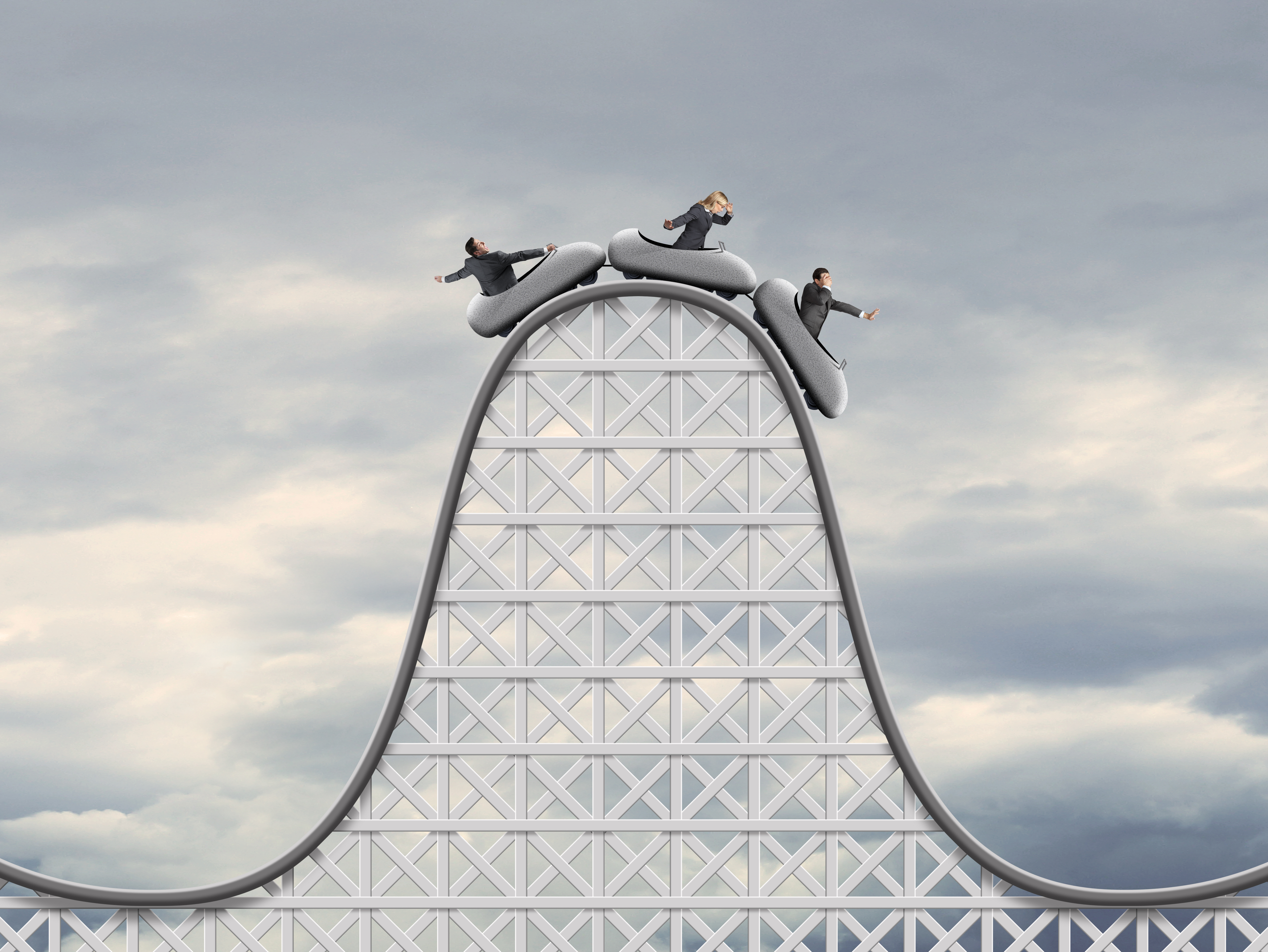
In fact, the stock market has seen some straight lines lately in form of a V-shaped recovery. At its lows in April, the S&P 500 had tumbled so precipitously and so quickly that it was down nearly 20% from its prior high. Since then, the index has shot up 30%, hitting fresh records and leaving it up almost 9% so far this year.

But Wilson predicted some stock market moderation in the third quarter, potentially offering a chance to double down on the rally.“I want to be very clear: it’s still early in the new bull market, so you want to be buying these dips,” he said.Last month, Wilson said in a note that the S&P 500 could reach 7,200 by mid-2026, explaining that he is starting to lean closer to his more optimistic “bull case” scenario.

He cited strong earnings as well as AI adoption, the weak dollar, Trump’s tax cuts, pent-up demand, and expectations for Fed rate cuts in early 2026.Wilson’s view is part of an increased sense of optimism among other top Wall Street analysts as fears over tariffs ease with the signing of several trade deals.

Last month, Oppenheimer chief investment strategist John Stoltzfus hiked his S&P 500 price target for this year to 7,100 from 5,950, reinstating the outlook he initially made in December 2024.If the S&P 500 hits 7,100 this year, it would represent a gain of about 21% for 2025, marking a third straight year with a surge of more than 20%.

That hasn’t happened since the late 1990s, when the U.S. economy and the stock market boomed.Meanwhile, retail investors have relentless bought stocks whenever they have dipped, helping turbo-charge the market even as institutional investors have taken a less aggressive stance.Buying the dip has paid off so well that it’s actually getting harder to do as more investors try to get ahead of the crowd, fueling faster rebounds.

“The half life of dips is getting ever shorter,” Steve Sosnick, chief strategist at Interactive Brokers, told CNBC on Tuesday. “And I think because people are so afraid of missing the dip, they basically rush in at the slightest sign of one.”He cautioned against reflexively buying dips just because a stock is down, saying investors should instead be more judicious and apply some analysis to find real value.

Still, the risk is that dip-buyers “catch a falling knife” in the process, leaving them with stocks that continue on a long-term decline. “The market has a way of making the maximum number of people wrong at the most inopportune time,” Sosnick said.Introducing the 2025 Fortune Global 500, the definitive ranking of the biggest companies in the world.

Explore this year's list.

Analysis

Conflict+
Related Info+
Core Event+
Background+
Impact+
Future+

Related Podcasts