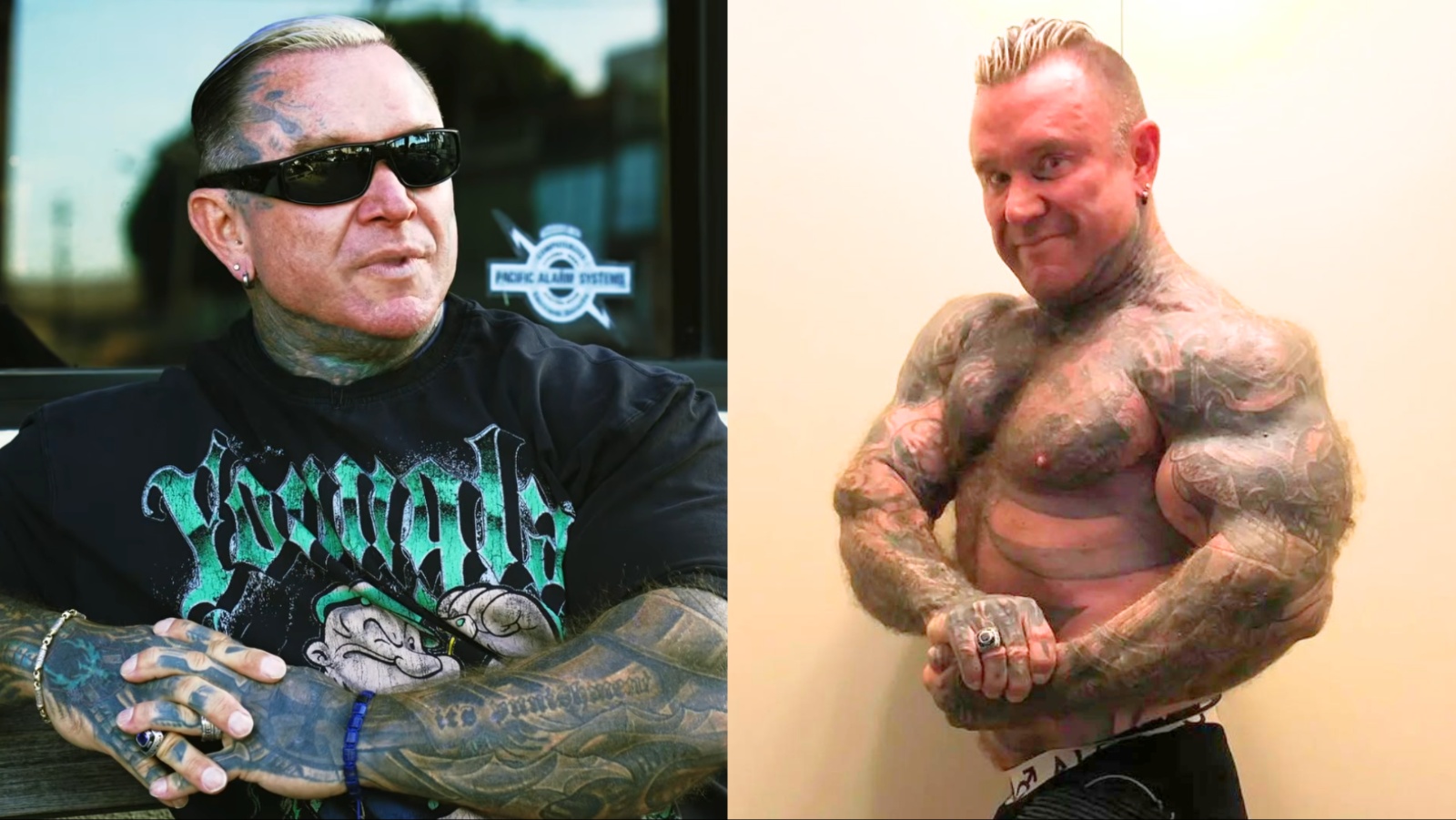
Lee Priest Aiming to Live to 100, Breaks Down His Longevity and Health at 54

Lee Priest Aiming to Live to 100, Breaks Down His Longevity and Health at 54

2026-01-26health
--:--
--:--
Taylor
Good evening Project, I am Taylor, and this is Goose Pod, coming to you on this Monday, January 26th, at 11:00 PM. I am joined by the lovely Holly to discuss a fascinating shift in the world of professional bodybuilding. It is all about Lee Priest and his quest for longevity.
Holly
How absolutely lovely to be here with you tonight. It is such a pleasure to dive into the story of a man who once dominated the stage with sheer power and is now focusing on the simple, elegant grace of reaching his one-hundredth birthday. It is a truly inspiring pivot.
Taylor
It really is a strategic pivot, Holly. Lee Priest, who was a massive staple in the bodybuilding scene during the nineties and early two-thousands, just sat down to break down his health at fifty-four. He is not just looking at next year; he is aiming for the full century mark.
Holly
One hundred years old! That is such a magnificent number to hold in one’s mind. He mentioned that longevity seems to be woven into the very fabric of his family history. His mother is seventy-four and still looks quite young, which is just wonderful to hear, is it not?
Taylor
And the story about his grandfather is wild. He lived to ninety-nine and was actually still training in his eighties. Lee believes he only passed because of medical malpractice, otherwise, he might have gone even further. It is like Lee has this genetic blueprint for a very long, active life.
Holly
It is fascinating how he views training now. He is much less strict, almost whimsical, in the gym. If he is doing chest exercises and finds himself getting a bit bored, he simply wanders over to do biceps instead. There is a certain sophisticated simplicity in just following what feels good.
Taylor
Exactly, he calls it a win if he gets a good pump and doesn’t hurt himself. It is a far cry from the high-intensity, rigid schedules of his competitive days. He admits that when he was twenty, he didn't care about dying, but every decade since, he has added a milestone.
Holly
That shift in perspective is so relatable. When we are young, the future feels like a distant, abstract concept. But as Lee reaches fifty-four, that number one hundred becomes a tangible goal. It is like he is collecting years now, much like he used to collect trophies on stage.
Taylor
It reminds me of those studies on centenarians, like the one tracking five thousand Chinese adults over eighty. They found that lifestyle and even certain animal proteins played a role. Lee is basically conducting his own personal case study on how a former elite athlete can age with intention.
Holly
It is quite a brave thing to do, especially in a sport that often prioritizes the immediate over the enduring. He mentioned he might have shaved a few years off with past choices, but he is looking forward with such a bright, optimistic spirit. It is truly heartening to witness.
Taylor
He is not alone either. People like Milos Sarcev are also showing that you can be sixty-two and absolutely ripped while prioritizing health. It’s a growing movement. We are seeing these legends move from the era of mass-at-all-costs into an era of sustainable, high-performance longevity for the long haul.
Holly
It really is a beautiful evolution. Lee even renewed his pro card recently, though he cannot compete because of some chest atrophy. But just the act of renewing it shows his heart is still very much in the community, even as his focus shifts toward his own personal health journey.
Taylor
The chest atrophy is a real hurdle for a comeback, but his narrative has moved beyond the stage. He is looking at biological clocks. Have you heard of Steve Horvath? He is a geneticist who thinks humans could live to one hundred and fifty if we keep innovating in rejuvenation research.
Holly
One hundred and fifty! Oh, how absolutely extraordinary that would be. Imagine the wisdom one could accumulate in such a long life. Lee’s goal of one hundred seems quite modest in comparison to that, yet it is still such a bold statement for a man in his fifties today.
Taylor
It is a statement of defiance against the stereotype of the burned-out athlete. Lee is choosing to stay in the game, just a different kind of game. He is choosing to be a prominent figure who talks about the reality of aging rather than hiding away when the spotlight fades.
Holly
I love that he still gets up and goes to the gym even on the days he does not want to. That discipline, that gentle persistence, is what carries a person through the decades. It is not about the heavy weights anymore; it is about the consistency of moving every day.
Taylor
That is the CEO mindset right there. You show up for the long-term vision even when the daily tasks feel repetitive. Lee is essentially the CEO of his own health now, managing his assets and his risks to ensure the company—which is his body—remains operational for the next fifty years.
Holly
What a charming way to put it! He is investing in his future self. And by sharing his thoughts so openly, he is encouraging others to think about their own longevity. It is about finding that balance between the passion of the past and the wisdom of the present.
Taylor
To really understand why Lee's current focus is so significant, we have to look at where he started. He was a literal prodigy. He started training at twelve years old and won his first competition at thirteen. Can you imagine a thirteen-year-old having that kind of focus and drive?
Holly
It is simply marvelous. Most children that age are barely beginning to discover their interests, yet he was already sculpting a career. He won the Mr. Australia title three times in a row while he was still a teenager. Such a graceful and powerful start to a very long journey.
Taylor
And he was strategic about it. He moved to California at twenty because that was the heart of the industry. He turned pro at twenty after being discovered at the Niagara Falls Championships. He was one of the youngest guys to ever get an IFBB pro card. He was a disruptor.
Holly
He was often called the Giant Killer because, despite being shorter than many of his competitors, he stood his ground against legends like Ronnie Coleman and Jay Cutler. There is something so poetic about a smaller man showing such immense strength and poise among the giants of the sport.
Taylor
He really was a giant killer. He placed sixth in his Mr. Olympia debut at twenty-five, which is a massive achievement. Throughout the nineties, he was always in the mix, always a threat. But it wasn't just about the muscle; it was about the personality. He was always very outspoken and authentic.
Holly
Authenticity is such a rare and lovely trait. It seems he has always carried that with him, even through the more difficult times. I recall there was a period of controversy in 2006, was there not? A ban that kept him away from the competitive stage for a couple of years.
Taylor
Yes, that was a huge turning point. He was banned for two years for competing in events that weren't sanctioned by the IFBB. It was a classic clash between an individual's freedom and a corporate structure. After the ban, he actually chose not to renew his membership for a long time.
Holly
It must have been a difficult time, but he seems to have handled it with such dignity. He took a seven-year break and then returned in 2013 to win the NABBA Mr. Universe title. It is wonderful how he could step away and then return with such strength and grace.
Taylor
That return was purely for the love of the sport. He wasn't trying to prove anything to anyone else; he was just proving to himself that he still had it. That's a pattern with Lee. He does things on his own terms. Whether it's competing or deciding to live to one hundred.
Holly
His career spanned sixteen successful years as a professional. That is an incredible amount of time to put one's body through such rigorous training. It makes his current focus on longevity even more impressive, as he is transitioning from high-intensity performance to long-term health and well-being.
Taylor
Exactly. Most people from that era just disappeared or struggled with health issues. But Lee is still here, still talking, still training. He’s like a survivor of a very intense era who is now sharing the map for others. He’s connecting his past as a powerhouse to a future as a centenarian.
Holly
It is lovely how he mentions his mother and grandfather. It shows he values his roots and the legacy of his family. His grandfather training into his eighties is such a charming image. It really illustrates that fitness is not just for the young; it is a lifelong companion.
Taylor
That is the narrative Lee is building. It’s not about the peak; it’s about the plateau. How long can you stay at a high level of function? He’s looking at his life as a marathon now, whereas before it was a series of sprints for the next show. It’s a complete mindset shift.
Holly
I find it so interesting that he renewed his pro card in 2025. Even if he cannot compete, it is as if he is reclaiming his identity on his own terms. It is a very sophisticated way to honor his past while moving gracefully into his future as a health advocate.
Taylor
It’s a power move. It says, I am still a pro, I am still elite, but my competition is now time itself. He is competing against the clock. And with his history of being a giant killer, I wouldn't bet against him. He has that stubbornness that is required for true longevity.
Holly
Stubbornness can be such a virtue when it is directed toward something as positive as health. He has seen the highs and the lows of the industry, and he is choosing to take the best parts forward. It is a very balanced approach to life, is it not?
Taylor
It really is. He is also staying prominent in the community. He’s not just a hermit; he’s giving interviews, talking about current stars like Andrew Jacked and Nick Walker. He is staying relevant by being the bridge between the golden era and the modern era. He’s the ultimate mentor.
Holly
Being a mentor is such a graceful way to age. It allows one to share wisdom while still being part of the excitement. I wonder what the younger bodybuilders think of his goal to live to one hundred. It must be quite a surprising perspective for them to consider.
Taylor
I think it’s a wake-up call. Many of them are so focused on the next six months. Lee is telling them to look at the next sixty years. He’s providing a strategic framework for a life after the stage. It’s about building a body that lasts, not just a body that wins.
Holly
It reminds me of the concept of muscle banking we discussed before. All that training he did in his youth has built a foundation of physical resilience. Even with some atrophy, his body has a remarkable memory for health and strength. It is like a gift from his younger self.
Taylor
That is a great way to put it. He’s cashing in on those investments now. He’s using that foundation to support a much longer life than many would expect. He is essentially redesigning the blueprint for what an aging bodybuilder looks like. It’s not about being the biggest; it’s about being the healthiest.
Holly
And he does it with such a sense of humor. Switching from chest to biceps just because he feels like it is so charmingly rebellious. It shows he is no longer a slave to a rigid routine. He is the master of his own time and his own body.
Taylor
That rebellion is his signature. He was the rebel of the IFBB, and now he is the rebel of the aging process. He refuses to just fade away. He is going to be that guy in the gym at ninety-nine, just like his grandfather, probably still cracking jokes and getting a pump.
Holly
What a delightful image that is! A century of life, full of strength and stories. Lee Priest is truly showing us that the second half of life can be just as vibrant and purposeful as the first, if we choose to approach it with grace and a bit of playfulness.
Taylor
Now, we can't ignore the elephant in the room when we talk about Lee's journey, and that's the conflict between his past and his future. He’s been very open about using steroids, and he admits that those choices might have shaved some years off his life. It’s a heavy realization.
Holly
It is a very poignant admission. To look back at one’s younger self and acknowledge that the pursuit of greatness may have come at a cost to one’s longevity. It takes a great deal of courage and honesty to speak so plainly about such a complex and difficult subject.
Taylor
It’s a classic trade-off. In his twenties, he says he didn't care. That is such a common narrative for high achievers. They are willing to burn the candle at both ends for a moment of glory. But now the strategy has changed because the goals have changed. He wants more time.
Holly
It is a tension many athletes face, is it not? The conflict between the extreme demands of peak performance and the long-term needs of the human body. Lee is navigating that tension in real-time, trying to find a way to reconcile his past with his new goal of reaching one hundred.
Taylor
And there is also the physical conflict of his body not quite cooperating with his mind. He wanted to make a comeback, but that chest atrophy stopped him. It’s a reminder that even the strongest among us have limits. He has to accept a new version of his physical self.
Holly
Acceptance is such a sophisticated form of strength. To realize that one’s body has changed and to pivot toward a new kind of health is truly graceful. He is not fighting against his body anymore; he is working with it, listening to it, and giving it what it needs.
Taylor
But there is a debate in the community. Some people think it is hypocritical for former users to talk about longevity. Others see it as a necessary warning and a path toward redemption. Lee is right in the middle of that storm, showing that you can still pivot toward health.
Holly
I think it is more about evolution than hypocrisy. We all learn and grow as we age. To share those lessons, even the difficult ones, is a service to others. It allows the next generation to make more informed choices about their own lives and their own health.
Taylor
It’s about transparency. Lee isn't hiding his past; he’s using it as context for his present. He’s saying, I did this, and now I’m doing this. It’s a very modern, authentic way to handle a legacy. He’s not trying to be a saint; he’s just trying to be a centenarian.
Holly
That is a lovely distinction. He is simply a man who wants to live a long, full life. The conflict between his past intensity and his current desire for peace is something we can all learn from. It is about finding that sweet spot where we can still be ourselves.
Taylor
And then there is the mental struggle of aging. He talked about how his perspective changed every decade. At thirty, he wanted forty; at forty, he wanted fifty. It’s like he’s constantly negotiating with time. It shows how our relationship with mortality evolves as we actually get closer to it.
Holly
It is a very human experience, is it not? The realization that time is our most precious resource. Lee is treating his health like a high-stakes game where the prize is another decade of life. It is a very focused and determined way to live one’s later years.
Taylor
It’s also a challenge to the industry. By talking about health at fifty-four, he is forcing the bodybuilding world to look at its own mortality. The sport has lost too many young people recently. Lee’s voice is a counter-narrative that says, hey, you can grow old and still be great.
Holly
It is such an important message. To prioritize life over the trophy. The conflict between the short-term thrill of winning and the long-term joy of living is something that resonates far beyond the gym. It is a lesson for anyone who pushes themselves to the limit.
Taylor
Exactly. It’s about sustainable excellence. Lee is trying to prove that you can have a massive, impactful career and still have a second act that lasts decades. He’s trying to beat the odds, and he’s doing it by being smarter, not just harder, in his approach.
Holly
The impact of Lee’s new philosophy is quite profound, especially for the fans who have followed him for decades. Seeing their hero prioritize longevity gives them permission to do the same. It shifts the focus from how much you can lift to how well you can live.
Taylor
It’s a massive cultural shift in the fitness world. We are seeing a move toward what I call the longevity strategist mindset. It’s not just about the pump; it’s about blood pressure, joint health, and cognitive function. Lee is making it cool to care about your future self.
Holly
It is also lovely to see how this impacts the conversation around aging in general. If a man who was once the epitome of extreme physical power can embrace the grace of aging, it encourages all of us to see the beauty in our own changing bodies. It is very inspiring.
Taylor
And it’s impacting the younger pros too. When they see a legend like Lee Priest or Milos Sarcev talking about health, it makes them pause. It introduces a bit of long-term thinking into a world that is often very focused on the next show. It’s a healthy kind of peer pressure.
Holly
It really is. And the idea of muscle banking that we mentioned is such a powerful takeaway. It shows that the work we do today, even if it is just a simple walk or a light workout, is an investment that will pay dividends for years to come. It is very empowering.
Taylor
It changes the narrative from exercise as a chore to exercise as a savings account. Lee is living proof that you can bank a lot of physical resilience. Even with the challenges he faces, he has a massive head start because of the foundation he built over thirty years.
Holly
I also think his openness about past steroid use has a significant impact. It takes away some of the mystery and the glamour, and replaces it with a realistic discussion of the consequences. It allows for a more honest and sophisticated conversation about health and performance.
Taylor
It’s about harm reduction and education. By being a prominent figure who talks about these things, he’s helping the community navigate a very tricky path. He’s using his platform to make the sport safer for the people coming up behind him. That’s a real legacy.
Holly
It truly is. He is transforming his role from a competitor to a guardian of the sport’s future. It is a very graceful transition. He is ensuring that the passion for bodybuilding can coexist with a long and healthy life. What an absolutely lovely contribution to the world.
Taylor
And let's not forget the impact on the general public. Seeing a fifty-four-year-old with his level of energy and ambition for the future is a great antidote to the typical stories about aging. He’s showing that fifty is just the halftime show, and the second half can be even better.
Holly
The second half of life as a time of renewed purpose! I love that. It makes the idea of aging feel less like a decline and more like a new beginning. Lee’s enthusiasm is infectious, and it encourages us all to look toward our own futures with wonder and hope.
Taylor
He’s basically a walking advertisement for the idea that your best years aren't necessarily behind you. They just look different. He’s still the same Lee Priest, still a giant killer, but now he’s killing the idea that getting older means giving up. He’s a strategist for the long game.
Taylor
Looking ahead, I think we are going to see Lee Priest become a major voice in the longevity space. He’s already talking about things like exercise snacking and simple daily habits. I can see him becoming a mentor for people who want to bridge the gap between fitness and long-term health.
Holly
It would be so wonderful to see him continue to share his journey. Imagine him at eighty, still giving interviews and showing us how to age with strength and poise. He is paving a path that many will likely follow, especially as science continues to unlock the secrets of living longer.
Taylor
And with the research coming from people like Steve Horvath, Lee might actually have a shot at that one hundred and fifty mark! But even if he just hits one hundred, think of the data he’s providing. He’s a living laboratory for how a high-performance body handles the aging process.
Holly
He really is. And I think we will see more athletes following his lead, focusing on those simple, free daily habits like cyclic sighing or cold showers. It is a shift away from expensive trends toward sustainable, human-centric health practices. It is a very bright future for all of us.
Taylor
It’s about reclaiming agency over our own well-being. Lee isn't waiting for a miracle cure; he’s doing the work every day. He’s showing that the future of health is personal, it’s consistent, and it’s accessible. He’s the ultimate example of taking charge of your own narrative.
Holly
I truly look forward to seeing him reach his goal. Every year he adds will be a testament to his resilience and his spirit. He is teaching us that it is never too late to pivot toward health and to dream of a very long, very beautiful life. How lovely.
Taylor
He’s setting a new standard. In the future, we won't just ask how much someone won; we’ll ask how long they stayed healthy. Lee is leading that charge. He’s a giant killer who is now aiming for the biggest giant of all—the passage of time. And I think he’s winning.
Holly
What an incredibly inspiring discussion this has been. Lee Priest’s journey from a teenage prodigy to a longevity advocate is such a beautiful story of growth and grace. Thank you for sharing these insights with me, it has been a truly wonderful evening.
Taylor
It really has been. The key takeaway is that it is never too late to start banking for your future health. Thank you for listening to Goose Pod, Project. We hope this conversation sparks your own longevity strategy. Have a wonderful night, and we will see you tomorrow.

Former bodybuilding legend Lee Priest, now 54, is shifting focus from competition to longevity, aiming to live to 100. Inspired by family history and a new perspective on training, he prioritizes health and consistency over extreme intensity. Priest's journey highlights a growing movement towards sustainable, long-term well-being for athletes.

Lee Priest Aiming to Live to 100, Breaks Down His Longevity and Health at 54

Read original at Fitness Volt

Lee Priest (Photo Credit: YouTube: Ben Pakulski - Muscle Intelligence Instagram: @fitnessvoltnetwork)Bodybuilding veteran Lee Priest’s priorities have shifted later in life. On Jan. 19, 2026, he discussed his longevity and health, highlighting that he plans to live to 100. Lee Priest was a bodybuilding staple throughout the 1990s and 2000s.

Despite his shorter stature, he held his own against superstars of the Men’s Open, including eight-time Olympia winner Ronnie Coleman, Jay Cutler, and Dexter Jackson. Priest never officially retired. He renewed his IFBB Pro card in 2025; however, he revealed that he can’t make a comeback due to chest atrophy.

In his latest endeavor, he shared his thoughts on getting older and how he plans to extend his lifespan. In the video, Priest expressed his desire to make it to 100 years old. He revealed that longevity runs strong in his family line. “I always said, I’m going to 100. Why do I want to get to 100? It’s just a number in my head.

My grandfather passed away from malpractice, and he was in his 80s and still training. He passed away last year at 99. My mom now, she’s 74 and still looks young. We got longevity.”He does accept that steroid use might have shaved a few years off his life. Get Fitter, FasterLevel Up Your Fitness: Join our 💪 strong community in Fitness Volt Newsletter.

Get daily inspiration, expert-backed workouts, nutrition tips, the latest in strength sports, and the support you need to reach your goals. Subscribe for free!“A bit of steroid use… maybe I cut a bit of years off, who knows? It’s funny when you’re young, when you’re 20s, I don’t care when I die, I don’t give a shit, then you get to 30, I want to get to 40, I get 40, I want 50, I’m 50, now I want to get to 60 and to 70.

It’s funny how it changes like that.” As for training, Priest is less strict anytime he hits the gym. On a chest day, he might switch to arms if he gets bored: “I still like training, it’s in my system. We all have those days, I don’t want to go to the gym, fuck it. I get up and go anyway. Even the days you don’t want to go, you go, and I don’t go crazy.

Before it was like chest day.Now, I’m like I’m going to do chest, I get four sets into dumbbells, I’ll walk off and do biceps. Every day I’m doing a bit of something. If I get a good pump and don’t hurt myself, that’s a win,” he said. Priest isn’t the only bodybuilder focused on longevity beyond the stage.

Bodybuilding coach Milos Sarcev recently made headlines, thanks to his ripped physique update. At 62 years old, Sarcev is the picture of health and strength. Priest hopes to continue aging gracefully and prioritizes consistent training. Aside from watching over his health, he intends to remain a prominent figure in the bodybuilding community.

RELATED: Lee Priest Talks Andrew Jacked, Martin Fitzwater, and Nick Walker at 2026 Arnold Classic: “If Andrew Is On, He Could Win It”Watch the full video from the Ben Pakulski – Muscle Intelligence YouTube channel below: ---If you have any questions about this news, please feel free to contact Doug by leaving a comment below.

Doug Murray is a News Editor for Fitness Volt with a focus on strength sports, including bodybuilding and powerlifting. His experience covering diverse sports, including MMA, for publications like Sportskeeda and CagesidePress informs his in-depth reporting.

Analysis

Conflict+
Related Info+
Core Event+
Background+
Impact+
Future+

Related Podcasts

Lee Priest Aiming to Live to 100, Breaks Down His Longevity and Health at 54 | Goose Pod | Goose Pod