
What happened
Report Provider: Newsweek
Author: Khaleda Rahman
Publication Date: August 13, 2025
President Donald Trump is looking to change the way the U.S. Census Bureau collects data, wanting to exclude immigrants who are in the United States illegally.But several experts told Newsweek that excluding people living in the country without legal status from the head count used to allocate congressional seats among the states and determine how federal funding is distributed would run afoul of the U.
S. Constitution.Trump wrote on Truth Social last week that he had instructed the Department of Commerce to have the Census Bureau start work on "a new and highly accurate CENSUS based on modern day facts and figures and, importantly, using the results and information gained from the Presidential Election of 2024."
He added: "People who are in our Country illegally WILL NOT BE COUNTED IN THE CENSUS."Though any efforts to change how the census is conducted are sure to face legal challenges, Trump's directive threatens to shift the balance of political power in the country.Is Donald Trump's New Census Constitutional?
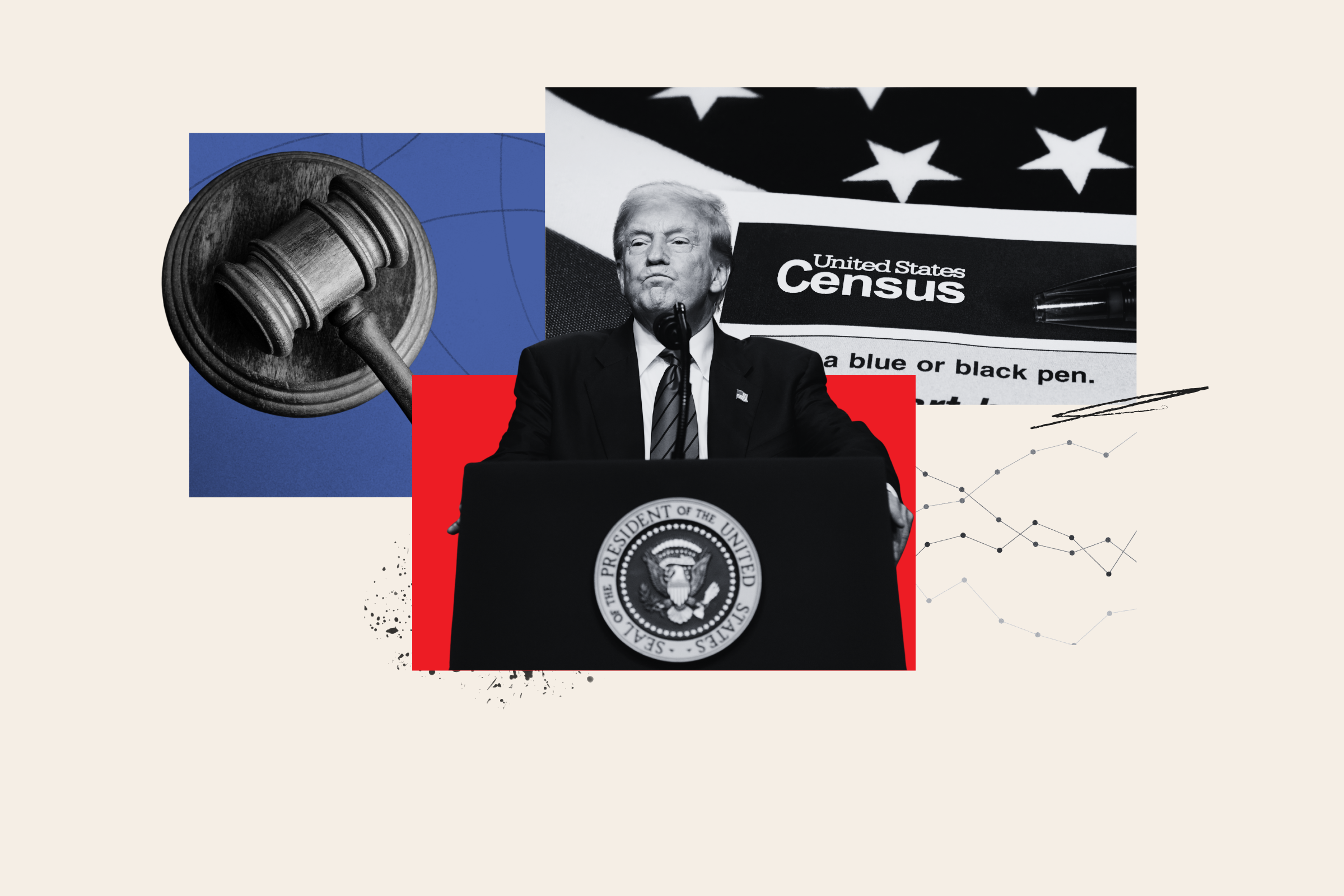
Newsweek Illustration/Getty What Does The Constitution Say?Experts say excluding undocumented immigrants from the census would violate the Fourteenth Amendment, which states that "the whole number of persons in each state" should be counted for the numbers used for apportionment—the process of allocating congressional seats and Electoral College votes among the states based on population."
Excluding undocumented immigrants from the United States Census would be unconstitutional," Jill Hasday, a professor at the University of Minnesota Law School and expert on constitutional law, told Newsweek."Section 2 of the Fourteenth Amendment provides that seats in the United States House of Representatives 'shall be apportioned among the several States according to their respective numbers, counting the whole number of persons in each State, excluding Indians not taxed.'
"Evan Bernick, an associate professor at Northern Illinois University College of Law who has authored a book on the Fourteenth Amendment, told Newsweek that "in Article I, Section 2, and then again in Section 2 of the Fourteenth Amendment, the Constitution requires the federal government to apportion congressional seats 'among the several States' based on the number of 'Persons' in each State."
He said "neither text draws any distinction between people and citizens, much less citizens and lawfully present noncitizens, on the one hand, and unlawfully present noncitizens, on the other."Gerard Magliocca, a professor at Indiana University's law school who has authored five books on constitutional law, agreed."
Persons who are here illegally are still persons," Magliocca told Newsweek. "Thus, they must be counted in the Census."Bernick said the only exception in the Fourteenth Amendment was for "Indians not taxed," explaining that the reason for this was "citizens of Native nations were generally not governed by U.
S. law on Tribal land at all."But this "is not true of unlawfully present noncitizens today, who are taxed and governed by U.S. law," he said."There are no other exceptions. And the executive branch does not have the power to create new exceptions to constitutional rules for contemporary policy reasons."
Federal courts have repeatedly supported the interpretation that the census should include everyone in the country regardless of their legal status.But the Supreme Court put off ruling on a challenge to Trump's 2020 effort to to exclude undocumented immigrants from the numbers used for apportioning congressional seats.
Lower courts had ruled the plan illegal after states, cities and organizations sued, but the high court's conservative majority threw out the case on technical grounds."We express no view on the merits of the constitutional and related statutory claims presented," the court's conservative majority said in an unsigned opinion.
"We hold only that they are not suitable for adjudication at this time."The court's three liberal justices dissented, saying they would have ruled the plan was unlawful."The plain meaning of the governing statutes, decades of historical practice, and uniform interpretations from all three branches of Government demonstrate that aliens without lawful status cannot be excluded from the decennial census solely on account of that status," Justice Stephen Breyer wrote in a dissent, joined by Justices Elena Kagan and Sonia Sotomayor."
The Government's effort to remove them from the apportionment base is unlawful, and I believe this Court should say so."Magliocca added that it was worth noting that prisoners are also included in the census."Even the worst murderers on death row," he said. "There are no exceptions based on who you are or what you did so long as you are here."
Full comments belowGerard Magliocca, a professor at Indiana University's law school"The proposal is unconstitutional. Section 2 of the Fourteenth Amendment requires 'counting the whole number of persons in each State, excluding Indians not taxed' for purposes of reapportioning the House. Persons who are here illegally are still persons.
Thus, they must be counted in the Census."It's worth adding that all prisoners within the United States are counted in the Census. Even the worst murderers on death row. There are no exceptions based on who you are or what you did so long as you are here."Evan Bernick, an associate professor at Northern Illinois University College of Law"It is unconstitutional.
In Article I, Section 2, and then again in Section 2 of the Fourteenth Amendment, the Constitution requires the federal government to apportion congressional seats 'among the several States' based on the number of 'Persons' in each State. Neither text draws any distinction between people and citizens, much less citizens and lawfully present noncitizens, on the one hand, and unlawfully present noncitizens, on the other."
Both texts contain a single exception for 'Indians not taxed,' and in both cases the historical reason for this exception was that citizens of Native nations were generally not governed by U.S. law on Tribal land at all. This is not true of unlawfully present noncitizens today, who are taxed and governed by U.
S. law. There are no other exceptions. And the executive branch does not have the power to create new exceptions to constitutional rules for contemporary policy reasons."Jill Hasday, a professor at the University of Minnesota Law School"Excluding undocumented immigrants from the United States Census would be unconstitutional.
Section 2 of the Fourteenth Amendment provides that seats in the United States House of Representatives 'shall be apportioned among the several States according to their respective numbers, counting the whole number of persons in each State, excluding Indians not taxed.' This means that the United States Census must count 'the whole number of persons in each State' so each state receives the correct number of House seats."
Source coverage
Report Provider: Newsweek
Author: Khaleda Rahman
Deeper analysis
Full source content
President Donald Trump is looking to change the way the U.S. Census Bureau collects data, wanting to exclude immigrants who are in the United States illegally.But several experts told Newsweek that excluding people living in the country without legal status from the head count used to allocate congressional seats among the states and determine how federal funding is distributed would run afoul of the U.
S. Constitution.Trump wrote on Truth Social last week that he had instructed the Department of Commerce to have the Census Bureau start work on "a new and highly accurate CENSUS based on modern day facts and figures and, importantly, using the results and information gained from the Presidential Election of 2024."
He added: "People who are in our Country illegally WILL NOT BE COUNTED IN THE CENSUS."Though any efforts to change how the census is conducted are sure to face legal challenges, Trump's directive threatens to shift the balance of political power in the country.Is Donald Trump's New Census Constitutional?
Newsweek Illustration/Getty What Does The Constitution Say?Experts say excluding undocumented immigrants from the census would violate the Fourteenth Amendment, which states that "the whole number of persons in each state" should be counted for the numbers used for apportionment—the process of allocating congressional seats and Electoral College votes among the states based on population."
Excluding undocumented immigrants from the United States Census would be unconstitutional," Jill Hasday, a professor at the University of Minnesota Law School and expert on constitutional law, told Newsweek."Section 2 of the Fourteenth Amendment provides that seats in the United States House of Representatives 'shall be apportioned among the several States according to their respective numbers, counting the whole number of persons in each State, excluding Indians not taxed.'
"Evan Bernick, an associate professor at Northern Illinois University College of Law who has authored a book on the Fourteenth Amendment, told Newsweek that "in Article I, Section 2, and then again in Section 2 of the Fourteenth Amendment, the Constitution requires the federal government to apportion congressional seats 'among the several States' based on the number of 'Persons' in each State."
He said "neither text draws any distinction between people and citizens, much less citizens and lawfully present noncitizens, on the one hand, and unlawfully present noncitizens, on the other."Gerard Magliocca, a professor at Indiana University's law school who has authored five books on constitutional law, agreed."
Persons who are here illegally are still persons," Magliocca told Newsweek. "Thus, they must be counted in the Census."Bernick said the only exception in the Fourteenth Amendment was for "Indians not taxed," explaining that the reason for this was "citizens of Native nations were generally not governed by U.
S. law on Tribal land at all."But this "is not true of unlawfully present noncitizens today, who are taxed and governed by U.S. law," he said."There are no other exceptions. And the executive branch does not have the power to create new exceptions to constitutional rules for contemporary policy reasons."
Federal courts have repeatedly supported the interpretation that the census should include everyone in the country regardless of their legal status.But the Supreme Court put off ruling on a challenge to Trump's 2020 effort to to exclude undocumented immigrants from the numbers used for apportioning congressional seats.
Lower courts had ruled the plan illegal after states, cities and organizations sued, but the high court's conservative majority threw out the case on technical grounds."We express no view on the merits of the constitutional and related statutory claims presented," the court's conservative majority said in an unsigned opinion.
"We hold only that they are not suitable for adjudication at this time."The court's three liberal justices dissented, saying they would have ruled the plan was unlawful."The plain meaning of the governing statutes, decades of historical practice, and uniform interpretations from all three branches of Government demonstrate that aliens without lawful status cannot be excluded from the decennial census solely on account of that status," Justice Stephen Breyer wrote in a dissent, joined by Justices Elena Kagan and Sonia Sotomayor."
The Government's effort to remove them from the apportionment base is unlawful, and I believe this Court should say so."Magliocca added that it was worth noting that prisoners are also included in the census."Even the worst murderers on death row," he said. "There are no exceptions based on who you are or what you did so long as you are here."
Full comments belowGerard Magliocca, a professor at Indiana University's law school"The proposal is unconstitutional. Section 2 of the Fourteenth Amendment requires 'counting the whole number of persons in each State, excluding Indians not taxed' for purposes of reapportioning the House. Persons who are here illegally are still persons.
Thus, they must be counted in the Census."It's worth adding that all prisoners within the United States are counted in the Census. Even the worst murderers on death row. There are no exceptions based on who you are or what you did so long as you are here."Evan Bernick, an associate professor at Northern Illinois University College of Law"It is unconstitutional.
In Article I, Section 2, and then again in Section 2 of the Fourteenth Amendment, the Constitution requires the federal government to apportion congressional seats 'among the several States' based on the number of 'Persons' in each State. Neither text draws any distinction between people and citizens, much less citizens and lawfully present noncitizens, on the one hand, and unlawfully present noncitizens, on the other."
Both texts contain a single exception for 'Indians not taxed,' and in both cases the historical reason for this exception was that citizens of Native nations were generally not governed by U.S. law on Tribal land at all. This is not true of unlawfully present noncitizens today, who are taxed and governed by U.
S. law. There are no other exceptions. And the executive branch does not have the power to create new exceptions to constitutional rules for contemporary policy reasons."Jill Hasday, a professor at the University of Minnesota Law School"Excluding undocumented immigrants from the United States Census would be unconstitutional.
Section 2 of the Fourteenth Amendment provides that seats in the United States House of Representatives 'shall be apportioned among the several States according to their respective numbers, counting the whole number of persons in each State, excluding Indians not taxed.' This means that the United States Census must count 'the whole number of persons in each State' so each state receives the correct number of House seats."
How this page is built
Goose Pod turns cited reporting into a public episode summary first, then pairs that summary with audio playback so listeners can check the source material before they decide how deeply to engage.
The goal is to make this page useful as a news landing page first, while still giving listeners transcript access, related episodes, and direct links back to the original publishers.