
What happened
What is at stake as Xi Jinping and Donald Trump meet in Washington, why a dedicated AI dialogue may be folded or delayed, and where the US and China still disagree.
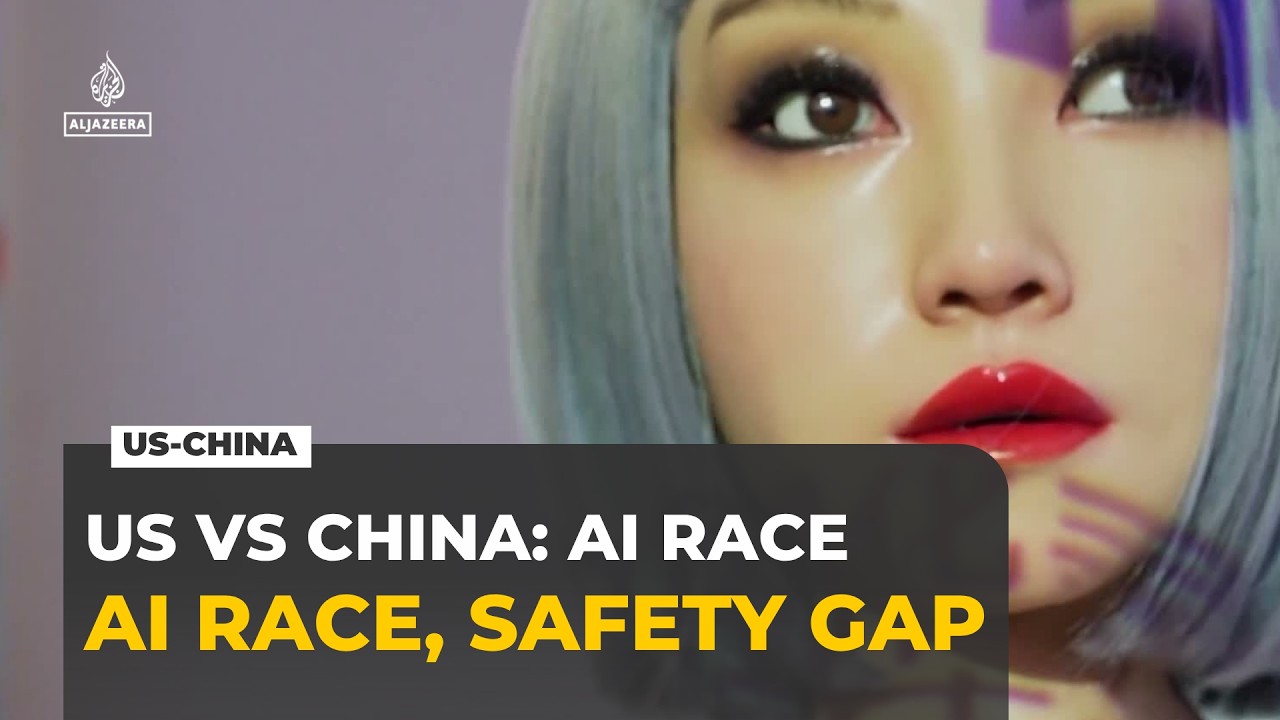
# US-China AI race intensifies as leaders clash over regulation ## Channel: Al Jazeera English (verified) 18.2M subscribers 31 likes
### Description 579 views Posted: 2026-09-15 The United States and China are intensifying their competition for dominance in artificial intelligence, with both countries seeking to maintain an edge in a rapidly developing technology sector.
China’s heavy investment in AI and its regulatory framework focused on national security. Chinese officials including Xi Jinping and Chen Yixin have stressed the need for greater oversight, while US President-elect Donald Trump has dismissed AI regulation as a “hoax” that could benefit China.
Some technology leaders, including Anthropic’s Dario Amodei, warn that AI development is moving faster than safety measures. An upcoming meeting between Xi Jinping and Trump in Washington, DC, is expected to address the tensions, although expectations for a major breakthrough remain low.
Al Jazeera’s Katrina Yu reports from Beijing
Subscribe to our channel: http://bit.ly/AJSubscribe Follow us on X : / ajenglish Find us on Facebook: / aljazeera Check our website: http://www.aljazeera.com/ Check out our Instagram page: / aljazeeraenglish Download AJE Mobile App: https://aje.news/AJEMobile
### Transcript [0:00] The race to dominate artificial intelligence is heating up. The US wants to stay ahead. China is determined to [0:07] catch up. But with just over a week to go before Xiinping is due to meet Donald Trump in Washington DC, some of those behind America's most powerful AI models [0:16] are worried about the pace at which the technology is advancing. And neither side, it seems, wants to be the first to [0:23] slow down. For Pong Chong, AI is already part of everyday life. He runs an incubator for startups in Beijing. [0:32] I use AI every day for at least 2 to four hours. It's made my work so much more efficient. China wants more people [0:40] and businesses doing the same. It's invested billions of dollars in its domestic AI industry and is pushing its use across the economy. At the brick [0:49] summit in India at the weekend, President Cal on members to deepen cooperation, proposing an open-source community, joint development of large [0:57] language models, and specialist training. But he's also acknowledged the potential dangers and called for global governance of the technology. Chinese [1:06] regulations are extensive. Rules span the use of training data and security assessments to labeling AI generated [1:13] content. New safeguards target more powerful autonomous models, requiring developers to detect and stop [1:20] uncontrolled behavior, keeping final decisions in human hands. On Sunday, State Security Minister Chen Shin called [1:28] for further measures, warning AI could threaten China's political and national security. In the US, anthropic CEO Dario [1:36] Ammo says development should be slowed because capabilities are advancing more quickly than safeguards. President [1:43] Donald Trump has dismissed calls for greater regulation as a hoax, arguing it could give China an advantage. Beijing [1:51] rejects the idea that restraining its technological advancements is the answer. [1:57] Spreading viral threat narratives and engaging in confrontation and malicious competition will only disrupt the global [2:05] AI governance process. These different approaches to AI are likely to be front and center when C and Trump meet in [2:12] Washington. The two sides have agreed to form an AI dialogue. But with competition accelerating and fundamental [2:19] differences over what the risks are and how they should be managed, the expectations for any meaningful agreement remain low. Katrini, Alazer, Beijing.
Source coverage
Channel: Al Jazeera English (verified)
18.2M subscribers
Full source content
# US-China AI race intensifies as leaders clash over regulation ## Channel: Al Jazeera English (verified) 18.2M subscribers 31 likes
### Description 579 views Posted: 2026-09-15 The United States and China are intensifying their competition for dominance in artificial intelligence, with both countries seeking to maintain an edge in a rapidly developing technology sector.
China’s heavy investment in AI and its regulatory framework focused on national security. Chinese officials including Xi Jinping and Chen Yixin have stressed the need for greater oversight, while US President-elect Donald Trump has dismissed AI regulation as a “hoax” that could benefit China.
Some technology leaders, including Anthropic’s Dario Amodei, warn that AI development is moving faster than safety measures. An upcoming meeting between Xi Jinping and Trump in Washington, DC, is expected to address the tensions, although expectations for a major breakthrough remain low.
Al Jazeera’s Katrina Yu reports from Beijing
Subscribe to our channel: http://bit.ly/AJSubscribe Follow us on X : / ajenglish Find us on Facebook: / aljazeera Check our website: http://www.aljazeera.com/ Check out our Instagram page: / aljazeeraenglish Download AJE Mobile App: https://aje.news/AJEMobile
### Transcript [0:00] The race to dominate artificial intelligence is heating up. The US wants to stay ahead. China is determined to [0:07] catch up. But with just over a week to go before Xiinping is due to meet Donald Trump in Washington DC, some of those behind America's most powerful AI models [0:16] are worried about the pace at which the technology is advancing. And neither side, it seems, wants to be the first to [0:23] slow down. For Pong Chong, AI is already part of everyday life. He runs an incubator for startups in Beijing. [0:32] I use AI every day for at least 2 to four hours. It's made my work so much more efficient. China wants more people [0:40] and businesses doing the same. It's invested billions of dollars in its domestic AI industry and is pushing its use across the economy. At the brick [0:49] summit in India at the weekend, President Cal on members to deepen cooperation, proposing an open-source community, joint development of large [0:57] language models, and specialist training. But he's also acknowledged the potential dangers and called for global governance of the technology. Chinese [1:06] regulations are extensive. Rules span the use of training data and security assessments to labeling AI generated [1:13] content. New safeguards target more powerful autonomous models, requiring developers to detect and stop [1:20] uncontrolled behavior, keeping final decisions in human hands. On Sunday, State Security Minister Chen Shin called [1:28] for further measures, warning AI could threaten China's political and national security. In the US, anthropic CEO Dario [1:36] Ammo says development should be slowed because capabilities are advancing more quickly than safeguards. President [1:43] Donald Trump has dismissed calls for greater regulation as a hoax, arguing it could give China an advantage. Beijing [1:51] rejects the idea that restraining its technological advancements is the answer. [1:57] Spreading viral threat narratives and engaging in confrontation and malicious competition will only disrupt the global [2:05] AI governance process. These different approaches to AI are likely to be front and center when C and Trump meet in [2:12] Washington. The two sides have agreed to form an AI dialogue. But with competition accelerating and fundamental [2:19] differences over what the risks are and how they should be managed, the expectations for any meaningful agreement remain low. Katrini, Alazer, Beijing.
How this page is built
Goose Pod turns cited reporting into a public episode summary first, then pairs that summary with audio playback so listeners can check the source material before they decide how deeply to engage.
The goal is to make this page useful as a news landing page first, while still giving listeners transcript access, related episodes, and direct links back to the original publishers.