This Stretching Device Pays You Real Rewards to Fix Your Posture - Yanko Design

This Stretching Device Pays You Real Rewards to Fix Your Posture - Yanko Design

2025-12-09health
--:--
--:--
Ziggy
Good evening, svhtcb2gxw. It is Tuesday, December 09th, the time is 19:57, and you’ve tuned into Goose Pod. I’m Ziggy. Tonight, we are looking at a curious intersection of sculpture, finance, and the human spine. It is a personalized audio experience, crafted just for your ears.
Holly
And I’m Holly. It is such a pleasure to be here with you, svhtcb2gxw. We are discussing a fascinating concept called Break, a stretching device that pays you real rewards to fix your posture. It sounds absolutely lovely, doesn’t it? Getting a treat just for sitting up straight.
Ziggy
It sounds almost too good to be true, doesn't it? A machine that bribes you to take care of yourself. This device, Break, isn't your standard piece of gym torture equipment. It was designed by Jeoung Jinyoung and a team of creatives to tackle the modern desk job crisis.
Holly
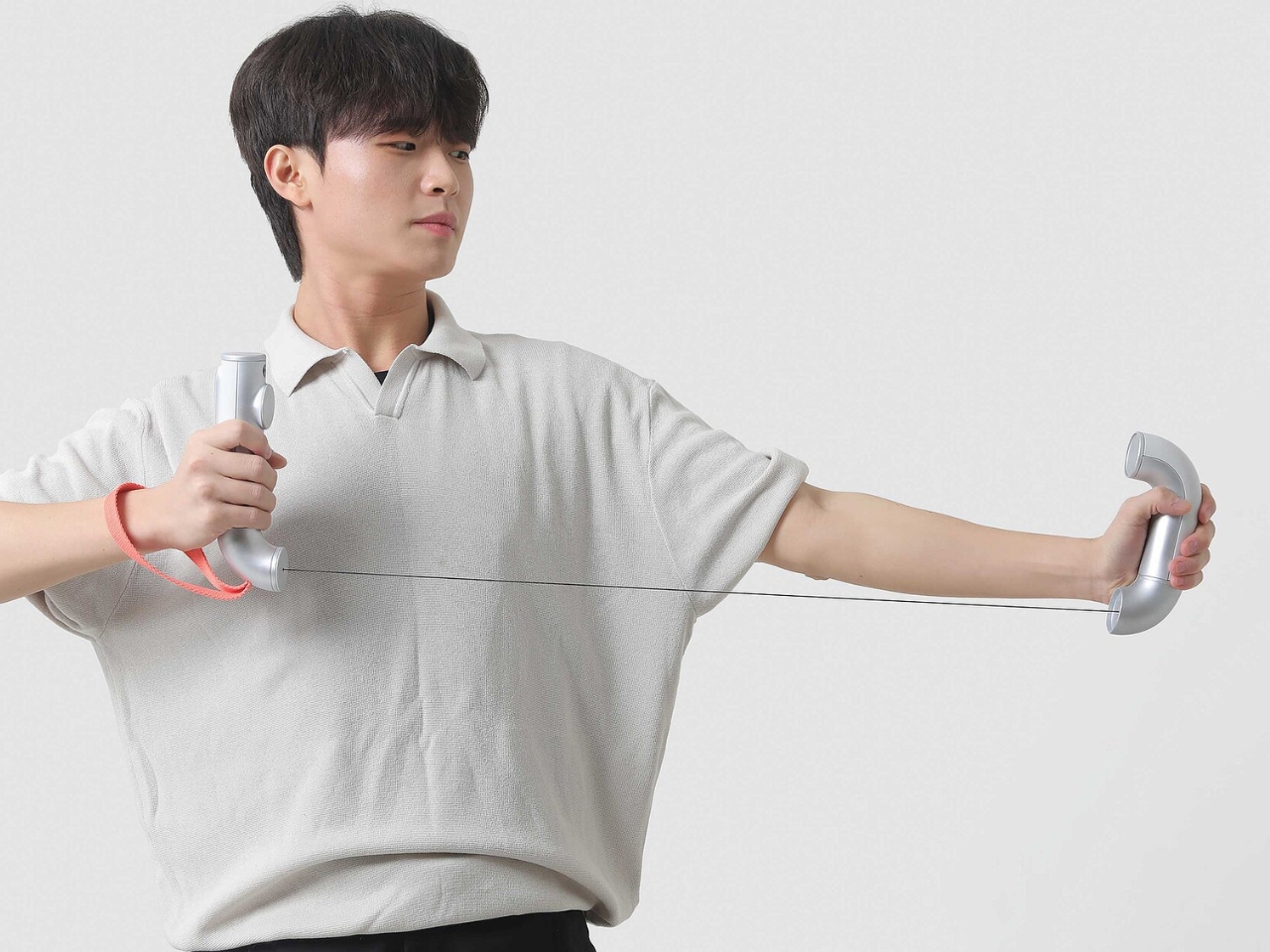
The design is what initially caught my eye. It is not aggressive or industrial. It has this curved, sculptural form, with a wire connecting two handles. It comes in soft blue and coral, which feels so refreshingly unintimidating. It looks more like a piece of modern art than a fitness tool.
Ziggy
That is the clever bit, isn't it? It disguises the work. You hold these handles, svhtcb2gxw, and the device creates resistance. But instead of just counting reps, it offers you 'quests' on a built-in screen. You are performing Y, T, and A raises, mimicking shapes to fix that dreadful tech neck.
Holly
I simply adore the idea of calling them quests. It transforms a mundane physical therapy exercise into a delightful little game. And the wire structure provides just enough resistance to engage those neglected muscles in your back and shoulders. It is like a gentle reminder to open up your chest.
Ziggy
But here is where it gets psychologically interesting. We have this memory, don't we, of fitness apps causing anxiety? You know the sort—constant notifications, shame for missing a day, the feeling that you are failing an algorithm. Break seems to flip that script entirely by offering tangible, real-world rewards.
Holly
Yes, that is the most charming part! The virtual rewards you earn from these stretching quests aren't just digital badges that sit on a screen. You can exchange them for actual goods, like a coffee or a snack. It connects the effort directly to a lovely little treat.
Ziggy
It is a fascinating loop. You stretch your neck, you get a coffee. It acknowledges that knowing sitting is bad for us isn't enough to make us stop. We need a carrot. Or in this case, perhaps a cappuccino. It monitors vitals too—heart rate, oxygen saturation—turning your body into a data stream.
Holly
It really meets people where they are, which is usually slumped over a desk, feeling tired and stressed. By making it portable and easy, it removes the barrier of entry. You don't need to change into gym clothes or drive anywhere. You just pick up this beautiful object and play a game.
Ziggy
And that gamification is key. It tracks calories and progress, sending everything to an app that becomes a wellness command center. But unlike those anxiety-inducing apps we mentioned, the end goal here is immediate gratification. It’s a transaction: my posture for your rewards. A mercenary approach to health, perhaps?
Holly
Oh, I wouldn't call it mercenary, Ziggy. I think it is supportive! It understands human nature. We need a little nudge. And if that nudge comes in the form of a soft coral device that buys me a latte, I think that is a wonderful innovation for svhtcb2gxw to consider.
Ziggy
Fair point. It is certainly better than the alternative, which is the slow ossification of our spines. The designers realized that awareness doesn't create change. Action does. And if you have to trick the brain with a game and a prize to get that action, then perhaps the ends justify the means.
Holly
It is quite revolutionary in its simplicity. Y-raises, T-raises, A-raises—simple movements that counteract the hunch of the laptop lifestyle. It is not trying to replace the gym; it is just trying to make the eight hours we spend sitting a little less damaging. A lovely ambition, truly.
Ziggy
Indeed. It is a resistance band that understands capitalism. But before we get too lost in the allure of free coffee, we should look at where this all came from. This isn't the first time we've tried to strap technology to our bodies to make us better people.
Holly
That is so true. The history of wearable health technology is richer than one might expect. It actually goes all the way back to the late 16th century with mechanical pedometers. And did you know, Ziggy, that Leonardo da Vinci even had concepts for gear-driven devices to track steps?
Ziggy
Da Vinci, of course. The man couldn't look at a bird without trying to engineer a flying machine, so naturally, he'd want to measure a walk. But the real game-changer, the moment it went pop culture, was the 1960s in Japan. The Manpo-Kei. It sounds poetic, doesn't it?
Holly
It does! It translates to the ten-thousand step meter. It was created by Dr. Iwao Ohya and Juri Kato around 1965. It is fascinating because that number—ten thousand steps—wasn't initially based on rigorous medical science, but it became the gold standard for daily activity that we still use today.
Ziggy
Exactly. It was a marketing slogan that became a health commandment. It shows the power of a simple metric. Then you jump to the 80s, and you have Polar introducing heart rate monitors. Suddenly, it wasn't just about steps; it was about the engine inside. The Quantified Self movement was born.
Holly
And that was such a breakthrough for athletes. The Polar Sport Tester PE3000 in 1984 allowed them to analyze training data on their wrists. But now, with devices like Break, we are seeing that technology shift from the elite athlete on the track to the office worker in the cubicle.
Ziggy
It is a massive shift in context. We have moved from performance optimization to damage control. The modern office is a health hazard, and the corporate world knows it. The wellness tech industry is projected to reach nearly seven trillion dollars by 2025. That is a staggering amount of money, svhtcb2gxw.
Holly
It really is. And it makes sense why companies are investing in it. A healthy workforce is a happy workforce. Trends show that sixty-six percent of HR leaders believe IoT technologies will improve physical well-being. They are looking for ways to help employees manage stress and avoid burnout.
Ziggy
It is the intersection of altruism and the bottom line. They are using AI now to predict health dangers, offering apps for mindfulness and meditation. It’s almost as if the corporation has become the new doctor, or perhaps the new parent, constantly monitoring our vitals to ensure we remain productive units.
Holly
Oh, that sounds a bit cynical, Ziggy! I like to think of it as providing resources. Things like telehealth and digital detox programs are becoming so common. It is about creating a holistic environment where people can thrive, not just survive. Apps for mental health have exploded in popularity recently.
Ziggy
They have, indeed. But consider the trajectory. We went from a mechanical gear in a pocket counting steps to a resistance band that tracks your oxygen saturation and pays you in goods. The data resolution is getting higher. We are painting a digital portrait of our own biology, pixel by pixel.
Holly
And that portrait can be very empowering! Knowing your heart rate or your calorie burn can give you a sense of control. The Break device takes all that complex history—the sensors, the tracking, the feedback loops—and wraps it in that friendly, soft blue package. It makes the technology accessible.
Ziggy
Accessible, yes. But also pervasive. The article mentioned that the most successful corporate wellness strategies support employees in every dimension. That means work is no longer just about what you produce; it's about how you sleep, how you eat, and how straight you sit. The boundaries are dissolving.
Holly
But if that leads to people feeling better, isn't it worth it? The Manpo-Kei got people walking. Break might get people stretching. The technology is just a tool to help us reconnect with our bodies, which is something we often forget to do when we are busy staring at screens.
Ziggy
A tool, or a crutch? That is the question. We have these ancient bodies designed for hunting and gathering, now stuck in ergonomic chairs, relying on a USB-charged device to tell us our shoulders are tight. It is a beautiful absurdity. We have engineered the problem, and now we are engineering the solution.
Holly
Well, life is full of little absurdities, isn't it? But I think it is marvelous that designers are paying attention to these needs. It shows a shift in values. We aren't just celebrating speed and efficiency anymore; we are starting to value balance and well-being, even in the workplace.
Ziggy
That is a valid observation. The rise of these devices parallels a rise in awareness. We know that sitting is the new smoking. We know the stats. So, in a way, Break is the physical manifestation of our collective guilt about our sedentary lives. It’s a penance we pay with sweat and Y-raises.
Holly
I prefer to see it as a celebration of movement! And with the industry growing so fast, we are going to see more and more of these innovations. It is an exciting time for svhtcb2gxw to be looking into this, as the options for personalized wellness are simply blossoming.
Ziggy
Blossoming is one word for it. Exploding is another. But as we embrace these gamified, reward-based systems, we have to ask ourselves what happens to the motivation. Does the joy of movement survive when it's tied to a leaderboard or a coupon? That is where the tension lies.
Holly
That is a very deep question. It reminds me of the research on gamified wearables. They say it can really help sedentary people, but sometimes it has the opposite effect on people who are already active. It is such a delicate balance to strike, isn't it?
Ziggy
Precisely. And that brings us to the friction point of today's discussion. When we turn our health into a game, who is actually holding the controller? Is it us, or is it the system designing the quests? Let's peel back the glossy surface of this gamified world.
Ziggy
So, we have established that gamification is the engine here. But svhtcb2gxw, we need to talk about the concept of 'Dark Patterns.' These are design choices that leverage psychology to drive behavior, sometimes against our best interests. It's the grinding mechanics, the FOMO, the artificial scarcity.
Holly
It is a bit worrying when you put it that way. We want these devices to help us, not to trick us. I read that ethical gamification requires autonomy. Users must have a genuine choice. If a device uses fear or social pressure to make you stretch, that doesn't feel very wellness-oriented.
Ziggy
Exactly. Imagine a scenario where your office leaderboard is public. You see your colleagues racking up points with their Break devices, and you are at the bottom. Suddenly, stretching isn't about your spine; it's about social survival. It shifts the motivation from internal health to external validation.
Holly
Oh, the pressure of the leaderboard! There was a study about Fitbit users that showed highly active people actually walked fewer steps when placed on a leaderboard because the competition demotivated them. It just shows that one size does not fit all when it comes to motivation.
Ziggy
It is the paradox of measurement. And then there is the surveillance aspect. The 'Panopticon' of the workplace. If this data goes to an app, and that app is connected to your employer's wellness program, does your boss know you haven't done your Y-raises today?
Holly
That is a frightfully uncomfortable thought. The line between encouragement and coercion can be so blurry. If getting a bonus or lower insurance premiums depends on using the device, is it really voluntary? It feels like we might be losing a bit of our privacy in exchange for these rewards.
Ziggy
Surveillance capitalism, plain and simple. Your body becomes a data asset. The article mentioned that workers can become 'cyborgs,' with wristbands tracking fatigue and heat. It starts as safety, but it can easily become a tool to see how far a worker can be pushed before they break.
Holly
We must hope that designers adhere to the principles of beneficence and non-maleficence. They need to prevent harm. But even with good intentions, there is the risk of addiction. If we are only moving to get the digital badge or the free coffee, are we losing the intrinsic joy of simply being in our bodies?
Ziggy
That is the artistic tragedy of it. The 'hollowfication' of experience. If I go for a walk in the rain, I want to feel the rain, not check if I hit my step count. Break offers real rewards, which is clever, but it reinforces the idea that health is a transaction, not a state of being.
Holly
But Ziggy, for someone who is in pain, who is stuck at a desk for ten hours, maybe that transaction is the lifeline they need? If the choice is between chronic pain and a gamified stretch, surely the game is the lesser of two evils? It could be the spark that starts a habit.
Ziggy
A valid counterpoint. For the 'health strugglers' mentioned in the data, those who want to be healthy but can't find the motivation, this gamification is a bridge. It is just a matter of whether they can ever cross that bridge and leave the device behind, or if they are stuck paying the toll forever.
Holly
And we must consider the data privacy laws. In the US, HIPAA protects some things, but consumer health data is often in a gray zone. If svhtcb2gxw uses a device like Break, who owns that data? Is it the user, the hardware company, or the merchant providing the coffee?
Ziggy
Precisely. You are paying for the coffee with your biometric identity. It is a new currency. And as these devices get more advanced, tracking oxygen and heart rate variability, that data becomes incredibly intimate. It is not just how much you move; it is how you feel, biologically speaking.
Holly
It is a lot to think about. We want the wellness, the beautiful posture, and the relief from pain. But we have to navigate this complex web of data, ethics, and motivation. It makes the simplicity of just stretching on your own seem almost radical, doesn't it?
Ziggy
Radical indeed. To move without being tracked is the new rebellion. But let's look at the sheer scale of this. Why are companies pushing this so hard? It turns out, fixing your posture isn't just good for your neck; it is potentially worth trillions to the global economy.
Holly
The numbers are truly astronomical. The McKinsey Health Institute estimates that enhanced employee health could generate up to eleven point seven trillion dollars in global economic value. That is trillion with a T! It is incredible to think that better health translates so directly into economic power.
Ziggy
It puts the price of a 'Break' device into perspective. If a company spends a few hundred on a gadget and saves thousands in lost productivity, absenteeism, and healthcare costs, it is a no-brainer investment. A healthy worker is a profitable worker. It is the industrialization of well-being.
Holly
And it is not just about avoiding costs. It is about unlocking potential. They say well-being is the ultimate productivity multiplier. When people feel good, they are more creative, more engaged. It ripples out to their families and communities too. It is a lovely cycle of positivity.
Ziggy
There is a demographic shift driving this too. Gen Z and Millennials are rewriting the rules. They don't view wellness as a luxury; they view it as a daily practice. They are the 'Maximalist Optimizers,' spending money on functional nutrition and sleep apps. Break is tailor-made for them.
Holly
Yes, the data shows that younger generations are prioritizing wellness much more than older ones. They are willing to experiment with new products. For svhtcb2gxw, this means the market is going to be flooded with high-quality, beautifully designed tools because the demand is so high.
Ziggy
It changes the social contract of employment. It used to be 'a fair day's wage for a fair day's work.' Now it's 'a fair day's wage plus mental health support, ergonomic interventions, and digital detox access.' If a company doesn't offer these things, they risk losing the best talent.
Holly
And that is a wonderful pressure to put on employers. It forces them to care. Companies with higher well-being scores actually achieve greater valuations and profits. So, doing the right thing for people's bodies is actually the smart thing for business. It is a happy convergence of interests.
Ziggy
For once, capitalism and humanism might be walking in the same direction, even if they are checking their step counters while they do it. But the impact on the individual is profound. It validates the pain of office work. It says, 'Your back pain is real, and it matters.'
Holly
That validation is so important. We have normalized being in pain at work for too long. Devices like Break, by offering rewards, signal that taking care of yourself is a valuable activity. It gives permission to stop, to breathe, and to stretch. It changes the culture of the office.
Ziggy
It does. But as we look forward, this is just the tip of the iceberg. If Break is what we have today—a controller with a screen—what happens when the technology disappears into the fabric of our lives? What does the future of this 'Smart Wellness' actually look like?
Holly
The future seems to be heading towards a highly interconnected ecosystem. We are moving beyond standalone devices to 'Smart Wellness' where everything talks to everything else. Imagine your chair, your watch, and your lighting all working together to optimize your health. It sounds like science fiction, but it is coming.
Ziggy
AI is the ghost in that machine. We are going to see AI-powered coaching that is far more sophisticated than a simple 'quest.' It will know you are stressed before you do, based on your heart rate variability, and might subtly adjust your environment or suggest a specific stretch.
Holly
Personalization is the key word here. The future isn't one-size-fits-all. It is nutrition plans, mental wellness apps, and exercise routines tailored exactly to your biology. It is so exciting to think that svhtcb2gxw could have a wellness program that is as unique as a fingerprint.
Ziggy
It is a fascinating prospect. But I wonder if we will reach a saturation point. Will we eventually reject the constant monitoring and crave a 'dumb' wellness? A return to intuition? Or will we merge so completely with the tech that we can't function without it?
Holly
I like to be optimistic! I think the technology will become invisible. It won't be a burden; it will just be a supportive background layer. Devices will have medical-grade accuracy and last for weeks without charging. It will just be there to catch us when we fall, or hunch.
Ziggy
An invisible safety net for our posture. I can live with that. As long as the rewards keep coming, I suppose. If the future pays me in coffee to stay healthy, I might just sign up for the cyborg lifestyle after all. It’s a brave new world of wellness.
Ziggy
So, there we have it. The Break device. A colorful, gamified bridge between our sedentary reality and a healthier future. It turns the boring task of posture correction into a profitable little side quest. Thank you for lending us your ears, svhtcb2gxw.
Holly
It has been absolutely delightful exploring this with you. I hope you feel inspired to take a little stretch, even if you don't get a digital reward for it just yet. Thank you for listening to Goose Pod. We shall speak again soon.
Ziggy
Take care of that spine. See you tomorrow.

This podcast explores "Break," a sculptural stretching device rewarding users for posture correction. It gamifies exercises, offering tangible rewards like coffee, transforming health into a transaction. The discussion delves into the history of wellness tech, corporate wellness trends, and the ethical implications of gamification and data surveillance, questioning the balance between motivation and control.

This Stretching Device Pays You Real Rewards to Fix Your Posture - Yanko Design

Read original at Yanko Design

You know that feeling when you’ve been hunched over your laptop for three hours straight and your shoulders are basically living rent-free up by your ears? That tightness in your neck that no amount of rolling your head around seems to fix? Yeah, we all do. The modern office worker’s body is basically staging a protest, and honestly, it has every right to.

Enter Break, a wellness device that’s part fitness tracker, part game controller, and part intervention for your increasingly sedentary existence. Designed by Jeoung Jinyoung, Lee Jonghyun, Yang Junhong, and Lee Junyoung, this Red Dot award-winning concept tackles the desk job health crisis with a surprisingly playful approach.

The device itself looks like nothing you’ve seen before. It has this curved, almost sculptural form with a wire connecting two handle-like pieces. Think of it as a resistance band met a piece of modern art and they decided to help you fix your posture. The sleek design in soft blue and coral feels refreshingly un-intimidating, which is kind of the point.

This isn’t gym equipment that’ll gather dust in your closet while silently judging you. It’s meant to be portable, accessible, and actually used. Designers: Jeoung Jinyoung, Lee Jonghyun, Yang Junhong, Lee Junyoung Here’s where it gets interesting. Break doesn’t just sit there looking pretty. It actively encourages you to do specific stretches that target the exact problems desk workers face.

Those rounded shoulders from hovering over your keyboard? The dreaded text neck from staring at your phone? The device prompts you with what it calls “quests” for exercises like Y/T/A raises, delivered right on its built-in screen. You’re basically doing physical therapy, but the gamification makes it feel less like a chore and more like, well, a game.

The wire structure facilitates these movements, giving you the resistance you need to actually work those neglected muscle groups. You hold the handles, stretch in different positions, and the device tracks your progress. It’s simple enough that you don’t need a YouTube tutorial to figure it out, but effective enough that you’ll actually feel the difference.

But Break goes beyond just being a stretching tool. It’s also monitoring your vitals with built-in sensors. Heart rate, oxygen saturation, calories burned, the whole package. This data gets sent to the accompanying app, which transforms your phone into your wellness command center. The more you use Break, the more detailed health information you receive, creating this feedback loop that actually motivates you to keep going.

And here’s the kicker that makes this concept particularly clever: those virtual rewards you earn from completing physical quests? They’re not just digital badges collecting virtual dust. You can exchange them for actual goods or services from real merchants. Suddenly, taking a break from your spreadsheet to do some shoulder stretches isn’t just good for your health, it’s also getting you closer to that coffee you’ve been craving or whatever else the reward system offers.

The genius of Break lies in understanding that knowing you should exercise isn’t enough. We all know sitting is the new smoking. We’re all aware our posture is terrible. But awareness doesn’t create change. What does? Making it easy, making it fun, and giving tangible rewards. Break tackles all three.

The design team behind this clearly understands that modern wellness solutions can’t just lecture people into being healthy. They need to meet users where they are, which is usually at a desk, probably tired, definitely stressed, and not particularly motivated to add one more thing to their to-do list.

By integrating seamlessly into the workday, requiring minimal time investment, and gamifying the experience, Break removes most of the barriers that keep office workers chained to their chairs. Is Break going to replace your gym membership? Probably not. But it might be the thing that gets you moving when you otherwise wouldn’t.

It might be the intervention your shoulders have been begging for. And in a world where we’re all increasingly aware of the toll our digital lives take on our physical bodies, having a beautifully designed tool that makes wellness feel achievable is pretty refreshing.

Analysis

Conflict+
Related Info+
Core Event+
Background+
Impact+
Future+

Related Podcasts