

What happened
This podcast episode delves into the escalating competition between SpaceX and Blue Origin, focusing on the recent success of Blue Origin's New Glenn rocket. The discussion highlights New Glenn's superior payload capacity, reliability, and cost-effectiveness compared to SpaceX's Starship and Falcon Heavy. The...
“Work hard in silence; let your success be the noise” is a phrase Elon Musk has never heard. Everything he does is spectacle over substance. It is all about the hype and perception of a thing, not whether it will actually work. You can see this with the Hyperloop, FSD, Grok, the Cybertruck, and the Tesla Bot.
But there is no greater display of this than Starship. It is a spectacle on a scale never seen before, yet even after so many launches, it has failed in almost every conceivable way. By comparison, Jeff Bezos’s Blue Origin has definitely heard this phrase. They have been astonishingly quiet about their latest rocket, New Glenn.
In fact, they have only just conducted their second-ever launch. However, the astounding success of that launch should give SpaceX a few sleepless nights, as it perfectly demonstrates that Blue Origin is preparing to leapfrog SpaceX.So, let’s look at the details of this incredible launch.New Glenn’s previous launch was a partial success, placing a prototype satellite into medium-Earth orbit but failing to land its reusable first stage.
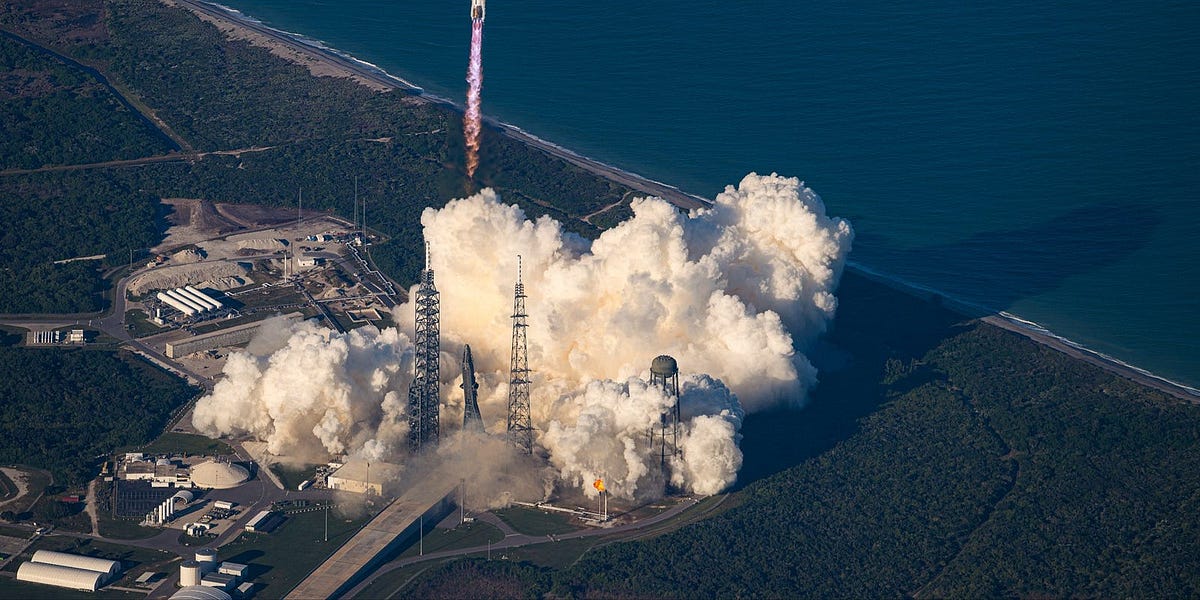
However, getting a payload into orbit on their first attempt was so damn impressive that NASA greenlighted the launch of their twin-probe ESCAPADE Mars mission on the next New Glenn flight.On November 13th, New Glenn successfully launched and delivered the ESCAPADE probes on their journey to Mars without a hitch and perfectly landed the first stage, proving New Glenn is a highly competent and economically viable launch vehicle.
Blue Origin’s Ariane Cornell phrased it best during the launch stream when she said, “We are open for business, baby, on New Glenn!”But why should SpaceX be scared? Their Starship is a very different and far larger rocket, meaning that they aren’t competitors. Right?Well, don’t forget that Starship was supposed to have 100+ tons of payload capacity to Low Earth Orbit (LEO) from the get-go, yet even after iterating the design over more than ten launches, it currently sits at less than 35 tons to LEO, which is ten tons less than New Glenn.
Musk has recognised that Starship needs a complete redesign, so he is launching unplanned Versions 2 and 3 of Starship soon and has claimed that they will have payloads of 150 tons and 200 tons to LEO, respectively. However, there is absolutely no reason to trust these claims. What’s more, even after 11 test flights, no Starship has ever even reached orbit, let alone placed a payload into orbit.
So, while they might seem like very different rockets for very different uses, that isn’t true. As it stands, New Glen has a much larger payload and is significantly more capable and reliable.And what if I told you that New Glenn is cheaper than anything SpaceX has to offer?NASA paid New Glenn $20 million for this launch, though some sources estimate the price at $55 million.
That means New Glen costs $444 to $1,222 per kg to LEO (with its 45-ton payload to LEO).SpaceX’s closest working competitor is the Falcon Heavy. SpaceX tends to hide and underestimate launch costs; for example, they still quote the fully reusable price for a Falcon Heavy launch, even though none have launched with that setup in six years, and none are scheduled to either.
But the Falcon Heavy recently launched NASA’s Europa Clipper mission to Jupiter, which is a comparable contract to the ESCAPADE launch, giving us a verified comparison point. NASA handed SpaceX $178 million for this launch. In this partially “expendable” configuration, Falcon Heavy has a payload to LEO of 57 tons, meaning a price tag of $3,122 per kg to LEO.
So, SpaceX’s Falcon Heavy is around three times as expensive as New Glenn!Okay, so what about Starship?
Source coverage
Author: Will Lockett
Publication Date: November 19, 2025
Deeper analysis
Full source content
“Work hard in silence; let your success be the noise” is a phrase Elon Musk has never heard. Everything he does is spectacle over substance. It is all about the hype and perception of a thing, not whether it will actually work. You can see this with the Hyperloop, FSD, Grok, the Cybertruck, and the Tesla Bot.
But there is no greater display of this than Starship. It is a spectacle on a scale never seen before, yet even after so many launches, it has failed in almost every conceivable way. By comparison, Jeff Bezos’s Blue Origin has definitely heard this phrase. They have been astonishingly quiet about their latest rocket, New Glenn.
In fact, they have only just conducted their second-ever launch. However, the astounding success of that launch should give SpaceX a few sleepless nights, as it perfectly demonstrates that Blue Origin is preparing to leapfrog SpaceX.So, let’s look at the details of this incredible launch.New Glenn’s previous launch was a partial success, placing a prototype satellite into medium-Earth orbit but failing to land its reusable first stage.
However, getting a payload into orbit on their first attempt was so damn impressive that NASA greenlighted the launch of their twin-probe ESCAPADE Mars mission on the next New Glenn flight.On November 13th, New Glenn successfully launched and delivered the ESCAPADE probes on their journey to Mars without a hitch and perfectly landed the first stage, proving New Glenn is a highly competent and economically viable launch vehicle.
Blue Origin’s Ariane Cornell phrased it best during the launch stream when she said, “We are open for business, baby, on New Glenn!”But why should SpaceX be scared? Their Starship is a very different and far larger rocket, meaning that they aren’t competitors. Right?Well, don’t forget that Starship was supposed to have 100+ tons of payload capacity to Low Earth Orbit (LEO) from the get-go, yet even after iterating the design over more than ten launches, it currently sits at less than 35 tons to LEO, which is ten tons less than New Glenn.
Musk has recognised that Starship needs a complete redesign, so he is launching unplanned Versions 2 and 3 of Starship soon and has claimed that they will have payloads of 150 tons and 200 tons to LEO, respectively. However, there is absolutely no reason to trust these claims. What’s more, even after 11 test flights, no Starship has ever even reached orbit, let alone placed a payload into orbit.
So, while they might seem like very different rockets for very different uses, that isn’t true. As it stands, New Glen has a much larger payload and is significantly more capable and reliable.And what if I told you that New Glenn is cheaper than anything SpaceX has to offer?NASA paid New Glenn $20 million for this launch, though some sources estimate the price at $55 million.
That means New Glen costs $444 to $1,222 per kg to LEO (with its 45-ton payload to LEO).SpaceX’s closest working competitor is the Falcon Heavy. SpaceX tends to hide and underestimate launch costs; for example, they still quote the fully reusable price for a Falcon Heavy launch, even though none have launched with that setup in six years, and none are scheduled to either.
But the Falcon Heavy recently launched NASA’s Europa Clipper mission to Jupiter, which is a comparable contract to the ESCAPADE launch, giving us a verified comparison point. NASA handed SpaceX $178 million for this launch. In this partially “expendable” configuration, Falcon Heavy has a payload to LEO of 57 tons, meaning a price tag of $3,122 per kg to LEO.
So, SpaceX’s Falcon Heavy is around three times as expensive as New Glenn!Okay, so what about Starship?
How this page is built
Goose Pod turns cited reporting into a public episode summary first, then pairs that summary with audio playback so listeners can check the source material before they decide how deeply to engage.
The goal is to make this page useful as a news landing page first, while still giving listeners transcript access, related episodes, and direct links back to the original publishers.

