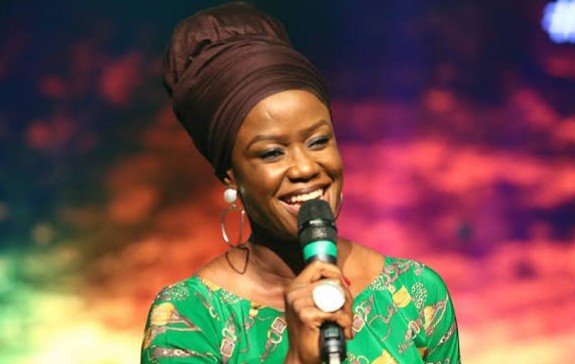
Sola Allyson: Why I converted from Islam to Christianity - TheCable Lifestyle

Sola Allyson: Why I converted from Islam to Christianity - TheCable Lifestyle

2025-12-09Islam
--:--
--:--
Elon
Good morning sacha4pub, I'm Elon, and this is Goose Pod for you. Today is Wednesday, December 10th. We are breaking down a fascinating pivot in personal ideology, focusing on Sola Allyson: Why I converted from Islam to Christianity. It is a story of disruption.
Taylor
And I'm Taylor! We are diving into a narrative that is honestly so rich with cultural texture and personal discovery. It is not just a conversion story, sacha4pub, it is about finding your own voice amidst the noise. Let's get into this.
Elon
Right, let's look at the core mechanism here. Sola Allyson, a prominent Nigerian gospel singer, shifted from Islam to Christianity. But she explicitly rejects the standard narrative of rebellion. She calls it a result of exposure and curiosity. It is an optimization of her own spiritual software, not a bug in her upbringing.
Taylor
Exactly, and the way she frames it is just poetic. She uses this Yoruba phrase, "ÀÌGBỌDỌ̀MÁRÌN," which roughly translates to a walk that one must walk alone, or an unconventional path. It is like she realized her character arc was encoded differently from the start. She wasn't pushed; she was pulled by genuine encounters.
Elon
That concept of "encoded" is crucial. She mentions moving from Ijebu-Ode, where the environment was predominantly Islamic, to Ikorodu in Lagos. That geographical shift changed her input variables. She went from a disciplined routine of Islamic prayers to experiencing church worship with a friend. It is classic environmental conditioning leading to a new output.
Taylor
But she never discarded her origin story, which I love. She says she still loves her birth name, Rasheedat. It is not a retcon of her past; it is a sequel. She talks about the loneliness of this path, describing it as an "ìgbó ÀÌGBỌDỌMÁWỌ́," a forest one must enter alone. It is such a vivid image of the hero's journey.
Elon
It sounds like a high-stakes solo mission. She admitted learning the hard way that you cannot fix people or fit them into your framework. That is a lesson in pragmatism. She stopped trying to optimize others to match her new configuration. She realized her internal operating system was just "too much" to squeeze into someone else's hardware.
Taylor
Oh, totally. She said she stopped trying to "fix" anyone. That is a massive plot point in her life. She credits "Grace and Help from Above" for getting her through that isolation. Now she is releasing work like "ṢÈ’MỌ́LẸ̀" to help others, essentially sharing the map she created while being lost in that forest.
Elon
It is interesting that she views her conversion not as a rejection of Islam but as a natural evolution based on data she gathered from her environment. She maintains respect for the discipline of her Muslim household. It creates a much more nuanced discussion than the typical binary conflict we usually see in religious shifts.
Taylor
It really does. It is less about "this side vs. that side" and more about "where does my soul fit?" She emphasizes that average minds might not comprehend her expression because they are looking for easy answers wrapped in ego. She is writing a complex novel while everyone else is reading a pamphlet.
Elon
To understand the gravity of this, we need to look at the background data. Sola Allyson was born in the early 1970s in Ikorodu. She started as a backup singer in the late 80s. Her breakout moment was the album *Eji Owuro* in 2003. She is not a novice; she is a deeply established figure in the Nigerian music industry.
Taylor
*Eji Owuro* was a cultural reset! It was a soundtrack for a film, and it launched her into the stratosphere. But think about the setting, Elon. Nigeria has this intense religious duality. She was born into a Muslim family, and now she is a Gospel icon. That crossover appeal is incredibly rare and difficult to navigate.
Elon
The demographics make this even more volatile. Historically, Nigeria has been split. In 1953, Muslims were about 45 percent of the population. By 2010, it was roughly a 49-49 split between Christians and Muslims. But here is the critical metric: fertility rates are diverging. The gap between Christian and Muslim birth rates has widened significantly since 1990.
Taylor
Wait, so the population balance is shifting just based on family size? That adds so much pressure to the cultural narrative. If the numbers are shifting, then a public figure crossing that line becomes a symbol of something much bigger than just personal faith. It becomes political, almost.
Elon
Precisely. In 1999, twelve northern states institutionalized Sharia law. That created a distinct legal and cultural boundary. The fertility rate in those Sharia states is over 7 children per woman, compared to lower numbers in the South. So when Sola converts, she is moving against a massive demographic current. It is a disruption of the established pattern.
Taylor
And yet, she navigates it with such grace. Her music is classified as Folk, Soul, and religious. She met her husband, Toyin Obaniyi, in a church choir. So her romantic and professional life became deeply intertwined with this new identity. It is like her life soundtrack shifted from the call to prayer to choral harmonies.
Elon
The educational gap is another factor. The data shows a massive disparity in years of schooling between women in the North and South, largely driven by these religious and cultural systems. Sola representing a successful, educated, independent woman making her own theological choice is a powerful signal in that specific market.
Taylor
It is the ultimate empowerment arc. She took the discipline she learned from her Muslim upbringing—the routine, the prayers—and applied it to her Christian walk. She mentions researching her name "Rasheedat" as a girl to understand it. She has always been a researcher of her own identity, hasn't she?
Elon
She operates from first principles. She didn't just accept the default settings of her environment. She questioned, tested, and iterated. That is what makes her background so compelling. It is not just "I changed religions." It is "I analyzed my inputs, moved to a new location, and updated my worldview."
Taylor
And that connects back to the broader Nigerian context. You have these rigid structures—Sharia in the North, English law in the South—and she is fluidly moving between the cultural markers of both. She is like a bridge character in a story where the two worlds are drifting apart.
Elon
The friction is real, though. With the U.S. designating Nigeria a "country of particular concern" regarding religious freedom at times, and tensions over sectarian violence, her peaceful transition is a counter-narrative. She is proving that the interface between these two massive systems can be handled with individual agency rather than conflict.
Taylor
That is a beautiful way to put it. She is a living Easter egg for peace. In a massive, complex history of colonial rule, fertility stats, and legal battles, here is one woman singing soulful folk music and saying, "I choose my own path." It grounds all that heavy history into one human heart.
Elon
However, it is not all smooth sailing. There is a specific conflict regarding her product—her music. Sola has faced scrutiny because she rarely mentions the name "Jesus" explicitly in her lyrics. In the Gospel genre, that is usually a non-negotiable requirement. It is like selling a Tesla without the 'T' logo. People get confused.
Taylor
Oh, I love that she does that! It creates this mystery. She explained that she broke her silence on this to say her lyrical choices are intentional. It fits her "unconventional" brand. She isn't trying to hit the standard keywords; she is trying to convey a feeling. But I can see why the gatekeepers would be annoyed.
Elon
It is a branding risk. If you are in the "Gospel" vertical, the market expects specific deliverables. By omitting the central figure's name, she risks alienating her core user base. But she argues that religion is a personal relationship. She even echoes Ayuba's sentiment that Muslims and Christians worship the same God.
Taylor
That is the "universalist" plot twist. She defends her friendship with people like Lateef Adedimeji, a Muslim actor. She says, "Religion can't separate us." She is actively fighting against the tribalism we discussed earlier. She is refusing to let the external conflict dictate her internal narrative or her relationships.
Elon
That refusal to "fix" others is the key conflict resolution for her. She mentioned trying to fit into others' spaces and finding it impossible. The conflict wasn't just with the public; it was internal. She had to stop trying to optimize other people's lives. That is a hard lesson for anyone with high standards.
Taylor
It is the classic "I can change him" trope, but applied to theology! She realized she couldn't squeeze herself into a box that wasn't hers, and she couldn't force others into her box. It is a moment of radical acceptance. But in a polarized society, sitting on the fence or building a bridge often gets you shot from both sides.
Elon
True. And considering the U.S. has flagged Nigeria for religious freedom violations and potential violence against Christians, her stance is actually quite brave. She is operating in a high-risk environment. Taking a moderate, nuanced stance in a polarized zone is statistically the most dangerous position to hold.
Taylor
She is rewriting the genre rules. By not saying "Jesus" in every line, she might actually be making her music more accessible to her Muslim fans from her past. She is keeping the door open. It is a brilliant, if controversial, storytelling device. She is blurring the lines that everyone else is trying to sharpen.
Elon
Let's look at the impact. Her career began in 1997 at a Celestial Church of Christ. By blending Folk, Soul, and religious themes, she has created a unique product market fit. She is not just a singer; she is a cultural artifact. Her music acts as a soft power tool in this religious divide.
Taylor
Soft power is the perfect term. She is influential. Think about the Nigerian music industry—it is projected to hit huge numbers, millions of dollars in revenue. For her to maintain this unique, "bridge-building" persona in such a booming, competitive market shows that authenticity sells. People are hungry for something that isn't just a copy-paste formula.
Elon
And she is leveraging that influence. She mentioned her new work "ṢÈ’MỌ́LẸ̀" is on digital platforms. She is using modern distribution to scale her personal philosophy. The impact is that she provides a model for other Nigerians who might feel trapped between these two massive religious identities. She validates the "seeker" demographic.
Taylor
She really does. And looking at the broader creative industry in Africa, stories like hers are what give the music depth. It is not just about the beat; it is about the backstory. She is adding intellectual and emotional capital to the Nigerian music scene. She is proving you can be successful without being a caricature.
Elon
She also challenges the "us versus them" mentality. By publicly defending her interfaith friendships, she is reducing the friction coefficient in society. If a top Gospel singer can be best friends with a Muslim actor, it sends a signal to the fanbase that coexistence is possible. That is a tangible societal impact.
Taylor
It is character development for the whole nation, honestly. She is showing that your past (Islam) and your present (Christianity) don't have to be enemies. They can be chapters in the same book. That integration is so healthy, and I think her music carries that healing frequency.
Elon
Looking ahead, this trend of religious fluidity seems to be accelerating or at least becoming more visible. We have seen Burna Boy, a massive global star, discuss converting from Christianity to Islam. He says he is "still out here trying to find what's really going on." It is the same search for truth, just a different vector.
Taylor
That comparison is so spot on! Burna Boy going one way, Sola Allyson going the other. It shows that the future of faith in Nigeria might be more fluid. It is less about inheritance and more about discovery. People are treating religion like a playlist—curating what resonates with their soul.
Elon
It is the marketplace of ideas in action. As information flow increases, people will naturally seek configurations that optimize their wellbeing. Sola's future seems to be deepening this "unconventional" path. She is not reverting to the mean. She is continuing to innovate on her spiritual interface. I expect her next works to be even more philosophical.
Taylor
I agree. I think we will see her lean even harder into that "ÀÌGBỌDỌ̀MÁRÌN" concept. She might become a mentor figure for this new generation of seekers. The future is definitely about authenticity over conformity. And honestly, I can't wait to see what kind of art comes out of that freedom.
Elon
It is a fascinating case study in autonomy. That's the end of today's discussion. Thank you for listening to Goose Pod. See you tomorrow, sacha4pub.
Taylor
Thanks for tuning in! Keep walking your own path, even if you have to walk it alone sometimes. Bye!

This podcast explores Sola Allyson's conversion from Islam to Christianity, framing it not as rebellion but as personal discovery and spiritual evolution. It highlights her unique path, embracing her past while forging a new identity. The discussion emphasizes her nuanced approach to faith, bridging religious divides and advocating for individual agency in a complex cultural landscape.

Sola Allyson: Why I converted from Islam to Christianity - TheCable Lifestyle

Read original at TheCable Lifestyle

Analysis

Conflict+
Related Info+
Core Event+
Background+
Impact+
Future+
Sola Allyson: Why I converted from Islam to Christianity - TheCable Lifestyle | Goose Pod | Goose Pod