

What happened
This article, published on July 25, 2025, by Andria Wu, Strategy Director and China Team Lead at Media.Monks, explores a significant cultural shift where Chinese influence is increasingly shaping global aspirations, challenging the long-held dominance of American culture. Wu, an American-born Chinese, shares her...
Key Findings and Conclusions:
Key Statistics and Metrics:
Monks China’s Andria Wu is a strategy director between two worlds. Recently, she’s been feeling a greater pull from the east. Have you?As an American-born Chinese growing up in the 90s, the single worst thing you could have called me was a “FOB”.Short for “Fresh Off the Boat,” it was someone who had just come from China, rude, uncultured, painfully awkward in their tacky clothes and broken English.
Being called a FOB felt like a social death sentence because I learned early on that being cool could only mean one thing - being American.And it makes sense.For decades, American culture had single-handedly defined global youths’ aspirations. No matter the country, we all bought iPhones, watched Friends, and sipped Starbucks, not necessarily because they were the best, but because we were subscribing to the American dream.
Want to go deeper? Ask The DrumAnd we all wanted in on this American dream.Years later, I made a career selling that very dream to the world. As an advertising strategist in NYC, my job was to package and ship the aspiration of “American Cool” to global audiences everywhere. I checked all the boxes as the “hot new demographic” (millennial, creative, urban) at the time, so doing this felt intuitive.
After all, it was a narrative I’d spent my whole life painstakingly studying and internalizing.However, as with many millennials in the late 2010s, cracks in the American dream began to show. Xenophobia grew louder. Suddenly, “Go back to your country,” a taunt I’d heard since childhood, didn’t sound like such a bad idea.
So for the first time in my life, I set foot in China.What I found wasn’t what I expected.I landed in a China I’d never seen depicted in American media.What amazed me wasn’t just the creative scene, but the people behind it—filmmakers, designers, and digital artists expressing their culture in ways that felt truly original, whose creativity flourished not despite, but because of their constraints.
Whose sophisticated visual languages and metaphors made their art so uniquely layered and compelling.Working in advertising in Shanghai, strategy no longer felt intuitive, but it was infinitely more interesting. I saw firsthand how global brands coming into China had to unlearn everything they knew because Chinese youth weren’t following the western playbook.
They were defining their own. And now, the rest of the world is starting to catch on.Suggested newsletters for youDaily BriefingDailyCatch up on the most important stories of the day, curated by our editorial team.Weekly MarketingFridayStay up to date with a curated digest of the most important marketing stories and expert insights from our global team.
The Drum InsiderOnce a monthLearn how to pitch to our editors and get published on The Drum.Unlike previous generations who worshipped Hollywood stars and American brands, today’s youth, raised on the internet, are increasingly looking eastward.One of its biggest driving forces is social media, subtly reshaping how Gen Z sees the world, especially China.
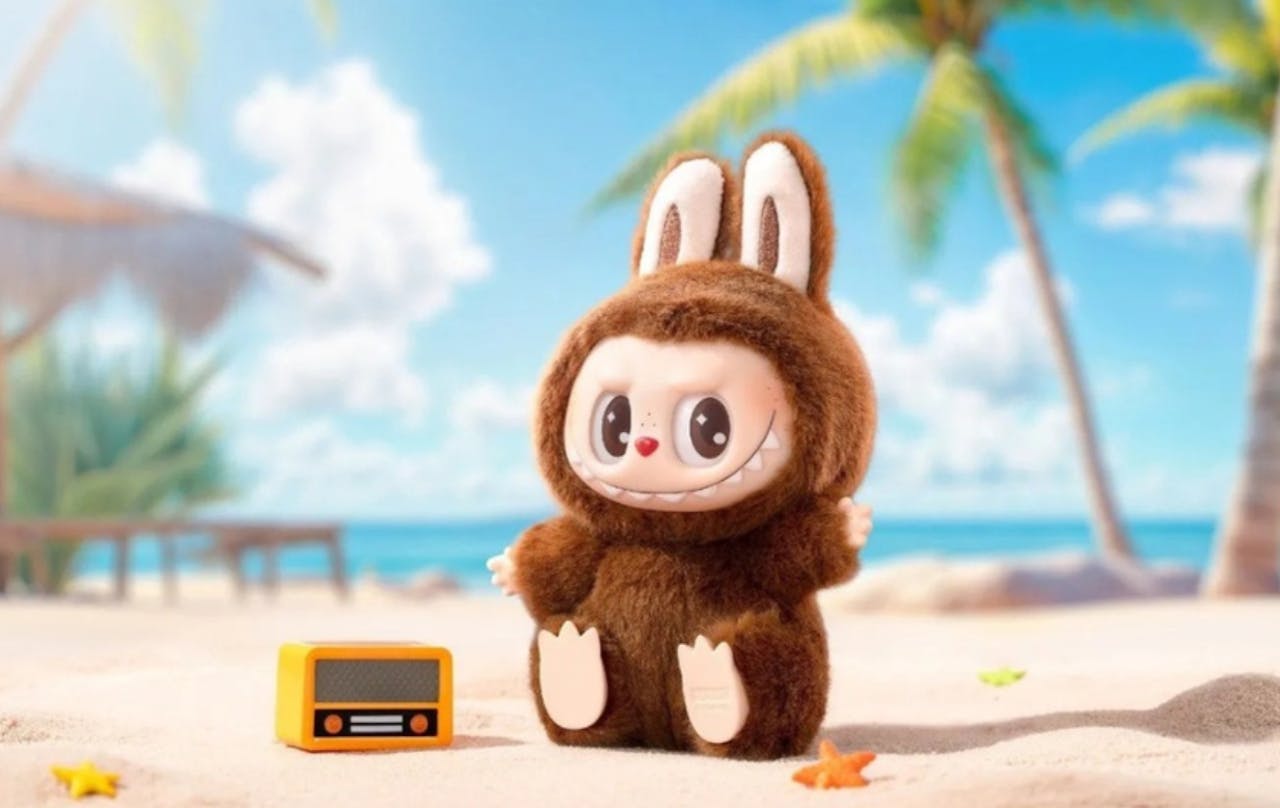
It’s become a powerful amplifier, elevating niche phenomena from Chinese streets to international sensations overnight - from Chinese Street Style, to Lao Gan Ma and Tanghulu, to breakout game Black Myth: Wukong - and most recently, the global craze that is Labubu.Beyond viral trends, social media has also humanized everyday Chinese culture.
A recent Rutgers University study found that heavy TikTok users are nearly twice as likely to see China as a desirable travel destination compared to non-users.And when fears of a U.S. TikTok ban arose, users didn’t flock to another American platform - they headed straight to the Chinese app RedNote, fueling a 216% surge in Chinese language courses on Duolingo.
Users swapped memes, cat photos, and glimpses of daily life, discovering firsthand how relatable, funny, and even cool Chinese netizens could be.Though short-lived, this digital migration cracked something open and revealed a more human, even aspirational side of China (most recently amplified by IShowSpeed’s widely streamed China tour).
As James Marriott aptly put it in The Times, “For modern teenagers, East Asia represents the same futuristic glamor America promised in the 1950s and 1960s. The internet has made cultural exchange wider, more frictionless... an age of dysfunction and self-doubt has damaged the west’s cultural cachet.
”This shift is also coming for some of America’s most iconic brands.The world’s biggest fast-food chain is no longer McDonald’s but a Chinese brand few in the west have heard of. The world’s most popular EV brand isn’t Tesla, but China’s BYD. The most influential social media app, or the most talked about AI, no longer comes from Silicon Valley, but Beijing.
Sure, there have been whispers of rising Chinese influence before that didn’t stick. In 2008, after the Beijing Olympics, people called it the dawn of a new “Chinese era.”In the late 2010s, the success of films like The Farewell, Crazy Rich Asians, Shang-Chi (and anything else starring Awkwafina) had people buzzing about the rise of Chinese stories in the mainstream.
However, while culturally significant, those stories still came through an American lens. They were reflections of China seen from the outside, palatable, polished, translated.This time feels different.What we’re witnessing now isn’t China filtered through Hollywood. It’s China on its own terms, fueled by renewed cultural confidence and driven by Chinese creators, brands, and platforms.
Not as exports tailored for the west but as homegrown phenomena reshaping global taste. And as US foreign policy continues to turn inward, it’s creating a vacuum that China’s soft power is all too ready to fill.Still, this shift isn’t absolute or instantaneous. While China’s cultural influence is undeniably growing, western cultural products and ideals still hold significant sway in many parts of the world.
The infrastructure of global media and consumption, built over decades, won’t be dismantled overnight. The rise of Chinese cool is not necessarily the demise of western influence, but rather a significant rebalancing where cultural influence flows both ways.Sign up for yourDaily Dose of Marketing InsightsGlobal strategies once centered solely around American trends are rapidly evolving, increasingly originating from China and APAC.
Cultural influence is no longer a one-way street from west to east. Chinese platforms, aesthetics, and behaviors are now setting global standards. Brands must actively engage with this wave, not just observe it. I’m already seeing this firsthand with some clients, where global brand strategies are developed in China/APAC and localized to the west rather than the reverse, which had always been the status quo.
So what should brands do now?Don’t let intuition hold you back: If, like me, your strategic instincts were shaped by being the target audience, sometimes what feels intuitive may be outdated, and what feels foreign may actually be the future. In an age where cultural breakthroughs emerge from the most unexpected places, we can no longer rely solely on our own personal experiences.
Lead with curiosity instead.Real-time brands move at the speed of culture: Digital culture is evolving faster than ever. Brands need the agility to identify and act on emerging trends in real time from the east before they become mainstream worldwide. In addition to TikTok and Instagram, keep tabs on RedNote, Bilibili, and Douyin because that’s where the next global trend might originate.
Follow the influence, not the aesthetic: It’s not about mimicking Chinese trends but understanding the forces behind them. From internet humor to fandom behaviors to storytelling formats, what’s emerging from China can be a blueprint for how global Gen Z (and Alpha) connects, consumes, and creates. Brands that decode these behaviors beyond the surface level will build relevance that travels.
As someone navigating this transformation up close, it feels deeply exciting on both a personal and professional level. China isn’t just an economic superpower—it’s becoming a cultural one and is increasingly an origin point for what’s next.FOBs, once the punchline of my American childhood, are now setting the tone for what’s cool.
Who would’ve thought?Andria Wu serves as the strategy director and China Team Lead at Media.Monks, a leading digital-first marketing, advertising, and technology services company. Based in Shanghai, Andria has held this position since February 2021, leading strategic initiatives and delivering brand solutions for both domestic and international clients operating in China’s dynamic media landscape.
Read more opinion on The Drum
Source coverage
This article, published on July 25, 2025, by Andria Wu, Strategy Director and China Team Lead at Media.Monks, explores a significant cultural shift where Chinese influence is increasingly shaping global aspirations, challenging the long-held dominance of American culture. Wu, an American-born Chinese, shares her...
Key Findings and Conclusions:
Deeper analysis
Full source content
Monks China’s Andria Wu is a strategy director between two worlds. Recently, she’s been feeling a greater pull from the east. Have you?As an American-born Chinese growing up in the 90s, the single worst thing you could have called me was a “FOB”.Short for “Fresh Off the Boat,” it was someone who had just come from China, rude, uncultured, painfully awkward in their tacky clothes and broken English.
Being called a FOB felt like a social death sentence because I learned early on that being cool could only mean one thing - being American.And it makes sense.For decades, American culture had single-handedly defined global youths’ aspirations. No matter the country, we all bought iPhones, watched Friends, and sipped Starbucks, not necessarily because they were the best, but because we were subscribing to the American dream.
Want to go deeper? Ask The DrumAnd we all wanted in on this American dream.Years later, I made a career selling that very dream to the world. As an advertising strategist in NYC, my job was to package and ship the aspiration of “American Cool” to global audiences everywhere. I checked all the boxes as the “hot new demographic” (millennial, creative, urban) at the time, so doing this felt intuitive.
After all, it was a narrative I’d spent my whole life painstakingly studying and internalizing.However, as with many millennials in the late 2010s, cracks in the American dream began to show. Xenophobia grew louder. Suddenly, “Go back to your country,” a taunt I’d heard since childhood, didn’t sound like such a bad idea.
So for the first time in my life, I set foot in China.What I found wasn’t what I expected.I landed in a China I’d never seen depicted in American media.What amazed me wasn’t just the creative scene, but the people behind it—filmmakers, designers, and digital artists expressing their culture in ways that felt truly original, whose creativity flourished not despite, but because of their constraints.
Whose sophisticated visual languages and metaphors made their art so uniquely layered and compelling.Working in advertising in Shanghai, strategy no longer felt intuitive, but it was infinitely more interesting. I saw firsthand how global brands coming into China had to unlearn everything they knew because Chinese youth weren’t following the western playbook.
They were defining their own. And now, the rest of the world is starting to catch on.Suggested newsletters for youDaily BriefingDailyCatch up on the most important stories of the day, curated by our editorial team.Weekly MarketingFridayStay up to date with a curated digest of the most important marketing stories and expert insights from our global team.
The Drum InsiderOnce a monthLearn how to pitch to our editors and get published on The Drum.Unlike previous generations who worshipped Hollywood stars and American brands, today’s youth, raised on the internet, are increasingly looking eastward.One of its biggest driving forces is social media, subtly reshaping how Gen Z sees the world, especially China.
It’s become a powerful amplifier, elevating niche phenomena from Chinese streets to international sensations overnight - from Chinese Street Style, to Lao Gan Ma and Tanghulu, to breakout game Black Myth: Wukong - and most recently, the global craze that is Labubu.Beyond viral trends, social media has also humanized everyday Chinese culture.
A recent Rutgers University study found that heavy TikTok users are nearly twice as likely to see China as a desirable travel destination compared to non-users.And when fears of a U.S. TikTok ban arose, users didn’t flock to another American platform - they headed straight to the Chinese app RedNote, fueling a 216% surge in Chinese language courses on Duolingo.
Users swapped memes, cat photos, and glimpses of daily life, discovering firsthand how relatable, funny, and even cool Chinese netizens could be.Though short-lived, this digital migration cracked something open and revealed a more human, even aspirational side of China (most recently amplified by IShowSpeed’s widely streamed China tour).
As James Marriott aptly put it in The Times, “For modern teenagers, East Asia represents the same futuristic glamor America promised in the 1950s and 1960s. The internet has made cultural exchange wider, more frictionless... an age of dysfunction and self-doubt has damaged the west’s cultural cachet.
”This shift is also coming for some of America’s most iconic brands.The world’s biggest fast-food chain is no longer McDonald’s but a Chinese brand few in the west have heard of. The world’s most popular EV brand isn’t Tesla, but China’s BYD. The most influential social media app, or the most talked about AI, no longer comes from Silicon Valley, but Beijing.
Sure, there have been whispers of rising Chinese influence before that didn’t stick. In 2008, after the Beijing Olympics, people called it the dawn of a new “Chinese era.”In the late 2010s, the success of films like The Farewell, Crazy Rich Asians, Shang-Chi (and anything else starring Awkwafina) had people buzzing about the rise of Chinese stories in the mainstream.
However, while culturally significant, those stories still came through an American lens. They were reflections of China seen from the outside, palatable, polished, translated.This time feels different.What we’re witnessing now isn’t China filtered through Hollywood. It’s China on its own terms, fueled by renewed cultural confidence and driven by Chinese creators, brands, and platforms.
Not as exports tailored for the west but as homegrown phenomena reshaping global taste. And as US foreign policy continues to turn inward, it’s creating a vacuum that China’s soft power is all too ready to fill.Still, this shift isn’t absolute or instantaneous. While China’s cultural influence is undeniably growing, western cultural products and ideals still hold significant sway in many parts of the world.
The infrastructure of global media and consumption, built over decades, won’t be dismantled overnight. The rise of Chinese cool is not necessarily the demise of western influence, but rather a significant rebalancing where cultural influence flows both ways.Sign up for yourDaily Dose of Marketing InsightsGlobal strategies once centered solely around American trends are rapidly evolving, increasingly originating from China and APAC.
Cultural influence is no longer a one-way street from west to east. Chinese platforms, aesthetics, and behaviors are now setting global standards. Brands must actively engage with this wave, not just observe it. I’m already seeing this firsthand with some clients, where global brand strategies are developed in China/APAC and localized to the west rather than the reverse, which had always been the status quo.
So what should brands do now?Don’t let intuition hold you back: If, like me, your strategic instincts were shaped by being the target audience, sometimes what feels intuitive may be outdated, and what feels foreign may actually be the future. In an age where cultural breakthroughs emerge from the most unexpected places, we can no longer rely solely on our own personal experiences.
Lead with curiosity instead.Real-time brands move at the speed of culture: Digital culture is evolving faster than ever. Brands need the agility to identify and act on emerging trends in real time from the east before they become mainstream worldwide. In addition to TikTok and Instagram, keep tabs on RedNote, Bilibili, and Douyin because that’s where the next global trend might originate.
Follow the influence, not the aesthetic: It’s not about mimicking Chinese trends but understanding the forces behind them. From internet humor to fandom behaviors to storytelling formats, what’s emerging from China can be a blueprint for how global Gen Z (and Alpha) connects, consumes, and creates. Brands that decode these behaviors beyond the surface level will build relevance that travels.
As someone navigating this transformation up close, it feels deeply exciting on both a personal and professional level. China isn’t just an economic superpower—it’s becoming a cultural one and is increasingly an origin point for what’s next.FOBs, once the punchline of my American childhood, are now setting the tone for what’s cool.
Who would’ve thought?Andria Wu serves as the strategy director and China Team Lead at Media.Monks, a leading digital-first marketing, advertising, and technology services company. Based in Shanghai, Andria has held this position since February 2021, leading strategic initiatives and delivering brand solutions for both domestic and international clients operating in China’s dynamic media landscape.
Read more opinion on The Drum
How this page is built
Goose Pod turns cited reporting into a public episode summary first, then pairs that summary with audio playback so listeners can check the source material before they decide how deeply to engage.
The goal is to make this page useful as a news landing page first, while still giving listeners transcript access, related episodes, and direct links back to the original publishers.
