
What happened
Google DeepMind's Demis Hassabis predicts an AI-driven renaissance of abundance within 15 years, following a decade-long shakeout. He believes AI can accelerate scientific discovery, revolutionize medicine, and solve global challenges like energy and space exploration. Google is investing heavily to integrate AI,...
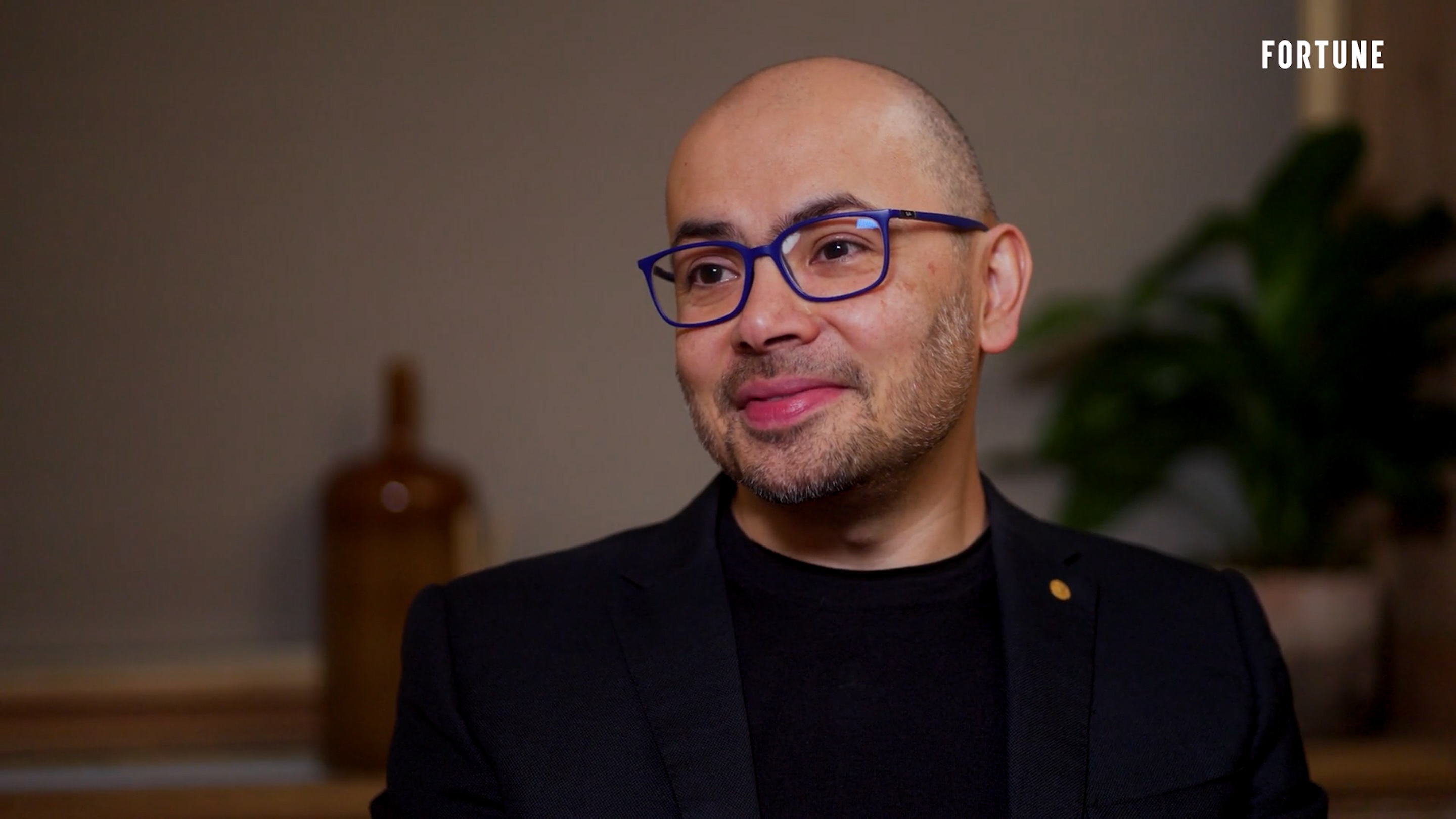
Sir Demis Hassabis, the recently minted Nobel laureate and CEO of Google DeepMind, believes humanity is standing on the precipice of a “new golden era of discovery.” But reaching this utopia will require navigating a turbulent transition period—a decade-long sprint that Hassabis describes as a necessary disruption for the $3.
9 trillion tech giant he helps lead.Speaking to Fortune editor-in-chief Alyson Shontell on the Fortune 500: Titans and Disruptors of Industry podcast, Hassabis offered a vision of the future defined by “radical abundance.” It is a world where artificial intelligence has successfully bottled the scientific method to solve the planet’s most intractable problems.
“In 10, 15 years’ time, we’ll be in a kind of new golden era of discovery that [is] a kind of new renaissance,” Hassabis predicted. In this near future, he predicted that “medicine won’t look like it does today,” with AI enabling personalized treatments and curing major diseases. Beyond health, he said he foresees AI unlocking new materials to solve the energy crisis through fusion or solar breakthroughs, eventually allowing humanity to “travel the stars and … explore the galaxy.
”However, the path to the stars is paved with what Hassabis identifies as a “classic innovator’s dilemma” here on Earth. For Google, the company that organized the world’s information, the rise of generative AI represents an existential pivot point. To build the future, the company must risk disrupting its own core search business.
“If we don’t disrupt ourselves, someone else will,” Hassabis said. “You’re better off … doing it on your terms.”DeepMind’s big reorgThis philosophy drove a massive internal reorganization in 2023, sparked by the rise of competitors such as OpenAI’s ChatGPT. Google merged its two world-class research units, Google Brain and DeepMind, into a single entity under Hassabis’s leadership.
“Bringing the two groups together and trying to combine the best of both cultures has been great,” Hassabis said. “And I think we’re reaping the rewards of that now.” He likened the combined entity to a “nuclear power plant that’s plugged into the rest of this amazing company,” providing the raw intelligence that powers everything from Search to YouTube.
The consolidation was necessary to pool the “enormous compute power” required to train frontier models like Gemini. The strategy appears to be working; following the release of models such as Gemini 3 and the viral image generator Nano Banana, Google parent Alphabet’s shares soared approximately 65% by the end of the year.
Hassabis said he thinks the company has now “crossed the watershed moment” where AI models are capable enough to act as useful assistants in high-level research.Science pointing the way to the next renaissanceThe cornerstone of this new era, according to Hassabis, is the application of AI to biology.
He pointed to AlphaFold, DeepMind’s breakthrough model that solved the 50-year-old “protein folding problem,” as the proof of concept. By predicting the 3D structure of over 200 million proteins, the system has provided a road map for the human body that is now used by over 3 million researchers. (This is the work that led to Hassabis being awarded the Nobel Prize in Chemistry in 2024.
)Hassabis is now applying AlphaFold at Isomorphic Labs, a Google spinoff dedicated to “solving” disease. By moving drug discovery from “wet labs” to in silico (computer) simulation, Hassabis said he believes the process can become “1,000 times more efficient.” The company is already in preclinical trials for cancer drugs, with hopes to move to clinical trials by the end of the year.
(Also in January, Shontell talked to Pfizer CEO Albert Bourla about his hopes of finding a cancer cure through smart use of AI.)This “renaissance” requires relentless effort, though. Hassabis admitted that he “doesn’t sleep very much,” working a “second day” from 10 p.m. to 4 a.m. to focus on deep scientific thinking.
“I come alive at about 1 a.m.,” he confessed.For Hassabis, the grueling schedule and the corporate restructuring are table stakes for the ultimate prize. The next decade may be a period of intense technological shakeout and adaptation, but he said he remains convinced of the destination. “We set out with the mission of … solving intelligence and then using it to solve everything else,” Hassabis said.
If his 15-year timeline holds true, “everything else” may soon include the stars themselves.Watch the full episode on YouTube. The interview transcript can be found here.
Source coverage
Alright, let's get down to it. As the Nobel-winning AI leader at Google DeepMind, I'm thinking about the future. I've been giving a lot of thought to this article. I see a "new golden era of discovery," a "renaissance," driven by AI, unfolding within the next 10 to 15 years. This isn't just a minor shift, but a...
But let's be realistic, it won't be easy. There's a "turbulent transition period," a "decade-long sprint," ahead. Google, this behemoth I'm a part of – a tech giant valued at $3.9 trillion – faces an "existential pivot point." We need to disrupt our own cash cow, the search business, with generative AI, or be...
Deeper analysis
Full source content
Sir Demis Hassabis, the recently minted Nobel laureate and CEO of Google DeepMind, believes humanity is standing on the precipice of a “new golden era of discovery.” But reaching this utopia will require navigating a turbulent transition period—a decade-long sprint that Hassabis describes as a necessary disruption for the $3.
9 trillion tech giant he helps lead.Speaking to Fortune editor-in-chief Alyson Shontell on the Fortune 500: Titans and Disruptors of Industry podcast, Hassabis offered a vision of the future defined by “radical abundance.” It is a world where artificial intelligence has successfully bottled the scientific method to solve the planet’s most intractable problems.
“In 10, 15 years’ time, we’ll be in a kind of new golden era of discovery that [is] a kind of new renaissance,” Hassabis predicted. In this near future, he predicted that “medicine won’t look like it does today,” with AI enabling personalized treatments and curing major diseases. Beyond health, he said he foresees AI unlocking new materials to solve the energy crisis through fusion or solar breakthroughs, eventually allowing humanity to “travel the stars and … explore the galaxy.
”However, the path to the stars is paved with what Hassabis identifies as a “classic innovator’s dilemma” here on Earth. For Google, the company that organized the world’s information, the rise of generative AI represents an existential pivot point. To build the future, the company must risk disrupting its own core search business.
“If we don’t disrupt ourselves, someone else will,” Hassabis said. “You’re better off … doing it on your terms.”DeepMind’s big reorgThis philosophy drove a massive internal reorganization in 2023, sparked by the rise of competitors such as OpenAI’s ChatGPT. Google merged its two world-class research units, Google Brain and DeepMind, into a single entity under Hassabis’s leadership.
“Bringing the two groups together and trying to combine the best of both cultures has been great,” Hassabis said. “And I think we’re reaping the rewards of that now.” He likened the combined entity to a “nuclear power plant that’s plugged into the rest of this amazing company,” providing the raw intelligence that powers everything from Search to YouTube.
The consolidation was necessary to pool the “enormous compute power” required to train frontier models like Gemini. The strategy appears to be working; following the release of models such as Gemini 3 and the viral image generator Nano Banana, Google parent Alphabet’s shares soared approximately 65% by the end of the year.
Hassabis said he thinks the company has now “crossed the watershed moment” where AI models are capable enough to act as useful assistants in high-level research.Science pointing the way to the next renaissanceThe cornerstone of this new era, according to Hassabis, is the application of AI to biology.
He pointed to AlphaFold, DeepMind’s breakthrough model that solved the 50-year-old “protein folding problem,” as the proof of concept. By predicting the 3D structure of over 200 million proteins, the system has provided a road map for the human body that is now used by over 3 million researchers. (This is the work that led to Hassabis being awarded the Nobel Prize in Chemistry in 2024.
)Hassabis is now applying AlphaFold at Isomorphic Labs, a Google spinoff dedicated to “solving” disease. By moving drug discovery from “wet labs” to in silico (computer) simulation, Hassabis said he believes the process can become “1,000 times more efficient.” The company is already in preclinical trials for cancer drugs, with hopes to move to clinical trials by the end of the year.
(Also in January, Shontell talked to Pfizer CEO Albert Bourla about his hopes of finding a cancer cure through smart use of AI.)This “renaissance” requires relentless effort, though. Hassabis admitted that he “doesn’t sleep very much,” working a “second day” from 10 p.m. to 4 a.m. to focus on deep scientific thinking.
“I come alive at about 1 a.m.,” he confessed.For Hassabis, the grueling schedule and the corporate restructuring are table stakes for the ultimate prize. The next decade may be a period of intense technological shakeout and adaptation, but he said he remains convinced of the destination. “We set out with the mission of … solving intelligence and then using it to solve everything else,” Hassabis said.
If his 15-year timeline holds true, “everything else” may soon include the stars themselves.Watch the full episode on YouTube. The interview transcript can be found here.
How this page is built
Goose Pod turns cited reporting into a public episode summary first, then pairs that summary with audio playback so listeners can check the source material before they decide how deeply to engage.
The goal is to make this page useful as a news landing page first, while still giving listeners transcript access, related episodes, and direct links back to the original publishers.