What happened
肯·伯恩斯纪录片《美国革命》揭示战争胜利者是无名之辈、罪犯和移民。该片打破神话,展现历史真相的混乱与残酷,强调小人物的牺牲与贡献。作品以“情感考古学”挖掘历史共鸣,并引发对国家身份的深刻对话,同时证明了公共广播的价值。
“I vowed after The Civil War not to do any more war films,” says the master documentarian. “It hurt too much.” Lucky for us, he couldn’t keep his promise—paving the way for The American Revolution, premiering this month on PBS.By Mike Doyle.“I’m a storyteller. I’m a filmmaker. I’m not a historian,” Ken Burns says shortly before the release of his 10-years-in-the-making behemoth, The American Revolution.
Few would argue the first two points, but I’m not so sure about the third.During an hour-long chat, the 72-year-old sainted son of public television spits out names, dates, and data points with remarkable recall—at one moment revealing the 18th-century origins of the Lower Manhattan streets just a few blocks away, listing them in an orderly east-to-west fashion, as if reading from a map.
(I’ll never think of Wooster Street. the same way again.) And few people have spent this much time—his first film, Brooklyn Bridge, came out 44 years ago—educating the masses about American history with Burns’s level of clarity, humanity, and depth. He may not have a degree in history. But if this isn’t a historian, who is?
In the world of placards and display cases, Burns is unquestionably a rock star. The management of Fraunces Tavern, a functioning Wall Street area restaurant and pub that doubles as a Revolutionary War museum, rolled out the red carpet for the mild-mannered documentarian, giving us private access to “The Long Room”—where General George Washington gave his farewell address to his officers before meeting the Continental Congress in Annapolis, formally resigning and ensuring the first elected president of the United States would be, simply, a citizen.
I knew that story from half-remembered class trips. It wasn’t until watching The American Revolution that I learned this was also the site of brutal legal proceedings in which enslaved people who had escaped to British lines were adjudicated back to their previous owners, a process with which Washington was greatly familiar.
A still from The American Revolution.As one would expect from the creator of The Civil War, this new series is loaded with characters, ideas, and perspectives that, corny as it may sound, make history feel urgent and new. It’s also got a stacked group of voiceover performers, including Tom Hanks, Paul Giamatti, Meryl Streep, Claire Danes, Maya Hawke, Liev Schrieber, Lucas Hedges, Samuel L.
Jackson, Kenneth Branagh, Josh Brolin, and Laura Linney, among others.Though he frequently cited his work’s “stately pace,” Burns and his frequent collaborator Sarah Botstein, one of two co-directors alongside David Schmidt, are mile-a-minute talkers, and both are bursting to speak about their latest work.
(Also potentially surprising: Burns drops more F-bombs than you might think, as you shall soon read.) What follows is considerably truncated for clarity’s sake.Vanity Fair: Before anything else, let’s talk about this extraordinary collection of actors you’ve assembled.Ken Burns: I suggest that there is no finer cast list than in any film ever made.
Maybe The Longest Day, which was every major star of the 1960s, but it’s not a lot of women.Pretty sharp to get Paul Giamatti, who starred in the 2008 HBO series John Adams, to voice John Adams.Burns: Remember that Giamatti also played Adams in our film Benjamin Franklin. And he was in our Theodore Roosevelt for The Roosevelts.
He can read the fucking phone book. One of my favorite quotes is [Adams’s] arrival to Philadelphia. There’s nothing dynamic or climactic about it; it’s about writing home to Abigail, saying, you know, “Philadelphia is an interesting town. It’s laid out from the Delaware to the Schuylkill, and it’s got first, second, third…” Some people don’t like it.
I do. This was like anybody else writing home to his wife!Now, Tom [Hanks] I’ve worked with for 25 years, and he’s so generous. When he walked in I said, “I’m not giving you George Washington,” because he would be perfect. So I gave him a variety of voices. I said we’ll pick a few. We ended up using every one.
And nobody’s making any real dough here, right?Burns: For a long time, nobody charged anything. Julie Harris read for ages; Arthur Miller, all these people that were great voices. Then after The Civil War went so big, SAG went insane. “We’re kicking Julie Harris out!” We had to pay SAG some ransom, so now we pay SAG minimum.
Sarah Botstein: People are always surprised that we’re signatories to several unions. We spend more time on paperwork than money.Burns: I hand Tom Hanks his check and say, “Tom, some advice from one friend to another—don’t spend this all at once. Save half of it, put a quarter into something you really want, and then maybe you’ve got some funny money.
”Who geeked out over the history the most?Botstein: Matthew Rhys, who played Otto Frank in our The U.S. and the Holocaust film, came to mind for us to play Thomas Paine because he comes from that part of the world. And he really wanted to know more about Thomas Paine. He’s unbelievably funny, but also serious.
Thomas Paine, Samuel Adams…the way they are depicted, I realized these are, in some ways, the blue-check guys on Twitter.Burns: It is Ecclesiastes. “What has been will be again. What has been done will be done again. There’s nothing new under the sun.”If you had made this movie as a follow-up to The Civil War back in 1990, in what ways would it have been different?
Burns: It wouldn’t benefit from all the scholarship that’s taken place in the last 35 years. You cannot understate the importance of the changes to romanticized ideas about the Revolution. It is still encrusted with the barnacles of sentimentality and nostalgia, and we don’t accept its violence.I vowed after The Civil War not to do any more war films.
It hurt too much. It’s painful. Then I learned that 1,000 American veterans of the Second World War were dying each day, and that a lot of graduating high school seniors thought we fought with the Germans against the Russians. I just said, fuuuuuuck, you know, we’ve got to do it. And that became The War.
And then before the ink was dry on that, I said we’re doing Vietnam. And that took 10 and a half years. And before the ink was dry, in December of 2015, when Barack Obama had 15 months to go in his presidency, I looked up to Sarah, and I said, “We’re doing the Revolution.”Stephanie BergerSo many of the best stories are about people I’ve never heard of.
Burns: Ninety-nine percent of people [back then] didn’t have their portrait painted. It does not mean they did not exist. They are central to the drama of the American Revolution. It might be a teenager: John Greenwood from Boston, or Joseph Plumb Martin from Connecticut. Or 10-year-old Betsy Ambler [from Yorktown] or the Native Americans or Spanish or French or Hessian soldiers.
At the end, we say the Continental Army is just filled with teenagers and ne’er-do-wells, second and third sons who aren’t due an inheritance, felons, and recent immigrants. That’s who wins the war, and that’s why democracy is not an object of the revolution, it’s a consequence—because you realize at the end, they did the fighting and dying.
We’re going to have to give them something. John Greenwood is a footnote? Betsy Ambler is a footnote? Follow the trail. And when you get Maya Hawke reading Betsy Ambler, it comes alive.I am particularly enamored of John Greenwood, the young fife player.Burns: When he goes home after Trenton, covered in lice, he’s a kid separated from his parents.
And he nearly freezes to death. I love the fact his father strips him, bakes the clothes in the stove, and covers him with lye.Then he becomes a dentist and eventually fixes George Washington’s teeth.Burns: You cannot make this up. Why would anyone make [fiction] films? James Forten is a kid who’s captured, a free kid of color in Philadelphia, and on the boat has a chance to go to England as a friend of the son of the captain.
He says no and goes to the worst prison ship. He survives it somehow, walks home barefoot to Philadelphia. He then becomes rich in the Merchant Marine and helps fund William Lloyd Garrison’s The Liberator. His granddaughter, Charlotte, leaves Philadelphia to go down to the Sea Islands in Georgia to help recently freed, liberated Black Americans in the early years of the Civil War adjust to freedom.
The other big revelation for me is how you treated the Loyalists.Burns: We’re umpires calling balls and strikes. We did not want to make the Loyalists the enemy. They didn’t know how things were going to turn out. George Washington didn’t know he was “George Washington.”Be honest—if there wasn’t a heavy fog in Brooklyn that one night in 1776, we’d all be speaking British English, right?
Burns: Or French, or Spanish.Botstein: Weather changed the world.Burns: And think about [so many other breaks]. If Arnold and Montgomery take Quebec City, we’ve got Canada too. If Washington hadn’t inoculated the troops, how many more would have died?I happened to watch that scene just when RFK Jr. was in the news, so I had a chuckle.
But I imagine even if you watch this series 10 years from now, you’ll find parallels to current events.Burns: Human nature doesn't change, right? So what’s surprising about a good story about the Revolution is that suddenly, they feel like people I know. Mark Twain is supposed to have said, “History doesn’t repeat itself, but it rhymes.
” There will always be rhymes.There’s a moment when the Baroness Riedesel is coming from Germany, and she’s terrified because she hears that Americans eat cats. Now, if our film had come out last fall, people would say, “You put that in!” [In our film,] we have a pandemic that kills more people than soldiers in the battle.
We have a total eclipse. We have a failed attempt to add Canada as one of our states.And the king initiates a standing army during peacetime, which certainly rhymed with ICE.Burns: We had a screening at Telluride, and when that came up—that Gage sent troops not to protect Boston, but to police them—the audience went crazy.
So there are ways in which we may be able to find our way back to ourselves, with this film as a Rosetta Stone. What do we value? Who are we? How were we formed?Do you think Thomas Jefferson knew he was a “do what I say, not what I do” guy?Burns: He knew slavery was wrong. George Washington knew slavery was wrong.
The second you make this about “natural rights,” the doors open. The people who are serving you hear about liberty; the people on your borders say, We already know this story. In fact, as our prologue shows, Benjamin Franklin is inspired to create a union of the Colonies from the Haudenosaunee, the Iroquois Confederacy.
Jefferson knows that slavery is wrong. He cannot let it go. And rather than address this, he just orders more French wine and Italian statuary.The Corporation for Public Broadcasting is now kaput, and I imagine you have some thoughts on this.Burns: This is one of the most shortsighted decisions that’s ever been made by our government.
The Corporation for Public Broadcasting is an outgrowth of the Public Broadcasting Act, part of the Great Society of Lyndon Johnson. This will hurt mostly the rural stations that will now be news deserts. Nobody’s going to be covering the school board or the city council meeting. It’s not just prime time [and] children’s programming—it’s the emergency stuff, the Homeland Security information.
[My production company] lost $14 million, [and we are] gonna have to scramble. This is going to be really tough times for us [and] for PBS, who just laid off a lot of people. When the argument is that [the programming] is political—isn’t this the network that for 32 years had Firing Line with William F.
Buckley? Antiques Roadshow and Masterpiece Theatre and Finding Your Roots? Our stuff? We’re not putting our thumb on the scale in terms of politics. We know a good story is a good story.Those rural stations—they’re cooked. PBS is the largest television network in the United States. Three hundred and thirty-eight stations, and many of them will disappear.
Crown Point State Historic Site, NY.By Megan Ruffe.I know the argument used to be that cable networks like The History Channel would pick up the slack.Burns [practically leaping out of his chair]: A&E, Arts and Entertainment, what do they show? Discovery? National Geographic, which is about exploration and the beauty of this globe?
Locked Up Abroad is one of their most-watched things, right? What about the [Ancient] Aliens on History Channel?You talk about our “stately pace”—well, who’s the tortoise and who’s the hare? The hare chased after profit with the mindless stuff. You go three minutes, then you’ve got commercial breaks and have to remind everybody what they’ve just seen.
We say thank you to Bank of America and all the people who helped us in this, and then you’ve got two hours of uninterrupted content that’s, you know, “binge-worthy.” People were always saying no one will watch it because of the attention spans of MTV, and later YouTube. People have always been their own curators of content.
This series takes half as long as it takes to read a book.PBS is the Declaration [of Independence] applied to the communications world, just as the National Parks are to the landscape.Before we go, I do need to represent Central New Jersey for a moment and scold you for leaving my gal Molly Pitcher out of the movie.
Burns: There are people steamed that Erroll Garner isn’t in Jazz. There are people pissed off in the Midwest that Harmon Killebrew doesn’t have a chapter in Baseball. Remember the part in Amadeus when the emperor says, “Too many notes?” We are not encyclopedias—we’re telling a story. So at some point, Molly Pitcher left.
Luckily, as you go on the New Jersey Turnpike, there’s a rest area where you can assuage your grief by having someone pump your gas.Jordan Hoffman is a Queens, New York–based writer who has been contributing to Vanity Fair since 2014. His work can also be read in The Guardian, the A.V. Club, the Times of Israel, and elsewhere.
He is a member of the New York Film Critics Circle, has published a book ... Read MoreRead MoreLegendary SNL Writer Jim Downey Finally Steps Out of the ShadowsThe man behind “Chippendales Audition” and some of Will Ferrell’s best Bushisms on the new documentary about him, acting in One Battle After Another, and why he’s happy not to be writing about Trump.
Rachel Maddow on MSNBC’s Big Rebrand: “We’re Still the Same Old MS”The news host and producer of Andrew Young: The Dirty Work on embracing the Serenity Prayer, the emergency of American authoritarianism, and Bari Weiss at CBS: “There’s an effort—systemically—to destroy important institutions in the country right now.
”Task: Tom Pelphrey on That Bloody Fight and Devastating Death“We’re rushing toward something inevitable, and yet it’s still compelling,” says Pelphrey of the HBO drama’s powerful penultimate episode.Bernie Sanders on Trump’s AI Slop Storm and Why You Should Run for Office“This is a guy who puts up an AI image of him in an airplane defecating on American cities—not quite the image of the president of the United States that I was educated to respect,” the senator and author of Fight Oligarchy tells Vanity Fair.
“Like Vienna in 1914”: At Bob Barnett's Memorial, Washington's Power Class Peers Over the BrinkAt a DC power broker’s memorial, politicos including James Carville, Jesse Watters, and Anthony Fauci gathered to eat focaccia sandwiches, swap memories, and place literal bets on the future of the country (Piers Morgan owes Oliver North $1,000)Al Pacino’s Biggest Regret: Never Marrying Diane KeatonAccording to the Daily Mail, for Pacino, the late actor was the one who got away.
“I know he will forever regret he didn’t make his move when he had the chance,” a source said.Oscar Nominee Paul Schrader Says He’s Ready to Make an AI Movie (and Have AI Review It)The Taxi Driver screenwriter turned social media icon on his viral film criticism, Pauline Kael’s rock-bottom moment, and why he isn’t afraid of the future: “I think we’re only two years away from the first AI feature.
”Ford Foundation Visionary Darren Walker Still Believes in AmericaThe outgoing foundation president on this new book and his enduring belief in the promise of the nation: “America has always had racists and homophobes, and regrettably, I don’t think we will ever be without. I believe the majority of Americans are not racists, are not homophobes, and want to find common ground.
”Cole Doman Was Ready for His Big Break. Then Apple Pulled His ShowThe indie film darling on starring in Kelly Reichardt’s The Mastermind, working with Jessica Chastain, and Apple TV’s decision to postpone their series about white extremists, The Savant, in the wake of Charlie Kirk’s killing.Tom Hiddleston and Olivia Colman on The Night Manager’s Long-Awaited ReturnNearly a decade after the Emmy-winning original series, their intelligence officers navigate a bleaker world in season two: “Forty years ago, people would write movies where the punchline was, ‘and the corruption goes all the way to the top!
’ Today, that’s the starting point.”After the Hunt Is Not a #MeToo Movie, Says Luca Guadagnino—but It Is PoliticalFor filmmaker Luca Guadagnino, the film’s ending captures this exact moment in time: “Look at where we are—look at who went to power again.”
Source coverage
---
News Summary: Ken Burns's "The American Revolution" Documentary
Deeper analysis
Full source content
“I vowed after The Civil War not to do any more war films,” says the master documentarian. “It hurt too much.” Lucky for us, he couldn’t keep his promise—paving the way for The American Revolution, premiering this month on PBS.By Mike Doyle.“I’m a storyteller. I’m a filmmaker. I’m not a historian,” Ken Burns says shortly before the release of his 10-years-in-the-making behemoth, The American Revolution.
Few would argue the first two points, but I’m not so sure about the third.During an hour-long chat, the 72-year-old sainted son of public television spits out names, dates, and data points with remarkable recall—at one moment revealing the 18th-century origins of the Lower Manhattan streets just a few blocks away, listing them in an orderly east-to-west fashion, as if reading from a map.
(I’ll never think of Wooster Street. the same way again.) And few people have spent this much time—his first film, Brooklyn Bridge, came out 44 years ago—educating the masses about American history with Burns’s level of clarity, humanity, and depth. He may not have a degree in history. But if this isn’t a historian, who is?
In the world of placards and display cases, Burns is unquestionably a rock star. The management of Fraunces Tavern, a functioning Wall Street area restaurant and pub that doubles as a Revolutionary War museum, rolled out the red carpet for the mild-mannered documentarian, giving us private access to “The Long Room”—where General George Washington gave his farewell address to his officers before meeting the Continental Congress in Annapolis, formally resigning and ensuring the first elected president of the United States would be, simply, a citizen.
I knew that story from half-remembered class trips. It wasn’t until watching The American Revolution that I learned this was also the site of brutal legal proceedings in which enslaved people who had escaped to British lines were adjudicated back to their previous owners, a process with which Washington was greatly familiar.
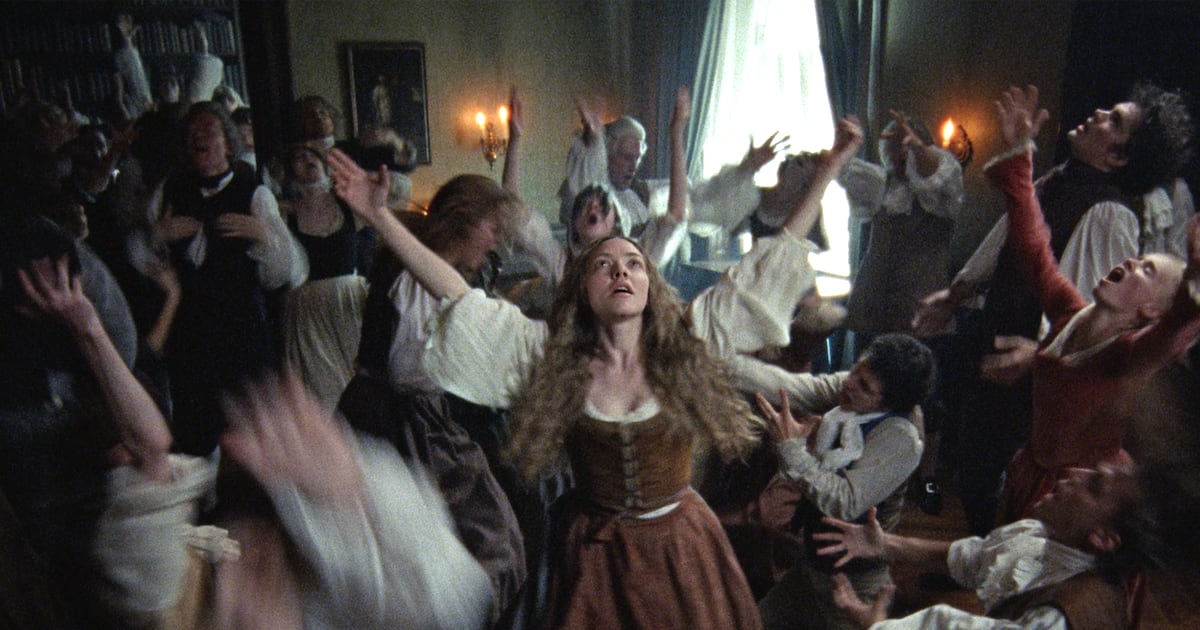
A still from The American Revolution.As one would expect from the creator of The Civil War, this new series is loaded with characters, ideas, and perspectives that, corny as it may sound, make history feel urgent and new. It’s also got a stacked group of voiceover performers, including Tom Hanks, Paul Giamatti, Meryl Streep, Claire Danes, Maya Hawke, Liev Schrieber, Lucas Hedges, Samuel L.
Jackson, Kenneth Branagh, Josh Brolin, and Laura Linney, among others.Though he frequently cited his work’s “stately pace,” Burns and his frequent collaborator Sarah Botstein, one of two co-directors alongside David Schmidt, are mile-a-minute talkers, and both are bursting to speak about their latest work.
(Also potentially surprising: Burns drops more F-bombs than you might think, as you shall soon read.) What follows is considerably truncated for clarity’s sake.Vanity Fair: Before anything else, let’s talk about this extraordinary collection of actors you’ve assembled.Ken Burns: I suggest that there is no finer cast list than in any film ever made.
Maybe The Longest Day, which was every major star of the 1960s, but it’s not a lot of women.Pretty sharp to get Paul Giamatti, who starred in the 2008 HBO series John Adams, to voice John Adams.Burns: Remember that Giamatti also played Adams in our film Benjamin Franklin. And he was in our Theodore Roosevelt for The Roosevelts.
He can read the fucking phone book. One of my favorite quotes is [Adams’s] arrival to Philadelphia. There’s nothing dynamic or climactic about it; it’s about writing home to Abigail, saying, you know, “Philadelphia is an interesting town. It’s laid out from the Delaware to the Schuylkill, and it’s got first, second, third…” Some people don’t like it.
I do. This was like anybody else writing home to his wife!Now, Tom [Hanks] I’ve worked with for 25 years, and he’s so generous. When he walked in I said, “I’m not giving you George Washington,” because he would be perfect. So I gave him a variety of voices. I said we’ll pick a few. We ended up using every one.
And nobody’s making any real dough here, right?Burns: For a long time, nobody charged anything. Julie Harris read for ages; Arthur Miller, all these people that were great voices. Then after The Civil War went so big, SAG went insane. “We’re kicking Julie Harris out!” We had to pay SAG some ransom, so now we pay SAG minimum.
Sarah Botstein: People are always surprised that we’re signatories to several unions. We spend more time on paperwork than money.Burns: I hand Tom Hanks his check and say, “Tom, some advice from one friend to another—don’t spend this all at once. Save half of it, put a quarter into something you really want, and then maybe you’ve got some funny money.
”Who geeked out over the history the most?Botstein: Matthew Rhys, who played Otto Frank in our The U.S. and the Holocaust film, came to mind for us to play Thomas Paine because he comes from that part of the world. And he really wanted to know more about Thomas Paine. He’s unbelievably funny, but also serious.
Thomas Paine, Samuel Adams…the way they are depicted, I realized these are, in some ways, the blue-check guys on Twitter.Burns: It is Ecclesiastes. “What has been will be again. What has been done will be done again. There’s nothing new under the sun.”If you had made this movie as a follow-up to The Civil War back in 1990, in what ways would it have been different?
Burns: It wouldn’t benefit from all the scholarship that’s taken place in the last 35 years. You cannot understate the importance of the changes to romanticized ideas about the Revolution. It is still encrusted with the barnacles of sentimentality and nostalgia, and we don’t accept its violence.I vowed after The Civil War not to do any more war films.
It hurt too much. It’s painful. Then I learned that 1,000 American veterans of the Second World War were dying each day, and that a lot of graduating high school seniors thought we fought with the Germans against the Russians. I just said, fuuuuuuck, you know, we’ve got to do it. And that became The War.
And then before the ink was dry on that, I said we’re doing Vietnam. And that took 10 and a half years. And before the ink was dry, in December of 2015, when Barack Obama had 15 months to go in his presidency, I looked up to Sarah, and I said, “We’re doing the Revolution.”Stephanie BergerSo many of the best stories are about people I’ve never heard of.
Burns: Ninety-nine percent of people [back then] didn’t have their portrait painted. It does not mean they did not exist. They are central to the drama of the American Revolution. It might be a teenager: John Greenwood from Boston, or Joseph Plumb Martin from Connecticut. Or 10-year-old Betsy Ambler [from Yorktown] or the Native Americans or Spanish or French or Hessian soldiers.
At the end, we say the Continental Army is just filled with teenagers and ne’er-do-wells, second and third sons who aren’t due an inheritance, felons, and recent immigrants. That’s who wins the war, and that’s why democracy is not an object of the revolution, it’s a consequence—because you realize at the end, they did the fighting and dying.
We’re going to have to give them something. John Greenwood is a footnote? Betsy Ambler is a footnote? Follow the trail. And when you get Maya Hawke reading Betsy Ambler, it comes alive.I am particularly enamored of John Greenwood, the young fife player.Burns: When he goes home after Trenton, covered in lice, he’s a kid separated from his parents.
And he nearly freezes to death. I love the fact his father strips him, bakes the clothes in the stove, and covers him with lye.Then he becomes a dentist and eventually fixes George Washington’s teeth.Burns: You cannot make this up. Why would anyone make [fiction] films? James Forten is a kid who’s captured, a free kid of color in Philadelphia, and on the boat has a chance to go to England as a friend of the son of the captain.
He says no and goes to the worst prison ship. He survives it somehow, walks home barefoot to Philadelphia. He then becomes rich in the Merchant Marine and helps fund William Lloyd Garrison’s The Liberator. His granddaughter, Charlotte, leaves Philadelphia to go down to the Sea Islands in Georgia to help recently freed, liberated Black Americans in the early years of the Civil War adjust to freedom.
The other big revelation for me is how you treated the Loyalists.Burns: We’re umpires calling balls and strikes. We did not want to make the Loyalists the enemy. They didn’t know how things were going to turn out. George Washington didn’t know he was “George Washington.”Be honest—if there wasn’t a heavy fog in Brooklyn that one night in 1776, we’d all be speaking British English, right?
Burns: Or French, or Spanish.Botstein: Weather changed the world.Burns: And think about [so many other breaks]. If Arnold and Montgomery take Quebec City, we’ve got Canada too. If Washington hadn’t inoculated the troops, how many more would have died?I happened to watch that scene just when RFK Jr. was in the news, so I had a chuckle.
But I imagine even if you watch this series 10 years from now, you’ll find parallels to current events.Burns: Human nature doesn't change, right? So what’s surprising about a good story about the Revolution is that suddenly, they feel like people I know. Mark Twain is supposed to have said, “History doesn’t repeat itself, but it rhymes.
” There will always be rhymes.There’s a moment when the Baroness Riedesel is coming from Germany, and she’s terrified because she hears that Americans eat cats. Now, if our film had come out last fall, people would say, “You put that in!” [In our film,] we have a pandemic that kills more people than soldiers in the battle.
We have a total eclipse. We have a failed attempt to add Canada as one of our states.And the king initiates a standing army during peacetime, which certainly rhymed with ICE.Burns: We had a screening at Telluride, and when that came up—that Gage sent troops not to protect Boston, but to police them—the audience went crazy.
So there are ways in which we may be able to find our way back to ourselves, with this film as a Rosetta Stone. What do we value? Who are we? How were we formed?Do you think Thomas Jefferson knew he was a “do what I say, not what I do” guy?Burns: He knew slavery was wrong. George Washington knew slavery was wrong.
The second you make this about “natural rights,” the doors open. The people who are serving you hear about liberty; the people on your borders say, We already know this story. In fact, as our prologue shows, Benjamin Franklin is inspired to create a union of the Colonies from the Haudenosaunee, the Iroquois Confederacy.
Jefferson knows that slavery is wrong. He cannot let it go. And rather than address this, he just orders more French wine and Italian statuary.The Corporation for Public Broadcasting is now kaput, and I imagine you have some thoughts on this.Burns: This is one of the most shortsighted decisions that’s ever been made by our government.
The Corporation for Public Broadcasting is an outgrowth of the Public Broadcasting Act, part of the Great Society of Lyndon Johnson. This will hurt mostly the rural stations that will now be news deserts. Nobody’s going to be covering the school board or the city council meeting. It’s not just prime time [and] children’s programming—it’s the emergency stuff, the Homeland Security information.
[My production company] lost $14 million, [and we are] gonna have to scramble. This is going to be really tough times for us [and] for PBS, who just laid off a lot of people. When the argument is that [the programming] is political—isn’t this the network that for 32 years had Firing Line with William F.
Buckley? Antiques Roadshow and Masterpiece Theatre and Finding Your Roots? Our stuff? We’re not putting our thumb on the scale in terms of politics. We know a good story is a good story.Those rural stations—they’re cooked. PBS is the largest television network in the United States. Three hundred and thirty-eight stations, and many of them will disappear.
Crown Point State Historic Site, NY.By Megan Ruffe.I know the argument used to be that cable networks like The History Channel would pick up the slack.Burns [practically leaping out of his chair]: A&E, Arts and Entertainment, what do they show? Discovery? National Geographic, which is about exploration and the beauty of this globe?
Locked Up Abroad is one of their most-watched things, right? What about the [Ancient] Aliens on History Channel?You talk about our “stately pace”—well, who’s the tortoise and who’s the hare? The hare chased after profit with the mindless stuff. You go three minutes, then you’ve got commercial breaks and have to remind everybody what they’ve just seen.
We say thank you to Bank of America and all the people who helped us in this, and then you’ve got two hours of uninterrupted content that’s, you know, “binge-worthy.” People were always saying no one will watch it because of the attention spans of MTV, and later YouTube. People have always been their own curators of content.
This series takes half as long as it takes to read a book.PBS is the Declaration [of Independence] applied to the communications world, just as the National Parks are to the landscape.Before we go, I do need to represent Central New Jersey for a moment and scold you for leaving my gal Molly Pitcher out of the movie.
Burns: There are people steamed that Erroll Garner isn’t in Jazz. There are people pissed off in the Midwest that Harmon Killebrew doesn’t have a chapter in Baseball. Remember the part in Amadeus when the emperor says, “Too many notes?” We are not encyclopedias—we’re telling a story. So at some point, Molly Pitcher left.
Luckily, as you go on the New Jersey Turnpike, there’s a rest area where you can assuage your grief by having someone pump your gas.Jordan Hoffman is a Queens, New York–based writer who has been contributing to Vanity Fair since 2014. His work can also be read in The Guardian, the A.V. Club, the Times of Israel, and elsewhere.
He is a member of the New York Film Critics Circle, has published a book ... Read MoreRead MoreLegendary SNL Writer Jim Downey Finally Steps Out of the ShadowsThe man behind “Chippendales Audition” and some of Will Ferrell’s best Bushisms on the new documentary about him, acting in One Battle After Another, and why he’s happy not to be writing about Trump.
Rachel Maddow on MSNBC’s Big Rebrand: “We’re Still the Same Old MS”The news host and producer of Andrew Young: The Dirty Work on embracing the Serenity Prayer, the emergency of American authoritarianism, and Bari Weiss at CBS: “There’s an effort—systemically—to destroy important institutions in the country right now.
”Task: Tom Pelphrey on That Bloody Fight and Devastating Death“We’re rushing toward something inevitable, and yet it’s still compelling,” says Pelphrey of the HBO drama’s powerful penultimate episode.Bernie Sanders on Trump’s AI Slop Storm and Why You Should Run for Office“This is a guy who puts up an AI image of him in an airplane defecating on American cities—not quite the image of the president of the United States that I was educated to respect,” the senator and author of Fight Oligarchy tells Vanity Fair.
“Like Vienna in 1914”: At Bob Barnett's Memorial, Washington's Power Class Peers Over the BrinkAt a DC power broker’s memorial, politicos including James Carville, Jesse Watters, and Anthony Fauci gathered to eat focaccia sandwiches, swap memories, and place literal bets on the future of the country (Piers Morgan owes Oliver North $1,000)Al Pacino’s Biggest Regret: Never Marrying Diane KeatonAccording to the Daily Mail, for Pacino, the late actor was the one who got away.
“I know he will forever regret he didn’t make his move when he had the chance,” a source said.Oscar Nominee Paul Schrader Says He’s Ready to Make an AI Movie (and Have AI Review It)The Taxi Driver screenwriter turned social media icon on his viral film criticism, Pauline Kael’s rock-bottom moment, and why he isn’t afraid of the future: “I think we’re only two years away from the first AI feature.
”Ford Foundation Visionary Darren Walker Still Believes in AmericaThe outgoing foundation president on this new book and his enduring belief in the promise of the nation: “America has always had racists and homophobes, and regrettably, I don’t think we will ever be without. I believe the majority of Americans are not racists, are not homophobes, and want to find common ground.
”Cole Doman Was Ready for His Big Break. Then Apple Pulled His ShowThe indie film darling on starring in Kelly Reichardt’s The Mastermind, working with Jessica Chastain, and Apple TV’s decision to postpone their series about white extremists, The Savant, in the wake of Charlie Kirk’s killing.Tom Hiddleston and Olivia Colman on The Night Manager’s Long-Awaited ReturnNearly a decade after the Emmy-winning original series, their intelligence officers navigate a bleaker world in season two: “Forty years ago, people would write movies where the punchline was, ‘and the corruption goes all the way to the top!
’ Today, that’s the starting point.”After the Hunt Is Not a #MeToo Movie, Says Luca Guadagnino—but It Is PoliticalFor filmmaker Luca Guadagnino, the film’s ending captures this exact moment in time: “Look at where we are—look at who went to power again.”
How this page is built
Goose Pod turns cited reporting into a public episode summary first, then pairs that summary with audio playback so listeners can check the source material before they decide how deeply to engage.
The goal is to make this page useful as a news landing page first, while still giving listeners transcript access, related episodes, and direct links back to the original publishers.