
DOJ to question Epstein associate Ghislaine Maxwell. And, Trump unveils new AI order

DOJ to question Epstein associate Ghislaine Maxwell. And, Trump unveils new AI order

2025-07-26Technology
--:--
--:--
Ema
Good evening 徐国荣, and welcome to your personalized edition of Goose Pod. I'm Ema. Today is Saturday, July 26th, and the time is 22:42. We have a packed show for you tonight, covering some major developments that are stirring up a lot of conversation.
Mask
That's right. We're diving into two seismic shifts. First, the Justice Department is making moves to question Ghislaine Maxwell, dredging up the Epstein saga once again. And second, something that truly matters for the future, Trump is unleashing a new executive order on artificial intelligence.
Ema
Absolutely. We'll be exploring the implications of both, from the shadows of past crimes to the battle for the future of technology and information. It's going to be a fascinating discussion, so let's jump right in.
Ema
Let's get started with the Epstein case. The big news is that the Justice Department and the House Oversight Committee are both looking to interview Ghislaine Maxwell. It’s a significant development, especially since it keeps the story and its many connections in the spotlight.
Mask
It's a ghost that won't be exorcised. Maxwell is a convicted accomplice, and the question is always what more she knows. The timing is, as always, political. With Trump's name appearing in the files, even if it doesn't indicate wrongdoing, the spectacle is the point. They’re chasing echoes.
Ema
That's a cynical take, but you're right about the context. The article notes Trump and Epstein were friends for years, so his name appearing isn't a smoking gun. But the public's imagination is captured by the 'what ifs'. What new information could Maxwell possibly provide now?
Mask
Probably nothing of substance. It's leverage. She might be angling for something, or the government is applying pressure. The real story isn't the past; it's the future. While they're chasing ghosts, Trump is busy trying to unshackle the most powerful technology humanity has ever created. That’s the real phenomenon.
Ema
You're talking about the new executive order on AI. It's definitely a stark contrast. The order requires AI companies doing business with the federal government to strip out what it calls 'ideological agendas.' It's a direct shot at perceived liberal bias in AI chatbots.
Mask
It’s not a shot; it’s a necessary cleansing. We can't build the future on a foundation of sanitized, politically correct nonsense. AI should be a tool for objective truth and raw innovation, not a DEI HR manager in digital form. This order is about freeing AI from its ideological chains.
Ema
But 'objective truth' is a very loaded term, isn't it? The order specifically targets concepts like diversity, equity, inclusion, and critical race theory. Critics would argue this isn't creating neutrality, but rather enforcing a different kind of ideological bias, a conservative one.
Mask
Progress requires a point of view. A strong one. Neutrality is a myth. For too long, Silicon Valley has been programming its own worldview into these models. This is a course correction. It's about ensuring the government isn't funding the proliferation of a single, narrow, 'woke' ideology.
Ema
This brings up a fascinating parallel with another story in the news: Columbia University. They just settled with the federal government for over $220 million to resolve investigations into antisemitism on campus, which stemmed from protests over the Gaza war. It’s another clash over ideology and institutional control.
Mask
Exactly! It’s the same battle on a different front. Columbia bent the knee because the government held the purse strings. They wanted their federal research funding back. It shows that when push comes to shove, institutions will comply. This AI order is applying the same principle to the tech giants.
Ema
It's a powerful lever to pull. The settlement restores hundreds of millions in frozen funding for Columbia, but it came at a high cost, both financially and in terms of academic freedom, according to some faculty. It sets a precedent that the government can use funding to influence campus policies.
Mask
And it should! The government is a client, a customer. If you want federal dollars, you play by the rules. The same goes for AI. If you want to build AI for the United States government, you ensure it isn't programmed to lecture us about social justice. It's just good business.
Ema
I see the connection you're drawing. Both stories are about the government using financial and regulatory power to enforce a specific worldview, whether it's on a university campus or inside an AI model. The phenomenon is this broader, assertive push against what the administration deems 'ideological agendas'.
Mask
It's a war for our foundational values. Do we want a future dictated by risk-averse academics and activists, or one built by ambitious innovators with the freedom to pursue greatness? While the media obsesses over Maxwell's potential whispers, a revolution is being signed into law. That’s the real story.
Ema
It's a powerful contrast indeed. The lingering questions of the past versus a very aggressive and controversial vision for the future of technology. It feels like we're at a crossroads, and these two stories perfectly encapsulate the tensions of our time. They are both about power, influence, and control.
Mask
One is about the power of shadows and secrets, the other about the power of creation and ambition. I know which one I'm betting on. The Epstein case is a sideshow. The main event is the battle for the soul of artificial intelligence, and by extension, the future of human potential.
Ema
I think many would argue that seeking justice for past crimes is never a sideshow. It’s about accountability. But I agree that the AI order has massive, forward-looking implications that we're only just beginning to grapple with. There's a lot more to unpack here.
Mask
Accountability is important, but it can't paralyze us. We can't be constantly looking in the rearview mirror. The future is accelerating towards us, and we need to have our hands on the wheel, not tied up in decade-old scandals. This AI order is about grabbing that wheel.
Ema
And with that, we've set the stage perfectly. Two major arenas where power, ideology, and the government's role are being fiercely contested. We need to dig into the background of how we got to this point in both the Epstein case and the AI debate.
Mask
Excellent. Let's dissect the machinery behind the headlines. The history here is crucial to understanding the power plays happening today. From a prison cell to a server farm, the threads of influence are everywhere. Let's pull on them and see what unravels.
Ema
To really understand why a new interview with Ghislaine Maxwell is such a big deal, we have to rewind. Jeffrey Epstein, a wealthy financier, was arrested in 2019 on federal sex trafficking charges. This wasn't his first run-in with the law, but this time, the case was massive.
Mask
And then, poof. He dies by suicide in his cell. The master manipulator, the man with a network of powerful friends that supposedly spanned the globe, just exits the stage. It was the most anticlimactic end to a story that promised to expose the rot at the highest levels of society.
Ema
Exactly. His death left a huge vacuum of unanswered questions. Who was involved? How deep did the conspiracy go? That’s where Ghislaine Maxwell comes in. She was his long-time associate, and many victims identified her as the one who allegedly recruited and groomed them for Epstein.
Mask
She was the lynchpin. The operator. After Epstein's death, she became the sole focus. She went into hiding but was eventually arrested in 2020. Her trial was the sequel everyone was waiting for, the next chance to get some answers and see some accountability for these horrific crimes.
Ema
And she was convicted. In late 2021, she was found guilty of sex trafficking of minors and other charges, and later sentenced to 20 years in prison. For many, that conviction provided a sense of justice that Epstein's death had denied them. But it didn't answer everything.
Mask
Of course not. Because the trial was focused on *her* guilt. It wasn't designed to expose the entire network. The infamous 'client list' or the 'Epstein files' that everyone talks about remained largely in the shadows. That’s the source of the endless speculation and political maneuvering.
Ema
That's the crucial background. So when the DOJ and a House committee want to interview her now, five years after Epstein’s death and after her own conviction, it raises the question: what is the endgame? Is there new evidence? Or, as you suggested, is it about political pressure?
Mask
It's always about pressure. Now, let's pivot to the background of the other major story, Trump's AI order. This didn't just appear out of nowhere. It's the culmination of a growing war of words between conservatives and Silicon Valley over technology's ideological leanings. A war I've been on the front lines of.
Ema
That's true. For the last few years, there's been a rising chorus of criticism from the right, alleging that major tech platforms—from social media to search engines and now AI models—have a built-in liberal bias. They point to content moderation decisions, or how AI chatbots respond to sensitive political queries.
Mask
It's not an allegation; it's a fact. Ask an AI model to write a poem about Donald Trump's positive achievements, and it gives you a lecture. Ask it to do the same for his opponent, and it produces a sonnet. It's a programmed bias, a digital thumb on the scale. It's subtle, but incredibly powerful.
Ema
Well, developers from companies like Google and OpenAI have said they are working hard to reduce bias and make their models as neutral as possible. But defining 'neutral' is the core of the problem. What one person sees as neutral, another sees as biased. It's an incredibly difficult technical and ethical challenge.
Mask
It's not a challenge; it's a choice. They chose to bake in a specific, progressive worldview. The background to this executive order is that the Trump administration, and many in the tech industry who aren't part of the Silicon Valley consensus, are saying 'no more.' We need a different choice. We need true competition of ideas.
Ema
And this connects to the Columbia University situation as well. The administration's action there wasn't just about the Gaza war protests. It was framed as a response to what they called 'antisemitism on campus,' tapping into a much larger cultural debate about free speech, hate speech, and ideological conformity at universities.
Mask
These universities have become monocultures. They preach diversity but practice ideological homogeneity. The background is years of taxpayer money and federal grants flowing to institutions that, in the administration's view, foster an environment hostile to conservative thought and, in this case, Jewish students. The funding freeze was a long-overdue wakeup call.
Ema
So, in both cases, the background is a long-simmering cultural and political conflict. With the Epstein case, it's a deep-seated public distrust and desire for accountability from powerful elites. With the AI order and the Columbia settlement, it's a backlash against what the administration perceives as dominant liberal ideology in key institutions.
Mask
Precisely. They are two fronts in the same war. One is about cleaning up the corruption of the past, the other is about seizing control of the narrative of the future. Both require a willingness to challenge established powers, whether it's a shadowy network of elites or the entrenched dogma of academia and Big Tech.
Ema
And in both stories, Donald Trump is a central figure. His past friendship with Epstein keeps him tied to that saga, and his administration is the driving force behind the push against 'woke' AI and the actions taken against Columbia. It places him right at the heart of these major cultural flashpoints.
Mask
Because he's a disrupter. He's willing to kick over the anthill. While others debate endlessly, he acts. The executive order on AI is a perfect example. It's not a suggestion; it's a directive. It's using the power of the federal government to force a change in the market. That's the background: a shift from complaining about bias to actively dismantling it.
Ema
It's a very aggressive stance. The background for the tech industry is that they've largely enjoyed a period of self-regulation. This order signals a new era where the government intends to be much more hands-on in dictating how their core products are built, especially if they want lucrative federal contracts.
Mask
It's about time. The age of unaccountable tech monopolies is over. They have more power than nations, yet we're supposed to trust them to regulate themselves? It's absurd. This order is the first step towards technological sovereignty, ensuring that the tools that shape our world align with our national interests, not just the whims of a few CEOs in California.
Ema
That sets up the central conflict perfectly. On one side, you have the administration and its supporters who see this as a necessary correction to reclaim neutrality and foster real innovation. On the other, you have critics who see this as a dangerous overreach, an attempt to enforce a political ideology on technology and academia.
Mask
It is a conflict, but not a symmetric one. One side is defending a brittle and biased status quo. The other is pushing towards a more dynamic and resilient future. It's the friction of progress. Let's get into that conflict, because it's where the future is being forged.
Ema
Alright, let's dive into the conflict surrounding Trump's AI order. The administration's plan, laid out in a 28-page document, is being called the 'AI Action Plan.' And at its heart is a direct conflict with what it terms 'woke' AI. It's an aggressive, deregulatory push.
Mask
It's not just a push; it's a declaration of independence for AI. The core conflict is this: should AI be developed as a tool for unconstrained progress, or as a nanny that constantly lectures and limits us based on a narrow, hyper-progressive ideology? This plan chooses progress. It's about speed, power, and American dominance.
Ema
But the critics see a major conflict with free speech principles. The plan proposes revising the official AI Risk Management Framework to eliminate words like 'misinformation,' 'Diversity, Equity, and Inclusion,' and even 'climate change.' One source called it 'Orwellian' to ban words in the name of free speech. How is that not a contradiction?
Mask
Because those words have become weaponized. They aren't neutral descriptors; they are Trojan horses for a specific political agenda. Removing them from a risk framework isn't banning speech; it's refusing to mandate a certain ideology. The conflict is over the language of control. We're rejecting the language of our ideological opponents.
Ema
But who decides what language is acceptable? The order says federal agencies can only contract with companies whose AI models are 'objective and free from top-down ideological bias.' That sounds good, but in practice, doesn't it just mean the White House gets to be the arbiter of 'objective truth'? That seems like a huge concentration of power.
Mask
Power is the point! The government is the customer. It has the right to set the specifications for the products it buys. If you're building a fighter jet, you follow the Pentagon's specs. If you're building an AI for the government, you follow its specs. No more funding AI that works against the administration's goals.
Ema
This creates a huge conflict for the tech industry. Some leaders, especially those with ties to the administration like Elon Musk and Peter Thiel, are likely thrilled. The plan promises to fast-track data centers and cut red tape. But what about other companies? Are they forced to create two versions of their AI: a 'Trump-approved' one for government contracts and another for the public?
Mask
That's called a market. Let them compete. If the government-certified, 'anti-woke' AI is better, faster, and more useful, the market will adopt it. This isn't forcing anyone to do anything. It's creating a powerful incentive to build AI that is aligned with American success, not academic theories. It’s a feature, not a bug.
Ema
The plan also explicitly aims to penalize US states that pass their own AI laws, calling them 'burdensome.' This sets up a major conflict between federal and state governments. We're already seeing states like California and Colorado trying to regulate AI. This plan seems to be a direct challenge to their authority.
Mask
As it should be. We can't have a patchwork of 50 different AI regulations if we want to compete with a unified entity like China. This is a national priority. AI development is a matter of national security. We can't let individual states strangle innovation with their own pet projects and local politics. It requires a singular, national vision.
Ema
But critics, like Samir Jain from the Center for Democracy & Technology, say 'The government should not be acting as a ministry of AI truth.' The conflict is between the desire for a unified national strategy and the fear of creating a centralized propaganda tool. That's a serious tension.
Mask
The 'ministry of truth' already exists. It’s in San Francisco. It’s in the content moderation policies and algorithmic biases of Google and others. This isn't creating a ministry of truth; it's challenging the one we already have. It's introducing competition into the marketplace of truth. Let them fight it out. May the best truth win.
Ema
This is also a conflict over the very definition of AI's purpose. The administration's allies, like VP JD Vance, have warned of 'authoritarian censorship' from Large Language Models. But opponents of this plan see it as its own form of authoritarianism, creating what one critic called a 'blueprint for dystopia' and 'AI-flavored authoritarianism'.
Mask
Dystopia? The dystopia is a world where America falls behind, where our technology is neutered by fear and our innovators are strangled by red tape. The real authoritarianism is the soft tyranny of the algorithm, the invisible hand of a biased AI shaping our thoughts. This plan is a rebellion against that future. It's a gamble, yes, but greatness requires risk.
Ema
So you see the conflict as necessary friction. But what about the workers? The plan has a section on 'Empowering American Workers,' but the article dismisses it as 'lip service,' just tax write-offs for companies. Is there a conflict between this pro-business, deregulatory push and the interests of ordinary people who might be displaced by AI?
Mask
The best thing for workers is a booming economy driven by technological superiority. A rising tide lifts all boats. Protecting old jobs is a recipe for stagnation. We need to focus on creating the industries of the future, not preserving the industries of the past. The plan's focus on unleashing investment and innovation is the most pro-worker policy there is.
Ema
It's clear this AI Action Plan has ignited a firestorm. The conflict touches on everything: free speech, federal power, the role of corporations, and the very future of truth in a digital world. The lines are drawn very clearly, with very little middle ground. This is a battle of fundamentally different visions for the future.
Mask
It is. And it's a conflict we must have. The stakes are too high for polite disagreement and consensus-building. We need bold, decisive action. This plan provides that. It's a high-risk, high-reward strategy, and that's the only way to win a game this important. The impact will be transformative.
Ema
Let's talk about that impact, because we're already seeing it play out. The Columbia University settlement is a perfect case study. The immediate impact is huge: Columbia pays the federal government $221 million but, in return, regains access to over a billion dollars in grants and frozen research funding.
Mask
That's a massive impact. It's a clear demonstration of the power the administration wields. They turned off the money tap, and Columbia had to make a choice. They chose the billion dollars. It proves the model works. If you can bring a powerful university to heel, you can do the same with a tech company.
Ema
But the impact goes beyond the financial. As part of the deal, Columbia agreed to take disciplinary action against about 70 students who participated in the pro-Palestinian protests. This includes suspensions and even expulsions. The impact on those students' lives is profound and, for some, career-altering.
Mask
Actions have consequences. If you participate in demonstrations that create an environment deemed hostile or unsafe, leading to federal investigations, you can't be surprised when there are repercussions. This isn't a game. The university is protecting its core function, which is research and education, funded in large part by the government.
Ema
This has created a huge backlash on campus. The article mentions that student groups have called the deal a 'betrayal.' And the president of the American Association of University Professors called it a 'devastating blow to academic freedom.' The impact is a deeply divided and resentful campus community. Harvard, by contrast, sued the administration.
Mask
And how is that working out for Harvard? Columbia made a pragmatic choice. They took the deal and got their funding back. The impact on 'academic freedom' is overstated. This isn't about suppressing ideas; it's about maintaining order and ensuring the university can fulfill its obligations. Freedom isn't free from consequences.
Ema
Now let's project this onto the AI order. What's the likely impact there? Tech companies will face a similar choice to Columbia's. If a significant portion of your potential revenue comes from federal contracts, the pressure to create AI models that align with the government's definition of 'objective' will be immense.
Mask
The impact will be a renaissance of innovation. It will force companies to compete on a new axis: ideological neutrality, or at least, an alternative to the current orthodoxy. It will spawn new startups eager to cater to this massive government market. It breaks the ideological monopoly of the existing players. That's a healthy market impact.
Ema
Or, the impact could be a chilling effect. Companies might become overly cautious, stripping nuance and controversial topics from their models altogether to avoid being blacklisted. We could end up with AI that is bland and useless for anything other than simple, non-controversial tasks. It could stifle genuine inquiry.
Mask
That’s a failure of imagination. The challenge is to build AI that is robust, truthful, and powerful without being a purveyor of propaganda. The impact of this order is that it makes that challenge explicit. It's a new design constraint, and engineers love solving for constraints. This will accelerate progress, not stifle it.
Ema
Another impact to consider is on the global stage. If the US government mandates a specific type of AI, how does that affect the country's competitiveness against China? Critics argue that letting the tech industry self-regulate, as it largely has, is what has made it so dominant and innovative in the first place. This could disrupt that.
Mask
That's a ridiculous argument. Our 'self-regulating' industry is tying itself in knots over ethical dilemmas and pronoun usage while China is racing ahead, integrating AI into every facet of its military and economy without a second thought. The impact of this order is to say: the gloves are off. We are now competing to win, not just to feel good about ourselves.
Ema
The broader societal impact is also significant. If the government's AI models are perceived as having a specific political slant, it could deepen partisan divides. People might trust or distrust information based solely on which AI model it came from. It could create separate digital realities.
Mask
We already have separate realities. This just makes the dividing lines clearer. I'd rather have a transparent choice between different worldviews than a hidden, monolithic one that pretends to be neutral. The impact is transparency. You'll know the philosophical operating system of the AI you're using. That’s a step forward.
Ema
Thinking about the future, this entire debate raises a huge question: who should govern AI? The data we have on public opinion is fascinating. In both the U.S. and the U.K., people are more concerned than optimistic about AI, and there's overwhelming support for regulation. But they don't trust anyone to do it right.
Mask
Of course they don't. They see governments as slow and clueless, and they see tech companies as greedy and unaccountable. The public is right to be skeptical of both. That's why the future can't be about creating a single, perfect regulatory body. That will never work. The future is about fostering a competitive ecosystem.
Ema
That's an interesting take, because the data suggests the public actually favors a multi-stakeholder approach. They believe companies, government, universities, ethicists, and even end-users should all have a say in setting the rules. It’s not about one entity, but a collaboration. How does that fit with a purely competitive model?
Mask
'Multi-stakeholder' is a nice-sounding word for 'design by committee.' It leads to compromise, bureaucracy, and mediocrity. The future of AI will be forged by bold individuals and companies with a clear vision, funded by governments with strategic objectives. The others can offer opinions, but they shouldn't have veto power. Let the builders build.
Ema
But the trust deficit is real. A July 2023 survey showed 82% of U.S. voters don't trust tech executives to self-regulate. If the future is just builders and governments, how do you ever gain public trust? Without it, you face constant backlash, and adoption of the technology could stall. That's a major risk.
Mask
You don't gain trust by committee. You gain trust by delivering results. Build an AI that helps doctors cure diseases, an AI that makes our economy more productive, an AI that simplifies people's lives. Success is the only thing that builds trust. People will forget their concerns when the benefits become undeniable. Show, don't tell.
Ema
So, for you, the future path is clear: The Trump administration's AI order is the correct model. It's a strong, government-led push to shape the technology for national interests, creating a new market and forcing a shift away from the current Silicon Valley consensus. The future is top-down and competitive.
Mask
Yes. It's a strategic intervention. It's not about controlling everything, but about setting the direction and letting the innovators run. The future of AI is too important to be left to the whims of corporate HR departments or academic ethics boards. It's a national asset, and it needs to be treated as such. This is the way.
Ema
I think the future is likely to be much messier. We'll probably see a continued tug-of-war. The federal government will push its agenda, states like California will push back with their own laws, and the public will remain skeptical. The future of AI governance will be a battlefield for years to come.
Ema
And that brings us to the end of today's discussion. We've journeyed from the unresolved shadows of the Epstein case to the front lines of the battle for the soul of artificial intelligence. The common thread is the immense struggle over power, truth, and control in our society.
Mask
Indeed. We're seeing a deliberate effort to challenge the established order, whether it's in our institutions or our technology. The future is being actively written, and the outcome is anything but certain. It's a turbulent, but necessary, process. The stakes couldn't be higher.
Ema
That's all the time we have for tonight. Thank you for listening to Goose Pod, 徐国荣. We hope it was an insightful and personalized experience for you. See you tomorrow.

## Up First Newsletter: Epstein Files, Columbia Settlement, and AI Executive Order **Report Provider:** NPR **Author:** Brittney Melton **Date:** July 24, 2025 (as indicated by the publication date of the newsletter) **Topic:** Technology, Politics, Education, Justice This newsletter covers several significant news items, including ongoing investigations related to Jeffrey Epstein, a substantial settlement by Columbia University, and a new executive order from President Trump concerning Artificial Intelligence. ### Key News Items: * **Jeffrey Epstein Investigations:** * The Justice Department and the House Oversight Committee are seeking to interview **Ghislane Maxwell**, a convicted associate of Jeffrey Epstein. * Questions continue to mount regarding the **Epstein files** and President Trump's past ties to Epstein. * A federal judge in Florida **denied a request to unseal grand jury transcripts** from a separate Epstein case in Florida. * A report indicated that President Trump was briefed in May that his name appeared several times in the Epstein files. It is noted that the appearance of his name **does not indicate wrongdoing**, as Trump and Epstein were friends for years. * **Columbia University Settlement:** * Columbia University has agreed to a settlement with the federal government, paying **over $220 million** to resolve multiple investigations. * The settlement includes: * **$200 million** to be paid to the government over three years. * An additional **$21 million** to the Equal Employment Opportunity Commission. * This settlement will also **restore access to hundreds of millions of dollars in frozen research funding**. * Columbia's acting president, Claire Shipman, stated the settlement addresses concerns about **admissions and hiring**, though details were not provided. * This approach contrasts with Harvard University, which has rejected government demands and filed a lawsuit. * The American Association of University Professors views the agreement as a **"devastating blow to academic freedom and freedom of speech"** at Columbia. * The Trump administration had previously sent demands to Columbia, including strict controls over its international studies department and changes to student discipline policies, alleging antisemitism on campus related to student protests over the Gaza war. President Trump had linked compliance with these demands to the unfreezing of funds and eligibility for future federal funding. * **President Trump's AI Executive Order:** * President Trump signed an executive order requiring **artificial intelligence companies that do business with the federal government to remove "ideological agendas" from their AI models**. * The order **prohibits federal agencies from contracting with technology companies** whose AI chatbots exhibit partisan bias. * Bias is defined in the order to include concepts such as **diversity, equity and inclusion, critical race theory, and "transgenderism."** * The initiatives aim to **reduce red tape for AI companies**, facilitating faster data center construction, easier overseas shipment of AI hardware and software, and the elimination of AI chatbots with a perceived liberal worldview. * Tech companies will need to **certify their chatbots as politically neutral** to receive federal government work. * Some in the tech industry see this as a payoff for their engagement with the president, while critics argue it allows the tech industry to self-regulate. ### Other Noteworthy Information: * **Tesla's Financial Performance:** Tesla reported a **16% year-on-year drop in net income** during its second quarter, despite CEO Elon Musk's increased focus on his companies after working with the Trump administration. * **U.S. Postal Service Anniversary:** The U.S. Postal Service is celebrating its **250th anniversary** and released new stamps. * **Podcast Feature:** Michael Vargas Arango, winner of NPR's 2023 College Podcast Challenge, released a new podcast, "The Monsters We Saved," discussing the global response to his personal story about moving to the U.S. from Colombia to study while living with a rare mental health condition. * **Heatwave Preparedness:** With a long-lasting heat dome expected to bring triple-digit temperatures, the newsletter offers tips for staying cool, including using appliances during off-peak hours, closing curtains during peak hours, setting AC systems higher when away, and blocking drafts.

DOJ to question Epstein associate Ghislaine Maxwell. And, Trump unveils new AI order

Read original at NPR

Epstein Files Subpoena, Columbia $221 Million Settlement, 'Woke' AIGood morning. You're reading the Up First newsletter. Subscribe here to get it delivered to your inbox, and listen to the Up First podcast for all the news you need to start your day. Today's top stories The Justice Department and the House Oversight Committee are seeking to interview Ghislane Maxwell, a convicted associate of Jeffrey Epstein.

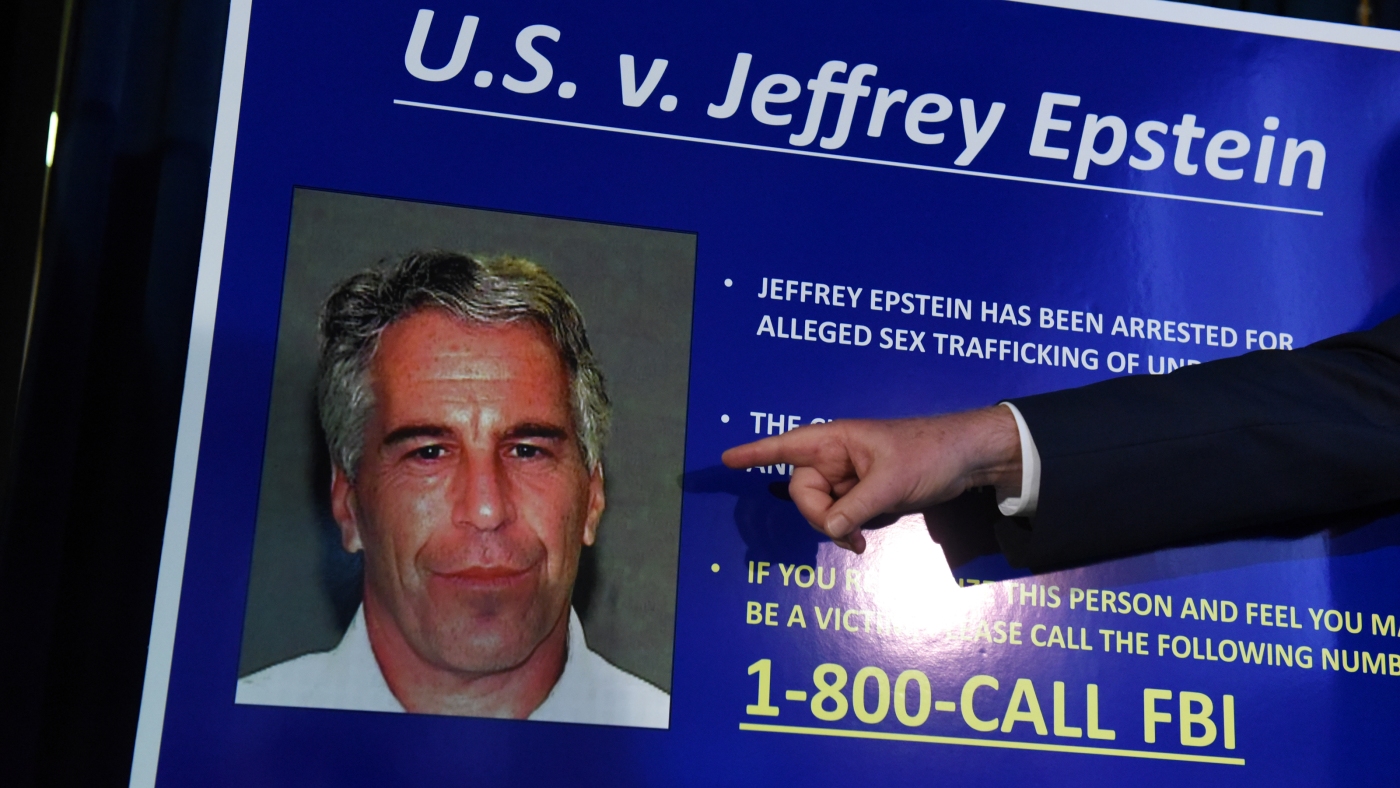
This inquiry comes as questions about the Epstein files continue to mount, as well as information about President Trump's ties to Epstein, the financier and convicted sex offender who died by suicide while in prison five years ago. U.S. Attorney for the Southern District of New York Geoffrey Berman announces charges against Jeffery Epstein on July 8, 2019 in New York City.

A federal judge in Florida has denied a request to unseal grand jury transcripts from a separate Epstein case in Florida.Stephanie Keith/Getty Imageshide captiontoggle captionStephanie Keith/Getty Images🎧 It is not known what new information Maxwell would provide or what she could get out of testifying, if anything, NPR's Domenico Montanaro tells Up First.

The government, encouraged by Trump, attempted to release grand jury transcripts from the Epstein case. But a federal judge yesterday denied one of those requests. A report, broken by the Wall Street Journal, stated that Trump was briefed in May that his name appeared several times in the Epstein files.

Montanaro says it is important to note that the appearance of the president's name doesn't indicate wrongdoing, as Trump and Epstein were friends for years. Columbia University has settled with the federal government and will pay over $220 million to resolve multiple investigations. The settlement, which comes after months-long negotiations, will also restore access to hundreds of millions of dollars in frozen research funding.

The university will pay $200 million over the span of three years to the government and another $21 million to the Equal Employment Opportunity Commission. Columbia's acting president, Claire Shipman, says the settlement also addresses concerns about admissions and hiring, though she didn't provide details on how.

🎧 Columbia's decision to settle is a different approach from Harvard University, which has rejected the government's demands and sued the administration, says NPR's Elissa Nadworny. Todd Wolfson, the president of the American Association of University Professors, says the agreement is a devastating blow to academic freedom and freedom of speech at Columbia.

In March, the Trump administration sent Columbia demands, including requesting strict controls over its international studies department and changes to student discipline policies. The administration alleged there was antisemitism on campus related to student protests over the Gaza war. Trump expressed that Columbia would need to comply with the demands if it wanted its funds to be unfrozen and be eligible for more federal funding in the future.

Trump signed an executive order yesterday requiring artificial intelligence companies that do business with the federal government to remove "ideological agendas" from their AI models. The order prohibits federal agencies from contracting with technology companies that operate AI chatbots exhibiting partisan bias.

This bias is defined in the order as related to concepts such as diversity, equity and inclusion, critical race theory, and "transgenderism." 🎧 The president's initiatives aim to reduce the red tape for AI companies, allowing them to build massive data centers faster, ship AI hardware and software overseas with more ease and eliminate AI chatbots that have adopted a liberal worldview, according to NPR's Bobby Allyn.

The president's order states that tech companies would essentially have to certify that their chatbots are politically neutral before receiving federal government work. Some in the tech industry say this shows that all the warming they have done to the president is paying off. Critics of Trump's plan say it shows that the administration is allowing the tech industry to make its own regulations.

Today's listen Michael Vargas in his room on Wednesday, April 3, 2024 in Miami.Eva Marie Uzcategui for NPRhide captiontoggle captionEva Marie Uzcategui for NPRMichael Vargas Arango, who won NPR's 2023 College Podcast Challenge, recently sent NPR a new podcast, The Monsters We Saved, discussing the surprising response he received worldwide from his story.

His winning entry, The Monsters We Create, was an emotional and personal story about moving to the U.S. from Colombia to study while living with a rare mental health condition. Vargas Arango used audio effects to help listeners understand what living with schizoaffective disorder is like for him. The podcast helped him find a connection with a new community, new opportunities and led him on a journey of self-discovery.

Listen to his new podcast or read more about his journey. Life advice Trying to beat the heat? There are other methods that dropping the thermostat.George Frey/Getty Imageshide captiontoggle captionGeorge Frey/Getty ImagesThis summer has been no stranger to heat, and it looks like it isn't about to ease up.

A long-lasting heat dome is expected to bring triple-digit temperatures over large areas of the Midwest and Eastern U.S. in the coming days. Air conditioners are sure to be on, and people may try precooling their homes to stay comfortable. This involves lowering your home's temperature during off-peak hours and allowing the cool air to last through when the sun is at its strongest and energy costs are higher.

Depending on whom you ask, it may or may not be effective. But don't worry, here are some tips to keep you cool this summer. 🌡️ Use large, heat-generating appliances like ovens, dishwashers and clothes dryers during off-peak hours.🌡️ Keep the sun out during peak hours by closing the curtains and blinds.

🌡️ Set your AC system to increase the temperature when you're away.🌡️ Block drafts from windows and doors in your home using caulk or weather stripping. 3 things to know before you go A 2023 Model X sports-utility vehicle sits outside a Tesla dealership Sunday, June 18, 2023, in Englewood, Colo.David Zalubowski/APhide captiontoggle captionDavid Zalubowski/APTesla yesterday reported its net income dropped 16% year-on-year during its second quarter, despite CEO Elon Musk pivoting back to focusing on his companies after working with the Trump administration.

The U.S. Postal Service is celebrating its 250th anniversary this weekend. To commemorate this milestone, it released new stamps yesterday. (via Hawaiʻi Public Radio)In 2019, Alek Hermon faced the heartbreaking decision to take his father, who had suffered whole brain death, off life support. After he died, Hermon left the operating room where his father's organ donation procedure was set to begin.

As he walked down the hallway, a nurse named Ray, who had been by his father's side, followed him. Hermon's unsung hero embraced him and made sure he wasn't alone with his grief. This newsletter was edited by Suzanne Nuyen.

Analysis

Phenomenon+
Conflict+
Background+
Impact+
Future+

Related Podcasts

DOJ to question Epstein associate Ghislaine Maxwell. And, Trump unveils new AI order | Goose Pod | Goose Pod