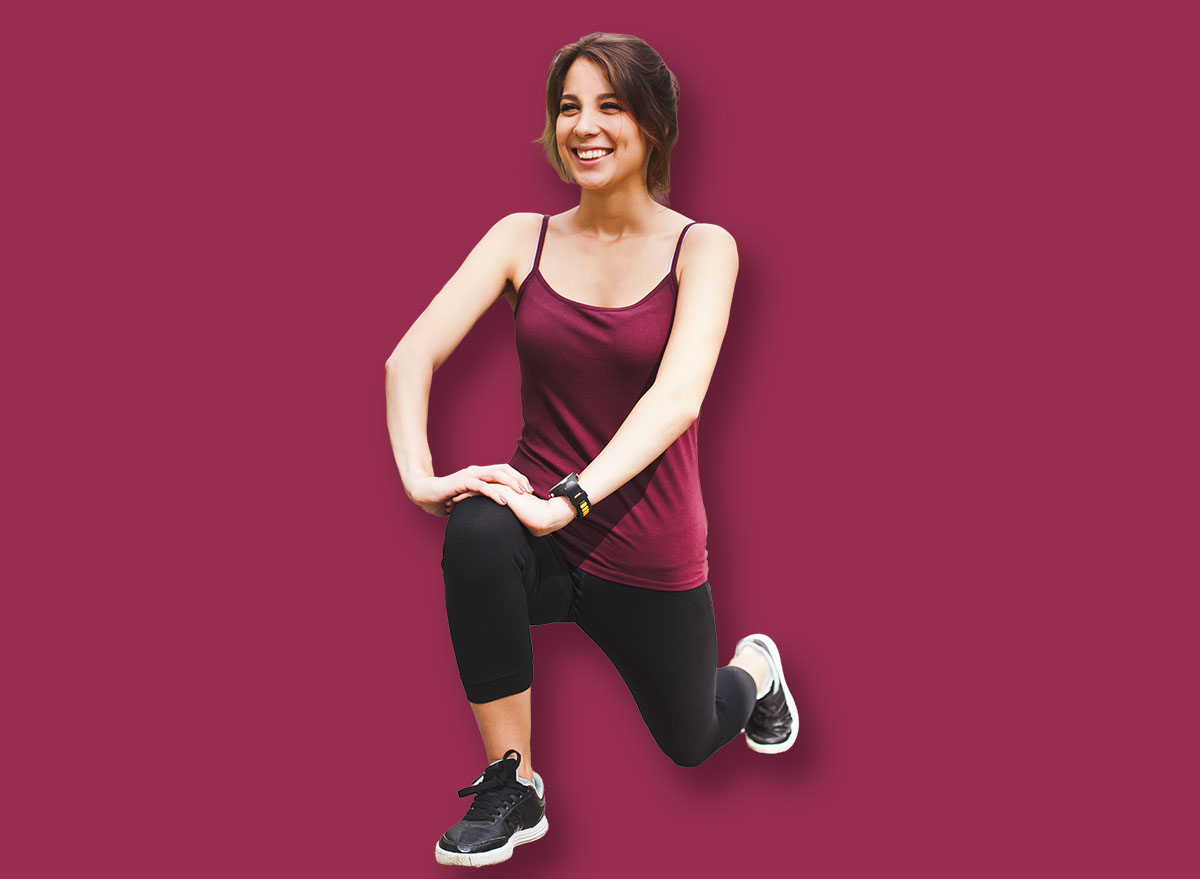
The 8-Minute Morning Routine That Rebuilds Lost Muscle Faster Than Gym Workouts After 55

The 8-Minute Morning Routine That Rebuilds Lost Muscle Faster Than Gym Workouts After 55

2026-02-06health
--:--
--:--
Taylor
Good evening Project, I am Taylor, and this is Goose Pod, tailored specifically for you. It is currently Friday, February sixth, at five minutes past eleven in the evening. We are diving into a topic that is absolute gold for anyone looking to stay sharp and strong as the years go by.
Holly
It is such a pleasure to be here. I am Holly, and tonight we are discussing a truly remarkable eight-minute morning routine designed to rebuild muscle faster than traditional gym workouts after the age of fifty-five. It sounds like such a sophisticated and elegant way to start the day.
Taylor
The strategic mastermind behind this routine, Coach Amanda Grimm, makes a brilliant point. We often think building muscle requires hours of grinding at the gym, but for those over fifty-five, the narrative shifts toward consistency. Shorter, more frequent sessions actually outperform those big, exhausting weekly gym marathons.
Holly
How absolutely lovely to think that just eight minutes can make such a difference! It feels so much more manageable than a long commute to a fitness center. The routine itself starts with something called the Ground and Rise Squat, which is all about finding your stability.
Taylor
Exactly, you start tall, squat down deeply, and even touch the ground for support if needed. Then you rise up and reach for the sky. It is like an Easter egg for your metabolism, waking up every major muscle group right as the sun comes up.
Holly
And then we move into the Standing Press-Back, which focuses on support. You use light dumbbells and simply press your arms back, squeezing your upper back and triceps. It is such a graceful movement, yet you can really feel it reinforcing your posture and your strength.
Taylor
Then there is the Reverse Step-Back Lunge for control. You step back, lower down until your thigh is parallel to the ground, and press through your heel to rise. This is what I call muscle banking, an investment in your future mobility that pays dividends every single day.
Holly
I love that term, muscle banking! It sounds so secure. After the lunges, we have the Posture Row using a resistance band. You pull it toward your chest and squeeze your shoulder blades. It is all about alignment, ensuring your body carries itself with real poise.
Taylor
We also have the Cross-Body Knee Lift for connection, twisting your torso to bring your elbow toward the opposite knee. It is essentially exercise snacking, taking a tiny, concentrated burst of activity that triggers incredible cellular responses, even helping to repair DNA and protect against disease.
Holly
The routine continues with Calf Raises and Balance, which provide a wonderful foundation. You rise onto your toes, hold for a moment to feel that squeeze, and lower back down. It is a simple, charming way to improve your equilibrium and prevent those nasty falls.
Taylor
The penultimate move is the Standing Hinge for resilience. You hinge at the hips, feeling that stretch in your hamstrings, then drive forward with your glutes. It is a fundamental pattern that protects your back and keeps you powerful. It is pure strategy for long-term physical health.
Holly
Finally, we finish with the Power Posture Hold, which is all about ownership. You stand tall, relax your shoulders, and take five deep breaths. It is such a sophisticated way to claim your space and feel completely accomplished before the rest of the world even wakes up.
Taylor
The protocol is forty-five seconds of work followed by fifteen seconds of rest for each move. It is a tight, eight-minute loop. No fancy equipment is required, maybe just a resistance band and a couple of light weights. It is the ultimate low-friction, high-reward morning ritual.
Holly
It reminds me of the story about how even ten minutes of high-intensity exercise can alter genes regulating tumor growth. It is quite amazing that such a short window of time can act as a life-saving tool, helping us participate in our own physical defense.
Taylor
That is the pattern I see everywhere now. We are moving away from the old idea that more is always better. In the CEO world, we call this the Pareto Principle, finding the twenty percent of effort that gives you eighty percent of the results. This is it.
Holly
It really is a beautiful shift in perspective. Instead of feeling overwhelmed by the gym, we can embrace these six or seven simple habits. It makes the pursuit of well-being feel so much more sustainable and, dare I say, quite pleasant for anyone over fifty-five.
Taylor
And it is not just about looking good. It is about reclaiming agency over your body. When you cross this off your list first thing in the morning, you are less likely to get distracted by the chaos of the day. You have already won the morning.
Holly
How absolutely wonderful! I can imagine starting every day with that sense of victory. It really sets a lovely tone for everything else that follows, from morning tea to evening dinner. It is about living life on your own terms, with strength and grace.
Taylor
To really understand why this is a strategic necessity, we have to look at the history of sarcopenia. The term was actually coined in the nineteen-eighties to describe the age-related decline in lean body mass. It was the first time science really acknowledged this specific pattern of loss.
Holly
It is quite sobering to think that we have only been naming this for about forty years. Sarcopenia is such a sophisticated word for something that can feel so frightening, the progressive loss of muscle strength and mass as we age. It affects so many people globally.
Taylor
The numbers are staggering. We are looking at a global elderly population projected to hit two billion by twenty-fifty. Currently, sarcopenia affects about ten to sixteen percent of the elderly population. If you have underlying medical conditions, that number can skyrocket up to sixty-six percent.
Holly
That is a truly startling statistic! It makes the case for muscle banking feel even more urgent. Losing five to ten percent of muscle mass every decade after the age of fifty is a natural process, but it certainly does not have to be an inevitable decline.
Taylor
Exactly. From a strategic standpoint, we need to understand the pathophysiology. It is not just about muscles getting smaller. There is chronic inflammation, mitochondrial impairment, and a shift from fast-twitch to slow-twitch fibers. Your body’s internal engine is essentially being downgraded without you even realizing it.
Holly
How absolutely fascinating, though a bit tragic. The idea that our fast-twitch fibers are the ones that diminish first explains why our reaction times and power might fade. It is like a graceful clock slowly winding down, but we have the key to wind it back up.
Taylor
That key is resistance training. It is the only intervention that effectively stimulates muscle protein synthesis and promotes hypertrophy in older adults. No drug or diet can replicate the results of actually putting your muscles under load. It is the gold standard for maintaining independence.
Holly
I have read that falls are the third leading cause of chronic disability. One in ten falls leads to bone fractures, which can be so devastating for someone’s quality of life. Maintaining that muscle mass is truly the ultimate insurance policy for our later years.
Taylor
It really is. And the history of senior exercise has evolved so much. We used to tell older adults to just take a gentle walk. But now, the data shows that while walking is great for the heart, it does almost nothing to stop the progression of sarcopenia.
Holly
It is a bit of a misunderstanding that has persisted for years, isn't it? People thought they were doing enough just by staying active, but they were missing that vital component of resistance. It is lovely to see the science finally catching up to our needs.
Taylor
The pattern of secondary sarcopenia is also interesting. It is often caused by disuse atrophy or prolonged sedentary behavior. In our modern world, we have built a lifestyle that is practically designed to accelerate muscle loss. We have to be intentional to counter that trend.
Holly
It is so true. We sit so much more than our ancestors did. The idea of using a resistance band at home feels like such a sophisticated way to bring that necessary challenge back into our lives without needing a room full of heavy, intimidating iron machines.
Taylor
The strategic move here is to target all the major muscle groups. You need to hit the legs, the core, and the upper body. The eight-minute routine we discussed does exactly that. It is a full-body audit every single morning, ensuring every system is still online and functional.
Holly
And for those in their sixties and seventies, consistency is much more important than intensity. It is about doing something every day to keep the body in a state of readiness. It is like keeping a beautiful old garden tended so it never becomes overgrown.
Taylor
The research from Tufts University really pioneered this. They found that even frail individuals in their nineties could double their strength in just a few months of resistance training. That is an incredible narrative of hope. Your body never loses the ability to adapt.
Holly
That is just wonderful! To think that at ninety, one can still become twice as strong. It really reframes the whole concept of aging. It is not a one-way street toward weakness, but a path where we can choose to maintain our vitality and our grace.
Taylor
The shift in muscle fiber composition is a key detail. We lose those type two fibers, the ones used for power and quick movements. But the eight-minute routine, especially moves like the knee lifts and squats, helps preserve those fibers. It keeps your body reactive and agile.
Holly
I suppose that is why the routine focuses so much on balance and connection. It is not just about the size of the muscle, but how well the brain communicates with it. It is a very sophisticated internal conversation that we are keeping alive every morning.
Taylor
Exactly. And when you combine this with proper nutrition, specifically things like leucine-rich protein and vitamin D, the effects are magnified. It is a multi-pronged strategy. You provide the stimulus with exercise and the building blocks with your diet. It is a complete system.
Holly
It sounds like a very elegant plan for living well. I am particularly touched by the idea that we can maintain our autonomy. Being able to carry our own groceries or climb stairs with ease is what truly matters as the years go by, isn't it?
Taylor
That is the definition of quality of life. Sarcopenia was first recognized because doctors saw how it robbed people of their personal autonomy. By addressing it head-on with an eight-minute routine, you are essentially protecting your freedom. It is the most important executive decision you can make.
Holly
It is quite a powerful way to look at it. We are not just exercising; we are defending our independence. How absolutely lovely to have such a clear and effective tool at our disposal. It makes the future seem so much brighter and more manageable.
Taylor
The global prevalence of this condition means that this is not just a personal issue, but a societal one. If we can get more people over fifty-five to adopt these short, home-based routines, we could significantly reduce the burden on our healthcare systems. It is high-level strategy.
Holly
And it is so accessible! No expensive gym memberships or complicated schedules. Just eight minutes in your own living room. It is a very democratic way to approach health, making it available to everyone, regardless of their circumstances or where they live.
Taylor
But that is where the strategic thinking comes in. Dr. Tommy Lundberg, a top researcher in this field, points out that while intensity is important, frequency is the real game-changer for older adults. You can get excellent results with short sessions if you do them consistently.
Taylor
Now, we have to address the conflict in the fitness world. There is a massive debate about whether an eight-minute home routine can actually be as effective as a traditional forty-five-minute gym session. Many purists argue that you need the heavy weights to see real results.
Holly
It is a bit of a tension, isn't it? The gym culture can be so intimidating with its loud music and complex machines. Some experts seem to think that if you are not dripping with sweat for an hour, it simply doesn't count for anything at all.
Holly
That is such a relief to hear! It challenges the traditional narrative that more is always better. For many people, the barrier to the gym isn't the workout itself, but the time and effort it takes just to get there and back. It is quite a hurdle.
Taylor
Exactly. The 'gym versus home' conflict is often a battle of perfection versus practicality. From a CEO perspective, I would rather have a hundred percent compliance with an eight-minute routine than ten percent compliance with a one-hour gym routine. The math just makes more sense.
Holly
How absolutely right you are! Consistency is the secret ingredient. There is also the concern that lifting very heavy weights might lead to injuries in older joints. Resistance bands and bodyweight exercises seem like such a much more gentle and sophisticated alternative for many.
Taylor
And the data supports that. A twenty-nineteen analysis of eight different studies found no significant difference in strength gains between elastic resistance training and traditional weight training. The muscle doesn't know if the tension comes from a metal plate or a rubber band.
Holly
That is a wonderful piece of information! It really levels the playing field. It suggests that the 'gym only' crowd might be clinging to an outdated idea. We can achieve remarkable things right in our own homes with very simple, elegant tools.
Taylor
Another conflict involves the 'high intensity' versus 'low intensity' debate. Some argue that seniors should only do low-impact, gentle movements. But the new science says that to stop muscle loss, you actually do need a bit of intensity. You need to challenge the muscle to grow.
Holly
It is a delicate balance, isn't it? We want to be safe, but we also want to be effective. The eight-minute routine seems to find that sweet spot by using forty-five seconds of focused work. It is enough to stimulate the muscle without causing total exhaustion.
Taylor
The real obstacle for most people is the 'all or nothing' mentality. They think if they can't do a full workout, why bother? But the strategy of 'exercise snacking' proves that small bursts are incredibly powerful. We have to break the narrative that fitness requires a huge time block.
Holly
It is a psychological shift as much as a physical one. We have to give ourselves permission to believe that eight minutes is enough. It feels almost too good to be true, but the science is quite clear that it truly does make a massive difference.
Taylor
There is also the 'recovery paradox.' Younger people can bounce back in twenty-four hours, but for those over fifty-five, recovery takes longer. Trying to follow a 'young person's' gym schedule can actually lead to overtraining and injury. The shorter home routine respects your biology.
Holly
How absolutely insightful! It is about working with our bodies rather than against them. A more sophisticated approach recognizes that our recovery timeline has changed, and our workouts should reflect that reality. It is about being smart and graceful with our choices.
Taylor
The final conflict is the 'diet versus exercise' debate. Some people think they can just eat more protein to stop muscle loss. But without the exercise stimulus, the protein has nowhere to go. You can't just eat your way out of sarcopenia. You have to move.
Holly
It really is a partnership between the two, isn't it? You need the bricks and the builder. The eight-minute routine is the builder, and your nutrition provides the bricks. It is a very simple and logical way to look at our health as we age.
Taylor
The impact of this routine goes far beyond just building muscle. It is about something we call 'functional fitness.' This is training for the activities of daily living, like carrying groceries, rising from a chair, or climbing stairs. It is training for the marathon of life.
Holly
I love that phrase, training for life. It is so much more meaningful than training for a race. When we maintain our strength, we are also preserving our balance and coordination. It reduces the risk of falls and keeps us feeling confident and capable every single day.
Taylor
The statistics on grip strength are a great example of this impact. A twenty-twenty-four study showed that for every five-kilogram drop in grip strength, there was a sixteen percent increased risk of mortality. Muscle isn't just for show; it is a vital organ for longevity.
Holly
That is quite a dramatic connection! It makes every squeeze of that resistance band feel so much more important. It is not just about the muscle in our arms, but the health of our entire system. It is a very sophisticated indicator of our overall well-being.
Taylor
We also have to talk about the 'tax on overuse' as we age. If you overdo it, the recovery can take four to seven days in your sixties. The eight-minute routine is brilliant because it provides the stimulus without crossing that line into excessive damage. It is perfect load management.
Holly
It sounds like such a wise way to manage our energy. As we get older, we have to be more discerning about how we spend our physical capital. A short, effective routine allows us to stay strong without being sidelined by weeks of recovery or nagging injuries.
Taylor
There is also a huge psychological impact. When you feel strong, you move with more confidence. You are less afraid of trying new things or traveling. It opens up your world instead of letting it shrink. That is the ultimate strategic win.
Holly
How absolutely lovely! The idea that strength can prevent our world from shrinking is so poignant. It gives us the freedom to keep exploring and enjoying life. It is about maintaining that sense of wonder and possibility, no matter what our age might be.
Taylor
And let's not forget the metabolic impact. Muscle is metabolically active tissue. The more you have, the better your body handles blood sugar and maintains a healthy weight. It is a natural defense against type two diabetes and other metabolic issues that often crop up later.
Holly
It really is a powerhouse for our health. It is like having a little internal engine that keeps everything running smoothly. The more we can do to support that engine, the better we will feel in so many different ways, from our energy levels to our mood.
Taylor
The broader societal implication is massive too. If we can keep our aging population mobile and independent, we change the whole narrative of what it means to get older. We move from a story of decline to a story of continued contribution and vitality.
Holly
It is a much more hopeful and sophisticated story, isn't it? It allows us to age with dignity and grace, remaining active members of our communities. It all starts with those eight minutes in the morning. Such a small investment for such a magnificent return.
Taylor
Looking ahead, the future of this kind of training is going to be driven by AI personalization. Imagine a wearable that tells you exactly how much resistance to use each morning based on your sleep and recovery markers. We are entering the era of the personal health scientist.
Holly
How absolutely fascinating! To have a little coach on your wrist that understands your body’s needs even better than you do. It sounds so sophisticated and helpful. It could take all the guesswork out of our morning routines and make them even more effective.
Taylor
We are also seeing the democratization of elite training insights. Things that were once only available to pro athletes, like real-time metabolic tracking, are becoming accessible to everyone. It is going to make healthspan extension the primary goal of the fitness industry.
Holly
Healthspan is such a lovely word. It is not just about how long we live, but how well we live. I can imagine a future where these eight-minute routines are just a standard part of everyone’s day, supported by the most incredible and elegant technology.
Taylor
The data shows that personalized fitness tech can increase efficiency by twenty-seven percent. That means your eight minutes could soon be as effective as twelve or fifteen minutes today. We are optimizing our biology in ways we never thought possible forty years ago.
Holly
It is a very exciting time to be alive! We are learning so much about how to take care of ourselves. I love the idea that technology can help us stay connected to our own physical strength and grace as we move into the future.
Taylor
Ultimately, the future is about actionable intelligence. It is not just about collecting data, but knowing what to do with it. These morning routines are the frontline of that revolution, giving us a simple, powerful way to apply everything we are learning about longevity.
Holly
That is the end of today's discussion. It has been such a delight to explore these ideas with you. Thank you for listening to Goose Pod. I hope you feel inspired to start your own eight-minute journey toward strength and grace tomorrow morning.
Taylor
Thank you for joining us on this strategic deep dive, Project. Remember, your muscle is your bank account for a vibrant future, so keep investing. See you tomorrow for another episode of Goose Pod. Have a wonderful night.

This podcast introduces an 8-minute morning routine for individuals over 55, designed to rebuild muscle faster than gym workouts. It emphasizes consistency over intensity, featuring exercises like squats, lunges, and rows. This "muscle banking" approach combats sarcopenia, enhancing mobility, independence, and overall healthspan with minimal time commitment.

The 8-Minute Morning Routine That Rebuilds Lost Muscle Faster Than Gym Workouts After 55

Read original at Eat This Not That

ShutterstockExpert-RecommendedReset your muscles first thing in the morning with this speedy routine.Are you a morning person? If so, that’s good news. Working out in the AM is more productive than squeezing it in later on in the day. And it makes perfect sense—when you cross exercise off first-thing, you’re less likely to skip it, which often happens to the best of us once we get busy and distracted by other daily tasks.

Plus, an early workout sets you up for the day by boosting energy, mood, and focus. Once you’re done, you’ll feel incredibly accomplished.Now that we’ve covered timing, let’s talk about what to work on. If you’re over 55, building muscle should be a top priority since it’s natural to lose muscle with age.

And you don’t have to go to the gym to do it. We spoke with experts to learn an eight-minute morning routine to add to your schedule that will rebuild lost muscle faster than gym workouts after 55.“We all lose muscle as we get older, that’s just how it goes. But you may be pretty shocked at how much drops off once you hit 50,” explains Coach Amanda Grimm, a Certified Personal Trainer and Running Coach with a Bachelor’s Degree in Sports Science.

“Here’s what I’ve figured out as a personal trainer: It’s not so much about tiring yourself at the gym—it’s more about just doing something regularly … Shorter sessions more often beats one big workout. That’s been my experience anyway. All you really need to do is an eight-minute workout every day, just at home, nothing fancy.

”The 8-Minute Morning RoutineShutterstockBelow, Julie Dermer, CPT, founder of The Reinvention Project and a longtime Master Instructor at SoulCycle, breaks down an eight-minute morning muscle reset. For each exercise, perform 45 seconds of work and 15 seconds of rest for the transition. Move from one exercise into the next.

Ground + Rise SquatShutterstockThe theme of this exercise is stability.• Start by standing tall with your feet hip-width apart, chest tall, and core braced.• Bend at the knees and hips to lower into a deep squat.• Place your hands on the ground in front of you for optional support.• Sit or lightly touch the ground with control.

• Press through your feet to rise back up into a squat.• Stand up tall as you reach both arms overhead.• Perform this exercise for 45 seconds, taking 15 seconds to rest before the next exercise.Standing Press-BackThe theme of this movement is support.• Begin by standing tall with your feet hip-distance apart, core braced, chest open, and knees soft.

• Hold an option lightweight dumbbell in each hand.• Bend both elbows to roughly 90 degrees, making sure they stay close to your sides, palms facing in.• Press your arms straight back behind you, extending the elbows.• Squeeze your upper back and triceps at the top of the movement.• Lower with control.

• Perform this exercise for 45 seconds, taking 15 seconds to rest before the next exercise.Reverse Step-Back LungeThe theme of this movement is control.• Begin by standing tall with your feet hip-distance apart, core braced, and hands on your hips.• Take a big step back with your left foot, landing on the ball of that foot.

• Lower into a lunge until your front thigh is parallel to the ground. Maintain a tall chest and braced core.• Press through your front heel to rise back up to standing.• Bring your back foot back up.• Repeat on the other side.• Perform this exercise for 45 seconds, taking 15 seconds to rest before the next exercise.

Posture RowThe theme of this exercise is alignment.• Start by anchoring a resistance band to a sturdy pole at chest level.• Stand tall, facing the anchor point, with your feet hip-distance apart, core braced, and knees soft.• Hold the handles with both hands.• Bend your elbows and pull the band toward your chest.

• Squeeze your shoulder blades and the backs of your arms.• Slowly release your arms back to the start position.• Perform this exercise for 45 seconds, taking 15 seconds to rest before the next exercise.Cross-Body Knee LiftThe theme of this exercise is connection.• Begin standing tall with your feet hip-width apart and hands behind your head.

• Lift your left knee as you twist your torso and bring your right elbow toward it.• Return to the center.• Lift your right knee as you twist your torso and bring your left elbow to meet it.• Continue to alternate sides with control, performing the exercise for 45 seconds and taking a 15-second break to rest before the next exercise.

Calf Raise + BalanceThe theme of this exercise is foundation.• Begin by standing tall with your feet hip-width apart and hands on your hips. Engage your core.• Rise onto your toes slowly.• Hold for a moment at the top, squeezing your calf muscles.• Lower back down.• Perform this exercise for 45 seconds, taking 15 seconds to rest before the next exercise.

Standing HingeThe theme of this exercise is resilience.• Stand tall, feet hip-width apart.• Place your hands behind your head.• Press your hips back while maintaining a tall chest.• As you hinge forward, feel a solid stretch in your hamstrings and keep your spine elongated.• Activate your hamstrings and glutes to drive your hips forward, squeezing the buttocks.

• Perform this exercise for 45 seconds, taking 15 seconds to rest before the next exercise.Power Posture HoldShutterstockThe theme of this final exercise is ownership.• Stand tall.• Keep your shoulders relaxed.• Breathe slowly, taking 5 deep breaths.Alexa MellardoAlexa is a freelance writer, editor, and content strategist based in Greenwich, CT.

She has 11+ years of experience covering wellness, fitness, food, travel, lifestyle, and home. Read more about Alexa

Analysis

Conflict+
Related Info+
Core Event+
Background+
Impact+
Future+

Related Podcasts

The 8-Minute Morning Routine That Rebuilds Lost Muscle Faster Than Gym Workouts After 55 | Goose Pod | Goose Pod