
What happened
This podcast criticizes Rachel Reeves' budget for taxing young workers more than pensioners. By freezing tax thresholds while state pensions rise, the government effectively "mugs the youth" to fund retirees. This "fiscal drag" disincentivizes labor, exacerbates inequality, and creates a stark generational divide,...
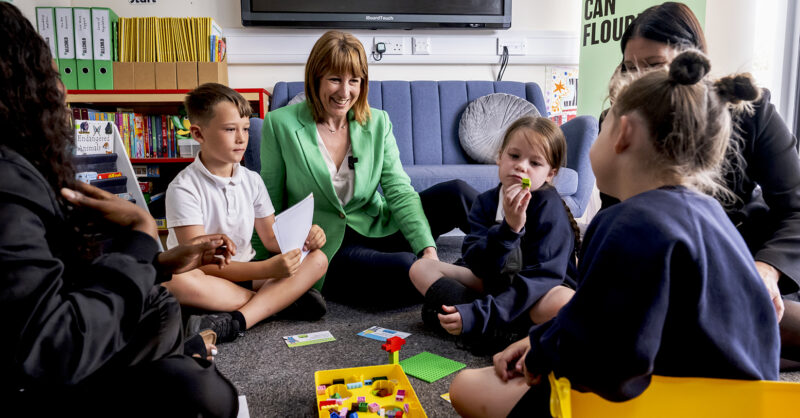
Photo by Anthony Devlin/WPA Pool via Getty Kate, 25, wants to change career, so she looks at becoming an apprentice. In 2026 she’ll be offered the minimum wage for anyone in their first year of apprenticeship. At the new rate of £8 per hour (from April next year), this works out to a salary of £12,480, which is less than her grandfather, Keith, will get from his state pension (£12,534.
60 from April next year). Neither of them earn enough to pay income tax, but this is about to change. In her 2025 Autumn Budget, Rachel Reeves promised to protect Keith from being pushed into paying income tax by rises in the state pension. She did not make the same promise to Kate. A new level of unfairness is taking shape in the UK economy.
In 2027, the Keiths of this economy are likely to cross the threshold for income tax, as the “triple lock” raises the state pension above £12,570, but Reeves has guaranteed that they will not start paying tax. The Kates of this economy will also receive higher nominal income as they work more hours or receive higher pay.
As they go beyond the £12,570 threshold (frozen in place by Reeves until 2030-31), they will start paying tax. The OBR predicts this will be the case for 5.2 million people by the end of the forecast period. This raises the possibility of a new situation at the lower end of the pay scale: as inflation or average wage growth pushes up Keith’s state pension, he will receive a higher income than a first-year apprentice like Kate and pay no tax on it.
We will have an economy in which the full-time work of some young people will pay less than the state pensions of retirees, and yet it is the young people who will be taxed. Also, Keith gets free public transport. And lower council tax. And the Winter Fuel Allowance. And free prescriptions. His wealthier friend, Kevin, is allowed to keep whacking £20,000 a year into a cash ISA, because he’s over 65 (even if Kate had the money to do this, she wouldn’t be allowed).
Treat yourself or a friend this Christmas to a New Statesman subscription for just £2 Keith might argue that the state pension he receives is the result of having paid into the National Insurance Fund throughout his life. He’d be wrong. The NIF is not a pension fund. Keith’s National Insurance contributions were spent on the retirements of previous generations, and his state pension is being paid by Kate.
The NIF is best thought of as the pot used to carry money from today’s workers to today’s retirees. It currently holds a surplus, but this will have entirely evaporated decades before Kate retires. When Kate does eventually retire, she will also have a private pension pot that may be tens of thousands of pounds smaller as a result of this year’s Budget, which imposed a £2,000 cap on salary sacrifice pensions contributions (her employer may also decide to pay her less over her career to compensate for the extra tax).
If she decided to study for a degree rather than an apprenticeship, she will have to start making student loan repayments – effectively a tax, for the majority of students – almost as soon as she enters the workforce, because Reeves has also frozen the threshold at which these payments begin. Most of the big revenue-raising measures in Reeves’ budget were forms of fiscal drag, meaning they use inflation to cause people to pay more tax.
As a way to raise money this is coherent with the view of the 17th-century French statesman Jean-Baptiste Colbert, who famously said that taxation was the art of “so plucking the goose as to get the most amount of feathers with the least amount of hissing”. Stealth tax, using fiscal drag, causes little hissing in the short term because it robs from the future rather than taking money up front, which makes it very attractive to a Chancellor focused on fiscal rules that are all about what the state of government finances will be in the years to come.
But that does not mean the hissing can be avoided. What is becoming clear is that making fiscal policy in this way – the mañana approach of gaming the forecast and allowing inflation to take the blame – involves taxing the young much more than the old. If it becomes the case that young people are earning basically the same amount as their grandparents – but only the young are paying tax – then we should expect the hissing to get very loud indeed.
[Further reading: Tax the old] Content from our partners
Source coverage
This article from the New Statesman really gets under my skin. It's a clear indictment of current economic policy in the UK, specifically the way it's setting up an unfair system where young workers are getting the short end of the stick while retirees are essentially protected. The core issue is this: a growing...
Let's break this down. We have this fictional apprentice, Kate, who's going to be making a minimum of £8 an hour from April 2026. That’s just £12,480 a year. Meanwhile, someone like Keith is going to be getting a state pension of £12,534.60. Now, here's the rub: the income tax threshold is frozen at £12,570. So,...
Deeper analysis
Full source content
Photo by Anthony Devlin/WPA Pool via Getty Kate, 25, wants to change career, so she looks at becoming an apprentice. In 2026 she’ll be offered the minimum wage for anyone in their first year of apprenticeship. At the new rate of £8 per hour (from April next year), this works out to a salary of £12,480, which is less than her grandfather, Keith, will get from his state pension (£12,534.
60 from April next year). Neither of them earn enough to pay income tax, but this is about to change. In her 2025 Autumn Budget, Rachel Reeves promised to protect Keith from being pushed into paying income tax by rises in the state pension. She did not make the same promise to Kate. A new level of unfairness is taking shape in the UK economy.
In 2027, the Keiths of this economy are likely to cross the threshold for income tax, as the “triple lock” raises the state pension above £12,570, but Reeves has guaranteed that they will not start paying tax. The Kates of this economy will also receive higher nominal income as they work more hours or receive higher pay.
As they go beyond the £12,570 threshold (frozen in place by Reeves until 2030-31), they will start paying tax. The OBR predicts this will be the case for 5.2 million people by the end of the forecast period. This raises the possibility of a new situation at the lower end of the pay scale: as inflation or average wage growth pushes up Keith’s state pension, he will receive a higher income than a first-year apprentice like Kate and pay no tax on it.
We will have an economy in which the full-time work of some young people will pay less than the state pensions of retirees, and yet it is the young people who will be taxed. Also, Keith gets free public transport. And lower council tax. And the Winter Fuel Allowance. And free prescriptions. His wealthier friend, Kevin, is allowed to keep whacking £20,000 a year into a cash ISA, because he’s over 65 (even if Kate had the money to do this, she wouldn’t be allowed).
Treat yourself or a friend this Christmas to a New Statesman subscription for just £2 Keith might argue that the state pension he receives is the result of having paid into the National Insurance Fund throughout his life. He’d be wrong. The NIF is not a pension fund. Keith’s National Insurance contributions were spent on the retirements of previous generations, and his state pension is being paid by Kate.
The NIF is best thought of as the pot used to carry money from today’s workers to today’s retirees. It currently holds a surplus, but this will have entirely evaporated decades before Kate retires. When Kate does eventually retire, she will also have a private pension pot that may be tens of thousands of pounds smaller as a result of this year’s Budget, which imposed a £2,000 cap on salary sacrifice pensions contributions (her employer may also decide to pay her less over her career to compensate for the extra tax).
If she decided to study for a degree rather than an apprenticeship, she will have to start making student loan repayments – effectively a tax, for the majority of students – almost as soon as she enters the workforce, because Reeves has also frozen the threshold at which these payments begin. Most of the big revenue-raising measures in Reeves’ budget were forms of fiscal drag, meaning they use inflation to cause people to pay more tax.
As a way to raise money this is coherent with the view of the 17th-century French statesman Jean-Baptiste Colbert, who famously said that taxation was the art of “so plucking the goose as to get the most amount of feathers with the least amount of hissing”. Stealth tax, using fiscal drag, causes little hissing in the short term because it robs from the future rather than taking money up front, which makes it very attractive to a Chancellor focused on fiscal rules that are all about what the state of government finances will be in the years to come.
But that does not mean the hissing can be avoided. What is becoming clear is that making fiscal policy in this way – the mañana approach of gaming the forecast and allowing inflation to take the blame – involves taxing the young much more than the old. If it becomes the case that young people are earning basically the same amount as their grandparents – but only the young are paying tax – then we should expect the hissing to get very loud indeed.
[Further reading: Tax the old] Content from our partners
How this page is built
Goose Pod turns cited reporting into a public episode summary first, then pairs that summary with audio playback so listeners can check the source material before they decide how deeply to engage.
The goal is to make this page useful as a news landing page first, while still giving listeners transcript access, related episodes, and direct links back to the original publishers.