
What happened
All Blacks coach Scott Robertson's admission that assistant Scott Hansen effectively leads coaching has sparked controversy in New Zealand. Critics argue it undermines traditional coaching roles, while proponents see it as a necessary evolution towards distributed leadership and specialized player preparation,...
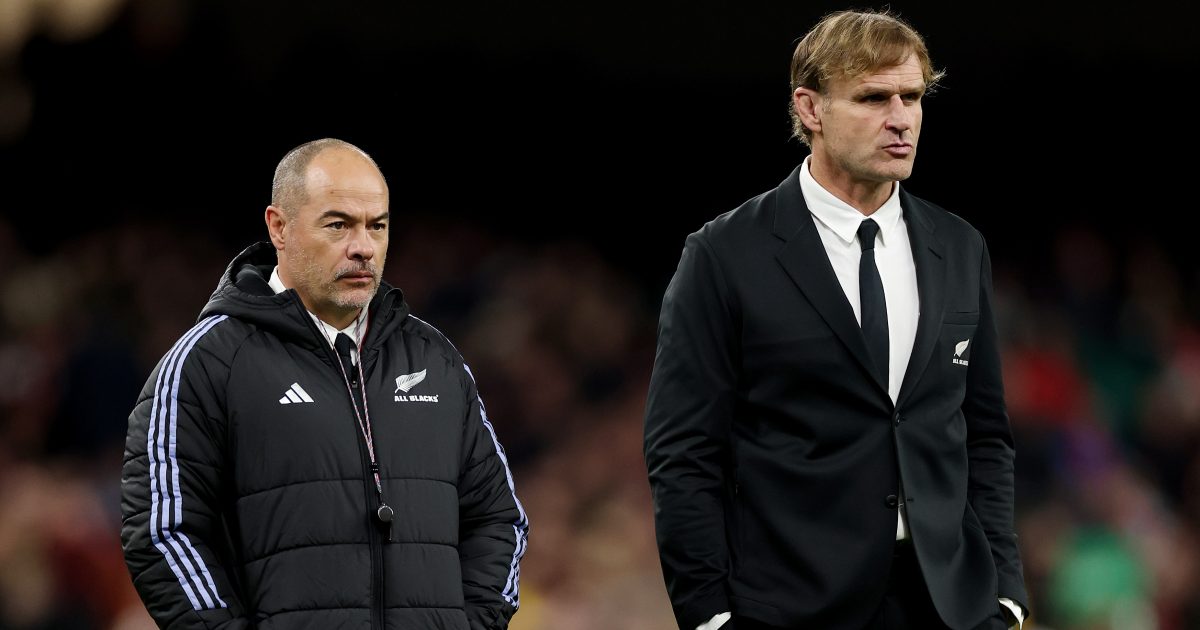
CARDIFF, WALES - NOVEMBER 22: Scott Robertson, Head Coach of New Zealand, and Scott Hansen, Assistant Coach of New Zealand, look on prior to the Quilter Nations Series 2025 match between Wales and New Zealand at the Principality Stadium on November 22, 2025 in Cardiff, Wales. (Photo by Dan Mullan/Getty Images) Kiwi pundits have been left “flabbergasted” by an admission from All Blacks coach Scott Robertson in Wales last week that revealed how the Kiwi coaching group operates.
While it was Robertson who had all the hype and winning momentum behind him in his campaign to succeed Ian Foster as All Blacks coach following the 2023 Rugby World Cup, his Crusaders running mates flew largely under the radar. However, when the long-awaited call from New Zealand Rugby came, and it was time to select his coaching staff, Robertson’s choices raised plenty of eyebrows.
Limited Test-level experience could be found amongst the group, which consisted of former Crusaders and Canterbury assistants, as Robertson stuck to trusted former colleagues when selecting his sidekicks.However, the traditional understanding of who is playing Robin to Robertson’s Batman was upended last week, with RugbyPass contributor Gregor Paul penning a piece for the New Zealand Herald that discussed in depth the structures within New Zealand Rugby and the All Blacks that were put forward as potentially problematic.
“As Robertson confirmed to the Herald this week in Cardiff, it is his assistant, Scott Hansen, who effectively operates in the role most would recognise as the head coach,” Paul wrote.RelatedThat snippet of text swiftly spread across the internet, sparking a strong reaction from the All Blacks faithful.
“I’m flabbergasted by this,” long-time radio host Martin Devlin reacted on DSPN. “None of us wanted Scott Hansen to be the coach of the All Blacks. No disrespect to Scott Hansen, but you weren’t given the job. Razor is the coach; if you can’t be the coach, then we need another coach. And it’s not Scott Hansen.
“You haven’t earned the right to be the All Blacks coach, yet. You haven’t. That’s the thing. You haven’t even coached the Crusaders. There’s another guy called Scott Robertson who was meant to be doing that.“It’s an amazing quote, and just to reveal that says an awful lot.“Last week, remember, at the press conference, he said that the assistants were learning on the job, and this week he says that ‘that guy there is actually the coach’.
Did he mean that? Because if he means that, then we’ve got serious problems.“Because also, New Zealand Rugby didn’t hire Scott Hansen to be the coach. They hired Scott Robertson. So there’s a devolution of power and roles. I want Scott Robertson to coach the All Blacks. I don’t want anyone else to coach the All Blacks; otherwise, get another coach in.
”In Paul’s original article, it is specified that Robertson pitched himself as a “cultural coach” during the All Blacks’ appointment process, suggesting there was some level of understanding between him and New Zealand Rugby about how he would delegate coaching roles and responsibilities within his selected cohort of assistants.
Recommended
Source coverage
Okay, so here's what I've got from this news piece about the All Blacks coaching situation. It's really something. The article, published in the New Zealand Herald, dives into the fallout from an unexpected admission by All Blacks coach Scott Robertson.
The core of it is this: Robertson confirmed in an interview in Cardiff on November 22, 2025, that his assistant, Scott Hansen, is essentially operating as the de facto head coach. This revelation has caused, to put it mildly, quite a stir. The pundits are flabbergasted.
Deeper analysis
Full source content
CARDIFF, WALES - NOVEMBER 22: Scott Robertson, Head Coach of New Zealand, and Scott Hansen, Assistant Coach of New Zealand, look on prior to the Quilter Nations Series 2025 match between Wales and New Zealand at the Principality Stadium on November 22, 2025 in Cardiff, Wales. (Photo by Dan Mullan/Getty Images) Kiwi pundits have been left “flabbergasted” by an admission from All Blacks coach Scott Robertson in Wales last week that revealed how the Kiwi coaching group operates.
While it was Robertson who had all the hype and winning momentum behind him in his campaign to succeed Ian Foster as All Blacks coach following the 2023 Rugby World Cup, his Crusaders running mates flew largely under the radar. However, when the long-awaited call from New Zealand Rugby came, and it was time to select his coaching staff, Robertson’s choices raised plenty of eyebrows.
Limited Test-level experience could be found amongst the group, which consisted of former Crusaders and Canterbury assistants, as Robertson stuck to trusted former colleagues when selecting his sidekicks.However, the traditional understanding of who is playing Robin to Robertson’s Batman was upended last week, with RugbyPass contributor Gregor Paul penning a piece for the New Zealand Herald that discussed in depth the structures within New Zealand Rugby and the All Blacks that were put forward as potentially problematic.
“As Robertson confirmed to the Herald this week in Cardiff, it is his assistant, Scott Hansen, who effectively operates in the role most would recognise as the head coach,” Paul wrote.RelatedThat snippet of text swiftly spread across the internet, sparking a strong reaction from the All Blacks faithful.
“I’m flabbergasted by this,” long-time radio host Martin Devlin reacted on DSPN. “None of us wanted Scott Hansen to be the coach of the All Blacks. No disrespect to Scott Hansen, but you weren’t given the job. Razor is the coach; if you can’t be the coach, then we need another coach. And it’s not Scott Hansen.
“You haven’t earned the right to be the All Blacks coach, yet. You haven’t. That’s the thing. You haven’t even coached the Crusaders. There’s another guy called Scott Robertson who was meant to be doing that.“It’s an amazing quote, and just to reveal that says an awful lot.“Last week, remember, at the press conference, he said that the assistants were learning on the job, and this week he says that ‘that guy there is actually the coach’.
Did he mean that? Because if he means that, then we’ve got serious problems.“Because also, New Zealand Rugby didn’t hire Scott Hansen to be the coach. They hired Scott Robertson. So there’s a devolution of power and roles. I want Scott Robertson to coach the All Blacks. I don’t want anyone else to coach the All Blacks; otherwise, get another coach in.
”In Paul’s original article, it is specified that Robertson pitched himself as a “cultural coach” during the All Blacks’ appointment process, suggesting there was some level of understanding between him and New Zealand Rugby about how he would delegate coaching roles and responsibilities within his selected cohort of assistants.
Recommended
How this page is built
Goose Pod turns cited reporting into a public episode summary first, then pairs that summary with audio playback so listeners can check the source material before they decide how deeply to engage.
The goal is to make this page useful as a news landing page first, while still giving listeners transcript access, related episodes, and direct links back to the original publishers.