

What happened
News Summary: "Katrina: Come Hell and High Water" Review
News Title/Type: Documentary Review
Report Provider/Author: The Guardian / Jack Seale
It’s hard to quantify the significance of Hurricane Katrina: the combination of a historic natural disaster and cold systemic indifference towards its impoverished African American victims makes it perhaps the most significant event in 21st-century Black American history. It’s no surprise, then, that more than one major documentary series has been made to mark 20 years since wind, water and a whole lot of racism devastated New Orleans, or that leading cinematic auteurs of two consecutive generations, Spike Lee and Ryan Coogler, have each executive-produced their own.
But watching Katrina: Come Hell and High Water, you do wish Lee and Coogler had got on the phone to check they weren’t doubling up too much. The new three-parter – the Lee one that arrives on Netflix to coincide with the week of the anniversary, has its impact dulled by the pre-existence of Hurricane Katrina: Race Against Time, the Coogler one which came out on Disney+ and National Geographic a month ago.
For much of the screen time, this is a less comprehensive rendering of the same story, using many of the same clips and interviewees.That tale is essential, however, and powerfully told. Katrina, a Category 5 hurricane on a scale that goes up to 5, hit New Orleans on 29 August 2005. An order to evacuate the city came late, and many residents with limited economic means didn’t have a way of getting out anyway.
New Orleans is a bowl, with much of it below sea level; floodwalls and drainage canals had been built to protect against storm surges, but they were inadequate and, after the hurricane struck, entire neighbourhoods flooded. With many dead – 1,392 at the final count – and thousands effectively refugees in their own city, help was unbelievably slow in arriving: the local authorities were unprepared, and George W Bush’s national government seemed simply not to care.
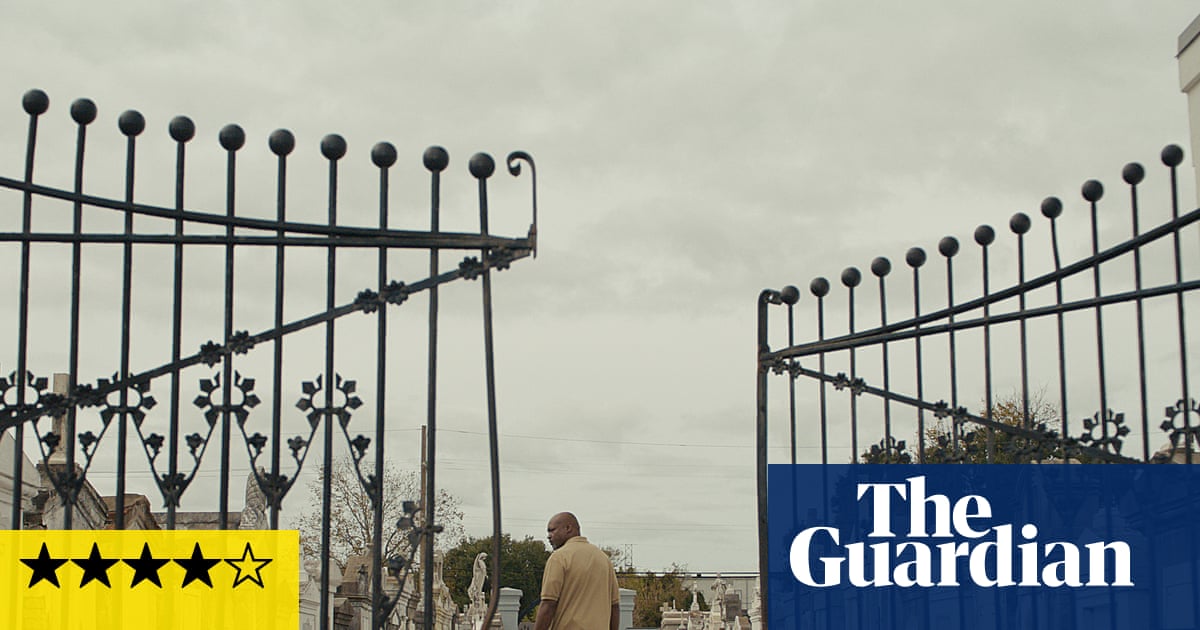
Impassioned … Toni and Adonika Landry in Katrina: Come Hell and High Water. Photograph: Courtesy of NetflixCome Hell and High Water is more impassioned and elegiac than the detailed but still furious Race Against Time. Here we have a less robust timeline of events as Katrina approached, and a narrower picture of why New Orleans was so vulnerable.
But this film is better at conveying the unimaginable horror of the rapidly rising waters, and is strong, too, on the racism that pervaded the media and political elites’ reaction to the aftermath: as people dying of thirst took supplies that were lying in abandoned shops, the line quickly became that “looting” was out of control and that “order” had to be restored.
As is demonstrated here, similarly stricken white people would not have received the same treatment.None of that was absent from the other show, though. Your best advice is to watch Race Against Time instead of the first two episodes of Come Hell and High Water. Come back, though, for the closing documentary feature directed by Spike Lee: a rich oral history of the city in the two decades since the hurricane, this film rattles off the myriad injustices that continued to devastate New Orleans after the waters receded, as reported by creative figures such as the actor Wendell Pierce and the musician Branford Marsalis, among Katrina survivors.
We hear how the city’s unique culture was deliberately and methodically prevented from reasserting itself, starting with insurance companies and banks ruthlessly taking what they said they were owed. A federally funded rebuilding drive was weighted in favour of wealthier areas, assigning money based on buildings’ previous values.
Public services were markedly underfunded. Black teachers were laid off. Many local residents, notably the Black middle classes, left for Atlanta or Houston.These and numerous other issues – rising crime leading to boom time for privatised prisons, gentrification turning Black areas into white ones – are rather hurled at the viewer with scant evidence or context.
The overall point is very clear and there is no reason to doubt any of the angry assertions made; it would just be nice to hear more about each one before we pivot to the next. The only editorial device the director employs, the flashing up of key phrases from the interviews as captions that appear as the person says them, feels patronising and oddly flippant.
Lee is finely attuned, however, to how the spirit, the culture, the soul of a city can survive the worst hardships, so he ends on a note of defiant joy. New Orleans, he tells us, is coming alive again, and refusing to be a template for the destruction of any community that doesn’t conform. Come Hell and High Water is a stirring tribute to what has been lost and what has been stolen, but it assures us that New Orleans will never be gone, even if it will never be the same.
Katrina: Come Hell and High Water is on Netflix now.
Source coverage
News Summary: "Katrina: Come Hell and High Water" Review
News Title/Type: Documentary Review
Deeper analysis
Full source content
It’s hard to quantify the significance of Hurricane Katrina: the combination of a historic natural disaster and cold systemic indifference towards its impoverished African American victims makes it perhaps the most significant event in 21st-century Black American history. It’s no surprise, then, that more than one major documentary series has been made to mark 20 years since wind, water and a whole lot of racism devastated New Orleans, or that leading cinematic auteurs of two consecutive generations, Spike Lee and Ryan Coogler, have each executive-produced their own.
But watching Katrina: Come Hell and High Water, you do wish Lee and Coogler had got on the phone to check they weren’t doubling up too much. The new three-parter – the Lee one that arrives on Netflix to coincide with the week of the anniversary, has its impact dulled by the pre-existence of Hurricane Katrina: Race Against Time, the Coogler one which came out on Disney+ and National Geographic a month ago.
For much of the screen time, this is a less comprehensive rendering of the same story, using many of the same clips and interviewees.That tale is essential, however, and powerfully told. Katrina, a Category 5 hurricane on a scale that goes up to 5, hit New Orleans on 29 August 2005. An order to evacuate the city came late, and many residents with limited economic means didn’t have a way of getting out anyway.
New Orleans is a bowl, with much of it below sea level; floodwalls and drainage canals had been built to protect against storm surges, but they were inadequate and, after the hurricane struck, entire neighbourhoods flooded. With many dead – 1,392 at the final count – and thousands effectively refugees in their own city, help was unbelievably slow in arriving: the local authorities were unprepared, and George W Bush’s national government seemed simply not to care.
Impassioned … Toni and Adonika Landry in Katrina: Come Hell and High Water. Photograph: Courtesy of NetflixCome Hell and High Water is more impassioned and elegiac than the detailed but still furious Race Against Time. Here we have a less robust timeline of events as Katrina approached, and a narrower picture of why New Orleans was so vulnerable.
But this film is better at conveying the unimaginable horror of the rapidly rising waters, and is strong, too, on the racism that pervaded the media and political elites’ reaction to the aftermath: as people dying of thirst took supplies that were lying in abandoned shops, the line quickly became that “looting” was out of control and that “order” had to be restored.
As is demonstrated here, similarly stricken white people would not have received the same treatment.None of that was absent from the other show, though. Your best advice is to watch Race Against Time instead of the first two episodes of Come Hell and High Water. Come back, though, for the closing documentary feature directed by Spike Lee: a rich oral history of the city in the two decades since the hurricane, this film rattles off the myriad injustices that continued to devastate New Orleans after the waters receded, as reported by creative figures such as the actor Wendell Pierce and the musician Branford Marsalis, among Katrina survivors.
We hear how the city’s unique culture was deliberately and methodically prevented from reasserting itself, starting with insurance companies and banks ruthlessly taking what they said they were owed. A federally funded rebuilding drive was weighted in favour of wealthier areas, assigning money based on buildings’ previous values.
Public services were markedly underfunded. Black teachers were laid off. Many local residents, notably the Black middle classes, left for Atlanta or Houston.These and numerous other issues – rising crime leading to boom time for privatised prisons, gentrification turning Black areas into white ones – are rather hurled at the viewer with scant evidence or context.
The overall point is very clear and there is no reason to doubt any of the angry assertions made; it would just be nice to hear more about each one before we pivot to the next. The only editorial device the director employs, the flashing up of key phrases from the interviews as captions that appear as the person says them, feels patronising and oddly flippant.
Lee is finely attuned, however, to how the spirit, the culture, the soul of a city can survive the worst hardships, so he ends on a note of defiant joy. New Orleans, he tells us, is coming alive again, and refusing to be a template for the destruction of any community that doesn’t conform. Come Hell and High Water is a stirring tribute to what has been lost and what has been stolen, but it assures us that New Orleans will never be gone, even if it will never be the same.
Katrina: Come Hell and High Water is on Netflix now.
How this page is built
Goose Pod turns cited reporting into a public episode summary first, then pairs that summary with audio playback so listeners can check the source material before they decide how deeply to engage.
The goal is to make this page useful as a news landing page first, while still giving listeners transcript access, related episodes, and direct links back to the original publishers.


