
What happened
This report details the development of a novel robot capable of self-assembly and repair by consuming other robots.
Key Metadata:
Critical Information:
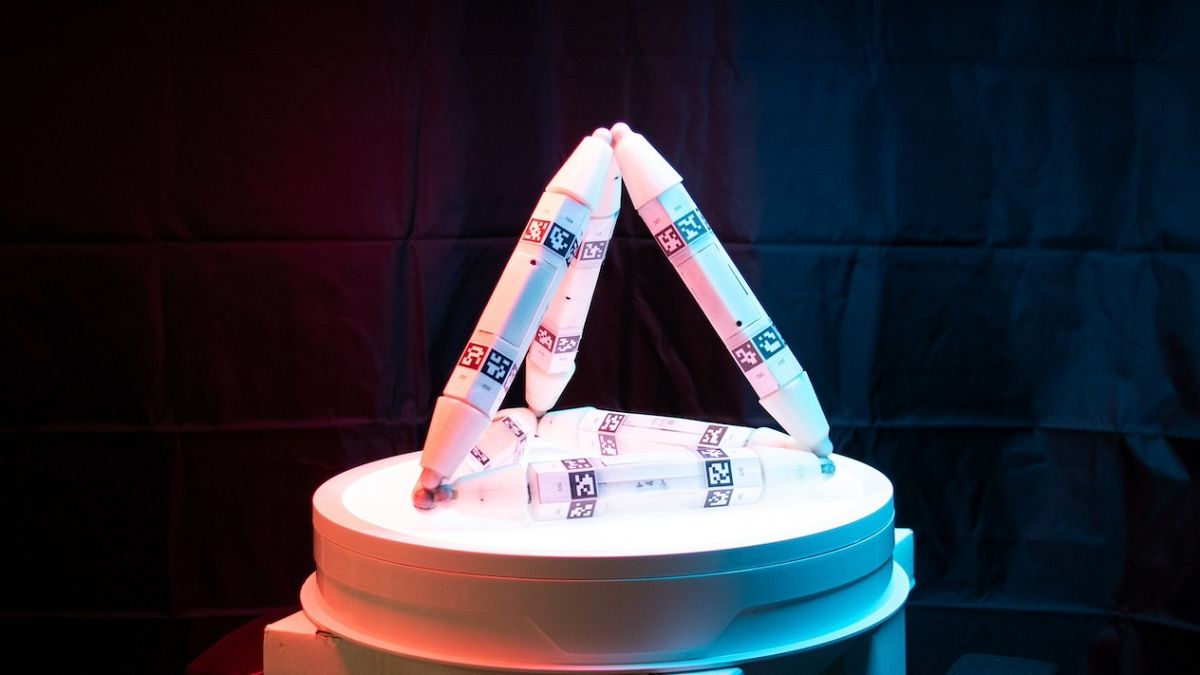
Published on24/07/2025 - 15:02 GMT+2ADVERTISEMENTThis robot is not the first transformer mechanism revealed to the public, but the way it transforms is certainly novel – it grows and heals by consuming other robots.Researchers from Columbia University in the United States have developed a robot, called the Truss Link, that can detect and merge with pieces of robots nearby to fill in missing parts.
"True autonomy means robots must not only think for themselves but also physically sustain themselves," Philippe Martin Wyder, lead author and researcher at Columbia Engineering and the University of Washington, wrote in a statement.Made with magnetic sticks, the Truss Link can expand or transform from a flat shape to a 3D structure to adapt to the environment.
It can also add new bits from other robots or discard old parts that are not functional anymore to increase its performance.In a video posted by the team, the robot merges with a piece nearby and uses it as a walking stick to increase its speed by more than 50 per cent. “Gives legs to AI”Researchers named the process in which the robot self-assembles bits of other robots “robot metabolism”.
It is described as a natural biological organism that can often absorb and integrate resources.Robots like the Truss Link can “provide a digital interface to the physical world, and give legs to AI,” according to a video produced by Columbia Engineering School.Integrated with AI, they possess great potential, experts believe.
"Robot metabolism provides a digital interface to the physical world and allows AI to not only advance cognitively, but physically – creating an entirely new dimension of autonomy," said Wyder.The Truss Link could, in future, be used to help develop groundbreaking technologies spanning from marine research to rescue services to extraterrestrial life."
Ultimately, it opens up the potential for a world where AI can build physical structures or robots just as it, today, writes or rearranges the words in your email," Wyder said.Programming robots has been a challenge for engineers; however, artificial intelligence is advancing developments in robotics.
“We now have the technology [AI] to make robots really programmable in a general-purpose way and make it so that normal people can programme them, not just specific robot programming engineers," Rev Lebaredian, vice president of Omniverse and simulation technology at Nvidia, told Euronews Next in May.
Source coverage
This report details the development of a novel robot capable of self-assembly and repair by consuming other robots.
Key Metadata:
Deeper analysis
Full source content
Published on24/07/2025 - 15:02 GMT+2ADVERTISEMENTThis robot is not the first transformer mechanism revealed to the public, but the way it transforms is certainly novel – it grows and heals by consuming other robots.Researchers from Columbia University in the United States have developed a robot, called the Truss Link, that can detect and merge with pieces of robots nearby to fill in missing parts.
"True autonomy means robots must not only think for themselves but also physically sustain themselves," Philippe Martin Wyder, lead author and researcher at Columbia Engineering and the University of Washington, wrote in a statement.Made with magnetic sticks, the Truss Link can expand or transform from a flat shape to a 3D structure to adapt to the environment.
It can also add new bits from other robots or discard old parts that are not functional anymore to increase its performance.In a video posted by the team, the robot merges with a piece nearby and uses it as a walking stick to increase its speed by more than 50 per cent. “Gives legs to AI”Researchers named the process in which the robot self-assembles bits of other robots “robot metabolism”.
It is described as a natural biological organism that can often absorb and integrate resources.Robots like the Truss Link can “provide a digital interface to the physical world, and give legs to AI,” according to a video produced by Columbia Engineering School.Integrated with AI, they possess great potential, experts believe.
"Robot metabolism provides a digital interface to the physical world and allows AI to not only advance cognitively, but physically – creating an entirely new dimension of autonomy," said Wyder.The Truss Link could, in future, be used to help develop groundbreaking technologies spanning from marine research to rescue services to extraterrestrial life."
Ultimately, it opens up the potential for a world where AI can build physical structures or robots just as it, today, writes or rearranges the words in your email," Wyder said.Programming robots has been a challenge for engineers; however, artificial intelligence is advancing developments in robotics.
“We now have the technology [AI] to make robots really programmable in a general-purpose way and make it so that normal people can programme them, not just specific robot programming engineers," Rev Lebaredian, vice president of Omniverse and simulation technology at Nvidia, told Euronews Next in May.
How this page is built
Goose Pod turns cited reporting into a public episode summary first, then pairs that summary with audio playback so listeners can check the source material before they decide how deeply to engage.
The goal is to make this page useful as a news landing page first, while still giving listeners transcript access, related episodes, and direct links back to the original publishers.