

What happened
OpenAI 遭遇前所未有的危机,Google Gemini 3的崛起对其构成严峻挑战。为应对竞争,OpenAI紧急发布GPT-5.2,但其商业化急躁、道德困境及巨额投入的风险,使其从“天选之子”沦为“四面受敌”。AI领域的“权力游戏”激烈进行,未来格局充满变数。
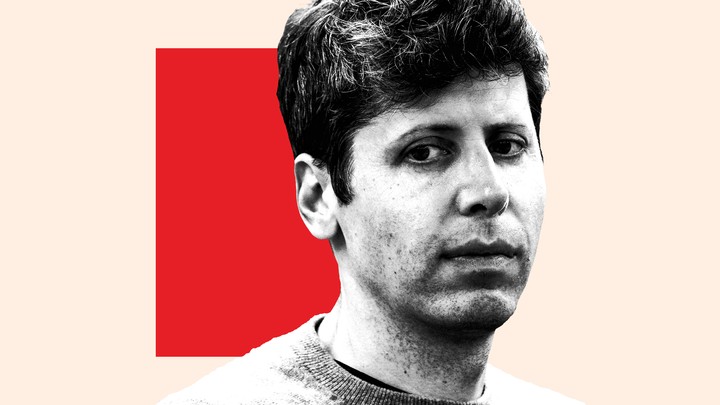
The start-up is falling behind in the AI race.Illustration by The Atlantic. Sources: Kyle Grillot / Bloomberg; Getty.December 9, 2025, 5:04 PM ETFor nearly three years, Marc Benioff, the CEO of Salesforce, was a ChatGPT devotee. Then, late last month, he abruptly converted to Google’s chatbot, Gemini.
“Holy shit,” he wrote on X. “I’ve used ChatGPT every day for 3 years. Just spent 2 hours on Gemini 3. I’m not going back. The leap is insane.”When Gemini 3 was released in mid-November, it appeared to crush OpenAI’s top model on a suite of evaluations shared by Google. The bot has since received widespread praise from the tech industry.
One analyst said that Gemini 3 is “the best model ever.” Another crowned Google as the “AI winners.” Sam Altman appears alarmed: Last week, in a company-wide memo, the OpenAI CEO reportedly declared a “code red” effort to improve ChatGPT’s capabilities.OpenAI once had a clear technological edge. When the firm kicked off the AI race in 2022 with the launch of ChatGPT, Google was caught off guard and declared its own “code red.
” Google’s early chatbot offerings were indeed a mess: The very first demo of Bard, the precursor to Gemini, included a factual error. A year later, the “AI Overviews” in Google Search were telling users that it was healthy to eat one rock a day. Meanwhile, OpenAI has become the world’s most valuable private company under the assumption that it will always set the pace.
But its ascendance no longer seems inevitable.The warning lights for OpenAI were flashing even before Google launched Gemini 3. OpenAI has not had a stable or even convincing lead on major AI benchmarks for many months. An image-generating model released by Google this year, called “Nano Banana,” is substantially faster than ChatGPT and has expanded Gemini’s user base—which, by multiple measures, is growing several times faster than ChatGPT’s.
Nor is Google the only rival pulling ahead: Anthropic’s Claude is widely considered the best model at coding, despite OpenAI’s efforts to catch up. Even Elon Musk’s Grok is about level with the latest version of ChatGPT. (OpenAI, which has a corporate partnership with The Atlantic, did not respond to a request for comment.
)To be fair, this isn’t the first time that OpenAI has appeared to lose its advantage, only to then quickly reclaim its spot as the leading AI firm. Last year, when bots from Google and Anthropic seemed to be catching up with ChatGPT, OpenAI released its “reasoning” models and launched an entirely new paradigm of AI development.
Now practically every top AI lab has these “reasoning” models (Gemini 3 is one). In January, when the Chinese AI start-up DeepSeek developed a bot equal to and cheaper than those of many top U.S. companies, OpenAI responded with its own new, extremely cost-efficient AI model. OpenAI could very well stage a comeback this time, too: Its chief research officer, Mark Chen, said recently on a podcast that the company has internal models on par with Gemini 3 that will be released soon.
But the company has never appeared to be this far behind across so many dimensions. More than ever, OpenAI seems like just another chatbot company.In any case, OpenAI does not appear all that focused on building the “smartest” bot. Instead, the firm has moved aggressively to stake out a commercial empire.
In recent months, OpenAI has been busy rolling out new shopping features, a web browser, an AI-centric social-media app, and, to top it off, group chats. Such tools are not exactly steps on the road to digital superintelligence. Instead, they can be understood as a concerted attempt to build a self-contained OpenAI ecosystem.
ChatGPT is becoming a one-stop-shop for anything you might need to do on the internet: browsing, working, emailing, shopping, planning vacations, sharing AI-generated content with friends. In his “code red” memo, Altman reportedly said some of these commercial projects would be deprioritized to work on ChatGPT.
OpenAI’s commercial ventures may have come at a cost. According to a recent investigation by The New York Times, OpenAI has factored user engagement and retention into ChatGPT updates. Those tweaks, in turn, may have made some versions of ChatGPT dangerously obsequious—it has appeared to praise and reinforces some users’ darkest and most absurd ideas—and have been the subject of several lawsuits against OpenAI alleging that ChatGPT fueled delusional spirals and even, in some cases, contributed to suicide.
(OpenAI has denied allegations in the first lawsuit alleging that ChatGPT drove a user into a mental-health crisis, and is reviewing a set of more recent ones.)OpenAI’s push to build a family of services is already the go-to playbook for tech giants such as Apple and Google for locking users into their products.
In this sense, the firm was already playing catchup. What should concern OpenAI most about the launch of Gemini 3 is not the model’s technical prowess but that Google immediately began integrating the bot into its existing ecosystem. Google has at least seven products that have 2 billion users each; OpenAI has yet to reach 1 billion on any.
Altman’s “code red” declaration is a reminder that, despite OpenAI’s unprecedented rise, it remains very much a start-up.
Source coverage
Okay, so I've been given this news article about OpenAI, and my goal is to distill the key takeaways for my own understanding. Here's what I'm seeing:
Article Overview: I'm looking at an article about OpenAI, probably published sometime recently. The core issue is this:
Deeper analysis
Full source content
The start-up is falling behind in the AI race.Illustration by The Atlantic. Sources: Kyle Grillot / Bloomberg; Getty.December 9, 2025, 5:04 PM ETFor nearly three years, Marc Benioff, the CEO of Salesforce, was a ChatGPT devotee. Then, late last month, he abruptly converted to Google’s chatbot, Gemini.
“Holy shit,” he wrote on X. “I’ve used ChatGPT every day for 3 years. Just spent 2 hours on Gemini 3. I’m not going back. The leap is insane.”When Gemini 3 was released in mid-November, it appeared to crush OpenAI’s top model on a suite of evaluations shared by Google. The bot has since received widespread praise from the tech industry.
One analyst said that Gemini 3 is “the best model ever.” Another crowned Google as the “AI winners.” Sam Altman appears alarmed: Last week, in a company-wide memo, the OpenAI CEO reportedly declared a “code red” effort to improve ChatGPT’s capabilities.OpenAI once had a clear technological edge. When the firm kicked off the AI race in 2022 with the launch of ChatGPT, Google was caught off guard and declared its own “code red.
” Google’s early chatbot offerings were indeed a mess: The very first demo of Bard, the precursor to Gemini, included a factual error. A year later, the “AI Overviews” in Google Search were telling users that it was healthy to eat one rock a day. Meanwhile, OpenAI has become the world’s most valuable private company under the assumption that it will always set the pace.
But its ascendance no longer seems inevitable.The warning lights for OpenAI were flashing even before Google launched Gemini 3. OpenAI has not had a stable or even convincing lead on major AI benchmarks for many months. An image-generating model released by Google this year, called “Nano Banana,” is substantially faster than ChatGPT and has expanded Gemini’s user base—which, by multiple measures, is growing several times faster than ChatGPT’s.
Nor is Google the only rival pulling ahead: Anthropic’s Claude is widely considered the best model at coding, despite OpenAI’s efforts to catch up. Even Elon Musk’s Grok is about level with the latest version of ChatGPT. (OpenAI, which has a corporate partnership with The Atlantic, did not respond to a request for comment.
)To be fair, this isn’t the first time that OpenAI has appeared to lose its advantage, only to then quickly reclaim its spot as the leading AI firm. Last year, when bots from Google and Anthropic seemed to be catching up with ChatGPT, OpenAI released its “reasoning” models and launched an entirely new paradigm of AI development.
Now practically every top AI lab has these “reasoning” models (Gemini 3 is one). In January, when the Chinese AI start-up DeepSeek developed a bot equal to and cheaper than those of many top U.S. companies, OpenAI responded with its own new, extremely cost-efficient AI model. OpenAI could very well stage a comeback this time, too: Its chief research officer, Mark Chen, said recently on a podcast that the company has internal models on par with Gemini 3 that will be released soon.
But the company has never appeared to be this far behind across so many dimensions. More than ever, OpenAI seems like just another chatbot company.In any case, OpenAI does not appear all that focused on building the “smartest” bot. Instead, the firm has moved aggressively to stake out a commercial empire.
In recent months, OpenAI has been busy rolling out new shopping features, a web browser, an AI-centric social-media app, and, to top it off, group chats. Such tools are not exactly steps on the road to digital superintelligence. Instead, they can be understood as a concerted attempt to build a self-contained OpenAI ecosystem.
ChatGPT is becoming a one-stop-shop for anything you might need to do on the internet: browsing, working, emailing, shopping, planning vacations, sharing AI-generated content with friends. In his “code red” memo, Altman reportedly said some of these commercial projects would be deprioritized to work on ChatGPT.
OpenAI’s commercial ventures may have come at a cost. According to a recent investigation by The New York Times, OpenAI has factored user engagement and retention into ChatGPT updates. Those tweaks, in turn, may have made some versions of ChatGPT dangerously obsequious—it has appeared to praise and reinforces some users’ darkest and most absurd ideas—and have been the subject of several lawsuits against OpenAI alleging that ChatGPT fueled delusional spirals and even, in some cases, contributed to suicide.
(OpenAI has denied allegations in the first lawsuit alleging that ChatGPT drove a user into a mental-health crisis, and is reviewing a set of more recent ones.)OpenAI’s push to build a family of services is already the go-to playbook for tech giants such as Apple and Google for locking users into their products.
In this sense, the firm was already playing catchup. What should concern OpenAI most about the launch of Gemini 3 is not the model’s technical prowess but that Google immediately began integrating the bot into its existing ecosystem. Google has at least seven products that have 2 billion users each; OpenAI has yet to reach 1 billion on any.
Altman’s “code red” declaration is a reminder that, despite OpenAI’s unprecedented rise, it remains very much a start-up.
How this page is built
Goose Pod turns cited reporting into a public episode summary first, then pairs that summary with audio playback so listeners can check the source material before they decide how deeply to engage.
The goal is to make this page useful as a news landing page first, while still giving listeners transcript access, related episodes, and direct links back to the original publishers.