What happened
Thousands in the Philippines protest rampant corruption, demanding the return of stolen funds, particularly from defective flood control projects. Public outrage, amplified by the Catholic clergy, targets systemic graft and cronyism. Protesters seek accountability, with President Marcos Jr. promising arrests, as...
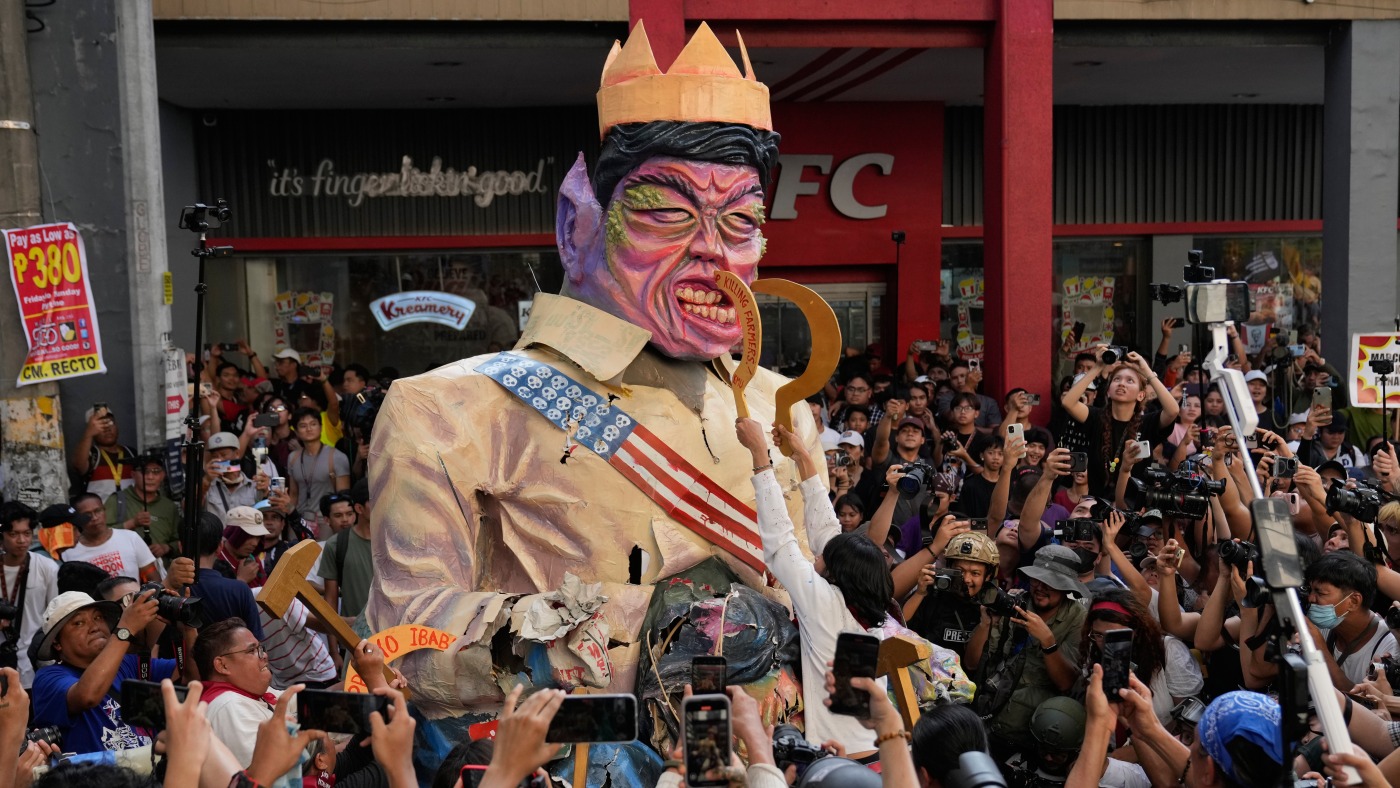
Protesters destroy an effigy of Philippine President Ferdinand Marcos Jr. during an anti-corruption rally in Manila, Philippines on, Sunday, Nov. 30, 2025. Aaron Favila/AP hide caption toggle caption Aaron Favila/AP MANILA, Philippines — Thousands of demonstrators including from the Roman Catholic church clergy protested in the Philippines on Sunday, calling for the swift prosecution of top legislators and officials implicated in a corruption scandal that has buffeted the Asian democracy.
Left-wing groups led a separate protest in Manila's main park with a blunt demand for all implicated government officials to immediately resign and face prosecution. President Ferdinand Marcos Jr. has been scrambling to quell public outrage over the massive corruption blamed for substandard, defective or non-existent flood control projects across an archipelago long prone to deadly flooding and extreme weather in tropical Asia.
More than 17,000 police officers were deployed in metropolitan Manila to secure the separate protests. The Malacanang presidential palace complex in Manila was in a security lockdown with key access roads and bridges blocked by anti-riot police forces, trucks and barbed wire railings. In a deeply divided democracy where two presidents have been separately overthrown in the last 39 years partly over allegations of plunder, there have been isolated calls for the military to withdraw support from the Marcos administration.
The Armed Forces of the Philippines has steadfastly rejected such calls and welcomed on Sunday a statement signed by at least 88 mostly retired generals, including three military chiefs of staff, who said they "strongly condemn and reject any call for the Armed Forces of the Philippines to engage in unconstitutional acts or military adventurism."
"The unified voice of our retired and active leaders reaffirms that the Armed Forces of the Philippines remains a pillar of stability and a steadfast guardian of democracy," the military said in a statement. Roman Catholic churches across the country helped lead Sunday's anti-corruption protests in their districts, with the main daylong rally being held at a pro-democracy "people power" monument along EDSA highway in the capital region.
Police said about 5,000 demonstrators mostly wearing white joined before noon. Protesters shout slogans during anti-corruption protest in Manila, Philippines on Sunday Nov. 30, 2025. Aaron Favila/AP hide caption toggle caption Aaron Favila/AP They demanded that members of Congress, officials and construction company owners behind thousands of anomalous flood control projects in recent years be imprisoned and ordered to return the government funds they stole.
A protester wore a shirt with a blunt message: "No mercy for the greedy." "If money is stolen, that's a crime, but if dignity and lives are taken away, these are sins against fellow human beings, against the country but, most importantly, against God," said the Rev. Flavie Villanueva, a Catholic priest, who has helped many families of impoverished drug suspects killed under former President Rodrigo Duterte's crackdowns.
"Jail all the corrupt and jail all the killers," Villanueva told the crowd of protesters. Since Marcos first raised alarm over the flood control anomalies in his state of the nation address before Congress in July, at least seven public works officers have been jailed for illegal use of public funds and other graft charges in one flood control project anomaly alone.
Executives of Sunwest Corp., a construction firm involved in the project, were being sought. On Friday, Henry Alcantara, a former government engineer who has acknowledged under oath in Senate inquiry hearings his involvement in the anomalies, returned 110 million pesos ($1.9 million) in kickbacks that justice officials said he stole and promised to return more in a few weeks.
About 12 billion pesos ($206 million) worth of assets of suspects in flood control anomalies have been frozen by authorities, Marcos said. Marcos has pledged that many of at least 37 powerful senators, members of Congress and wealthy construction executives implicated in the corruption scandal would be in jail by Christmas.
Protesters in Sunday's rallies said many more officials, including implicated senators and House of Representatives members, should be jailed sooner and ordered to return the funds they stole and used to finance fleets of private jets and luxury cars, mansions and extravagant lifestyles. AP journalists Joeal Calupitan and Aaron Favila contributed to this report
Source coverage
Overview
I've got a strong grasp of the situation: On Sunday, November 30, 2025, thousands of Filipinos, including religious leaders, took to the streets in protest against a pervasive corruption scandal. They're demanding the return of stolen funds and accountability for those involved. There's a lot of outrage. A lot....
Deeper analysis
Full source content
Protesters destroy an effigy of Philippine President Ferdinand Marcos Jr. during an anti-corruption rally in Manila, Philippines on, Sunday, Nov. 30, 2025. Aaron Favila/AP hide caption toggle caption Aaron Favila/AP MANILA, Philippines — Thousands of demonstrators including from the Roman Catholic church clergy protested in the Philippines on Sunday, calling for the swift prosecution of top legislators and officials implicated in a corruption scandal that has buffeted the Asian democracy.
Left-wing groups led a separate protest in Manila's main park with a blunt demand for all implicated government officials to immediately resign and face prosecution. President Ferdinand Marcos Jr. has been scrambling to quell public outrage over the massive corruption blamed for substandard, defective or non-existent flood control projects across an archipelago long prone to deadly flooding and extreme weather in tropical Asia.
More than 17,000 police officers were deployed in metropolitan Manila to secure the separate protests. The Malacanang presidential palace complex in Manila was in a security lockdown with key access roads and bridges blocked by anti-riot police forces, trucks and barbed wire railings. In a deeply divided democracy where two presidents have been separately overthrown in the last 39 years partly over allegations of plunder, there have been isolated calls for the military to withdraw support from the Marcos administration.
The Armed Forces of the Philippines has steadfastly rejected such calls and welcomed on Sunday a statement signed by at least 88 mostly retired generals, including three military chiefs of staff, who said they "strongly condemn and reject any call for the Armed Forces of the Philippines to engage in unconstitutional acts or military adventurism."
"The unified voice of our retired and active leaders reaffirms that the Armed Forces of the Philippines remains a pillar of stability and a steadfast guardian of democracy," the military said in a statement. Roman Catholic churches across the country helped lead Sunday's anti-corruption protests in their districts, with the main daylong rally being held at a pro-democracy "people power" monument along EDSA highway in the capital region.
Police said about 5,000 demonstrators mostly wearing white joined before noon. Protesters shout slogans during anti-corruption protest in Manila, Philippines on Sunday Nov. 30, 2025. Aaron Favila/AP hide caption toggle caption Aaron Favila/AP They demanded that members of Congress, officials and construction company owners behind thousands of anomalous flood control projects in recent years be imprisoned and ordered to return the government funds they stole.
A protester wore a shirt with a blunt message: "No mercy for the greedy." "If money is stolen, that's a crime, but if dignity and lives are taken away, these are sins against fellow human beings, against the country but, most importantly, against God," said the Rev. Flavie Villanueva, a Catholic priest, who has helped many families of impoverished drug suspects killed under former President Rodrigo Duterte's crackdowns.
"Jail all the corrupt and jail all the killers," Villanueva told the crowd of protesters. Since Marcos first raised alarm over the flood control anomalies in his state of the nation address before Congress in July, at least seven public works officers have been jailed for illegal use of public funds and other graft charges in one flood control project anomaly alone.
Executives of Sunwest Corp., a construction firm involved in the project, were being sought. On Friday, Henry Alcantara, a former government engineer who has acknowledged under oath in Senate inquiry hearings his involvement in the anomalies, returned 110 million pesos ($1.9 million) in kickbacks that justice officials said he stole and promised to return more in a few weeks.
About 12 billion pesos ($206 million) worth of assets of suspects in flood control anomalies have been frozen by authorities, Marcos said. Marcos has pledged that many of at least 37 powerful senators, members of Congress and wealthy construction executives implicated in the corruption scandal would be in jail by Christmas.
Protesters in Sunday's rallies said many more officials, including implicated senators and House of Representatives members, should be jailed sooner and ordered to return the funds they stole and used to finance fleets of private jets and luxury cars, mansions and extravagant lifestyles. AP journalists Joeal Calupitan and Aaron Favila contributed to this report
How this page is built
Goose Pod turns cited reporting into a public episode summary first, then pairs that summary with audio playback so listeners can check the source material before they decide how deeply to engage.
The goal is to make this page useful as a news landing page first, while still giving listeners transcript access, related episodes, and direct links back to the original publishers.