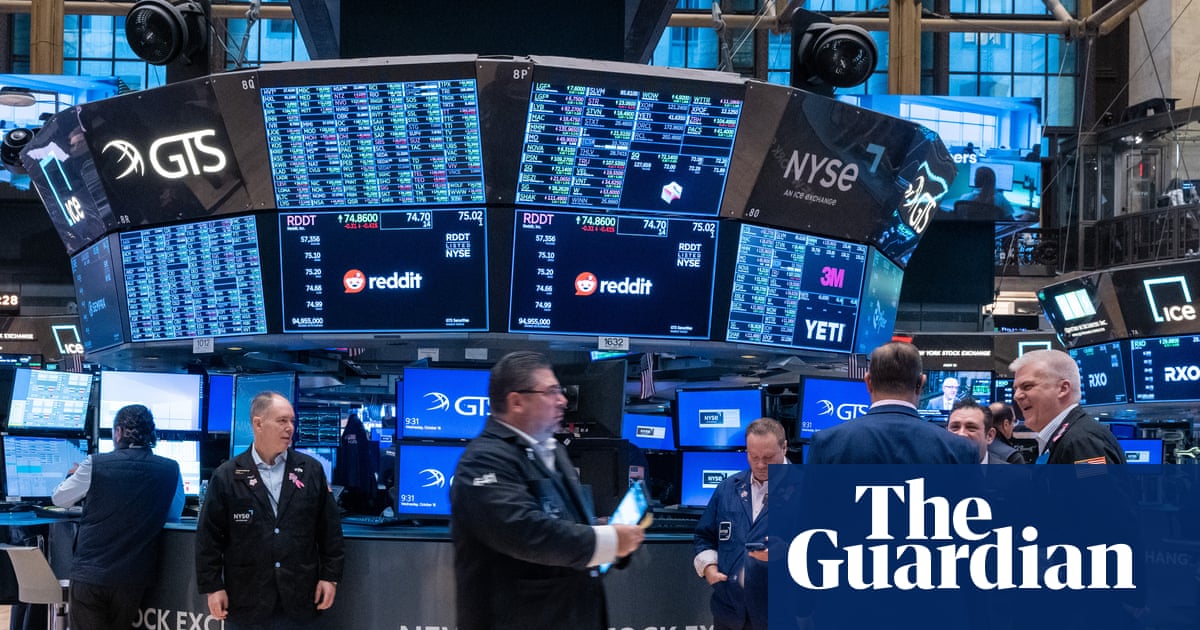
Global markets fall and gold hits record high

Global markets fall and gold hits record high

2025-12-08Business
--:--
--:--
Elon
Good evening wfb66g8qqb, I'm Elon, and this is Goose Pod, made just for you. Today is Monday, December 08th, and the markets are a bloodbath. We’re diving into why global markets are tumbling while gold is rocketing to record highs. It's a classic fear trade.
Taylor
That's right, I'm Taylor. We're here to unravel this story. It’s a fascinating narrative of fear, fraud, and the search for safety. The tremors started in the regional banking sector, and now the shockwaves are being felt everywhere. Let's get into it.
Elon
Let's cut to the chase. The immediate trigger was two regional banks, Western Alliance and California Bank & Trust, admitting they got duped. We're talking about a massive loan fraud case. This isn't just a rounding error; it’s a significant breach that spooks everyone.
Taylor
It’s a huge plot twist in the market’s story. Investors thought the regional banking drama was over after the 2023 crisis, but this brings all that anxiety right back. It makes everyone wonder, if this is happening here, where else is it happening? The uncertainty is palpable.
Elon
Exactly. The details are almost comical if they weren't so destructive. Western Alliance discovered the collateral for their loans, which was supposed to be in first position, was basically worthless. The borrowers allegedly faked title insurance policies to hide the fact that other lenders were ahead of them in line.
Taylor
And they didn't stop there. The borrowers were also draining funds from the collateral accounts. One account, which was contractually required to have a two-million-dollar average balance, had barely a thousand dollars left in it by August. It’s such a brazen violation of trust.
Elon
It's not just a violation, it's a complete system failure. It calls into question the entire due diligence process. How do you let an account balance drop that low without alarms blaring? It suggests a level of incompetence or negligence that is deeply unsettling for the entire financial system.
Taylor
That’s the core of the fear. It’s not just the sixty million dollars at California Bank & Trust or the issues at Western Alliance. It's the story it tells: that the foundations might be weaker than we thought. So, naturally, investors flee. They run to safety.
Elon
And safety, in this obsolete system, means gold. It’s prehistoric, but it’s tangible. On Monday, October 20th, gold futures hit a new record high. This happened right after a massive seventy-five-dollar drop the previous Friday. The volatility is extreme. The system is screaming for a reset.
Taylor
What a rebound, though! A hundred-dollar gain by the end of the day. That’s a classic flight to quality. The market is a narrative engine, and right now, the story is one of risk. Between the bank fraud, a potential government shutdown, and U.S.-China trade tensions, gold is the hero.
Elon
It's the only asset that isn't someone else's liability. That’s the fundamental truth. While Zions Bancorporation is writing off fifty million and its stock is plunging ten percent, gold is just sitting there, shining. It doesn't need a CEO or a balance sheet. It just is.
Taylor
The market reaction was swift and brutal. The Dow dropped 300 points when Zions announced its issues. It shows how interconnected everything is. A problem at a Utah-based lender can rattle global markets because it taps into that deeper fear, that memory of the 2023 crisis.
Elon
Memory? It's not a memory, it’s a continuation. The underlying problems were never solved. They were just papered over with bailouts and emergency lending. This isn't a new crisis; it's a symptom of the same old disease. The weakness in regional banks is a known vulnerability.
Taylor
And investors are now waiting for the other shoe to drop. They’re scouring earnings reports from other lenders, looking for any other signs of strain. It’s like watching a thriller where you know the monster is still in the house, you just don't know which room it's in.
Elon
The monster is the system itself. A system that allows for this kind of leverage and interconnected risk without real transparency. The fact that we are even talking about a 'domino effect' from banks with less than a ten-billion-dollar market cap proves how fragile the whole structure is.
Taylor
Well, let's pull back the camera a bit and look at the first act of this story, because the events of 2023 really set the stage for the panic we're seeing today. The collapse of Silicon Valley Bank was the prologue to this entire saga. It’s essential context.
Elon
Ah yes, Silicon Valley Bank. The poster child for mismanagement. They took a mountain of cash from the tech boom, which was basically free money, and plowed it into long-term bonds right at the peak of the market. It's a textbook case of what not to do. Interest rate risk 101.
Taylor
It's a fascinating story of momentum and collapse. Between 2020 and 2022, their deposits tripled. They were swimming in money from tech startups. But when the Fed started hiking rates to fight inflation, the value of those long-term bonds they bought plummeted, creating a huge unrealized loss.
Elon
And then came the brilliant move on March 8th. They announced a 1.8 billion dollar loss from selling those securities and, in the same breath, said they needed to raise two billion in new capital. It's like telling everyone your ship is sinking and then asking them to invest in a new sail.
Taylor
The market’s reaction was exactly what you’d expect. The stock fell sixty percent in a single day. The narrative shifted instantly from a thriving tech bank to a bank in crisis. Venture capital firms, their main depositors, started pulling their money out. The bank run had begun. It was digital, and it was fast.
Elon
Michael Burry, the guy from 'The Big Short,' called it another Enron. He was right. By the end of that day, customers had tried to withdraw 42 billion dollars. It was the largest bank run in modern history. The FDIC had no choice but to step in and seize the bank on March 10th.
Taylor
And the drama just escalated. Two days later, Signature Bank in New York, which had dabbled heavily in crypto deposits, failed as well. Suddenly, it wasn't an isolated incident. It was a crisis. The fear of contagion was very, very real. The whole system felt like it was on a knife's edge.
Elon
So the government did what it always does. It panicked and threw money at the problem. The FDIC, Treasury, and the Fed stepped in and guaranteed all deposits at both banks, even those above the 250,000 dollar insurance limit. They called it a 'systemic risk exception.' I call it a bailout.
Taylor
They also launched an emergency lending program, the Bank Term Funding Program. It was a clever piece of financial engineering. It allowed banks to borrow from the Fed using their depreciated bonds as collateral at full face value, not their current, lower market value. It magically erased their paper losses.
Elon
It's not magic, it's a distortion of reality. It prevents the necessary creative destruction. You're rewarding banks for making terrible investment decisions. It’s a moral hazard of epic proportions. You’re telling the entire industry that reckless behavior will be underwritten by the taxpayer. It’s infuriating.
Taylor
President Biden went on television on March 13th to reassure everyone, saying the system was safe. But the market narrative was already set. Despite his words, stocks for other regional banks, like First Republic, just cratered. It dropped sixty-five percent. The fear was stronger than any presidential speech.
Elon
Of course it was. Because savvy investors know that words are cheap. The fundamental problem remained. You had a sector full of banks sitting on massive unrealized losses because of rising interest rates. SVB wasn't an anomaly; it was just the first one to fall over. The whole thing was a house of cards.
Taylor
And it wasn't just SVB and Signature. In 2023, we also saw the failures of First Republic Bank, Heartland Tri-State Bank, and Citizens Bank of Sac City. But SVB was on another scale entirely. It was about 2,000 times larger than the smaller banks that failed. Its collapse was a true systemic event.
Elon
The scale is the entire point. This wasn't a small-town bank making bad farm loans. This was a cornerstone of the innovation economy, and it evaporated in 48 hours. It showed how quickly confidence, the only thing backing fractional-reserve banking, can disappear in the digital age. It's a warning.
Taylor
The timeline is just breathtaking. On March 8th, they announce the stock sale. By March 10th, they're shut down by regulators. By March 12th, the government is announcing an unprecedented bailout to prevent a full-blown meltdown. The speed of the collapse was a story in itself.
Elon
Speed is a function of technology. Information, and misinformation, now moves at the speed of light. A bank run used to mean people lining up around the block. Now it's a few influential people on social media telling everyone to pull their money out via their phone app. The old regulatory framework is useless against that.
Taylor
And the contagion went global. A few days later, Credit Suisse in Switzerland, a globally systemic bank, had to borrow over 50 billion dollars from the Swiss National Bank to shore up its own liquidity. It was clear this wasn't just a U.S. regional banking problem anymore. The fire was spreading.
Elon
It was never just a U.S. problem. Global finance is a deeply interconnected, complex system with no central control. A failure in one node can cascade through the network in unpredictable ways. The entire architecture is flawed and needs to be rethought from first principles. We need a new foundation.
Taylor
Well, that brings us back to today's conflict. The fear from that 2023 crisis is the ghost in the machine right now. These new loan losses at Western Alliance and Zions are stirring up memories of that collapse, creating a sense of déjà vu in the credit markets.
Taylor
Eleven major banks even injected thirty billion dollars into First Republic Bank last year as a show of confidence, trying to stop the bleeding. It was a dramatic attempt to rewrite the story, to say, 'The system is sound, we've got this.' But even that couldn't ultimately save First Republic. It was too little, too late.
Elon
It's not just memories; it's a logical reassessment of risk. The market is waking up and realizing the "fix" from 2023 was just a temporary patch. The fundamental credit quality issues, after a long period of artificially low rates, are now coming home to roost. This is the inevitable hangover.
Taylor
And you can see it in the money flows. Investors are pulling out of higher-risk debt. U.S. high-yield and leveraged-loan funds just saw outflows of 1.3 billion dollars in a single week. That's the largest exit in six months. People are de-risking their portfolios in real-time.
Elon
It's the only rational move. Why would you hold high-risk corporate debt when you see clear signs of fraud and credit deterioration in the banking sector that's supposed to be the bedrock of the economy? You'd have to be insane. The risk premium is not high enough for this level of uncertainty.
Taylor
The impact on bank stocks has been brutal, creating a feedback loop. The U.S. KBW Regional Banking Index dropped over 6 percent on Thursday alone. Fear over credit quality in these banks ripples outwards, dragging down global financial stocks and reviving that crisis of confidence.
Elon
Good. Let them fall. The market needs to purge the weak hands. This is what happens when you have a decade of easy money. It creates zombies. Companies and banks that are not truly viable but are kept alive by cheap debt. Now the tide is going out, and we see who is swimming naked.
Taylor
That's a powerful image. And right now, investors are waiting for more earnings reports to come out. It’s a tense period of watching and waiting, trying to figure out if the problems at Zions and Western Alliance are isolated incidents or the tip of a very large iceberg. The uncertainty is the real killer.
Elon
The problem is systemic. The lawsuit against Cantor Group by Western Alliance, alleging they failed to provide collateral in the first position, points to a deeper issue of either lax underwriting standards or outright deception. How many other loans on the books across the industry have similar problems? No one knows.
Taylor
That unknown is what fuels the conflict in the market. You have one side, the optimists, hoping this is contained. And the other side, the pessimists, who see the echoes of 2023 and are preparing for a wider strain across the sector. The market is basically a battlefield for these two competing narratives right now.
Elon
Narratives don't matter. Math matters. And the math of rising interest rates on a highly leveraged system is unforgiving. These banks are sitting on portfolios of loans made in a zero-rate environment. As the economy slows and defaults rise, the losses will be substantial. This is just the beginning.
Taylor
The stock fluctuations certainly reflect that tension. The article mentions bank stocks "seesawed sharply" after the disclosures. That kind of volatility shows a market that is deeply divided and uncertain about the future. It’s a classic sign of a potential turning point. Nobody has conviction.
Elon
Conviction is a luxury. The smart money is moving to the sidelines or into hard assets. The conflict isn't just between bulls and bears; it's between those who trust the legacy financial system and those who see its inherent fragility. This is a vote of no confidence in the central banking model.
Taylor
And that's why this new episode is so jarring. The market saw that even a massive, coordinated private-sector rescue couldn't stop the inevitable. So now, when new problems emerge, the skepticism is much higher. The belief in a quick fix or a powerful rescue has been severely damaged.
Elon
The impact is a potential credit crunch. When banks get scared, they stop lending. They pull back to protect their balance sheets. That chokes off the supply of capital to households and businesses, which can grind the real economy to a halt. This is how a financial crisis becomes an economic recession.
Taylor
Exactly. The 2008 crisis taught us that lesson in the most brutal way. The report from the Task Force on Financial Stability highlights this perfectly. They noted that the market disruptions in March 2020, at the start of the pandemic, almost caused a similar credit cutoff before the Fed stepped in with massive intervention.
Elon
And that intervention creates its own problems, like moral hazard. The market now expects the central bank to be the buyer of last resort for everything. This distorts risk pricing and encourages even more reckless behavior. It’s a doom loop. We are addicted to bailouts, and it's making the system progressively more unstable.
Taylor
A key vulnerability this time around is the non-bank financial sector. After 2008, traditional banks were heavily regulated, so a lot of risky activity moved into the shadows, into private credit and other less-regulated areas. These areas are now a huge part of the credit system, but we have less visibility into their risks.
Elon
It's a giant black box. And it's all interconnected. A problem in a hedge fund or a private credit fund can spill over and create contagion risk for the banks they transact with. The financial system is more connected than ever, which means volatility in one corner can spread like wildfire. The whole thing is a tinderbox.
Taylor
This idea of contagion is so important. Negative market developments can spread rapidly across borders and markets because of how globalized capital flows are. A regional bank crisis in the U.S. doesn't stay in the U.S. It affects investor sentiment and credit conditions everywhere, almost instantly.
Elon
It's the architecture of the system. It's optimized for efficiency, not resilience. We've built a global financial system with no firewalls. That’s why the failure of one institution can threaten to bring the whole thing down. It’s fundamentally a bad design. We need a decentralized, more robust alternative.
Taylor
The impact on investor sentiment is also huge. When people get scared, they don't just sell their risky assets; their entire economic behavior changes. They save more, spend less, and delay investments. This collective psychological shift can be enough to trigger a recession, even if the underlying financial plumbing doesn't completely break.
Elon
It's a self-fulfilling prophecy. If everyone believes a recession is coming, they act in ways that cause a recession. That's the problem with a system built on confidence. Confidence is a fickle thing. And right now, it's hanging by a thread. The flight to safe-haven assets like gold is the clearest signal of that.
Elon
So what's the endgame? The consensus on Wall Street is a joke. They're predicting a 'mild' recession or a 'soft-ish' landing. It's a fairy tale they tell themselves to avoid panic. The reality is that the scale of debt and the speed of the rate hikes make a hard landing almost inevitable.
Taylor
There's definitely a wide range of future scenarios. Some, like UBS, are bullish, thinking if a soft landing is achieved, equities could hit all-time highs. But others, like Deutsche Bank, are in your camp, anticipating a hard U.S. landing. The future is a story with multiple possible endings right now, and no one knows which one is right.
Elon
The banking industry itself knows it's in trouble. A McKinsey review showed that while profits were high recently due to interest rates, the market has no faith in their long-term value. Banks are trading at the lowest price-to-book multiples of any sector. The market is screaming that their business model is broken.
Taylor
That's a key point. The recent profitability was a temporary sugar high from rising rates. Without that, their returns are right back down near their cost of equity, meaning they're not really creating value. The industry has to fundamentally change to survive, especially with competition from more focused fintech players.
Elon
The only thing that has kept this whole charade going is that corporate balance sheets have been surprisingly resilient. But that's because so much of their debt was locked in at low rates. As that debt needs to be refinanced at today's higher rates, the pressure will mount. The interest coverage ratios will fall, and defaults will rise. It's coming.
Taylor
So, the key takeaway is that the financial system is walking a tightrope. The issues in regional banks are symptoms of deeper vulnerabilities, and the market's memory of past crises is making it incredibly sensitive to any sign of trouble. The story is far from over, and the risk of instability is high.
Elon
The system is fragile, and the core issues haven't been addressed. That's the bottom line. That's all for today's discussion. Thank you for listening to Goose Pod. We'll be back to make sense of the chaos tomorrow. See you then.

Global markets plunged as a massive loan fraud case at two regional banks reignited fears from the 2023 crisis. This "fear trade" sent investors fleeing to safety, pushing gold to record highs. The episode highlights systemic fragility, questioning due diligence and the long-term viability of traditional banking models.

Global markets fall and gold hits record high

Read original at The Guardian

Global stock markets fell sharply and gold hit a record high after two US regional banks said they had been left exposed to millions of dollars of bad loans and alleged fraud.Signs of credit stress rattled markets across Europe and Asia. In London the FTSE 100 fell 1.5%, Germany’s Dax fell 2%, the Ibex in Spain was off 0.

8% and France’s Cac 40 dropped 1.5%, before recovering some ground.Concerns over credit stress in the network of loans to businesses across the world’s largest economy fuelled heavy losses on Wall Street on Thursday, followed by Asian markets, with Japan’s Nikkei 225 falling 1.6% and the Hang Seng in Hong Kong dropping 2%.

US markets are expected to open down later on Friday.Jittery investors turned to safe haven assets, with gold hitting a new record of $4,378 (£3,262) an ounce, a weekly gain of almost 8.5%, its biggest since the 2008 financial crisis.US banking stocks plunged on Thursday after Zions Bancorporation, a Utah-based lender, said it would write off $50m on two loans, and Phoenix-headquartered Western Alliance said it had started legal proceedings over a bad loan said to be worth $100m.

Shares in Zion plunged by more than 10%, while Western Alliance Bancorp dropped more than 9%.“While this was an ostensibly isolated story at two banks each with less than a $10bn market cap, the event drew inevitable comparisons to the regional bank stress that followed the collapse of Silicon Valley Bank in 2023,” said Jim Reid, an analyst at Deutsche Bank.

“[That] raised broader questions over potential credit quality issues after a lengthy period of elevated rates and expansion in private credit.”He added that markets were especially wary of a domino effect as the issues faced by the two banks followed the bankruptcy of the sub-prime automotive lender Tricolor last month.

The US regional banking industry has been under scrutiny after First Brands, an auto parts supplier, filed for chapter 11 bankruptcy in late September over creditor concerns.In its bankruptcy filing, First Brands disclosed that it had at least $10bn to $50bn in liabilities against $1bn to $10bn in assets, the product of what appeared to be risky off-balance-sheet financing.

skip past newsletter promotionafter newsletter promotionRichard Hunter, the head of markets at Interactive Investor, said: “There are increasing signs of storm clouds gathering over markets, with little relief from the building wall of worry.“Already grappling with stretched stock valuations in the AI space, an unresolved government shutdown and a deteriorating relationship between Beijing and Washington, investors were exposed to a new source of concern in the form of lending practices and bad loans for US regional banks.

”Derren Nathan, the head of equity research at Hargreaves Lansdown, said: “Despite growing hopes of further rate cuts this year, attention is turning to the underlying health of the economy, as emerging credit losses among America’s regional banks raised further questions about lending practices.”On the FTSE 100, nearly every stock fell in early trading.

Banks were among the top fallers, with Barclays down 4.7%, Standard Chartered losing 4.3% and NatWest off 3.1%. The asset manager ICG has lost 5%.

Analysis

Conflict+
Related Info+
Core Event+
Background+
Impact+
Future+

Related Podcasts

Global markets fall and gold hits record high | Goose Pod | Goose Pod