
What happened
UmbrelOS empowers users to reclaim digital sovereignty. This user-friendly system enables self-hosting of services like cloud storage, personal AI, and Bitcoin nodes, all from a home device. It prioritizes privacy and ownership, making advanced technology accessible and offering a powerful alternative to...
UmbrelOS: Selfhosting Plattform für Raspberry Pi & NUC mit App Store, Docker, Nextcloud, Tailscale VPN & lokaler KI über Ollama + OpenWebUI.UmbrelOS hat sich leise, aber stetig weiterentwickelt. Inzwischen zählt es zu den interessantesten Plattformen für alle, die ihre digitale Welt selbst in die Hand nehmen wollen.
Was einst als kleines Bastelprojekt auf dem Raspberry Pi* begann, ist heute ein ausgereiftes System für Medien, Smarthome, Büroanwendungen und künstliche Intelligenz. Das Betriebssystem ist bewusst schlank gehalten und lässt sich unkompliziert betreiben, egal ob auf einem günstigen Raspberry Pi oder auf einem leistungsstarken NUC.
UmbrelOS Installation auf Raspberry Pi und NUCDas Betriebssystem UmbrelOS funktioniert zuverlässig auf dem Raspberry Pi 4 und 5. Für viele private Nutzer ist das bereits ideal. Wer jedoch mehr Leistung oder parallele Prozesse benötigt, profitiert auf einem NUC* oder Mini-PC von deutlich mehr Reserven.
Einrichtung und erster Start von UmbrelOSFür die erste Installation empfiehlt es sich, Maus, Tastatur und Monitor anzuschließen. Besonders bei NUC-Systemen erleichtert das die Auswahl des Ziellaufwerks und die Netzwerkkonfiguration. Danach arbeitet UmbrelOS vollständig ohne Bildschirm im Netzwerk weiter und lässt sich bequem über die Adresse umbrel.
local oder direkt über die IP-Adresse im Browser aufrufen.Netzwerk und VerbindungsmöglichkeitenUmbrelOS unterstützt Ethernet, WLAN und Bluetooth. Allerdings funktioniert die kabellose Verbindung nicht bei jedem NUC zuverlässig, da die Treiberunterstützung je nach Chipsatz variiert. In der Praxis läuft es bei vielen Geräten daher auf eine kabelgebundene Verbindung hinaus.
Auf dem Raspberry Pi hingegen funktioniert WLAN in der Regel ohne Probleme.Fernzugriff und sichere Verbindung mit UmbrelOSUmbrelOS lässt sich im lokalen Netz direkt aufrufen. Es kann aber auch von außen sicher erreicht werden. Neben Tailscale unterstützen viele Anwendungen und Dienste den Zugriff über Tor, Cloudflare Tunnel oder ZeroTier.
Besonders Tor eignet sich, wenn man den Zugriff vollständig anonym und ohne öffentliche IP realisieren möchte.UmbrelOS im Docker Container mit Dockurr ImageUmbrelOS lässt sich nicht nur klassisch installieren, sondern auch in einer Docker Umgebung betreiben. Das offizielle Image dockurr/umbrel auf Docker Hub liefert eine stabile Version 1.
4.0, die mit einem einzigen Befehl gestartet werden kann. Diese Variante eignet sich besonders für Nutzer, die bereits eine bestehende Server oder NAS Infrastruktur betreiben. So kann Umbrel parallel zu anderen Diensten laufen, ohne dass ein separates System erforderlich ist.Neue Funktionen in Version 1.
5Direkt nach der Installation lassen sich zahlreiche neue Funktionen aktivieren, die ursprünglich noch in der Erprobung waren. Dazu gehören verbesserte Backups, die GPU-Beschleunigung, eine optimierte Netzwerkverwaltung und eine insgesamt stabilere Systemleistung.Backups und Wiederherstellung mit RewindBackups lassen sich verschlüsselt auf USB Laufwerken, NAS Freigaben oder anderen Umbrel-Systemen speichern.
Sie werden mit AES-256-GCM verschlüsselt, also demselben Standard, den auch professionelle Cloud Anbieter einsetzen. Mit der sogenannten Rewind Funktion können Nutzer frühere Datei- oder Systemzustände zurückholen.Snapshots mit BtrfsAuf unterstützten Laufwerken lassen sich zusätzlich System Snapshots anlegen.
Diese Funktion nutzt Btrfs und ermöglicht es, ältere Systemzustände direkt aus der Oberfläche wiederherzustellen, ohne eine Neuinstallation vornehmen zu müssen. Fortgeschrittene Nutzer können diese Snapshots auf andere Laufwerke oder Geräte kopieren, um ganze Systemstände zu sichern oder zwischen mehreren Umbrel-Installationen zu synchronisieren.
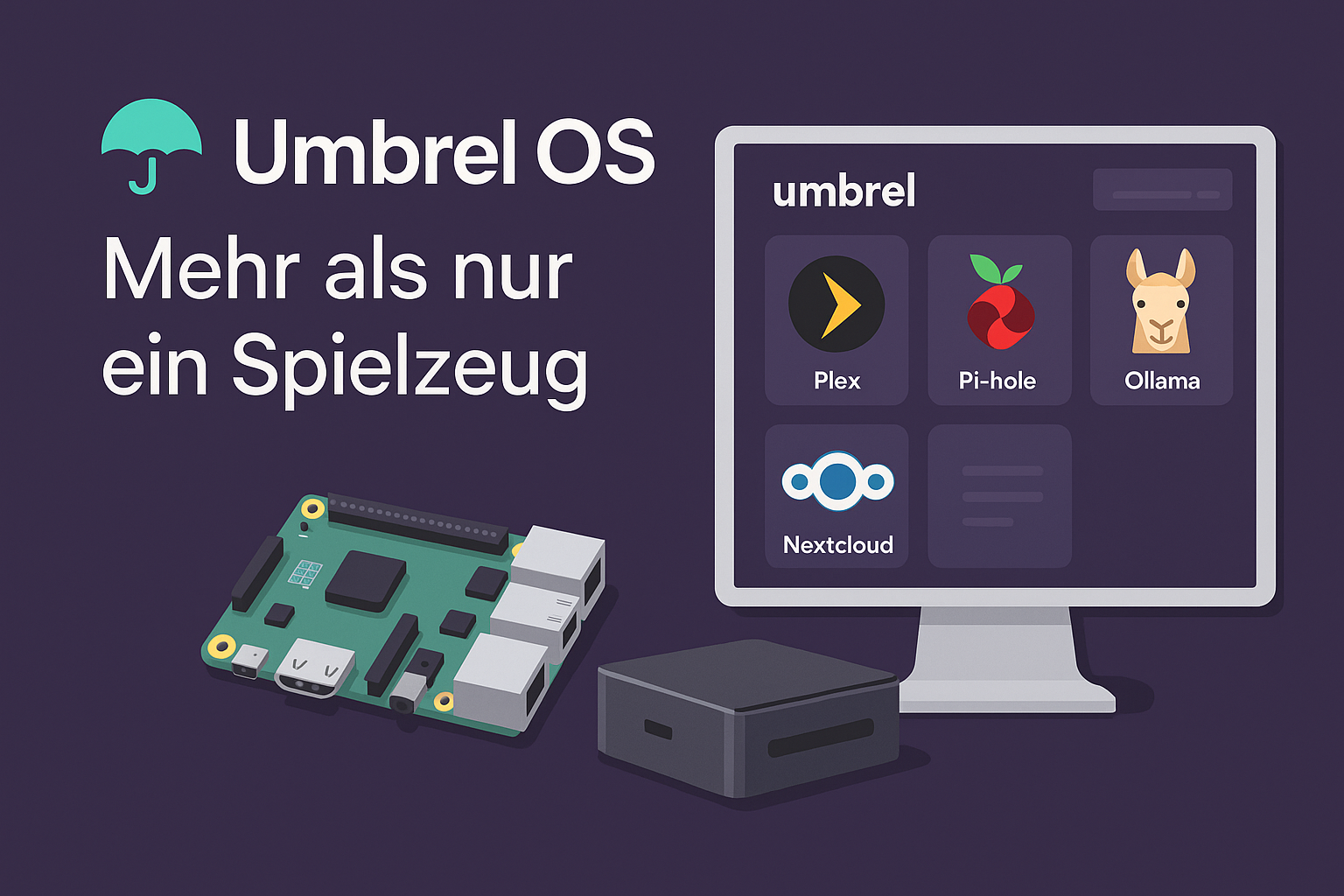
UmbrelOS App Store mit Anwendungen für Medien, KI und SmarthomeDer App Store ist das Herzstück von UmbrelOS. Statt Container manuell zu konfigurieren, können Anwendungen mit wenigen Klicks installiert werden. Das Angebot reicht von Medienservern über Netzwerkschutz bis hin zu Werkzeugen für künstliche Intelligenz und Office Anwendungen.
Plex, Jellyfin, AdGuard Home, Pi hole, Technitium DNS, Nextcloud, Navidrome, Paperless NGX, Stirling PDF und Home Assistant gehören zu den beliebtesten.DNS im Zusammenspiel mit TailscaleFortgeschrittene Nutzer verwenden Tailscale, um die DNS Auflösung an AdGuard Home, Pi hole oder Technitium auf dem eigenen UmbrelOS zu leiten.
Dadurch lassen sich interne und externe Anfragen gezielt trennen oder umleiten. Tailscale dient dabei als sicheres Mesh VPN und verteilt bei Bedarf die DNS Konfiguration an verbundene Geräte. Interne Namen funktionieren über MagicDNS, während öffentliche Anfragen wahlweise an den lokalen DNS-Resolver oder an einen externen Dienst gehen.
Wer auf externe Resolver setzt, kann Mullvad DNS verwenden und diesen entweder über eine Tailscale Exit Node oder als gerätespezifische DNS Vorgabe einbinden. Technitium DNS kann außerdem über die Weboberfläche remote verwaltet werden, etwa per HTTPS Proxy hinter Tailscale oder dem Cloudflare Tunnel.
Neben dem offiziellen App Store existieren Community Stores, die von engagierten Nutzern gepflegt werden. Sie ermöglichen das Hinzufügen alternativer oder experimenteller Anwendungen. Wer technisch versiert ist, kann eigene App Repositorys einbinden oder selbst kleine Anwendungen veröffentlichen. So bleibt UmbrelOS eine offene Plattform, die sich laufend weiterentwickelt.
Sicherheit und Systempflege bei UmbrelOSUmbrelOS basiert auf Debian und wird langsamer mit Sicherheitsupdates versorgt als Ubuntu LTS. Für Heimanwender ist das kein Problem. Wer UmbrelOS in professionellen Umgebungen betreibt, sollte regelmäßige Backups und eine externe Firewall Lösung einplanen. Wer UmbrelOS auf externen Laufwerken betreibt, kann diese mit LUKS verschlüsseln.
Dadurch sind Daten auch bei physischem Zugriff geschützt. Über die Integration von Snowflake können Nutzer zusätzlich Internetzugriffe in zensierten Regionen ermöglichen.Sinnvolle Anwendungen im AlltagUmbrelOS ist längst keine technische Spielerei mehr. Es kann viele Online-Dienste ersetzen und dabei lokal betrieben werden.
Ein Medienserver zentralisiert Filme und Musik, während Navidrome mit Apps wie Symfonium auch unterwegs Zugriff auf die eigene Sammlung bietet. AdGuard, Pi hole und Technitium DNS schützen das Heimnetzwerk vor Werbung. Vaultwarden dient als Passwortverwaltung, Joplin Server als Notizsystem und Home Assistant als Steuerzentrale für das Smarthome.
Tools wie Paperless NGX und Stirling PDF digitalisieren Dokumente und machen Papierakten überflüssig. Weitere Anwendungen wie Photoprism, MeTube, FreshRSS oder Firefly III erweitern UmbrelOS um eine Fotoverwaltung, das Verwalten von RSS Feeds und die Finanzübersicht.Künstliche Intelligenz lokal betreiben mit Ollama und OpenWebUIUmbrelOS ermöglicht den lokalen Betrieb von KI Modellen wie Mistral oder Llama.
Über OpenWebUI lässt sich eine externe Ollama Instanz auf einem NUC mit NPU oder GPU anbinden. So laufen auch große Modelle effizient und komplett ohne Cloud. Die Entwickler haben außerdem angekündigt, dass künftig auch eine direkte Integration lokaler LLMs in das System selbst erfolgen soll. Damit könnten Modelle wie Llama 3, Mistral oder Mixtral künftig direkt auf UmbrelOS ausgeführt werden, ohne dass externe Tools wie Ollama oder OpenWebUI nötig sind.
Das angestrebte Ziel besteht darin, die lokale Nutzung von KI-Modellen so einfach zu gestalten wie die Installation einer App im UmbrelOS Store. Das würde UmbrelOS zu einer echten Plattform für eine private, lokal laufende künstliche Intelligenz machen. Und dies völlig unabhängig von Cloudanbietern oder fremden Servern.
Dann müsste man sich auch keine Gedanken mehr wegen dem Datenschutz oder der Weitergabe der Daten durch KI-Anbieter an irgendwelche Behörden machen.Eigene Container und Skripte mit PortainerWer tiefer in die Technik einsteigen möchte, kann die Software Portainer installieren. Damit lassen sich eigene Container, Skripte und Projekte verwalten.
Beispiele sind das Aldi Skript für automatisches Prepaid Nachbuchen oder das Better Bahn Skript für Fahrpreisabfragen. Über REST-Schnittstellen können viele Apps automatisiert angesprochen werden.Umbrel Home als Fertiggerät mit WLAN und BluetoothNicht jeder möchte UmbrelOS selbst installieren. Mit Umbrel Home gibt es ein fertiges Gerät inklusive Betriebssystem.
WLAN und Bluetooth funktionieren direkt, ohne Treiber. Das Gerät eignet sich für alle, die ein stabiles, wartungsarmes System suchen.Fazit – UmbrelOS als zentrales Selfhosting SystemUmbrelOS ist quelloffen und transparent. Sowohl das Betriebssystem als auch die App Quelllcodes liegen auf GitHub vor.
Es läuft stabil auf Raspberry Pi, NUC oder Docker. Mit einem eigenen App Store nebst Nextcloud, Technitium DNS, Navidrome, OpenWebUI, Portainer, Snowflake und Monero wird es zum digitalen Zentrum des Zuhauses. Wer klein anfangen möchte, kann später erweitern. Das geht lokal, flexibel, sicher und vollständig in eigener Hand.
Mit jeder neuen Version wird UmbrelOS reifer und bleibt ein Beispiel dafür, wie sich digitale Selbstbestimmung praktisch umsetzen lässt.(*) Alle mit einem Stern gekennzeichneten Links sind Affiliate-Links. Wenn Du über diese Links Produkte oder Abonnements kaufst, erhält Tarnkappe.info eine kleine Provision.
Dir entstehen keine zusätzlichen Kosten. Wenn Du die Redaktion anderweitig finanziell unterstützen möchtest, schau doch mal auf unserer Spendenseite oder in unserem Online-Shop vorbei.
Source coverage
Dieser Artikel von Tarnkappe.info beleuchtet die UmbrelOS-Plattform, eine sich stetig weiterentwickelnde Lösung für Selfhosting, die es Nutzern ermöglicht, ihre digitale Welt eigenverantwortlich zu gestalten. Ursprünglich als kleines Projekt für den Raspberry Pi gestartet, hat sich UmbrelOS zu einem ausgereiften...
---
Deeper analysis
Full source content
UmbrelOS: Selfhosting Plattform für Raspberry Pi & NUC mit App Store, Docker, Nextcloud, Tailscale VPN & lokaler KI über Ollama + OpenWebUI.UmbrelOS hat sich leise, aber stetig weiterentwickelt. Inzwischen zählt es zu den interessantesten Plattformen für alle, die ihre digitale Welt selbst in die Hand nehmen wollen.
Was einst als kleines Bastelprojekt auf dem Raspberry Pi* begann, ist heute ein ausgereiftes System für Medien, Smarthome, Büroanwendungen und künstliche Intelligenz. Das Betriebssystem ist bewusst schlank gehalten und lässt sich unkompliziert betreiben, egal ob auf einem günstigen Raspberry Pi oder auf einem leistungsstarken NUC.
UmbrelOS Installation auf Raspberry Pi und NUCDas Betriebssystem UmbrelOS funktioniert zuverlässig auf dem Raspberry Pi 4 und 5. Für viele private Nutzer ist das bereits ideal. Wer jedoch mehr Leistung oder parallele Prozesse benötigt, profitiert auf einem NUC* oder Mini-PC von deutlich mehr Reserven.
Einrichtung und erster Start von UmbrelOSFür die erste Installation empfiehlt es sich, Maus, Tastatur und Monitor anzuschließen. Besonders bei NUC-Systemen erleichtert das die Auswahl des Ziellaufwerks und die Netzwerkkonfiguration. Danach arbeitet UmbrelOS vollständig ohne Bildschirm im Netzwerk weiter und lässt sich bequem über die Adresse umbrel.
local oder direkt über die IP-Adresse im Browser aufrufen.Netzwerk und VerbindungsmöglichkeitenUmbrelOS unterstützt Ethernet, WLAN und Bluetooth. Allerdings funktioniert die kabellose Verbindung nicht bei jedem NUC zuverlässig, da die Treiberunterstützung je nach Chipsatz variiert. In der Praxis läuft es bei vielen Geräten daher auf eine kabelgebundene Verbindung hinaus.
Auf dem Raspberry Pi hingegen funktioniert WLAN in der Regel ohne Probleme.Fernzugriff und sichere Verbindung mit UmbrelOSUmbrelOS lässt sich im lokalen Netz direkt aufrufen. Es kann aber auch von außen sicher erreicht werden. Neben Tailscale unterstützen viele Anwendungen und Dienste den Zugriff über Tor, Cloudflare Tunnel oder ZeroTier.
Besonders Tor eignet sich, wenn man den Zugriff vollständig anonym und ohne öffentliche IP realisieren möchte.UmbrelOS im Docker Container mit Dockurr ImageUmbrelOS lässt sich nicht nur klassisch installieren, sondern auch in einer Docker Umgebung betreiben. Das offizielle Image dockurr/umbrel auf Docker Hub liefert eine stabile Version 1.
4.0, die mit einem einzigen Befehl gestartet werden kann. Diese Variante eignet sich besonders für Nutzer, die bereits eine bestehende Server oder NAS Infrastruktur betreiben. So kann Umbrel parallel zu anderen Diensten laufen, ohne dass ein separates System erforderlich ist.Neue Funktionen in Version 1.
5Direkt nach der Installation lassen sich zahlreiche neue Funktionen aktivieren, die ursprünglich noch in der Erprobung waren. Dazu gehören verbesserte Backups, die GPU-Beschleunigung, eine optimierte Netzwerkverwaltung und eine insgesamt stabilere Systemleistung.Backups und Wiederherstellung mit RewindBackups lassen sich verschlüsselt auf USB Laufwerken, NAS Freigaben oder anderen Umbrel-Systemen speichern.
Sie werden mit AES-256-GCM verschlüsselt, also demselben Standard, den auch professionelle Cloud Anbieter einsetzen. Mit der sogenannten Rewind Funktion können Nutzer frühere Datei- oder Systemzustände zurückholen.Snapshots mit BtrfsAuf unterstützten Laufwerken lassen sich zusätzlich System Snapshots anlegen.
Diese Funktion nutzt Btrfs und ermöglicht es, ältere Systemzustände direkt aus der Oberfläche wiederherzustellen, ohne eine Neuinstallation vornehmen zu müssen. Fortgeschrittene Nutzer können diese Snapshots auf andere Laufwerke oder Geräte kopieren, um ganze Systemstände zu sichern oder zwischen mehreren Umbrel-Installationen zu synchronisieren.
UmbrelOS App Store mit Anwendungen für Medien, KI und SmarthomeDer App Store ist das Herzstück von UmbrelOS. Statt Container manuell zu konfigurieren, können Anwendungen mit wenigen Klicks installiert werden. Das Angebot reicht von Medienservern über Netzwerkschutz bis hin zu Werkzeugen für künstliche Intelligenz und Office Anwendungen.
Plex, Jellyfin, AdGuard Home, Pi hole, Technitium DNS, Nextcloud, Navidrome, Paperless NGX, Stirling PDF und Home Assistant gehören zu den beliebtesten.DNS im Zusammenspiel mit TailscaleFortgeschrittene Nutzer verwenden Tailscale, um die DNS Auflösung an AdGuard Home, Pi hole oder Technitium auf dem eigenen UmbrelOS zu leiten.
Dadurch lassen sich interne und externe Anfragen gezielt trennen oder umleiten. Tailscale dient dabei als sicheres Mesh VPN und verteilt bei Bedarf die DNS Konfiguration an verbundene Geräte. Interne Namen funktionieren über MagicDNS, während öffentliche Anfragen wahlweise an den lokalen DNS-Resolver oder an einen externen Dienst gehen.
Wer auf externe Resolver setzt, kann Mullvad DNS verwenden und diesen entweder über eine Tailscale Exit Node oder als gerätespezifische DNS Vorgabe einbinden. Technitium DNS kann außerdem über die Weboberfläche remote verwaltet werden, etwa per HTTPS Proxy hinter Tailscale oder dem Cloudflare Tunnel.
Neben dem offiziellen App Store existieren Community Stores, die von engagierten Nutzern gepflegt werden. Sie ermöglichen das Hinzufügen alternativer oder experimenteller Anwendungen. Wer technisch versiert ist, kann eigene App Repositorys einbinden oder selbst kleine Anwendungen veröffentlichen. So bleibt UmbrelOS eine offene Plattform, die sich laufend weiterentwickelt.
Sicherheit und Systempflege bei UmbrelOSUmbrelOS basiert auf Debian und wird langsamer mit Sicherheitsupdates versorgt als Ubuntu LTS. Für Heimanwender ist das kein Problem. Wer UmbrelOS in professionellen Umgebungen betreibt, sollte regelmäßige Backups und eine externe Firewall Lösung einplanen. Wer UmbrelOS auf externen Laufwerken betreibt, kann diese mit LUKS verschlüsseln.
Dadurch sind Daten auch bei physischem Zugriff geschützt. Über die Integration von Snowflake können Nutzer zusätzlich Internetzugriffe in zensierten Regionen ermöglichen.Sinnvolle Anwendungen im AlltagUmbrelOS ist längst keine technische Spielerei mehr. Es kann viele Online-Dienste ersetzen und dabei lokal betrieben werden.
Ein Medienserver zentralisiert Filme und Musik, während Navidrome mit Apps wie Symfonium auch unterwegs Zugriff auf die eigene Sammlung bietet. AdGuard, Pi hole und Technitium DNS schützen das Heimnetzwerk vor Werbung. Vaultwarden dient als Passwortverwaltung, Joplin Server als Notizsystem und Home Assistant als Steuerzentrale für das Smarthome.
Tools wie Paperless NGX und Stirling PDF digitalisieren Dokumente und machen Papierakten überflüssig. Weitere Anwendungen wie Photoprism, MeTube, FreshRSS oder Firefly III erweitern UmbrelOS um eine Fotoverwaltung, das Verwalten von RSS Feeds und die Finanzübersicht.Künstliche Intelligenz lokal betreiben mit Ollama und OpenWebUIUmbrelOS ermöglicht den lokalen Betrieb von KI Modellen wie Mistral oder Llama.
Über OpenWebUI lässt sich eine externe Ollama Instanz auf einem NUC mit NPU oder GPU anbinden. So laufen auch große Modelle effizient und komplett ohne Cloud. Die Entwickler haben außerdem angekündigt, dass künftig auch eine direkte Integration lokaler LLMs in das System selbst erfolgen soll. Damit könnten Modelle wie Llama 3, Mistral oder Mixtral künftig direkt auf UmbrelOS ausgeführt werden, ohne dass externe Tools wie Ollama oder OpenWebUI nötig sind.
Das angestrebte Ziel besteht darin, die lokale Nutzung von KI-Modellen so einfach zu gestalten wie die Installation einer App im UmbrelOS Store. Das würde UmbrelOS zu einer echten Plattform für eine private, lokal laufende künstliche Intelligenz machen. Und dies völlig unabhängig von Cloudanbietern oder fremden Servern.
Dann müsste man sich auch keine Gedanken mehr wegen dem Datenschutz oder der Weitergabe der Daten durch KI-Anbieter an irgendwelche Behörden machen.Eigene Container und Skripte mit PortainerWer tiefer in die Technik einsteigen möchte, kann die Software Portainer installieren. Damit lassen sich eigene Container, Skripte und Projekte verwalten.
Beispiele sind das Aldi Skript für automatisches Prepaid Nachbuchen oder das Better Bahn Skript für Fahrpreisabfragen. Über REST-Schnittstellen können viele Apps automatisiert angesprochen werden.Umbrel Home als Fertiggerät mit WLAN und BluetoothNicht jeder möchte UmbrelOS selbst installieren. Mit Umbrel Home gibt es ein fertiges Gerät inklusive Betriebssystem.
WLAN und Bluetooth funktionieren direkt, ohne Treiber. Das Gerät eignet sich für alle, die ein stabiles, wartungsarmes System suchen.Fazit – UmbrelOS als zentrales Selfhosting SystemUmbrelOS ist quelloffen und transparent. Sowohl das Betriebssystem als auch die App Quelllcodes liegen auf GitHub vor.
Es läuft stabil auf Raspberry Pi, NUC oder Docker. Mit einem eigenen App Store nebst Nextcloud, Technitium DNS, Navidrome, OpenWebUI, Portainer, Snowflake und Monero wird es zum digitalen Zentrum des Zuhauses. Wer klein anfangen möchte, kann später erweitern. Das geht lokal, flexibel, sicher und vollständig in eigener Hand.
Mit jeder neuen Version wird UmbrelOS reifer und bleibt ein Beispiel dafür, wie sich digitale Selbstbestimmung praktisch umsetzen lässt.(*) Alle mit einem Stern gekennzeichneten Links sind Affiliate-Links. Wenn Du über diese Links Produkte oder Abonnements kaufst, erhält Tarnkappe.info eine kleine Provision.
Dir entstehen keine zusätzlichen Kosten. Wenn Du die Redaktion anderweitig finanziell unterstützen möchtest, schau doch mal auf unserer Spendenseite oder in unserem Online-Shop vorbei.
How this page is built
Goose Pod turns cited reporting into a public episode summary first, then pairs that summary with audio playback so listeners can check the source material before they decide how deeply to engage.
The goal is to make this page useful as a news landing page first, while still giving listeners transcript access, related episodes, and direct links back to the original publishers.