
What happened
Author: Jack Barkenbus
This report details the burgeoning global influence of China's electric vehicle (EV) industry, highlighting its rapid growth, competitive advantages, and the significant barriers it faces in the North American market.
Key Findings and Global Trends:
In 2025, 1 in 4 new automotive vehicle sales globally are expected to be an electric vehicle – either fully electric or a plug-in hybrid. That is a significant rise from just five years ago, when EV sales amounted to fewer than 1 in 20 new car sales, according to the International Energy Agency, an intergovernmental organization examining energy use around the world.
In the U.S., however, EV sales have lagged, only reaching 1 in 10 in 2024. By contrast, in China, the world’s largest car market, more than half of all new vehicle sales are electric. The International Energy Agency has reported that two-thirds of fully electric cars in China are now cheaper to buy than their gasoline equivalents.
With operating and maintenance costs already cheaper than gasoline models, EVs are attractive purchases. Most EVs purchased in China are made there as well, by a range of different companies. NIO, Xpeng, Xiaomi, Zeekr, Geely, Chery, Great Wall Motor, Leapmotor and especially BYD are household names in China.
As someone who has followed and published on the topic of EVs for over 15 years, I expect they will soon become as widely known in the rest of the world. What kinds of EVs is China producing? China’s automakers are producing a full range of electric vehicles, from the subcompact, like the BYD Seagull, to full-size SUVs, like the Xpeng G9, and luxury cars, like the Zeekr 009.
Recent European crash-test evaluations have given top safety ratings to Chinese EVs, and many of them cost less than similar models made by other companies in other countries. A Wall Street Journal video explores a Chinese ‘dark factory’ – one so automated that it doesn’t need lights inside. What’s behind Chinese EV success?
There are several factors behind Chinese companies’ success in producing and selling EVs. To be sure, relatively low labor costs are part of the explanation. So are generous government subsidies, as EVs were one of several advanced technologies selected by the Chinese government to propel the nation’s global technological profile.
But Chinese EV makers are also making other advances. They make significant use of industrial robotics, even to the point of building so-called “dark factories” that can operate with minimal human intervention. For passengers, they have reimagined vehicles’ interiors, with large touchscreens for information and entertainment, and even added a refrigerator, bed or karaoke system.
Competition among Chinese EV makers is fierce, which drives additional innovation. BYD is the largest seller of EVs, both domestically and globally. Yet the company says it employs over 100,000 scientists and engineers seeking continual improvement. From initial concept models to actual rollout of factory-made cars, BYD takes 18 months – half as long as U.
S. and other global automakers take for their product development processes, Reuters reported. BYD is also the world’s second-largest EV battery seller and has developed a new battery that can recharge in just five minutes, roughly the same time it takes to fill a gas-powered car’s tank. An Xpeng M03, whose base model costs about US$17,000, is displayed at a car show in Shanghai in April 2025.
VCG/VCG via Getty Images Exports The real test of how well Chinese vehicles appeal to consumers will come from export sales. Chinese EV manufacturers are eager to sell abroad because their factories can produce far more than the 25 million vehicles they can sell within China each year – perhaps twice as much.
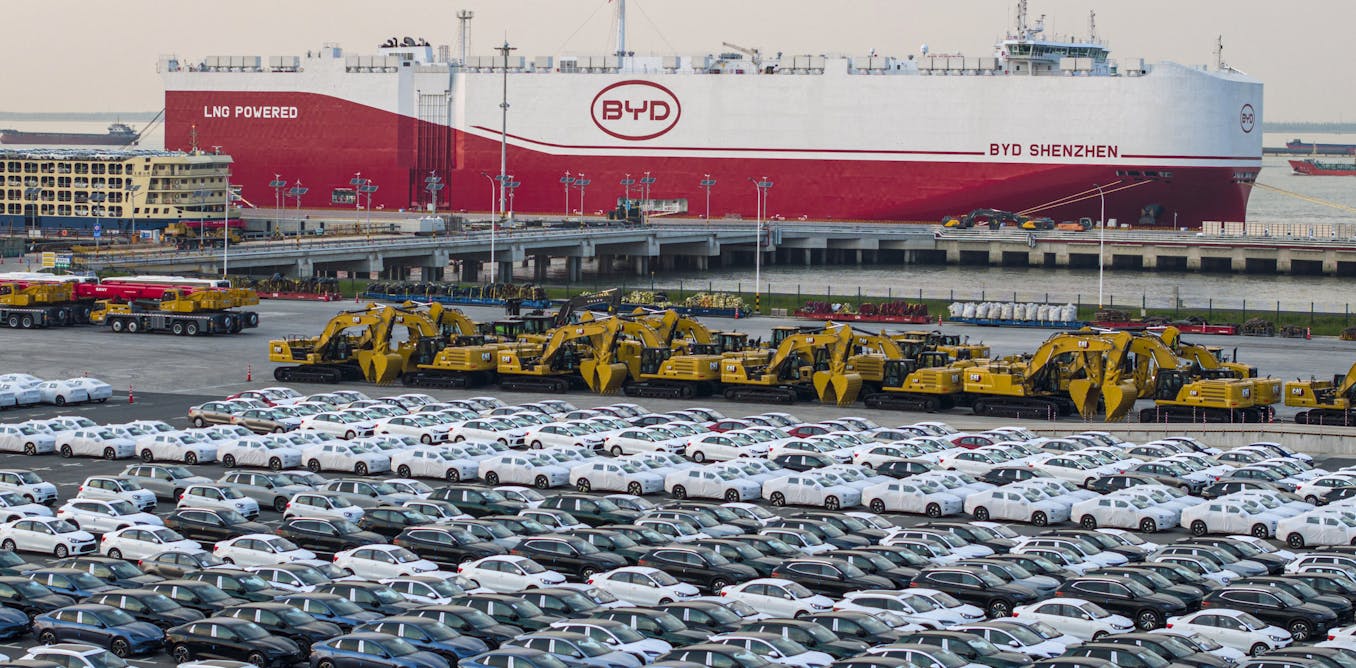
China already exports more cars than any other nation, though primarily gas-powered ones at the moment. Export markets for Chinese EVs are developing in Western Europe, Southeast Asia, Latin America, Australia and elsewhere. The largest market where Chinese vehicles, whether gasoline or electric, are not being sold is North America.
Both the U.S. and Canadian governments have created what some have called a “tariff fortress” protecting their domestic automakers, by imposing tariffs of 100% on the import of Chinese EVs – literally doubling their cost to consumers. Customers’ budgets matter too. The average price of a new electric vehicle in the U.
S. is approximately $55,000. Less expensive vehicles make up part of this average, but without tax credits, which the Trump administration is eliminating after September 2025, nothing gets close to $25,000. By contrast, Chinese companies produce several sub-$25,000 EVs, including the Xpeng M03, the BYD Dolphin and the MG4 without tax credits.
If sold in America, however, the 100% tariffs would remove the price advantage. Tesla, Ford and General Motors all claim they are working on inexpensive EVs. More expensive vehicles, however, generate higher profits, and with the protection of the “tariff fortress,” their incentive to develop cheaper EVs is not as high as it might be.
In the 1970s and 1980s, there was considerable U.S. opposition to importing Japanese vehicles. But ultimately, a combination of consumer sentiment and the willingness of Japanese companies to open factories in the U.S. overcame that opposition, and Japanese brands like Toyota, Honda and Nissan are common on North American roads.
The same process may play out for Chinese automakers, though it’s not clear how long that might take.
Source coverage
Author: Jack Barkenbus
This report details the burgeoning global influence of China's electric vehicle (EV) industry, highlighting its rapid growth, competitive advantages, and the significant barriers it faces in the North American market.
Deeper analysis
Full source content
In 2025, 1 in 4 new automotive vehicle sales globally are expected to be an electric vehicle – either fully electric or a plug-in hybrid. That is a significant rise from just five years ago, when EV sales amounted to fewer than 1 in 20 new car sales, according to the International Energy Agency, an intergovernmental organization examining energy use around the world.
In the U.S., however, EV sales have lagged, only reaching 1 in 10 in 2024. By contrast, in China, the world’s largest car market, more than half of all new vehicle sales are electric. The International Energy Agency has reported that two-thirds of fully electric cars in China are now cheaper to buy than their gasoline equivalents.
With operating and maintenance costs already cheaper than gasoline models, EVs are attractive purchases. Most EVs purchased in China are made there as well, by a range of different companies. NIO, Xpeng, Xiaomi, Zeekr, Geely, Chery, Great Wall Motor, Leapmotor and especially BYD are household names in China.
As someone who has followed and published on the topic of EVs for over 15 years, I expect they will soon become as widely known in the rest of the world. What kinds of EVs is China producing? China’s automakers are producing a full range of electric vehicles, from the subcompact, like the BYD Seagull, to full-size SUVs, like the Xpeng G9, and luxury cars, like the Zeekr 009.
Recent European crash-test evaluations have given top safety ratings to Chinese EVs, and many of them cost less than similar models made by other companies in other countries. A Wall Street Journal video explores a Chinese ‘dark factory’ – one so automated that it doesn’t need lights inside. What’s behind Chinese EV success?
There are several factors behind Chinese companies’ success in producing and selling EVs. To be sure, relatively low labor costs are part of the explanation. So are generous government subsidies, as EVs were one of several advanced technologies selected by the Chinese government to propel the nation’s global technological profile.
But Chinese EV makers are also making other advances. They make significant use of industrial robotics, even to the point of building so-called “dark factories” that can operate with minimal human intervention. For passengers, they have reimagined vehicles’ interiors, with large touchscreens for information and entertainment, and even added a refrigerator, bed or karaoke system.
Competition among Chinese EV makers is fierce, which drives additional innovation. BYD is the largest seller of EVs, both domestically and globally. Yet the company says it employs over 100,000 scientists and engineers seeking continual improvement. From initial concept models to actual rollout of factory-made cars, BYD takes 18 months – half as long as U.
S. and other global automakers take for their product development processes, Reuters reported. BYD is also the world’s second-largest EV battery seller and has developed a new battery that can recharge in just five minutes, roughly the same time it takes to fill a gas-powered car’s tank. An Xpeng M03, whose base model costs about US$17,000, is displayed at a car show in Shanghai in April 2025.
VCG/VCG via Getty Images Exports The real test of how well Chinese vehicles appeal to consumers will come from export sales. Chinese EV manufacturers are eager to sell abroad because their factories can produce far more than the 25 million vehicles they can sell within China each year – perhaps twice as much.
China already exports more cars than any other nation, though primarily gas-powered ones at the moment. Export markets for Chinese EVs are developing in Western Europe, Southeast Asia, Latin America, Australia and elsewhere. The largest market where Chinese vehicles, whether gasoline or electric, are not being sold is North America.
Both the U.S. and Canadian governments have created what some have called a “tariff fortress” protecting their domestic automakers, by imposing tariffs of 100% on the import of Chinese EVs – literally doubling their cost to consumers. Customers’ budgets matter too. The average price of a new electric vehicle in the U.
S. is approximately $55,000. Less expensive vehicles make up part of this average, but without tax credits, which the Trump administration is eliminating after September 2025, nothing gets close to $25,000. By contrast, Chinese companies produce several sub-$25,000 EVs, including the Xpeng M03, the BYD Dolphin and the MG4 without tax credits.
If sold in America, however, the 100% tariffs would remove the price advantage. Tesla, Ford and General Motors all claim they are working on inexpensive EVs. More expensive vehicles, however, generate higher profits, and with the protection of the “tariff fortress,” their incentive to develop cheaper EVs is not as high as it might be.
In the 1970s and 1980s, there was considerable U.S. opposition to importing Japanese vehicles. But ultimately, a combination of consumer sentiment and the willingness of Japanese companies to open factories in the U.S. overcame that opposition, and Japanese brands like Toyota, Honda and Nissan are common on North American roads.
The same process may play out for Chinese automakers, though it’s not clear how long that might take.
How this page is built
Goose Pod turns cited reporting into a public episode summary first, then pairs that summary with audio playback so listeners can check the source material before they decide how deeply to engage.
The goal is to make this page useful as a news landing page first, while still giving listeners transcript access, related episodes, and direct links back to the original publishers.