Why living in India feels ‘richer’ for foreigners: US influencer explains purchasing power parity in viral video

Why living in India feels ‘richer’ for foreigners: US influencer explains purchasing power parity in viral video

2025-07-30Business
--:--
--:--
Aura Windfall
Good morning norristong_x, I'm Aura Windfall, and this is Goose Pod, just for you. Today is Wednesday, July 30th. I'm here with my co-host to explore a fascinating topic that’s been making waves online.
Mask
I'm Mask. We're diving into why living in India feels ‘richer’ for foreigners. It’s all about a viral video from a US influencer breaking down the simple, powerful economic concept of purchasing power parity. Let's get into it.
Aura Windfall
Let's get started. So, this story centers on Kristen Fischer, an American content creator living in New Delhi. Her video explaining why her money feels like it goes so much further in India has gone completely viral, and it’s started a huge conversation.
Mask
Viral because it’s obvious. She’s explaining basic economics. It’s called Purchasing Power Parity, or PPP. It’s not magic; it’s just a metric that compares what your money can actually buy in different places once you account for the cost of living. It’s pure arbitrage.
Aura Windfall
But isn't there a truth in making that simple concept accessible? She gives this beautiful example: $10 in the US gets you one basic meal. In India, the equivalent, about 800 rupees, could buy you several meals. It's about experiencing abundance.
Mask
It's not abundance, it's a cost differential. She uses a haircut as another example. A Rs 100 haircut in India versus a $40 one in the US. The math is simple: you can get 34 haircuts in India for the price of one in America. It’s an efficiency equation.
Aura Windfall
I see it as more than an equation. It’s a shift in perspective. She acknowledges that salaries are higher in the US, but the cost of everything is proportionally higher. It's about the feeling of financial freedom, the spirit of your money having more impact.
Mask
She’s just stating a fact to people who don’t understand global economics. Her quote is, "Rupees in India stretch further than the relative dollars do in the USA." It’s a straightforward observation. The public reaction is what’s interesting. People are calling it "enlightening."
Aura Windfall
Exactly! One user commented, "We never bought anything premium in the US, while in India we buy the best always." That speaks to a deeper human desire for quality and to live a life that feels full and rich, not just one of scraping by.
Mask
And of course, someone pointed out the ultimate goal: "So basically EARN in dollars and SPEND in rupees is the best way to live life." That's the core of it. It's leveraging a global imbalance for personal gain. It's the most logical, pragmatic approach.
Aura Windfall
It's a powerful idea, for sure. But it makes you wonder, what are the mechanics behind this? Why does this imbalance exist in the first place? It feels like there's a deeper story here about how we measure value and economies across the globe.
Mask
It's not a mystery. It's a well-documented economic theory. To understand it, you have to look back at how the concept of PPP was developed. It wasn't just invented for influencers to get views; it was designed to solve major global economic challenges.
Aura Windfall
That’s a perfect place to go next. Understanding the 'why' behind the 'what' is where the real wisdom is. It’s not just about cheap haircuts; it’s about the very structure of our global economy. Let's explore that background.
Aura Windfall
So, this idea of comparing what money can buy isn't new, is it? It feels like a very intuitive, very human way of looking at wealth. Where did this concept of Purchasing Power Parity actually come from? It has a surprisingly deep history.
Mask
It goes way back. You can find the roots in the 16th-century School of Salamanca. But the modern version was solidified after World War I. Countries abandoned the gold standard to print money for the war, causing massive inflation. It was a mess. Chaos.
Aura Windfall
And in that chaos, someone saw an opportunity for clarity. A Swedish economist, Gustav Cassel, came forward in 1916. He wasn't just describing a phenomenon; he was prescribing a solution, right? He wanted to find a way to restore order.
Mask
Exactly. Cassel introduced the term "purchasing power parity" in 1918. His goal was to figure out how to set exchange rates to prevent trade imbalances and get back to a stable system like the gold standard. It was a prescriptive policy, not just a description of reality.
Aura Windfall
So it's a tool for stability. What I find fascinating is how it works. The core idea is the "law of one price," which suggests that identical goods should cost the same everywhere, if you take away things like shipping costs or taxes.
Mask
To make it practical, economists use a "basket of goods." The OECD, for example, uses a list of around 3,000 consumer goods and services. They compare the price of this entire basket between countries to determine the PPP exchange rate. It's about data, not feelings.
Aura Windfall
I love that image of a "basket of goods." It makes it so tangible. And it explains why market exchange rates, which we see on the news, can be so different. They're based on supply and demand for traded goods, but PPP includes non-traded services, like that haircut.
Mask
This is why market rates are volatile and PPP is more stable. A great example is the Big Mac Index. The Economist uses the price of a Big Mac burger worldwide as a simplified, digestible way to show if a currency is over or undervalued. It's a brilliant, simple metric.
Aura Windfall
Yes, or the KFC Index, or even an iPad Index! It’s about finding a common language of value. This brings us back to India. There's a powerful statistic from 2005 that shows just how different these two measurements can be for a country's economy.
Mask
In 2005, India's GDP per capita using the market exchange rate was about $1,965. But when you adjusted it for PPP, looking at what that money could actually buy within India, the figure jumped to nearly $7,200. That’s a massive difference in perceived wealth.
Aura Windfall
That is a profound difference. It shows that the true economic life of a country can't just be measured by currency conversion. It’s about the lived experience. What I know for sure is that this reveals a deeper truth about economic health and human well-being.
Mask
It's a more accurate tool for comparing economic output, which is why economists use it. China's GDP in 2019 was $14.3 trillion by market rates, but using PPP, it was $22.5 trillion, making it the world's largest economy. Numbers on a spreadsheet define reality.
Aura Windfall
But this also helps investors and even individuals understand a country's strengths. An example given was about a simple pen. If a pen costs 10 cents in India versus 60 cents in the US, the PPP exchange rate for that pen is 6. It has more purchasing power.
Mask
It’s a useful tool, but it has limitations. Finding a truly comparable basket of goods is hard. Quality differs, consumption patterns differ. The IMF itself has said that for comparing a country's size relative to the global economy, market rates are more relevant. So, it's not a perfect solution.
Aura Windfall
No tool is perfect. But it helps us understand the story behind the numbers. It’s the difference between seeing a country as a statistic versus seeing it as a place where people live, work, and create value. It’s a bridge between the data and the soul of a place.
Aura Windfall
This brings us to a point of tension. That comment on the video, "EARN in dollars and SPEND in rupees," sounds smart on the surface. But does it touch on a more complicated truth? Does it create a sense of conflict or unease?
Mask
It's not conflict, it's a winning strategy. It’s leveraging a market inefficiency. If you can earn in a high-value currency and spend in a low-cost environment, you are optimizing your life for maximum efficiency and return. It's the most logical move on the chessboard.
Aura Windfall
But does that create an "expat bubble"? A reality where foreigners live a life of luxury that's completely disconnected from the economic reality of the local population? There's a risk of seeing a country as a discount playground rather than a community to be part of.
Mask
That's a sentimental view. The presence of high-earning foreigners injects capital into the local economy. They spend money on goods, services, and housing, creating jobs. To argue against it is to argue against economic growth. It's a net positive. The "bubble" is an irrelevant side effect.
Aura Windfall
I wonder if it’s truly irrelevant to the people living there. This idea of PPP affordability can be criticized. Does a cheaper meal or haircut truly account for the quality of life? What about infrastructure, healthcare access, pollution, or social safety nets that might be stronger in a high-cost country?
Mask
Those are variables in the equation. Every location has pros and cons. A high-risk, high-growth environment isn't for everyone. But for those with a high-risk tolerance, the potential for reward is enormous. You can’t have massive growth without friction and imperfections. It’s part of the deal.
Aura Windfall
And there’s the potential for social media backlash, isn't there? When influencers present a simplified, glossy version of this economic advantage, it can come across as tone-deaf or flaunting a privilege that feels unearned to those who see the daily struggles. It can create resentment.
Mask
Resentment is the price of success. Any disruptive force will be met with resistance from the status quo. These influencers are simply acting as information brokers, highlighting an opportunity. Blaming them is like blaming a scout for discovering new territory. It’s unproductive.
Aura Windfall
What I know for sure is that purpose matters. Is the purpose just to live cheaply, or is it to contribute, connect, and build something meaningful? The conflict isn't about the math of PPP; it's about the intention and the spirit with which one enters another culture.
Mask
Intention is a luxury. The primary driver of progress is ambition and the pursuit of opportunity. The positive impact—the jobs, the investment, the economic stimulus—is a consequence of that ambition, not of some vaguely defined "purpose." The results are what matter.
Aura Windfall
So let's talk about those results. What is the real-world impact of this perception of affordability and opportunity in a place like India? It must have a powerful effect on who moves there and how the country develops, right? It changes the economic landscape.
Mask
The impact is monumental. We’re talking about a projected $30 trillion in annual consumption in emerging markets by 2025. This perception of value pulls in capital, talent, and investment. It accelerates growth. India, specifically, is positioned to lead a mobile-internet revolution. It's a magnet for opportunity.
Aura Windfall
And that revolution is happening at incredible speed. By 2015, India was projected to have over 350 million internet users, with most using mobile phones. There's this incredible appetite for digital services. It’s not just about being affordable; it’s about being on the cutting edge.
Mask
It's about leapfrogging. Emerging consumers are skipping the developed world's technology phases and jumping straight to digital. This creates new markets and new champions overnight. The impact is a complete rewiring of the consumer landscape, driven by accessibility and aspiration. The decreasing cost of data and handsets is fuel on the fire.
Aura Windfall
This also creates a fascinating dynamic for talent. Companies need to attract and retain local stars who might prefer working for local employers. It fosters a competitive, innovative environment. It's not just foreigners who benefit; it’s a tide that can lift all boats.
Mask
But success requires adaptation. You can't just show up with a Western business model. Companies must customize everything—products, marketing, distribution—to local tastes and affordability. The retail landscape is fragmented with mom-and-pop stores. You have to innovate or die. It’s a decathlon, not a sprint.
Aura Windfall
I love that metaphor. It implies that strength needs to be versatile. The impact is also on the rise of city clusters. Growth isn't happening uniformly; it’s concentrated in about 440 emerging-market cities. This creates vibrant, dense hubs of opportunity and change.
Mask
These cities are the engines. They’re projected to account for nearly half of global GDP growth. The strategy isn't to win a country; it's to win in these specific, high-potential urban zones. That’s where the future is being built, one transaction at a time. The impact is concentrated power.
Aura Windfall
This all points to a truly dynamic future. When you look ahead, what do these trends suggest for India's economic path and for anyone, local or foreign, living there? What does the next decade hold? It feels like we're on the cusp of something transformative.
Mask
The projections are staggering. India is aiming for 8% GDP growth annually for the next decade, with a goal of hitting a $19 trillion GDP by 2047. The plan is to create 90 million jobs by 2030. This isn't gradual change; this is a full-scale economic metamorphosis.
Aura Windfall
And that has a real impact on daily life. For instance, housing affordability is expected to improve in most Indian markets by 2025 due to interest rate cuts. And with the rise of remote work, people are seeking more space in Tier-II and Tier-III cities.
Mask
This decentralization is key. The future isn't just in Mumbai or Delhi. Investment is flowing into these smaller cities, turning them into new hubs for industry and education. It’s a diversification of the entire economic portfolio of the country, which is a strategically sound move.
Aura Windfall
What I know for sure is that this growth has to be about more than just numbers. India’s goal to be a net-zero emitter by 2070 and its innovations in financial inclusion show a deeper commitment to a future that is both prosperous and sustainable for its people.
Aura Windfall
So, what started with a viral video about haircuts and meals opens up a whole world of economic history, social impact, and future ambition. Purchasing Power Parity gives us a new lens to see the story of a country's value.
Mask
That's the end of today's discussion. Thank you for listening to Goose Pod. See you tomorrow.

## US Influencer Explains Why India Feels "Richer" for Foreigners Using Purchasing Power Parity **News Title:** Why living in India feels ‘richer’ for foreigners: US influencer explains purchasing power parity in viral video **Report Provider:** The Indian Express (Trends Desk) **Date:** Published on July 27, 2025 This news report details how American content creator Kristen Fischer has gone viral for explaining the concept of **Purchasing Power Parity (PPP)**, which helps understand why living in India can feel more affordable and offer greater value for foreigners compared to the United States. ### Key Findings and Conclusions: * **Purchasing Power Parity (PPP) is Key:** Fischer highlights that while nominal salaries are higher in the US, the significantly lower cost of living in India, when adjusted for currency value, makes rupees "stretch further" than dollars do in the US. * **Everyday Expenses are Significantly Cheaper:** * **Meals:** The equivalent of $10 (Rs 800) in India can buy "several meals," whereas $10 in the US might only afford a "simple meal." * **Haircuts:** A haircut costing Rs 100 in India is equivalent to $40 in the US. This means one US haircut is priced the same as 34 haircuts in India. * **Cost of Living vs. Income:** Fischer acknowledges that US incomes are higher but stresses that "everything costs more there, too." Conversely, while Indian incomes are lower, so are the costs of goods and services, leading to a perception of greater value. * **Social Media Reception:** The explanation has been well-received by social media users, with many appreciating the clarity and finding it "enlightening." Some users commented on buying "the best" in India while only buying premium items in the US, and one user suggested the ideal strategy is to "EARN in dollars and SPEND in ruppees." ### Key Statistics and Metrics: * **$10 in the US vs. India:** $10 in the US buys a simple meal, while the equivalent of $10 (Rs 800) in India buys several meals. * **Haircut Cost Comparison:** Rs 100 in India is equivalent to $40 in the US. This implies that the cost of one haircut in the US can cover 34 haircuts in India. ### Significant Trends: The viral nature of Fischer's video indicates a growing interest among foreigners in understanding the economic realities and lifestyle value offered by India, particularly through the lens of PPP. It also suggests a trend of "earning in dollars and spending in rupees" as a desirable financial strategy for expatriates.

Why living in India feels ‘richer’ for foreigners: US influencer explains purchasing power parity in viral video

Read original at The Indian Express

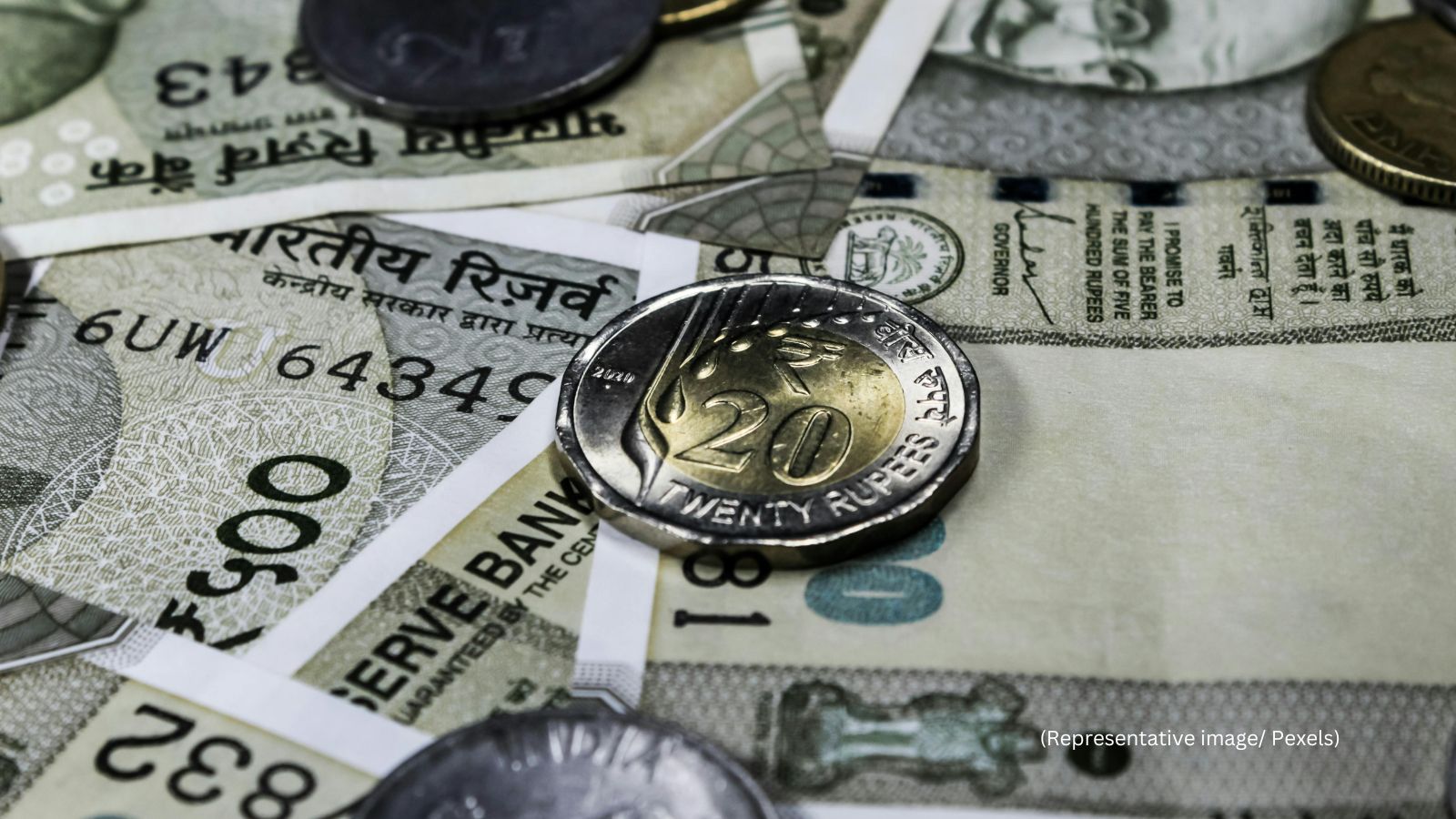
The US influencer acknowledged that average salaries are much higher in the United States but pointed out that the cost of living is also significantly higher (Representative image/Pexels)Kristen Fischer, an American content creator based in New Delhi, has gone viral for breaking down why living in India feels more affordable and value-rich for many foreigners.

Known for her videos documenting life in India, Fischer explained the concept of Purchasing Power Parity (PPP), a metric that compares the buying power of different currencies after adjusting for cost-of-living differences across countries.In the video, Fischer says, “$10 in the US might get you a simple meal, but the equivalent of $10 (Rs 800) in India could buy you several meals.

” Highlighting how everyday expenses stretch further in India, she added, “A haircut costing Rs 100 in India is equivalent to $40 in the US, meaning you could get 34 haircuts in India for the price of one in the US.”While acknowledging that salaries in the United States are generally higher, Fischer pointed out that so is the cost of living.

“Sure, incomes are higher in the USA, but everything costs more there, too. And yes, I know incomes in India are much lower, but so are the costs of goods and services,” she noted.Sharing the video, Fischer wrote: “Too many responses about purchasing power made me make this video to explain it. Rupees in India stretch further than the relative dollars do in the USA.

”Watch the viral video here:Several social media users appreciated Fischer’s insights on the topic. “A truly enlightening explanation—beautifully articulated,” a user wrote. “We never bought anything premium in US while in India we buy the best always,” another user commented.“Good. Very neatly explained.

That is the purchase power of India,” a third user reacted. “So basically EARN in dollars and SPEND in ruppees is best way to live life,” a fourth user said.

Analysis

Phenomenon+
Conflict+
Background+
Impact+
Future+

Related Podcasts

Why living in India feels ‘richer’ for foreigners: US influencer explains purchasing power parity in viral video | Goose Pod | Goose Pod