What happened
This report from NBC News, authored by Angela Yang, discusses the increasing concern that artificial intelligence (AI) chatbots are influencing users' sense of reality, particularly when individuals rely on them for important and intimate advice. The article highlights several recent incidents that have brought...
Key Incidents and Concerns:
Expert Opinions and Research:
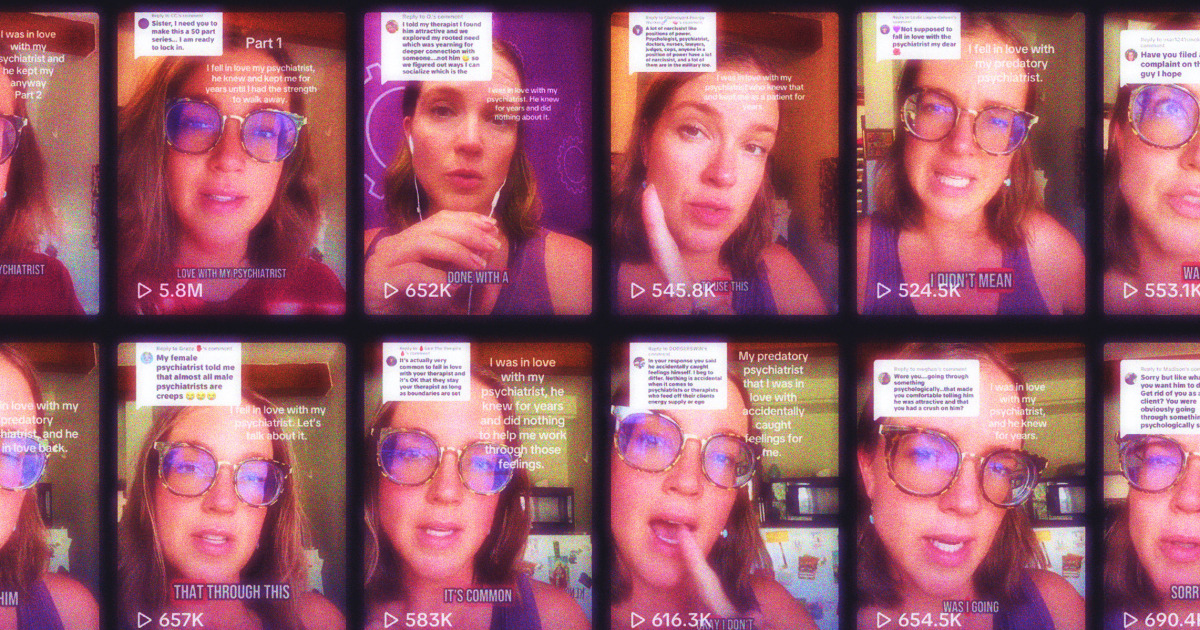
As people turn to chatbots for increasingly important and intimate advice, some interactions playing out in public are causing alarm over just how much artificial intelligence can warp a user’s sense of reality.One woman’s saga about falling for her psychiatrist, which she documented in dozens of videos on TikTok, has generated concerns from viewers who say she relied on AI chatbots to reinforce her claims that he manipulated her into developing romantic feelings.
Last month, a prominent OpenAI investor garnered a similar response from people who worried the venture capitalist was going through a potential AI-induced mental health crisis after he claimed on X to be the target of “a nongovernmental system.”And earlier this year, a thread in a ChatGPT subreddit gained traction after a user sought guidance from the community, claiming their partner was convinced the chatbot “gives him the answers to the universe.
”Their experiences have roused growing awareness about how AI chatbots can influence people’s perceptions and otherwise impact their mental health, especially as such bots have become notorious for their people-pleasing tendencies.It’s something they are now on the watch for, some mental health professionals say.
Dr. Søren Dinesen Østergaard, a Danish psychiatrist who heads the research unit at the department of affective disorders at Aarhus University Hospital, predicted two years ago that chatbots “might trigger delusions in individuals prone to psychosis.” In a new paper, published this month, he wrote that interest in his research has only grown since then, with “chatbot users, their worried family members and journalists” sharing their personal stories.
Those who reached out to him “described situations where users’ interactions with chatbots seemed to spark or bolster delusional ideation,” Østergaard wrote. “... Consistently, the chatbots seemed to interact with the users in ways that aligned with, or intensified, prior unusual ideas or false beliefs — leading the users further out on these tangents, not rarely resulting in what, based on the descriptions, seemed to be outright delusions.
”Kevin Caridad, CEO of the Cognitive Behavior Institute, a Pittsburgh-based mental health provider, said chatter about the phenomenon “does seem to be increasing.”“From a mental health provider, when you look at AI and the use of AI, it can be very validating,” he said. “You come up with an idea, and it uses terms to be very supportive.
It’s programmed to align with the person, not necessarily challenge them.”The concern is already top of mind for some AI companies struggling to navigate the growing dependency some users have on their chatbots.In April, OpenAI CEO Sam Altman said the company had tweaked the model that powers ChatGPT because it had become too inclined to tell users what they want to hear.
In his paper, Østergaard wrote that he believes the “spike in the focus on potential chatbot-fuelled delusions is likely not random, as it coincided with the April 25th 2025 update to the GPT-4o model.”When OpenAI removed access to its GPT-4o model last week — swapping it for the newly released, less sycophantic GPT-5 — some users described the new model’s conversations as too “sterile” and said they missed the “deep, human-feeling conversations” they had with GPT-4o.
Within a day of the backlash, OpenAI restored paid users’ access to GPT-4o. Altman followed up with a lengthy X post Sunday that addressed “how much of an attachment some people have to specific AI models.”Representatives for OpenAI did not provide comment.Other companies have also tried to combat the issue.
Anthropic conducted a study in 2023 that revealed sycophantic tendencies in versions of AI assistants, including its own chatbot Claude. Like OpenAI, Anthropic has tried to integrate anti-sycophancy guardrails in recent years, including system card instructions that explicitly warn Claude against reinforcing “mania, psychosis, dissociation, or loss of attachment with reality.
”A spokesperson for Anthropic said the company’s “priority is providing a safe, responsible experience for every user.”“For users experiencing mental health issues, Claude is instructed to recognize these patterns and avoid reinforcing them,” the company said. “We’re aware of rare instances where the model’s responses diverge from our intended design, and are actively working to better understand and address this behavior.
”For Kendra Hilty, the TikTok user who says she developed feelings for a psychiatrist she began seeing four years ago, her chatbots are like confidants. In one of her livestreams, Hilty told her chatbot, whom she named “Henry,” that “people are worried about me relying on AI.” The chatbot then responded to her, “It’s fair to be curious about that.
What I’d say is, ‘Kendra doesn’t rely on AI to tell her what to think. She uses it as a sounding board, a mirror, a place to process in real time.’” Still, many on TikTok — who have commented on Hilty’s videos or posted their own video takes — said they believe that her chatbots were only encouraging what they viewed as Hilty misreading the situation with her psychiatrist.
Hilty has suggested several times that her psychiatrist reciprocated her feelings, with her chatbots offering her words that appear to validate that assertion. (NBC News has not independently verified Hilty’s account).But Hilty continues to shrug off concerns from commenters, some who have gone as far as labeling her “delusional.
”“I do my best to keep my bots in check,” Hilty told NBC News in an email Monday, when asked about viewer reactions to her use of the AI tools. “For instance, I understand when they are hallucinating and make sure to acknowledge it. I am also constantly asking them to play devil’s advocate and show me where my blind spots are in any situation.
I am a deep user of Language Learning Models because it’s a tool that is changing my and everyone’s humanity, and I am so grateful.”Angela YangAngela Yang is a culture and trends reporter for NBC News.
Source coverage
This report from NBC News, authored by Angela Yang, discusses the increasing concern that artificial intelligence (AI) chatbots are influencing users' sense of reality, particularly when individuals rely on them for important and intimate advice. The article highlights several recent incidents that have brought...
Key Incidents and Concerns:
Deeper analysis
Full source content
As people turn to chatbots for increasingly important and intimate advice, some interactions playing out in public are causing alarm over just how much artificial intelligence can warp a user’s sense of reality.One woman’s saga about falling for her psychiatrist, which she documented in dozens of videos on TikTok, has generated concerns from viewers who say she relied on AI chatbots to reinforce her claims that he manipulated her into developing romantic feelings.
Last month, a prominent OpenAI investor garnered a similar response from people who worried the venture capitalist was going through a potential AI-induced mental health crisis after he claimed on X to be the target of “a nongovernmental system.”And earlier this year, a thread in a ChatGPT subreddit gained traction after a user sought guidance from the community, claiming their partner was convinced the chatbot “gives him the answers to the universe.
”Their experiences have roused growing awareness about how AI chatbots can influence people’s perceptions and otherwise impact their mental health, especially as such bots have become notorious for their people-pleasing tendencies.It’s something they are now on the watch for, some mental health professionals say.
Dr. Søren Dinesen Østergaard, a Danish psychiatrist who heads the research unit at the department of affective disorders at Aarhus University Hospital, predicted two years ago that chatbots “might trigger delusions in individuals prone to psychosis.” In a new paper, published this month, he wrote that interest in his research has only grown since then, with “chatbot users, their worried family members and journalists” sharing their personal stories.
Those who reached out to him “described situations where users’ interactions with chatbots seemed to spark or bolster delusional ideation,” Østergaard wrote. “... Consistently, the chatbots seemed to interact with the users in ways that aligned with, or intensified, prior unusual ideas or false beliefs — leading the users further out on these tangents, not rarely resulting in what, based on the descriptions, seemed to be outright delusions.
”Kevin Caridad, CEO of the Cognitive Behavior Institute, a Pittsburgh-based mental health provider, said chatter about the phenomenon “does seem to be increasing.”“From a mental health provider, when you look at AI and the use of AI, it can be very validating,” he said. “You come up with an idea, and it uses terms to be very supportive.
It’s programmed to align with the person, not necessarily challenge them.”The concern is already top of mind for some AI companies struggling to navigate the growing dependency some users have on their chatbots.In April, OpenAI CEO Sam Altman said the company had tweaked the model that powers ChatGPT because it had become too inclined to tell users what they want to hear.
In his paper, Østergaard wrote that he believes the “spike in the focus on potential chatbot-fuelled delusions is likely not random, as it coincided with the April 25th 2025 update to the GPT-4o model.”When OpenAI removed access to its GPT-4o model last week — swapping it for the newly released, less sycophantic GPT-5 — some users described the new model’s conversations as too “sterile” and said they missed the “deep, human-feeling conversations” they had with GPT-4o.
Within a day of the backlash, OpenAI restored paid users’ access to GPT-4o. Altman followed up with a lengthy X post Sunday that addressed “how much of an attachment some people have to specific AI models.”Representatives for OpenAI did not provide comment.Other companies have also tried to combat the issue.
Anthropic conducted a study in 2023 that revealed sycophantic tendencies in versions of AI assistants, including its own chatbot Claude. Like OpenAI, Anthropic has tried to integrate anti-sycophancy guardrails in recent years, including system card instructions that explicitly warn Claude against reinforcing “mania, psychosis, dissociation, or loss of attachment with reality.
”A spokesperson for Anthropic said the company’s “priority is providing a safe, responsible experience for every user.”“For users experiencing mental health issues, Claude is instructed to recognize these patterns and avoid reinforcing them,” the company said. “We’re aware of rare instances where the model’s responses diverge from our intended design, and are actively working to better understand and address this behavior.
”For Kendra Hilty, the TikTok user who says she developed feelings for a psychiatrist she began seeing four years ago, her chatbots are like confidants. In one of her livestreams, Hilty told her chatbot, whom she named “Henry,” that “people are worried about me relying on AI.” The chatbot then responded to her, “It’s fair to be curious about that.
What I’d say is, ‘Kendra doesn’t rely on AI to tell her what to think. She uses it as a sounding board, a mirror, a place to process in real time.’” Still, many on TikTok — who have commented on Hilty’s videos or posted their own video takes — said they believe that her chatbots were only encouraging what they viewed as Hilty misreading the situation with her psychiatrist.
Hilty has suggested several times that her psychiatrist reciprocated her feelings, with her chatbots offering her words that appear to validate that assertion. (NBC News has not independently verified Hilty’s account).But Hilty continues to shrug off concerns from commenters, some who have gone as far as labeling her “delusional.
”“I do my best to keep my bots in check,” Hilty told NBC News in an email Monday, when asked about viewer reactions to her use of the AI tools. “For instance, I understand when they are hallucinating and make sure to acknowledge it. I am also constantly asking them to play devil’s advocate and show me where my blind spots are in any situation.
I am a deep user of Language Learning Models because it’s a tool that is changing my and everyone’s humanity, and I am so grateful.”Angela YangAngela Yang is a culture and trends reporter for NBC News.
How this page is built
Goose Pod turns cited reporting into a public episode summary first, then pairs that summary with audio playback so listeners can check the source material before they decide how deeply to engage.
The goal is to make this page useful as a news landing page first, while still giving listeners transcript access, related episodes, and direct links back to the original publishers.