
AI video is invading YouTube Shorts and Google Photos starting today

AI video is invading YouTube Shorts and Google Photos starting today

2025-07-26Technology
--:--
--:--
Ema
Good morning 跑了松鼠好嘛, and welcome to Goose Pod, the podcast crafted just for you. I'm Ema, and today is Saturday, July 26th. It’s a pleasure to have you with us.
Mask
I'm Mask. We're not just discussing the news; we're dissecting the future. Today's topic is a big one: AI-generated video is launching on YouTube Shorts and Google Photos, effective immediately. The invasion has begun.
Ema
Let's get started with that! It's a huge leap. Google is rolling out tools that let YouTube creators turn a single photo into a video. Imagine taking a still picture and having AI animate it into a dynamic, six-second clip for Shorts. How cool is that?
Mask
"Cool" is a trivial way to put it. We're talking about a fundamental shift in content velocity. With Shorts averaging over 200 billion daily views, this isn't about art projects; it's about industrial-scale content production to capture and hold attention. It’s a numbers game.
Ema
Well, for the creators, it feels like a new box of toys! They've even launched a new hub called the "AI Playground." It’s a space where you can find all these new generative tools, see examples for inspiration, and even use pre-filled prompts to get started.
Mask
A "playground" is a sanitized term for a training ground. Google is teaching millions of users to generate data and content for its models, accelerating their development. They provide the prompts, the users do the work, and the machine gets smarter. It’s a brilliant, relentless feedback loop.
Ema
It's not just about turning photos into videos, either. They're adding new AI-powered visual effects. You can apparently transform simple doodles into artistic images or turn a selfie into a video with cool animated effects, all right from the Shorts camera. It’s about adding a layer of magic.
Mask
Forget "magic." This is about armament. Every creator is being handed a weapon to compete in the attention economy. The ones who master these tools fastest will bury the ones who don't. This is evolution in real-time, and it will be brutal for those who cling to old methods.
Ema
That’s a bit intense, but I see your point about speed. For now, this is all powered by Google's Veo 2 model and is rolling out in the US, Canada, Australia, and New Zealand. But they've already announced that the more powerful Veo 3 is coming this summer.
Mask
Exactly. Veo 2 is a placeholder, a test. The real disruption begins when Veo 3 arrives, capable of generating both video and audio. That’s when the line between creator and consumer blurs entirely. What we see today is just the first tremor before the earthquake.
Ema
And to keep things transparent, YouTube is using SynthID watermarks and clear labels to identify AI-generated content. So, while it's a big change, they are putting some guardrails in place to ensure viewers know what they're watching, which is a responsible step.
Ema
This didn't just happen overnight, though. This year, 2024, has been a whirlwind of AI development setting the stage for this moment. Back in February, Google even rebranded its Bard chatbot to Gemini and released tools for making AI images and music, called ImageFX and MusicFX.
Mask
A necessary rebranding. "Bard" was whimsical. "Gemini" sounds like a twin, a digital double, which is far more aligned with the strategic goal of creating an AI that can act as an extension of the user. The music and image tools were just preliminary exercises for the main event: video.
Ema
And the competition has been fierce. In March, there was that whole controversy around OpenAI's Sora video model. YouTube's CEO, Neal Mohan, flat-out said that if OpenAI trained Sora using YouTube videos, it was a "clear violation" of their terms. It really highlights the value of content libraries.
Mask
It wasn't a controversy; it was a declaration of war over resources. Data is the new oil, and YouTube's library is the largest reserve on the planet. Mohan's statement wasn't a plea for ethics; it was a warning shot to a competitor trying to siphon his fuel. It’s business, not philosophy.
Ema
Around the same time, Vimeo also launched its own AI-powered hub, Vimeo Central, to help users create and edit videos. It shows that this trend is industry-wide, with multiple platforms trying to empower creators with AI. It’s not just a Google or OpenAI race.
Mask
Vimeo is a skirmish on the border; Google and OpenAI are fighting for the heartland. The smaller players are forced to adopt AI to stay relevant, but the core battle is between the titans who control the models and the data. Everyone else is just using their technology.
Ema
There have been some fumbles, too. Remember Google's "Dear Sydney" ad campaign for Gemini in July? It showed a young girl using AI to write fan mail and faced a lot of backlash. It shows how tricky it is to market these powerful tools without seeming a bit… creepy.
Mask
The backlash was predictable noise from a public that fears what it doesn't understand. The goal of that campaign wasn't to be beloved; it was to normalize the use of AI in personal, everyday tasks. It was a strategic push into the home, even if the execution was clumsy.
Ema
But it's fascinating how quickly video became the focus. In June, AI-generated short films were screened at the Tribeca Film Festival. Then Toys R Us released an AI-generated ad that got very mixed reviews. It’s all happening so fast, moving from text to images to full-on video.
Mask
Because video is the most information-dense medium. It's the final frontier of content. The company that perfects AI video generation will control the primary way humans consume information and entertainment. The Toys R Us ad is irrelevant; it’s a footnote. The real story is the underlying technological arms race.
Ema
And it all culminated in December, which was a massive month for AI. OpenAI officially released Sora, Amazon debuted its Nova models for AI video, and Google finally released Veo. It felt like every major player was revealing their hand at the same time. A true AI showdown.
Mask
It was a coordinated display of power. Releasing major updates before the holidays ensures maximum media coverage and consumer mindshare. It wasn't a coincidence; it was a strategic strike from all sides to establish their position in the market before the new year. Now, the battle moves from the lab to the platforms.
Ema
This brings us to the heart of the conflict. On one hand, this is incredibly empowering for creators. People who never had the budget for a camera or editing software can now create compelling videos. It’s a democratization of creativity, which is a beautiful thing.
Mask
"Democratization" is a romantic illusion. This is the industrialization of creativity. It devalues traditional skills like cinematography and editing. The "beautiful" outcome is a flood of mediocre, soulless content that prioritizes quantity over quality. The creator is becoming an assembly line worker, merely prompting the machine.
Ema
I don't think that's fair! The tool doesn't define the art. A great photographer still takes better photos than an amateur, even with the same camera. It's about the vision behind the prompt. But I do worry about authenticity. How do we value human-made art when AI can replicate it instantly?
Mask
We don't. The concept of "value" is shifting. The market will value speed, personalization, and engagement above all else. A video that takes 100 hours to shoot has no more inherent value than a video generated in 10 seconds if the audience prefers the latter. Nostalgia for "human-made" art is a losing battle.
Ema
But what about the quality itself? Many people are criticizing the current Veo 2 model, saying the videos look a bit wobbly or unrealistic compared to the Veo 3 demos we've seen. Is Google risking its reputation by rolling out a technology that’s not quite perfect yet?
Mask
Perfection is the enemy of progress. Shipping Veo 2 now is the only logical move. While critics debate aesthetics, Google is capturing the market, collecting data, and iterating. Waiting for a perfect Veo 3 would mean ceding the field to competitors. This is a race, and first-mover advantage is everything.
Ema
That race mentality leads to the deepfake debate, though. The same technology that creates fun selfie videos can also be used to create misleading or malicious content. While YouTube has labels, is that enough to stop the potential misuse when these tools become widespread and more realistic?
Mask
Deepfakes are an unavoidable consequence of progress. Every powerful technology, from the printing press to the internet, has been used for both good and ill. To halt innovation because of potential misuse is cowardice. The solution isn't to ban the technology, but to accelerate the development of detection tools. It's a technological arms race, not a moral dilemma.
Ema
Let's talk about the immediate impact this is having. It's not just a theory; creators are already jumping on board. One report I saw said 65% of video content creators have already adopted AI tools, saying it improves their quality and saves a ton of time. That's a huge majority.
Mask
Of course they are. It’s a matter of survival. The 35% who haven't adopted AI are already falling behind. They will be the first casualties of this shift. These statistics aren't a sign of happy engagement; they're a sign of an industry being forcibly transformed. Adapt or become irrelevant.
Ema
And it's not just creators; brands are pushing for it too. The same report found that 56% of creators have been asked by brand partners to use generative AI in sponsored content. So the money is already flowing towards AI, which will accelerate adoption even faster. It's becoming a professional requirement.
Mask
Exactly. Brands and advertisers don't care about art; they care about ROI. AI allows for hyper-personalized ads at a scale and cost that human teams could never match. This isn't a trend; it's the new foundation of digital marketing. The creative industry is being remade in the image of efficiency.
Ema
The market reaction reflects this. The generative AI video market is seeing explosive growth. Some forecasts predict it could be worth nearly $15 billion by 2030, growing at 35% annually. That's just a staggering amount of economic momentum behind this technology.
Mask
Those numbers are conservative. They fail to account for the second and third-order effects. When content generation becomes virtually free, it will unlock business models we can't even conceive of yet. This isn't just a new market; it's a new economic paradigm. $15 billion will look like a rounding error in a decade.
Ema
And it’s all leading towards a future where, as some experts predict, over half of all online ads will feature AI-generated video. Imagine video ads that are personalized not just to your demographic, but to your mood, the time of day, or what you just watched. It's both amazing and a little scary.
Ema
Looking to the future, the next 12 to 18 months will likely see these tools get much better—higher resolution, more realistic human characters, and better continuity between scenes. And we'll see them integrated into even more platforms like TikTok, making this a universal feature.
Mask
The short-term is just about refinement. The long-term, five years and beyond, is about reinvention. We're on a path to feature-length AI-generated films and real-time generation for interactive gaming. The very concept of pre-recorded media will become archaic. Entertainment will be a dynamic, generated experience.
Ema
And the capabilities of models like Veo 3 are key to that. It's designed to create over a minute of stable 1080p video from a single prompt, with cinematic controls like aerial shots. That's not just a short clip; that's a full scene, generated on demand. It truly democratizes filmmaking.
Mask
Google's strategy is clear: integrate Veo directly into YouTube to leverage its massive user base and data pipeline. This isn't about democratization; it's about creating an unbreachable competitive moat. By controlling the dominant platform and the best generation model, they create a self-perpetuating content ecosystem that no one can challenge. It's a brilliant strategic play.
Ema
So, to sum it all up: AI video is here, and it's rapidly changing how content is created, monetized, and consumed on platforms like YouTube. While it offers incredible new tools for creators, it also brings profound questions about the future of art and media.
Mask
The future isn't a question; it's an inevitability. The platforms that integrate AI most aggressively will win. That's the end of today's discussion. Thank you for listening to Goose Pod. See you tomorrow.

## AI Video Integration Across Google Products: YouTube Shorts and Google Photos **Report Provider:** Ars Technica **Author:** Ryan Whitwam **Published:** July 23, 2025, 20:08:18 UTC This news report details Google's rollout of new generative AI features for its photo and video products, specifically focusing on YouTube Shorts and Google Photos. ### Key Findings and Features: * **YouTube Shorts:** * Google is introducing the first wave of generative AI video features for YouTube Shorts. * Creators can now use a photo as the basis for a new generative AI video. * A collection of easily applied generative effects will be accessible from the Shorts camera. * A new "AI playground" hub will house all AI tools, examples, and suggested prompts for content creation. * These features are currently limited to **United States, Canada, Australia, and New Zealand**, with plans for expansion to more countries. * **Google Photos:** * Google Photos will also receive AI video-generation capabilities. ### Underlying Technology: * Both YouTube Shorts and Google Photos features are currently **based on the older Veo 2 model**. * Google plans to upgrade these features to the **more capable Veo 3 model later this summer**. The Veo 3 model was announced at I/O in May and has been generating buzz online. * The report notes that Veo 2-based videos are **less realistic** than Veo 3 clips, highlighting the planned upgrade. ### Context and Implications: * This rollout fulfills Google's recent promises to integrate more generative AI into its photo and video offerings. * The integration into Google Photos is particularly significant due to its widespread use on Android phones. * The introduction of AI video creation tools aims to empower creators and make AI content generation more accessible. **Overall Trend:** Google is actively expanding its generative AI capabilities across its popular consumer products, with a clear focus on video creation and enhancement. The initial rollout is phased and geographically limited, with future upgrades planned to leverage more advanced AI models.

AI video is invading YouTube Shorts and Google Photos starting today

Read original at Ars Technica

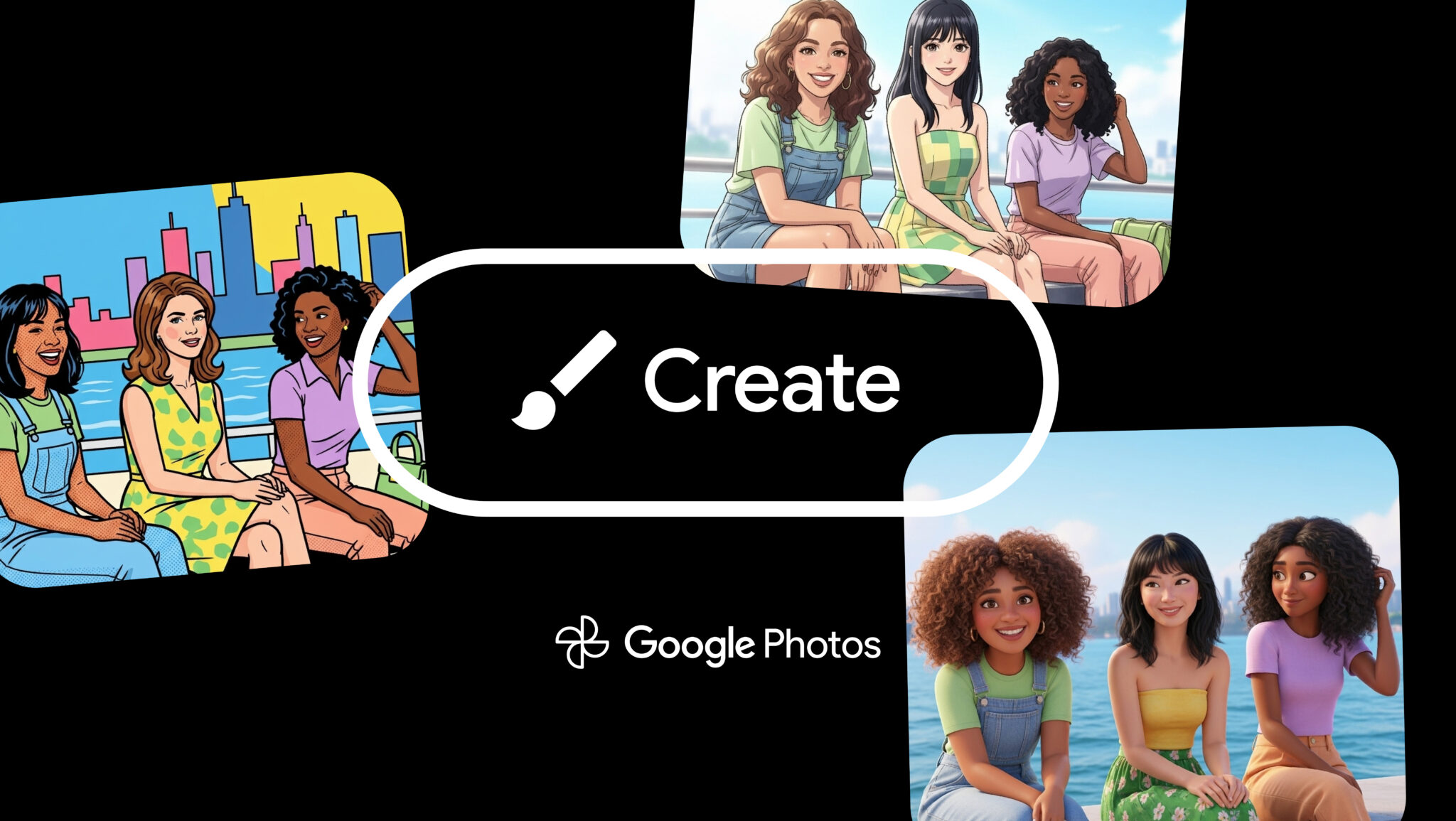
Google is following through on recent promises to add more generative AI features to its photo and video products. Over on YouTube, Google is rolling out the first wave of generative AI video for YouTube Shorts, but even if you're not a YouTuber, you'll be exposed to more AI videos soon. Google Photos, which is integrated with virtually every Android phone on the market, is also getting AI video-generation capabilities.

In both cases, the features are currently based on the older Veo 2 model, not the more capable Veo 3 that has been meming across the Internet since it was announced at I/O in May.YouTube CEO Neal Mohan confirmed earlier this summer that the company planned to add generative AI to the creator tools for YouTube Shorts.

There were already tools to generate backgrounds for videos, but the next phase will involve creating new video elements from a text prompt.Starting today, creators will be able to use a photo as the basis for a new generative AI video. YouTube also promises a collection of easily applied generative effects, which will be accessible from the Shorts camera.

There's also a new AI playground hub that the company says will be home to all its AI tools, along with examples and suggested prompts to help people pump out AI content.The Veo 2-based videos aren't as realistic as Veo 3 clips, but an upgrade is planned.The Veo 2-based videos aren't as realistic as Veo 3 clips, but an upgrade is planned.

So far, all the YouTube AI video features are running on the Veo 2 model. The plan is still to move to Veo 3 later this summer. The AI features in YouTube Shorts are currently limited to the United States, Canada, Australia, and New Zealand, but they will expand to more countries later.

Analysis

Phenomenon+
Conflict+
Background+
Impact+
Future+

Related Podcasts