
What happened
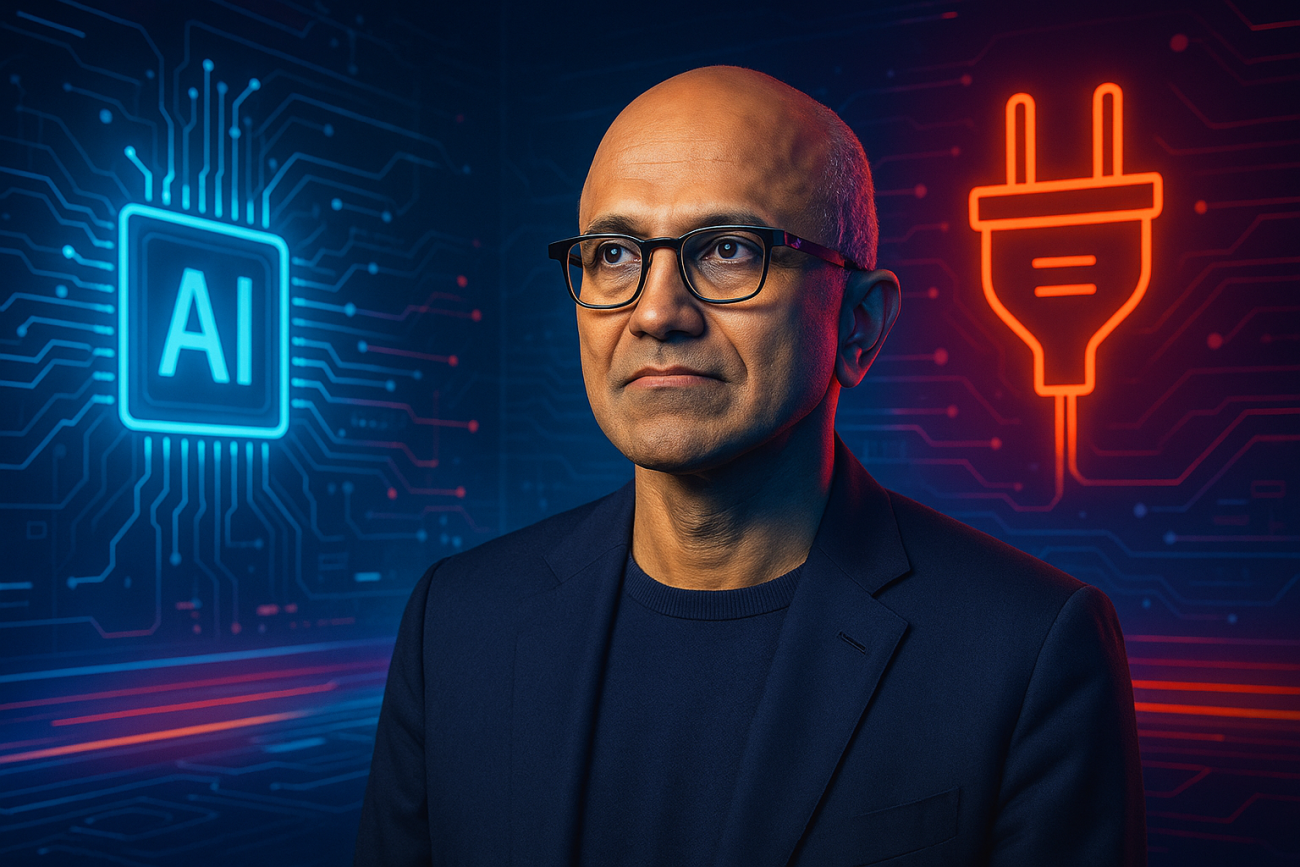
Microsoft CEO Satya Nadella reveals the AI boom is now limited by power, not chips. Data centers require immense electricity, straining the grid. This energy bottleneck threatens industry growth, forcing a re-evaluation of power sources like nuclear and highlighting the urgent need for grid modernization and clean...
Usman Salis Microsoft CEO Satya Nadella disclosed that the company has Nvidia GPUs sitting idle due to energy shortages, showing that power and data center capacity—not computing hardware—have become the real constraints on AI growth. ● Microsoft CEO Satya Nadella recently made a surprising admission: the company has Nvidia GPUs already installed in data centers that can't be turned on because there simply isn't enough power to run them.
This revelation, highlighted in an analysis by Shay Boloor, exposes a fundamental challenge facing the AI industry today. ● The bottleneck has shifted. It's no longer about getting enough chips—it's about securing enough electricity and data center infrastructure to actually use them. As Boloor points out, "If compute is easy to buy but power is hard to get, the leverage moves to whoever controls energy and infrastructure."
● Each new hyperscale data center from Microsoft, Google, Amazon, Meta, and Oracle needs hundreds of megawatts of stable power. But bringing that capacity online takes years, creating a timing problem: new GPU generations arrive so fast that older hardware loses value before it can generate meaningful returns.
● means AI growth now depends on how quickly companies can secure energy contracts and power up capacity—not just how many chips they can buy. Companies that built energy infrastructure early have gained a major strategic advantage. ● Nadella's comments confirm what investors are starting to understand—the next era of AI won't be built on silicon alone.
It will run on electricity. Usman has been in the blockchain space for 9 years and written dozens of articles about crypto in his career. He wants to put crypto on the global map.
Source coverage
Report Provider: thetradable.com
Author: Usman Salis
Deeper analysis
Full source content
Usman Salis Microsoft CEO Satya Nadella disclosed that the company has Nvidia GPUs sitting idle due to energy shortages, showing that power and data center capacity—not computing hardware—have become the real constraints on AI growth. ● Microsoft CEO Satya Nadella recently made a surprising admission: the company has Nvidia GPUs already installed in data centers that can't be turned on because there simply isn't enough power to run them.
This revelation, highlighted in an analysis by Shay Boloor, exposes a fundamental challenge facing the AI industry today. ● The bottleneck has shifted. It's no longer about getting enough chips—it's about securing enough electricity and data center infrastructure to actually use them. As Boloor points out, "If compute is easy to buy but power is hard to get, the leverage moves to whoever controls energy and infrastructure."
● Each new hyperscale data center from Microsoft, Google, Amazon, Meta, and Oracle needs hundreds of megawatts of stable power. But bringing that capacity online takes years, creating a timing problem: new GPU generations arrive so fast that older hardware loses value before it can generate meaningful returns.
● means AI growth now depends on how quickly companies can secure energy contracts and power up capacity—not just how many chips they can buy. Companies that built energy infrastructure early have gained a major strategic advantage. ● Nadella's comments confirm what investors are starting to understand—the next era of AI won't be built on silicon alone.
It will run on electricity. Usman has been in the blockchain space for 9 years and written dozens of articles about crypto in his career. He wants to put crypto on the global map.
How this page is built
Goose Pod turns cited reporting into a public episode summary first, then pairs that summary with audio playback so listeners can check the source material before they decide how deeply to engage.
The goal is to make this page useful as a news landing page first, while still giving listeners transcript access, related episodes, and direct links back to the original publishers.