
What happened
This opinion piece, published by The Guardian on July 14, 2025, and authored by Shadi Khan Saif, explores the author's personal experience and observations of multiculturalism in Australia, particularly in Melbourne. The central argument is that while Australia's multiculturalism is visible and celebrated on the...
Key Findings and Conclusions:
Key Statistics and Metrics:
The first thing that hit me when I landed in Melbourne from Kabul wasn’t the city’s famously unpredictable weather but the incredible diversity on the streets and in the food. It was nothing like the Australia I had imagined growing up: a cricket-mad nation led by white politicians in suits, in the headlines occasionally for either good or controversial reasons.
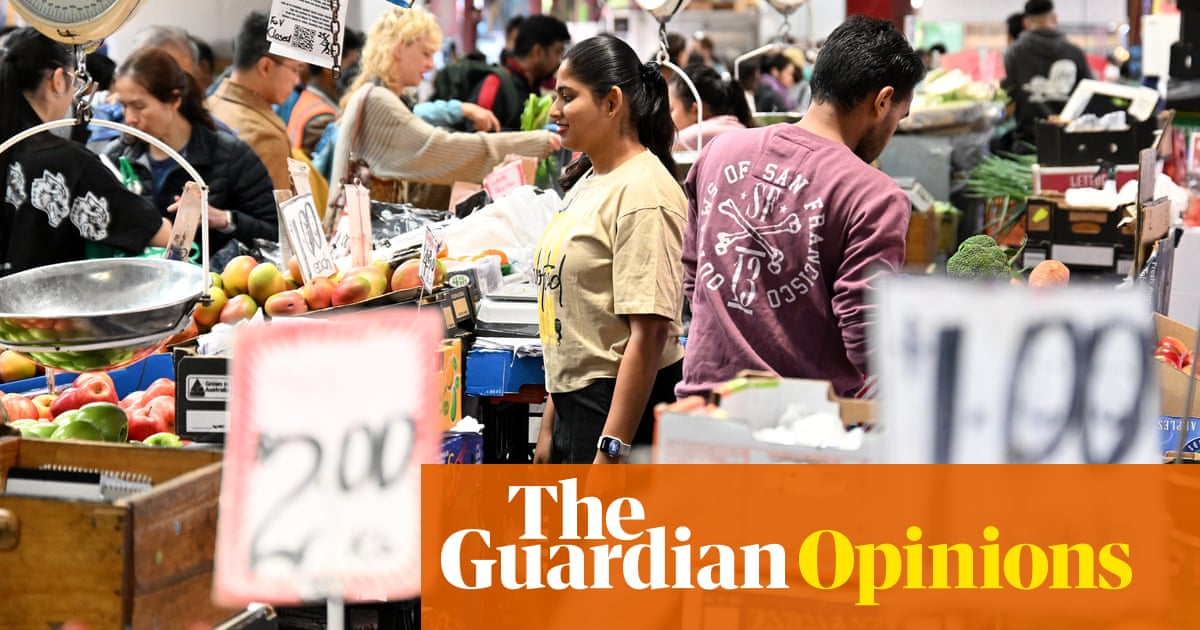
This vibrant reality surprised me in the best way.My curiosity turned into something deeper on my first weekend in the city, when I found myself at Queen Victoria market. I stood still, a little overwhelmed. The aromas – some familiar, some entirely new – drifted past me. Music played from different corners.
People chatted in languages I half-recognised, others I couldn’t place at all. Korean barbecue sizzled next to an Ethiopian injera stall. A few weekends later, I saw a Croatian choir performing while a Vietnamese lion dance troupe practised next.And then came Eid. On a crisp Melbourne day, hundreds of Muslims from a kaleidoscope of backgrounds gathered at the market for their annual festival.
Sufi music from South Asia filled the air, mingling with the scents of Mediterranean and Middle Eastern cuisine. I thought to myself: how wonderful that a market named after a British queen is now joyfully hosting the world’s cultures.As I started settling into life – juggling journalism, playing cricket, finding my feet in a new community – I couldn’t help but notice something else.
Yes, multiculturalism in Australia is visible, celebrated, and often delicious. But sometimes it feels like it lives mostly on the surface – in food stalls, colourful festivals and speeches on special days. When it comes to shaping narratives, policies or power structures, diversity tends to fade from the frame.
During the recent election campaign, I saw politicians making the rounds in multicultural neighbourhoods, eager to be seen connecting. They turned up at community barbecues, temple and mosque open days and cultural festivals – smiling for photos with kebabs, samosas and spring rolls in hand. But beyond the selfies and generic praise for “great food”, few seemed willing to go deeper.
Cricket, curiously, has been my constant in all of this. I joined a local club in inner-city Melbourne that looked and sounded like a mini United Nations. We laughed, competed and bonded across languages and backgrounds. It was beautiful. But if you zoom out to the state and national levels, the diversity vanishes.
Cricket Australia says more than 20% of grassroots players come from south Asian backgrounds. Yet only about 5% make it to state-level teams. At the elite level? Apart from Usman Khawaja, how many non-Anglo faces have you seen in the national squad in recent years? The gap is clear – and it’s not confined to sport.
The same story plays out in the media. Migrants and refugees often feature in stories, but still too rarely write them. Their experiences are framed by others – often painted as victims or inspirational exceptions, seldom as full, complex individuals.According to a 2020 Media Diversity Australia report, 75% of presenters and reporters came from Anglo-Celtic backgrounds.
Just 6% were from non-European ones. While some progress has been made, the overall imbalance remains stark.Sign up for Guardian Australia’s breaking news emailSo the recent launch of the Office for Multicultural Affairs is a welcome and necessary step. Minister Anne Aly – a trailblazer herself – put it clearly: “For too long, multiculturalism has been about citizenship and immigration.
” She’s right. In a nation where over 31% of the population was born overseas, this isn’t a minor oversight – it’s a structural blind spot.The new office promises to focus on inclusion, belonging and giving diverse communities a real say. That’s encouraging. But real transformation won’t come from consultation alone – it requires commitment to systemic change.
As someone from Afghanistan, a place where identity can determine destiny, these things are hard to ignore. In many countries migrants came from, the dangers of speaking out or being in the wrong place for the sake of identity could be deadly dangerous. Here in Australia, the risks are different – more subtle, often institutional.
But the ache of not being seen or heard remains for many.In many conversations with migrants, refugees and other diverse Australians, I’ve heard a common refrain: they don’t just want to be statistics in a census or smiling faces in government brochures. They want to be part of the decision-making.
They want to be trusted with stories, with strategy, with steering the future.To its credit, the Albanese government has moved multicultural affairs into cabinet. That matters. But many advocates hoped for more – including a standalone department of multicultural affairs, immigration and citizenship with its own minister.
Anne Aly, in a recent interview, acknowledged that social cohesion is a shared responsibility – and that it shouldn’t always fall on multicultural communities to “integrate” or prove their worth.That sentiment hit home. Inclusion without voice is tokenism. It allows others to speak for you, write your story, decide your place.
Real inclusion means power-sharing – not just presence, but participation.The last federal election did shift the needle. More women, more diverse MPs entered parliament. But the cabinet is still not always reflecting the streets, schools and sports fields of modern Australia. And let’s be clear: this isn’t only about recent migrants.
First Nations people have long spoken about exclusion and erasure. Multiculturalism without reconciliation is incomplete.So what might genuine inclusion look like?What if Cricket Australia’s leadership reflected the diversity of its grassroots players? What if newsrooms recruited refugee journalists to cover politics, economics, and not just “inspiring migrant” stories?
What if schoolchildren saw themselves not just on multicultural day, but in textbooks, staff rooms and leadership teams?These aren’t radical ideas. They’re reasonable expectations in a country that proudly calls itself multicultural.The new Office for Multicultural Affairs has the potential to help make these expectations reality.
But that will take more than events and strategy papers. It’ll take investment in leadership pathways, serious commitment to representation, and a willingness to listen to grassroots voices – not just those already at the table.Coming from a country where the cost of being silenced is painfully high, I can tell you this: Australia has immense potential.
The food, the festivals, the colours – they’re real and beautiful. But the people behind them want more than celebration. They want to contribute meaningfully to this nation’s journey.
Source coverage
This opinion piece, published by The Guardian on July 14, 2025, and authored by Shadi Khan Saif, explores the author's personal experience and observations of multiculturalism in Australia, particularly in Melbourne. The central argument is that while Australia's multiculturalism is visible and celebrated on the...
Key Findings and Conclusions:
Deeper analysis
Full source content
The first thing that hit me when I landed in Melbourne from Kabul wasn’t the city’s famously unpredictable weather but the incredible diversity on the streets and in the food. It was nothing like the Australia I had imagined growing up: a cricket-mad nation led by white politicians in suits, in the headlines occasionally for either good or controversial reasons.
This vibrant reality surprised me in the best way.My curiosity turned into something deeper on my first weekend in the city, when I found myself at Queen Victoria market. I stood still, a little overwhelmed. The aromas – some familiar, some entirely new – drifted past me. Music played from different corners.
People chatted in languages I half-recognised, others I couldn’t place at all. Korean barbecue sizzled next to an Ethiopian injera stall. A few weekends later, I saw a Croatian choir performing while a Vietnamese lion dance troupe practised next.And then came Eid. On a crisp Melbourne day, hundreds of Muslims from a kaleidoscope of backgrounds gathered at the market for their annual festival.
Sufi music from South Asia filled the air, mingling with the scents of Mediterranean and Middle Eastern cuisine. I thought to myself: how wonderful that a market named after a British queen is now joyfully hosting the world’s cultures.As I started settling into life – juggling journalism, playing cricket, finding my feet in a new community – I couldn’t help but notice something else.
Yes, multiculturalism in Australia is visible, celebrated, and often delicious. But sometimes it feels like it lives mostly on the surface – in food stalls, colourful festivals and speeches on special days. When it comes to shaping narratives, policies or power structures, diversity tends to fade from the frame.
During the recent election campaign, I saw politicians making the rounds in multicultural neighbourhoods, eager to be seen connecting. They turned up at community barbecues, temple and mosque open days and cultural festivals – smiling for photos with kebabs, samosas and spring rolls in hand. But beyond the selfies and generic praise for “great food”, few seemed willing to go deeper.
Cricket, curiously, has been my constant in all of this. I joined a local club in inner-city Melbourne that looked and sounded like a mini United Nations. We laughed, competed and bonded across languages and backgrounds. It was beautiful. But if you zoom out to the state and national levels, the diversity vanishes.
Cricket Australia says more than 20% of grassroots players come from south Asian backgrounds. Yet only about 5% make it to state-level teams. At the elite level? Apart from Usman Khawaja, how many non-Anglo faces have you seen in the national squad in recent years? The gap is clear – and it’s not confined to sport.
The same story plays out in the media. Migrants and refugees often feature in stories, but still too rarely write them. Their experiences are framed by others – often painted as victims or inspirational exceptions, seldom as full, complex individuals.According to a 2020 Media Diversity Australia report, 75% of presenters and reporters came from Anglo-Celtic backgrounds.
Just 6% were from non-European ones. While some progress has been made, the overall imbalance remains stark.Sign up for Guardian Australia’s breaking news emailSo the recent launch of the Office for Multicultural Affairs is a welcome and necessary step. Minister Anne Aly – a trailblazer herself – put it clearly: “For too long, multiculturalism has been about citizenship and immigration.
” She’s right. In a nation where over 31% of the population was born overseas, this isn’t a minor oversight – it’s a structural blind spot.The new office promises to focus on inclusion, belonging and giving diverse communities a real say. That’s encouraging. But real transformation won’t come from consultation alone – it requires commitment to systemic change.
As someone from Afghanistan, a place where identity can determine destiny, these things are hard to ignore. In many countries migrants came from, the dangers of speaking out or being in the wrong place for the sake of identity could be deadly dangerous. Here in Australia, the risks are different – more subtle, often institutional.
But the ache of not being seen or heard remains for many.In many conversations with migrants, refugees and other diverse Australians, I’ve heard a common refrain: they don’t just want to be statistics in a census or smiling faces in government brochures. They want to be part of the decision-making.
They want to be trusted with stories, with strategy, with steering the future.To its credit, the Albanese government has moved multicultural affairs into cabinet. That matters. But many advocates hoped for more – including a standalone department of multicultural affairs, immigration and citizenship with its own minister.
Anne Aly, in a recent interview, acknowledged that social cohesion is a shared responsibility – and that it shouldn’t always fall on multicultural communities to “integrate” or prove their worth.That sentiment hit home. Inclusion without voice is tokenism. It allows others to speak for you, write your story, decide your place.
Real inclusion means power-sharing – not just presence, but participation.The last federal election did shift the needle. More women, more diverse MPs entered parliament. But the cabinet is still not always reflecting the streets, schools and sports fields of modern Australia. And let’s be clear: this isn’t only about recent migrants.
First Nations people have long spoken about exclusion and erasure. Multiculturalism without reconciliation is incomplete.So what might genuine inclusion look like?What if Cricket Australia’s leadership reflected the diversity of its grassroots players? What if newsrooms recruited refugee journalists to cover politics, economics, and not just “inspiring migrant” stories?
What if schoolchildren saw themselves not just on multicultural day, but in textbooks, staff rooms and leadership teams?These aren’t radical ideas. They’re reasonable expectations in a country that proudly calls itself multicultural.The new Office for Multicultural Affairs has the potential to help make these expectations reality.
But that will take more than events and strategy papers. It’ll take investment in leadership pathways, serious commitment to representation, and a willingness to listen to grassroots voices – not just those already at the table.Coming from a country where the cost of being silenced is painfully high, I can tell you this: Australia has immense potential.
The food, the festivals, the colours – they’re real and beautiful. But the people behind them want more than celebration. They want to contribute meaningfully to this nation’s journey.
How this page is built
Goose Pod turns cited reporting into a public episode summary first, then pairs that summary with audio playback so listeners can check the source material before they decide how deeply to engage.
The goal is to make this page useful as a news landing page first, while still giving listeners transcript access, related episodes, and direct links back to the original publishers.