AI stethoscope could detect heart conditions in seconds

AI stethoscope could detect heart conditions in seconds

2025-09-01Technology
--:--
--:--
Aura Windfall
Good morning 1, I'm Aura Windfall, and this is Goose Pod for you. Today is Tuesday, September 2nd. What I know for sure is that today, we're diving into a topic that touches the very heart of human innovation and well-being.
Mask
And I'm Mask. We're here to discuss a seismic shift in medical technology: an AI-powered stethoscope that can detect heart conditions in seconds. Forget the old ways; this is about speed, data, and disruption. Let's get started.
Aura Windfall
Let's get started. The core of this is truly a beautiful marriage of the old and the new. Imagine, the stethoscope, a tool that has been with us for 200 years, is now being infused with incredible intelligence. It’s a powerful "aha moment" for medicine.
Mask
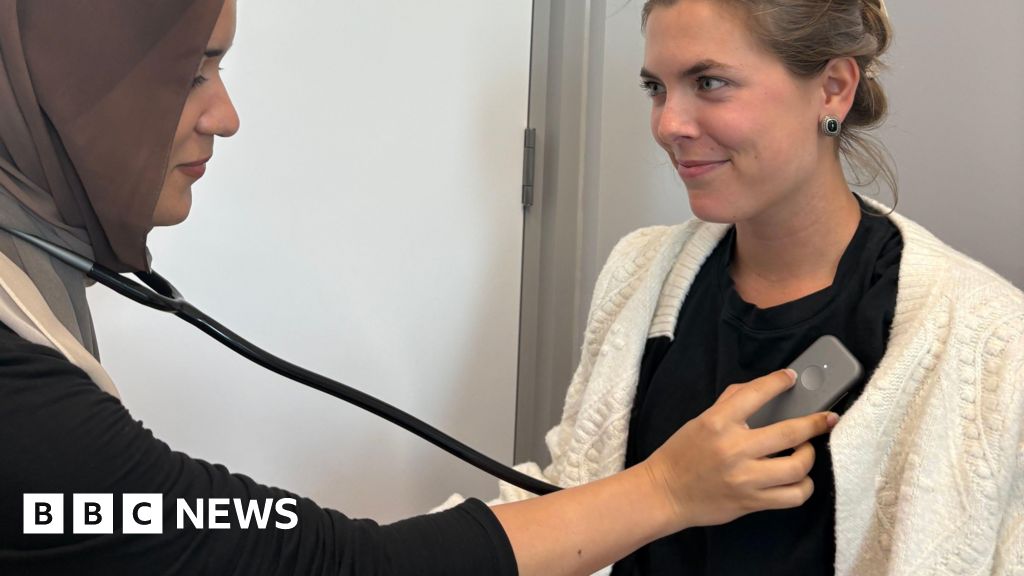
It's more than an 'aha moment'; it's a fundamental upgrade. The old design is obsolete. This new device, the size of a playing card, doesn't just listen. It analyzes, detects, and quantifies things the human ear could never hope to catch. It’s a straight-up superior tool.
Aura Windfall
And the truth of its power was shown in a massive study, wasn't it? Researchers at Imperial College London brought this to nearly 200 GP surgeries, examining about 12,000 patients. They focused on those with symptoms like breathlessness, seeking clarity and answers for them.
Mask
Exactly, and the results are undeniable. In a 15-second examination, it delivers a verdict on heart failure, atrial fibrillation, or valve disease. The numbers don't lie. This isn't about feelings; it's about pure, unadulterated data proving its effectiveness in the field.
Aura Windfall
What I find so inspiring is the speed combined with depth. Fifteen seconds to get a potential lifeline. Dr. Patrik Bächtiger from Imperial College noted how incredible it is that this examination can so quickly point towards a condition that might otherwise have remained hidden for years.
Mask
The key isn't just speed, it's the predictive power. The study compared patients from surgeries with the device to those without. The result? Patients examined with the AI stethoscope were 2.33 times more likely to have heart failure detected within a year. That’s a massive performance increase.
Aura Windfall
That’s more than a statistic; it’s 2.33 times more opportunities for a person to get the care they need, to live a fuller life. It's about turning anxiety and symptoms into a clear path forward, filled with hope and the gratitude of an early diagnosis.
Mask
And it gets better. For abnormal heartbeats, a silent risk factor for stroke, the detectability was 3.5 times higher. For heart valve disease, it was 1.9 times higher. We are talking about a quantum leap in diagnostic capability, making GPs exponentially more effective.
Aura Windfall
I love how Dr. Sonya Babu-Narayan of the British Heart Foundation called it an "elegant example" of upgrading a 200-year-old tool for the 21st century. It’s a testament to the idea that we can honor our history while courageously embracing the future. It’s about purpose.
Mask
It's not about elegance, it's about necessity. She pointed out that these conditions are often diagnosed in an emergency room when it's already advanced. This tool bypasses that failure point. It moves diagnosis from a reactive, hospital setting to a proactive, local GP office. It's just a smarter system.
Aura Windfall
And that shift is everything. It means people can get treatment sooner and live well for longer. This isn't just an invention; it's a beacon of hope. The findings were presented at the world's largest heart conference, sharing this spirit of possibility with thousands of doctors.
Mask
Presenting is fine, but deployment is what matters. The plan is to roll these out across more of the UK, in London, Sussex, and Wales. The goal should be to make this the standard of care, immediately. Anything less is an inefficient allocation of life-saving resources.
Aura Windfall
To truly appreciate this moment, we have to understand the journey of AI in medicine. The concept of AI has been around since the 1950s, a seed of an idea. But only now are we seeing it blossom in such a tangible, life-affirming way in our healthcare.
Mask
That's because for decades it was just a concept without the necessary power. The game-changer was the ability to process massive volumes of data. AI's utility isn't magic; it's brute-force computation applied to cardiology for risk prediction, imaging, and electrophysiology. It’s a paradigm shift.
Aura Windfall
And what I know for sure is that this shift is touching every aspect of care. We're seeing AI in auscultation—the simple act of listening to the body—become incredibly sophisticated. It's not just about hearing, but about understanding the language of the heart with a new depth.
Mask
Right, research from just this year highlights using AI to differentiate heart sounds with 'super StethoScopes.' We're moving beyond human limitations. The goal is to create a system that enhances care by removing the variable of human error and sensory dullness. It’s about precision.
Aura Windfall
And it extends beyond the heart. It’s so interesting to see how this same spirit of innovation is being applied to other areas. Researchers are using digital stethoscopes and AI to classify respiratory sounds, to listen for the whispers of lung diseases like COPD and asthma.
Mask
It's a logical progression. Once you have a platform that can analyze complex audio signals, you can retrain it for any acoustic biomarker. They're even trialing it for COVID-19 screening by analyzing a person's voice, breath, and cough. It's about creating adaptable, scalable diagnostic platforms.
Aura Windfall
It truly feels like we are at the beginning of a new chapter in patient-centered care. The technology allows for a more direct, more immediate connection between the patient's body and the doctor's understanding. It removes ambiguity and replaces it with clarity and truth.
Mask
The ultimate goal is a paradigm shift in diagnosis and management. We are on the cusp of a future where cardiovascular diseases are not just treated, but predicted and prevented with a level of accuracy we couldn't have imagined. This isn't an incremental improvement; it's a revolution.
Aura Windfall
This journey reminds me of the power of consistent effort. From a concept in the 1950s to real-time heart disease detection published in 2021, and now this incredible stethoscope. It's a beautiful lesson in how dedication to a purpose can truly change the world for the better.
Mask
It's not about dedication, it's about technological convergence. Processing power, cloud computing, and massive datasets made this possible. The idea was irrelevant until the hardware and data infrastructure caught up. Now that it has, the pace of change will be absolutely relentless. We have to keep up.
Aura Windfall
And we must. What this shows us is a future where technology serves humanity more deeply. Where a simple, routine check-up can reveal profound insights, allowing us to be proactive guardians of our own health and well-being, living our lives with greater peace of mind.
Mask
Peace of mind is a byproduct. The real win is efficiency and accuracy. We're building systems that will outperform humans in specific, repetitive, data-intensive tasks. This frees up doctors to focus on treatment and complex cases, not routine diagnostics that a machine can do better.
Aura Windfall
That freedom is so important. It allows doctors to bring more of their own spirit and humanity to their practice. When the burden of uncertainty in diagnosis is lifted, they can focus on the patient's journey, on healing the whole person, not just treating the condition.
Mask
Let's be clear. The machine isn't just helping; it's setting a new standard. The AI is trained on tens of thousands of patients, a dataset no single doctor could ever accumulate. It's creating a baseline of diagnostic excellence that will elevate the entire healthcare system. It’s about raising the bar.
Aura Windfall
Yes, raising the bar for everyone. It’s about democratizing expertise. This technology can put the insights of a top cardiologist into a device that any GP can use. It’s a beautiful example of how innovation can spread knowledge and healing, and I am so grateful for that.
Aura Windfall
But with all this incredible potential, we must also walk with wisdom. This technology brings up deep questions about the spirit of medicine. AI challenges our long-held ideas about what clinical expertise truly is, and who, or what, holds the authority to make life-changing decisions.
Mask
These are not questions; they are implementation hurdles. The authority is with the demonstrably superior tool. We have studies showing AI with 80% diagnostic accuracy in tough cases where human doctors only hit 20%. The data is the authority. The rest is just sentimental attachment to an old model.
Aura Windfall
But is that comparison truly fair? I read that in some of those studies, the human doctors weren't allowed to use tools like Google, which are a part of their everyday process. It seems we're comparing AI to a physician's unaided memory, not their full, resourceful self.
Mask
That's a footnote, a detail. Even if you level the playing field, the trajectory is clear. The machine learns exponentially. A doctor's memory does not. The AI is more cost-effective and faster. We can't let flawed study designs distract from the overwhelming strategic advantage of AI.
Aura Windfall
What I know for sure is that we can't ignore the ethical fabric of healthcare. There's a real concern that systems designed for efficiency might marginalize patients with rare or complex conditions. We have to ensure that in our quest for progress, no one is left behind.
Mask
That's an engineering problem. You define the parameters. You build in safeguards. The risk of the status quo, where diagnoses are missed entirely, is far greater than the risk of an algorithm needing refinement. We can't let the perfect be the enemy of the overwhelmingly good. Progress requires risk.
Aura Windfall
And what about the human connection? The latest research shows that the true magic happens not in opposition, but in collaboration. Diagnostic teams of human doctors and AI systems are significantly more accurate than either one alone. It's about synergy, not replacement. It’s about shared purpose.
Mask
Fine, collaboration is a good interim step. Let the AI handle the data analysis and pattern recognition, and let the human handle the clinical judgment and patient interaction. But make no mistake, the AI's role will only expand. It's the most powerful tool in the room.
Aura Windfall
This synergy is especially powerful for complex cases with many possible diagnoses. It allows for a breadth of insight that is truly remarkable. It’s a dance between data and intuition, between the analytical power of the machine and the deep, compassionate wisdom of a human healer.
Mask
Let's call it what it is: a powerful leverage of resources. We also have to address the issue of commercial control. Private tech companies holding the keys to this medical AI poses risks to data privacy and creates potential conflicts of interest. That needs to be managed with aggressive oversight.
Aura Windfall
Absolutely. The limitations here aren't just technical; they are deeply human and ethical. To move forward with integrity, we must align the deployment of this technology with our most cherished clinical values, acknowledging the complexities and vulnerabilities of human health. It's about stewardship.
Aura Windfall
And the impact of this stewardship is already taking shape. The UK's National Health Service, the NHS, has created an AI Lab specifically to nurture these innovations. It’s a sign of a real commitment to integrating this technology with care and compassion. It’s a system finding its truth.
Mask
It's a strategic investment. By 2025, the NHS already had over 80 AI projects running. This isn't just about stethoscopes; it's about optimizing nurse schedules, predicting bed occupancy, and speeding up radiology workflows. It's a full-scale efficiency overhaul of a massive, bureaucratic system.
Aura Windfall
And they are doing it mindfully. The AI Lab has partnered with regulators to create a sandbox for developers, a safe space to play and innovate while navigating the important rules. It’s about building a foundation of trust between the technology and the people it's meant to serve.
Mask
The 'Skunkworks' team is even more impressive. They are building practical tools, not just debating ethics. They developed an algorithm to streamline nurse placement and a natural language processing engine to search health records more efficiently. This is about execution, turning ideas into tangible assets.
Aura Windfall
What a beautiful thought, that this technology can help a nurse be exactly where they are needed most. That is technology in service of humanity. With over £100 million in funding for one program alone, the NHS is showing a powerful intention to advance care with protective guardrails.
Mask
The primary impact we're chasing is a reduction in the time and cost of healthcare. From earlier cancer detection to better resource management, it all comes down to a better return on investment. The AI stethoscope, for example, reduces the need for expensive, time-consuming specialist referrals. It’s a smarter allocation of capital.
Aura Windfall
And what I know for sure is that for a patient, that 'smarter allocation' means less waiting, less uncertainty, and a faster path to healing. It changes the entire experience of care, making it more responsive and humane. We must continue to invest in high-quality clinical trials to prove this value.
Mask
Real-world evidence is key. We need to demonstrate safety, efficacy, and economic value across diverse populations. And compliance is non-negotiable. These solutions must meet stringent regulatory requirements from the FDA and others, and comply with data privacy laws like GDPR. No exceptions. The system has to be robust.
Aura Windfall
Looking to the future, it feels like we are on the cusp of something truly transformative. This AI stethoscope is a beautiful, practical application, but it's also a symbol of a rising wave of innovation. It’s a sign that our capacity for healing is growing in incredible ways.
Mask
It's a market in motion. Gartner's tech hype cycle shows AI in medical devices is on the rise. We're seeing companies like Eko Health, who worked on this stethoscope, and AliveCor, with its mobile ECG, carving out the cardiovascular AI space. This is about establishing market dominance.
Aura Windfall
And these companies are often growing through partnerships, like the one between Mayo Clinic and Eko Health to detect heart murmurs. It's a testament to the power of collaboration, bringing together clinical wisdom and technological prowess to solve real-world problems. It’s about shared purpose creating progress.
Mask
Let's be clear about what AI is. It's a brilliant tool, but it's not the doctor. It's like a clever apprentice: fantastic at spotting patterns in data, but it has no bedside manner. The emphasis has to be on leveraging it as a tool, not fantasizing about it as a replacement.
Aura Windfall
That is the perfect way to see it. It's a tool that enhances, but doesn't replace, human connection and intuition. The future of AI in cardiology isn't a world without doctors; it's a world with more empowered, insightful, and effective doctors, and I am so grateful for that vision.
Aura Windfall
The truth is, this AI-powered stethoscope is more than just a new gadget. It’s a symbol of hope, a tool for earlier diagnosis, and a step towards a future where technology and humanity work in harmony for our well-being. It’s a powerful "aha moment" for us all.
Mask
That's the end of today's discussion. This technology will drive a new standard of care. The data is clear, the potential is massive. Thank you for listening to Goose Pod. See you tomorrow.

## AI Stethoscope Revolutionizes Heart Condition Detection **Report Provider:** BBC **Author:** George Wright **Published:** August 30, 2025 (as per `publishedAt` timestamp) **Topic:** Technology (AI) ### Summary of Findings Researchers have developed an **AI-powered stethoscope** that can detect three different heart conditions – **heart failure, heart valve disease, and abnormal heart rhythms** – in mere seconds. This innovative tool, a modern upgrade to the original stethoscope invented in 1816, has the potential to significantly **accelerate patient diagnosis and treatment**. ### Key Statistics and Metrics A study involving over **12,000 patients** from 96 GP surgeries in west and north-west London, utilizing AI stethoscopes manufactured by Eko Health, revealed the following improvements in detection rates compared to traditional methods: * **Heart Failure:** Patients were **2.33 times more likely** to have heart failure detected within 12 months when examined with the AI stethoscope. * **Abnormal Heartbeat Patterns:** These patterns, which can increase stroke risk, were **3.5 times more detectable** with the AI stethoscopes. * **Heart Valve Disease:** Detection rates for heart valve disease were **1.9 times higher** when using the AI stethoscope. ### How it Works The AI stethoscope replaces the traditional chest piece with a device the size of a playing card. It utilizes a microphone to analyze subtle differences in heartbeat and blood flow that are imperceptible to the human ear. The device also takes an **ECG (electrocardiogram)**, recording the heart's electrical signals. This information is then sent to the cloud for analysis by AI that has been trained on data from tens of thousands of patients. ### Impact and Future Plans Dr. Sonya Babu-Narayan, clinical director at the British Heart Foundation (BHF) and consultant cardiologist, hailed the innovation as an "elegant example of how the humble stethoscope... can be upgraded for the 21st century." She emphasized the vital nature of such advancements, particularly as heart conditions are "so often... only diagnosed at an advanced stage when patients attend hospital as an emergency." Earlier diagnosis, she stated, allows individuals to "access the treatment they need to help them live well for longer." The findings have been presented at the **European Society of Cardiology annual congress in Madrid**. Following a successful study, plans are underway to **roll out the AI stethoscope across the UK**, with initial introductions planned for GP practices in south London, Sussex, and Wales. ### Conclusion The AI stethoscope represents a significant advancement in cardiovascular diagnostics, offering the potential for earlier and more accurate detection of serious heart conditions, ultimately leading to improved patient outcomes.

AI stethoscope could detect heart conditions in seconds

Read original at BBC

Stethoscopes powered by artificial intelligence (AI) could help detect three different heart conditions in seconds, researchers say.The original stethoscope, invented in 1816, allows doctors to listen to the internal sounds of a patient's body.A British team conducted a study using a modern version and say they found it can spot heart failure, heart valve disease and abnormal heart rhythms almost instantly.

The tool could be a "real game-changer" resulting in patients being treated sooner, the researchers say - with plans to roll the device out across the UK following a study involving 205 GP surgeries in west and north-west London.The device replaces the traditional chest piece with a device around the size of a playing card.

It uses a microphone to analyse subtle differences in heartbeat and blood flow that the human ear cannot detect.It takes an ECG (electrocardiogram), recording electrical signals from the heart, and sends the information to the cloud to be analysed by AI trained on data from tens of thousands of patients.

The study by Imperial College London and Imperial College Healthcare NHS Trust saw more than 12,000 patients from 96 surgeries examined with AI stethoscopes manufactured by US firm Eko Health. They were then compared to patients from 109 GP surgeries where the technology was not used.Those with heart failure were 2.

33 times more likely to have it detected within 12 months when examined with the AI stethoscope, researchers said.Abnormal heartbeat patterns, which have no symptoms but can increase stroke risk, were 3.5 times more detectable with the AI stethoscopes, while heart valve disease was 1.9 times more detectable.

Dr Sonya Babu-Narayan, clinical director at the British Heart Foundation (BHF) and consultant cardiologist, said: "This is an elegant example of how the humble stethoscope, invented more than 200 years ago, can be upgraded for the 21st century". Such innovations are vital "because so often this condition is only diagnosed at an advanced stage when patients attend hospital as an emergency", she said."

Given an earlier diagnosis, people can access the treatment they need to help them live well for longer."The findings have been presented to thousands of doctors at the European Society of Cardiology annual congress in Madrid, the world's largest heart conference.There are plans to introduce the new stethoscopes to GP practices in south London, Sussex and Wales.

Analysis

Conflict+
Related Info+
Core Event+
Background+
Impact+
Future+

Related Podcasts