What happened
Russia's economic woes, stemming from sanctions and declining oil revenues, have forced them to the negotiating table. Facing a budget abyss and isolation from international markets, Moscow's desperate pivot to China and other nations highlights their weakened state. This economic pressure, not a change of heart,...
Moscow is burning through its reserves and staring into a deep domestic abyss. Everyone in Putin’s Russia — from the poorest pensioner to the wealthiest oligarch — is feeling the strain. That's why the Kremlin is looking for an exit. Russia’s economy is imploding. Largely due to sanctions caused by the Ukraine War, this year the Economics Ministry posted a record mid-year budget deficit of 3.
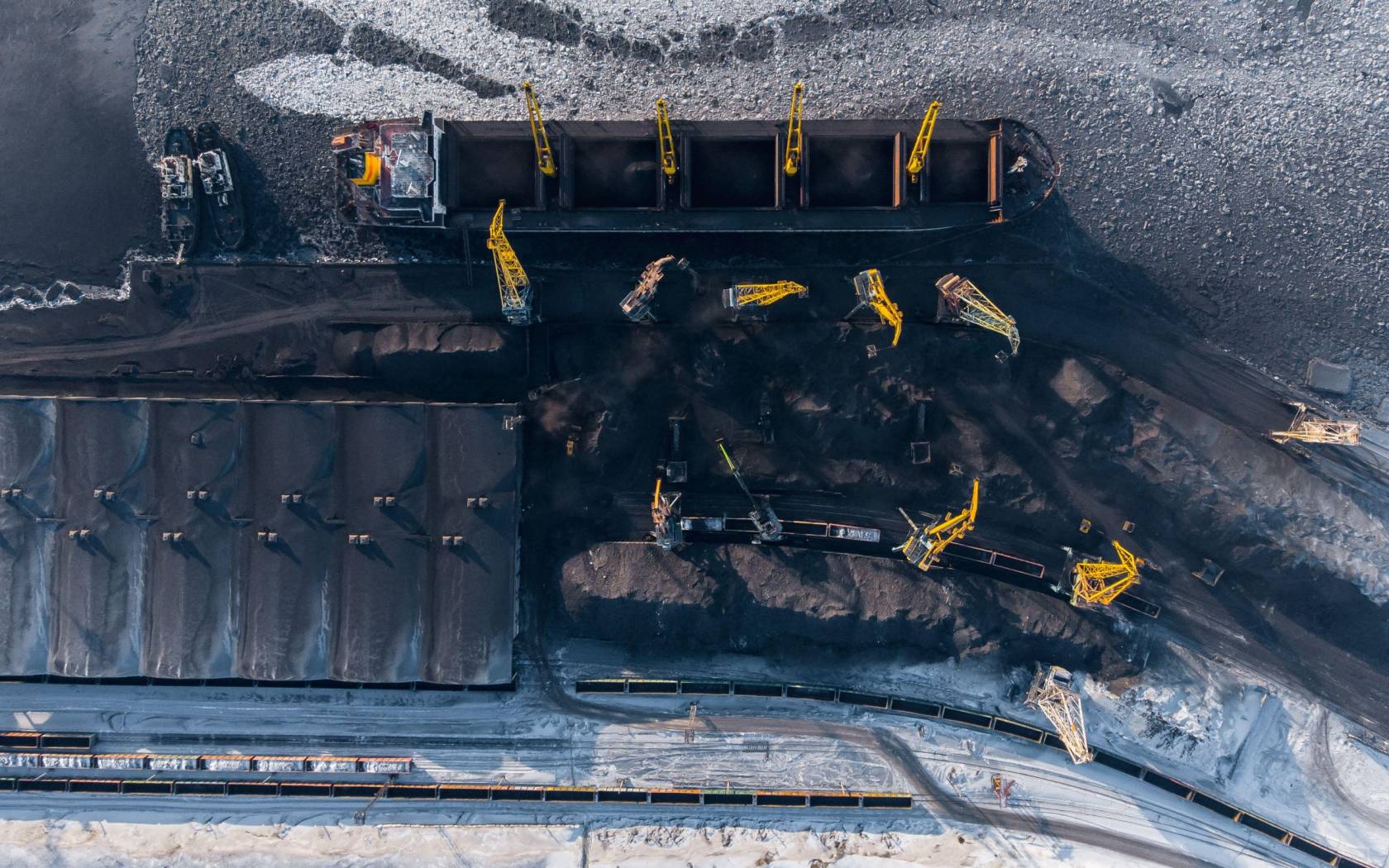
7 trillion roubles ($45.8 billion) and the Central Bank expects the full-year deficit to reach $55 billion, or 2 per cent of GDP. This is almost certainly the reason peace proposals with Ukraine have surfaced again. Firstly, its coal industry has been pushed to the brink of collapse. Russia exported 22.
6 per cent of its coal by rail to the EU in 2021, but lost that market due to trade embargoes after the Ukraine invasion, and was forced to redirect shipments to Asia by sea, with higher freight charges. Buyers have leveraged the disruption to negotiate lower rates, and prices have dropped further to $70 per tonne, which no longer covers production and shipping costs.
Russia’s overseas customers have ramped up their own production, particularly in China, India and Indonesia, but tracking the development of alternative energy forms, world coal consumption has slowed, which sent international prices plunging from $400 per tonne in late 2022 to around $100 per tonne by May 2025.
Domestically, the sector employs 150,000 people with several regions still dependent on the raw material for domestic heating, power generation and steel production. In 2024, Russia’s Energy Ministry reported the sector required central government support of $1.4 billion, with an estimated minimum of $3.
7 billion needed by the end of 2025. However, none of this financial outflow addresses more fundamental issues like global market competition or the transition to renewable energy. According to the assessments made by the ministry’s own economists, the real challenge lies in swiftly finding a new economic role for the country’s coal-producing regions and weaning the Motherland off coal.
Then, there is the diamond industry. The Russian Federation is the world’s largest producer of diamonds. Most stones originate in Siberia, are known for their quality, and considered among the best in the world. However, since the 2022 G7 ban on direct imports of Russian-origin material, both natural and synthetic, and restrictions put on third-country cutting and processing of stones over 0.
5 carats mined in the Federation from 2024, the situation has changed. With these sanctions taking effect, and with the market supported by lesser producers such as Botswana and Angola, analysts have estimated a 28.6 per cent monetary decline in uncut Russian diamond exports to $2.62 billion. International prices have shrunk, with a 24 per cent decrease in the average price of raw Russian brilliants, especially to Antwerp, the global hub for the cutting and polishing of stones into gems.
New worldwide certification, giving each non-Russian diamond shipment a number, now accompanies the gems along their production chain, to prevent them from being assimilated with Russian stones (currently labelled as blood diamonds) in a trading hub like Dubai or a polishing centre like the Indian city of Surat.
The financial implications to Putin are substantial, and with an inability to find alternative markets, losses have reached billions of dollars. Traditionally, the Kremlin has leant heavily on oil and gas exports to generate cash; in 2024, earnings from these exports contributed around 30 per cent of total federal budget revenue.
However, from an average price listing of $71.10 per barrel of Urals crude in November 2022, due to sanctions on Rosneft and Lukoil, reliance on its aging and inefficient ‘shadow tanker’ shipping fleet, and a G7-imposed price cap, after three years, traders report the price of Russian oil has slid to $36.
61 per barrel, with other OPEC producers replacing the Urals output. As key export buyers, notably China and India, were threatening to search elsewhere for suppliers, by November 2025 Russian sellers had been obliged to discount their black stuff to an average of $23.52 a barrel. Thus, the Kremlin has turned to selling assets it cannot replace.
In 2025, Putin liquidated $30 billion worth of Chinese yuan and announced he would release another $15 billion in 2026, serving the broader goal of injecting foreign currency into the domestic market to stabilise the rouble and settle his military accounts. Most significantly, on 19 November it was announced that Putin had directed a huge proportion of Russia’s gold reserves to be sold off.
The Kremlin has been slowly releasing gold bullion over the last three years. Sales to date have accounted for 57 percent of the 405.7 tonnes initially held by Russia’s Central Bank at the beginning of 2022, just before the full-scale invasion of Ukraine began. Since then, Putin’s Finance Ministry has liquidated 232.
6 tonnes of that stash to shore up state expenditure. By 1 November 2025, the National Wealth Fund’s gold holdings had plummeted to 173.1 tonnes, although the prices realised (currently the rouble equivalent of $4,130 per ounce), have been the highest ever. Gold has leapt from its pre-invasion high of $1,900 /ounce in February 2022, in an unprecedented war-induced rise, which puts former British Chancellor of the Exchequer Gordon Brown’s ill-advised 1999-2002 sale of 395 tonnes of UK gold, at an average price of $275 /ounce, into tragic perspective.
Admittedly, Putin’s deals have been made in the knowledge that there are other sources of gold stacked in Russian vaults not part of the NWF, currently around 2,300 tonnes in total, the fifth-largest stockpile in the world. Yet the fire sales underline how heavily the Kremlin is leaning on its bullion buffers to keep the boss’ military endeavours going.
Additionally, as one of the world’s most significant gold producers, ranking second only behind China, the Russian Federation mines a further 300-330 tonnes of gold annually, a substantial portion of global supply, but due to post-invasion sanctions, much of this is sold to China at far lower rates, or evasively traded through Dubai and Armenia, again heavily discounted.
Overall, Russian exports are clearly catastrophic, but the federation’s domestic finances are in an equally parlous state. The state statistics service, Rosstat, reported that one-year bank lending rates increased to 19.01 per cent in September 2025 for commercial loans and 27.85 per cent for personal arrangements.
Consumer prices rose 0.5 per cent in October 2025, bringing annual inflation to 7.7 per cent. However, most households believe prices are rising far faster than official figures suggest, with estimates of inflation over the past 12 months at around 14.5 per cent and expectations for the year ahead of 13.
3. With many civilian trucks commandeered to support the army in Ukraine and national distribution systems beginning to fail, some consumer staples, including potatoes, now being imported, are in short supply, with queues reminiscent of the Soviet era forming in cities just to buy essentials. Price caps are being considered for vegetables, poultry and dairy products.
Due to Ukraine’s successful targeting of petroleum infrastructure, gasoline for domestic use is either unobtainable or strictly rationed. These statistics touch everyone in Putin’s Russia, from the poorest pensioner to the wealthiest oligarch. Today’s kings of the Kremlin are finding that keeping the population supplied with vodka and bread is no longer sufficient.
However much Moscow tries to control it, the internet and social media have given all Russians a glimpse of the consumer goods and better living available in the West. No one is happy, and many correctly perceive their current hard living is the direct result of the war in Ukraine and the world’s response to it.
It should come as no surprise, therefore, that with Russia fast running out of funds and staring into a deep domestic abyss, possibly of 1917 proportions, peace proposals to end the Ukrainian adventure have materialised in Washington DC.
Source coverage
Alright, let's get down to brass tacks. I've been digging into this piece from engelsbergideas.com by Peter Caddick-Adams, published on November 28, 2025. It's painting a pretty grim picture of the Russian economy, and let me tell you, it's not looking good.
The Bottom Line: The central argument here is that Russia's in deep trouble. Sanctions, the war in Ukraine, the whole shebang - it's all adding up to an economic implosion, forcing Moscow to seriously consider an exit strategy, which means renewed peace proposals.
Deeper analysis
Full source content
Moscow is burning through its reserves and staring into a deep domestic abyss. Everyone in Putin’s Russia — from the poorest pensioner to the wealthiest oligarch — is feeling the strain. That's why the Kremlin is looking for an exit. Russia’s economy is imploding. Largely due to sanctions caused by the Ukraine War, this year the Economics Ministry posted a record mid-year budget deficit of 3.
7 trillion roubles ($45.8 billion) and the Central Bank expects the full-year deficit to reach $55 billion, or 2 per cent of GDP. This is almost certainly the reason peace proposals with Ukraine have surfaced again. Firstly, its coal industry has been pushed to the brink of collapse. Russia exported 22.
6 per cent of its coal by rail to the EU in 2021, but lost that market due to trade embargoes after the Ukraine invasion, and was forced to redirect shipments to Asia by sea, with higher freight charges. Buyers have leveraged the disruption to negotiate lower rates, and prices have dropped further to $70 per tonne, which no longer covers production and shipping costs.
Russia’s overseas customers have ramped up their own production, particularly in China, India and Indonesia, but tracking the development of alternative energy forms, world coal consumption has slowed, which sent international prices plunging from $400 per tonne in late 2022 to around $100 per tonne by May 2025.
Domestically, the sector employs 150,000 people with several regions still dependent on the raw material for domestic heating, power generation and steel production. In 2024, Russia’s Energy Ministry reported the sector required central government support of $1.4 billion, with an estimated minimum of $3.
7 billion needed by the end of 2025. However, none of this financial outflow addresses more fundamental issues like global market competition or the transition to renewable energy. According to the assessments made by the ministry’s own economists, the real challenge lies in swiftly finding a new economic role for the country’s coal-producing regions and weaning the Motherland off coal.
Then, there is the diamond industry. The Russian Federation is the world’s largest producer of diamonds. Most stones originate in Siberia, are known for their quality, and considered among the best in the world. However, since the 2022 G7 ban on direct imports of Russian-origin material, both natural and synthetic, and restrictions put on third-country cutting and processing of stones over 0.
5 carats mined in the Federation from 2024, the situation has changed. With these sanctions taking effect, and with the market supported by lesser producers such as Botswana and Angola, analysts have estimated a 28.6 per cent monetary decline in uncut Russian diamond exports to $2.62 billion. International prices have shrunk, with a 24 per cent decrease in the average price of raw Russian brilliants, especially to Antwerp, the global hub for the cutting and polishing of stones into gems.
New worldwide certification, giving each non-Russian diamond shipment a number, now accompanies the gems along their production chain, to prevent them from being assimilated with Russian stones (currently labelled as blood diamonds) in a trading hub like Dubai or a polishing centre like the Indian city of Surat.
The financial implications to Putin are substantial, and with an inability to find alternative markets, losses have reached billions of dollars. Traditionally, the Kremlin has leant heavily on oil and gas exports to generate cash; in 2024, earnings from these exports contributed around 30 per cent of total federal budget revenue.
However, from an average price listing of $71.10 per barrel of Urals crude in November 2022, due to sanctions on Rosneft and Lukoil, reliance on its aging and inefficient ‘shadow tanker’ shipping fleet, and a G7-imposed price cap, after three years, traders report the price of Russian oil has slid to $36.
61 per barrel, with other OPEC producers replacing the Urals output. As key export buyers, notably China and India, were threatening to search elsewhere for suppliers, by November 2025 Russian sellers had been obliged to discount their black stuff to an average of $23.52 a barrel. Thus, the Kremlin has turned to selling assets it cannot replace.
In 2025, Putin liquidated $30 billion worth of Chinese yuan and announced he would release another $15 billion in 2026, serving the broader goal of injecting foreign currency into the domestic market to stabilise the rouble and settle his military accounts. Most significantly, on 19 November it was announced that Putin had directed a huge proportion of Russia’s gold reserves to be sold off.
The Kremlin has been slowly releasing gold bullion over the last three years. Sales to date have accounted for 57 percent of the 405.7 tonnes initially held by Russia’s Central Bank at the beginning of 2022, just before the full-scale invasion of Ukraine began. Since then, Putin’s Finance Ministry has liquidated 232.
6 tonnes of that stash to shore up state expenditure. By 1 November 2025, the National Wealth Fund’s gold holdings had plummeted to 173.1 tonnes, although the prices realised (currently the rouble equivalent of $4,130 per ounce), have been the highest ever. Gold has leapt from its pre-invasion high of $1,900 /ounce in February 2022, in an unprecedented war-induced rise, which puts former British Chancellor of the Exchequer Gordon Brown’s ill-advised 1999-2002 sale of 395 tonnes of UK gold, at an average price of $275 /ounce, into tragic perspective.
Admittedly, Putin’s deals have been made in the knowledge that there are other sources of gold stacked in Russian vaults not part of the NWF, currently around 2,300 tonnes in total, the fifth-largest stockpile in the world. Yet the fire sales underline how heavily the Kremlin is leaning on its bullion buffers to keep the boss’ military endeavours going.
Additionally, as one of the world’s most significant gold producers, ranking second only behind China, the Russian Federation mines a further 300-330 tonnes of gold annually, a substantial portion of global supply, but due to post-invasion sanctions, much of this is sold to China at far lower rates, or evasively traded through Dubai and Armenia, again heavily discounted.
Overall, Russian exports are clearly catastrophic, but the federation’s domestic finances are in an equally parlous state. The state statistics service, Rosstat, reported that one-year bank lending rates increased to 19.01 per cent in September 2025 for commercial loans and 27.85 per cent for personal arrangements.
Consumer prices rose 0.5 per cent in October 2025, bringing annual inflation to 7.7 per cent. However, most households believe prices are rising far faster than official figures suggest, with estimates of inflation over the past 12 months at around 14.5 per cent and expectations for the year ahead of 13.
3. With many civilian trucks commandeered to support the army in Ukraine and national distribution systems beginning to fail, some consumer staples, including potatoes, now being imported, are in short supply, with queues reminiscent of the Soviet era forming in cities just to buy essentials. Price caps are being considered for vegetables, poultry and dairy products.
Due to Ukraine’s successful targeting of petroleum infrastructure, gasoline for domestic use is either unobtainable or strictly rationed. These statistics touch everyone in Putin’s Russia, from the poorest pensioner to the wealthiest oligarch. Today’s kings of the Kremlin are finding that keeping the population supplied with vodka and bread is no longer sufficient.
However much Moscow tries to control it, the internet and social media have given all Russians a glimpse of the consumer goods and better living available in the West. No one is happy, and many correctly perceive their current hard living is the direct result of the war in Ukraine and the world’s response to it.
It should come as no surprise, therefore, that with Russia fast running out of funds and staring into a deep domestic abyss, possibly of 1917 proportions, peace proposals to end the Ukrainian adventure have materialised in Washington DC.
How this page is built
Goose Pod turns cited reporting into a public episode summary first, then pairs that summary with audio playback so listeners can check the source material before they decide how deeply to engage.
The goal is to make this page useful as a news landing page first, while still giving listeners transcript access, related episodes, and direct links back to the original publishers.