What happened
News Title/Type: Opinion Piece / Analysis on Education and Technology
Report Provider/Author: The Atlantic / John McWhorter
Date/Time Period Covered: The article references data from 1976 and 2022, discusses current trends, and is published in the November 2024 issue of The Atlantic. The publication date of the article is October 23, 2025.
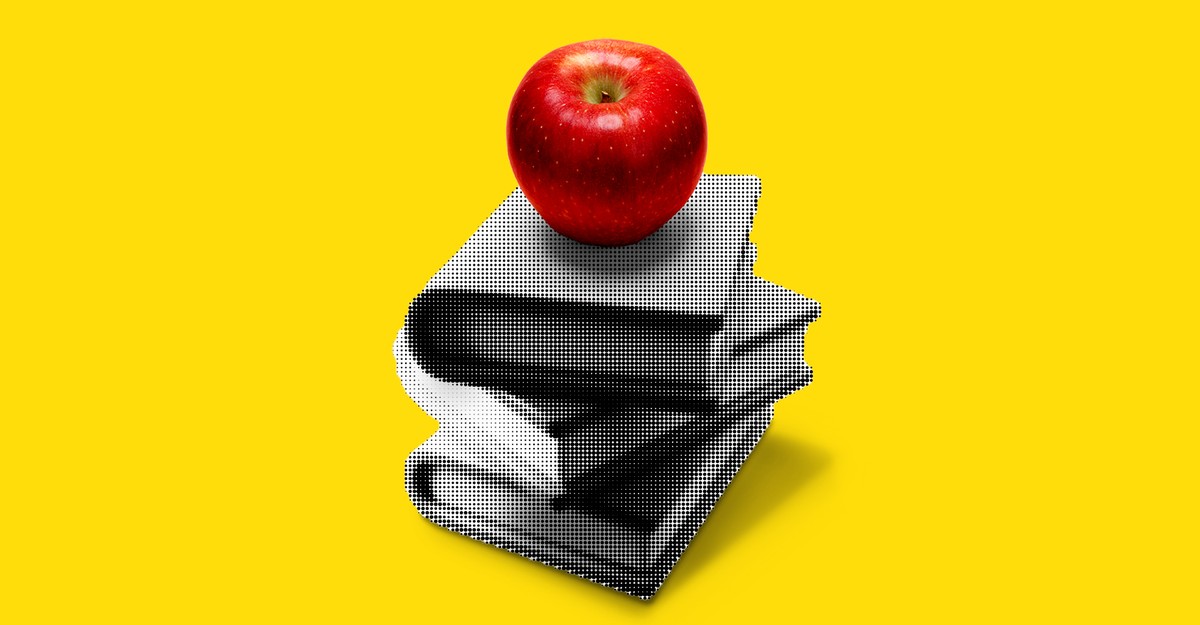
My tween-age daughters make me proud in countless ways, but I am still adjusting to the fact that they are not bookworms. I’m pretty sure that two generations ago, they would have been more like I was: always with their nose in some volume, looking up only to cross the street or to guide a fork on their plates.
But today, even in our book-crammed home, where their father is often in a cozy reading chair, their eyes are more likely to be glued to a screen.But then, as often as not, what I’m doing in that cozy chair these days is looking at my own screen.In 1988, I read much of Anna Karenina on park benches in Washington Square.
I’ll never forget when a person sitting next to me saw what I was reading and said, “Oh, look, Anna and Vronsky are over there!” So immersed was I in Tolstoy’s epic that I looked up and briefly expected to see them walking by.Today, on that same park bench, I would most certainly be scrolling on my phone.
From the November 2024 issue: The elite college students who can’t read booksAs a linguist, a professor, and an author, I’m meant to bemoan this shift. It is apparently the job of educators everywhere to lament the fact that students are reading less than they used to, and that they are relying on AI to read for them and write their essays, too.
Honestly, these developments don’t keep me up at night. It seems wrongheaded to feel wistful for a time when students had far less information at their fingertips. And who can blame them for letting AI do much of the work that they are likely to let AI do anyway when they enter the real world?Young people are certainly reading less.
In 1976, about 40 percent of high-school seniors said they had read at least six books for fun in the previous year, while 11.5 percent said they hadn’t read any, according to the University of Michigan’s Monitoring the Future survey. By 2022, those percentages had basically flipped; an ever-shrinking share of young people seems to be moved to read for pleasure.
Plenty of cultural critics argue that this is worrisome—that the trend of prizing images over the written word, short videos over books, will plunge us all into communal stupidity. I believe they are wrong.Print and its benefits will not disappear. It merely has to share the stage. Critics may argue that the competition for eyeballs yields far too much low-quality, low-friction content, all of it easily consumed with a fractured attention span.
But this ignores the proliferation of thoughtful writing and insightful dialogues, the rise of Substack newsletters and podcasts, which speaks to a demand for more ideas, more information—more opportunities to read and think, not less.My daughters still read books; they just prefer to commit their time to works they are on fire about.
This includes Tahereh Mafi’s Shatter Me series and Chris Colfer’s luscious six-book Land of Stories series, which they liked so much when I read it to them that we might do it again. When I was their age, I read far too many books that weren’t very good, because what else was I going to do? Maybe it taught me something about patience and tolerance for experiences that don’t deliver a dopamine high, but I sure would’ve been grateful if shows like The White Lotus had been around.
The choice for entertainment used to be between Middlemarch and music hall, Sister Carrie and vaudeville, The Invisible Man and I Dream of Jeannie. Today, our appetite for easy, silly content is sated by the mindless videos online, the snippets of animal misadventures and makeup tips that my girls sheepishly tell me they are watching.
I have begun limiting just how much of that digital junk they gorge on each day. But dismissing all online clips as crude or stupefying misses the cleverness amid the slop. Both of my girls are wittier than I was at their ages, largely because of all the comedic and stylized language they witness online.
The ubiquity of some content doesn’t mean it lacks art.Critics will argue that books are more valuable than videos because they demand more imagination—purportedly creating better, stronger thinkers. But this familiar argument strikes me as an ex post facto justification for existing prejudices. If there had always been video, I doubt many people would wish we could distill these narratives into words so that we could summon up our own images.
I have also never seen the argument that theater disadvantages viewers by providing visuals instead of letting people read the plays for themselves. Plenty of people used to argue that radio was better than television because it demanded imagination, but who among us thinks that Severance would have been better as a radio show?
We may be overestimating just how much heavy reading students were doing before. (CliffsNotes, anyone?) When I was in college, few of my peers read everything they were assigned. My own students from a pre-TikTok era admit that they, too, neglected most of the material. This is partly because professors often assign boatloads of text, yet discuss only fragments of it.
I recall having to read an endless and nettlesome chunk of Kierkegaard that the professor never even addressed, and Federico García Lorca’s play Bodas de Sangre, about which we discussed a single page. When a student some time ago accused me in an evaluation of making similarly excessive demands, I realized it was time to stop.
I now prefer to assign more manageable passages of text that we are sure to discuss. It’s a better use of their time and mine, and it yields better conversations in class.The rise of AI does mean that I will never again assign a classic five-paragraph essay on an abstract topic. Discuss the expression of irony in Jane Austen’s Pride and Prejudice.
Discuss Aristotle’s conception of virtue in contrast to that of Plato. Perhaps I sound like I am abjuring my role as professor. But I am merely bowing to the realities of technology. AI can now write those essays. Sending students off to write them is like sending them off to do fractions as if they won’t use the calculator on their phone.
The whole point of that old-school essay was to foster the ability to develop an argument. Doing this is still necessary, we just need to take a different tack. In some cases, this means asking that students write these essays during classroom exams—without screens, but with those dreaded blue books.
I have also found ways of posing questions that get past what AI can answer, such as asking for a personal take—How might we push society to embrace art that initially seems ugly?—that draws from material discussed in class. Professors will also need to establish more standards for in-class participation.
I loathed writing essays in college. The assignments felt too abstract and disconnected from anything I cared about, and I disliked how little control I had over whether I could get a good grade—it was never clear to me what a “good” essay was. I know I wasn’t alone. I always loved school, but those dry, daunting essay assignments kept me from knowing that I could love writing.
I do not regret that AI has marginalized this particular chore. There are other ways to teach students how to think.Tyler Austin Harper: ChatGPT doesn’t have to ruin collegeEssays are also meant to train students to use proper grammar to express themselves in a clear and socially acceptable way. Well, there was also a time when a person needed to know how to grow their own food and tie a bow tie.
We’re past that, along with needing to know how to avoid dangling participles. We will always need to express ourselves clearly, but AI tools now offer us ways to accomplish this.It bears noting that quite a few grammar rules are less about clarity than about fashion or preference, which we are expected to master like a code of dress-–Oxford commas (or not!
), when to use which versus that (something made up out of thin air by the grammarian Henry Fowler), fewer books rather than less books. AI now tells us how to navigate these codes. Some of us will still enjoy knowing when to use who versus whom, just as I might care to properly tie a bow tie, at least once.
But most people will be more than happy to outsource this to a machine.Sure, it’s disorienting to wonder whether either of my own children will ever embrace long, classic novels. But they now enjoy a richer array of material than I ever did, and my job is simply to encourage them to engage with the best of it as much as possible—even if that means they will likely encounter less Tolstoy than I did.
And although I find grammar rules intriguing enough to have devoted much of my life to studying them, I don’t mind that my daughters and students needn’t expend so much energy mastering these often-arbitrary dictates. My hope is that by having AI handle some of this busy work, they will have more time to actually think for themselves.
Source coverage
News Title/Type: Opinion Piece / Analysis on Education and Technology
Report Provider/Author: The Atlantic / John McWhorter
Deeper analysis
Full source content
My tween-age daughters make me proud in countless ways, but I am still adjusting to the fact that they are not bookworms. I’m pretty sure that two generations ago, they would have been more like I was: always with their nose in some volume, looking up only to cross the street or to guide a fork on their plates.
But today, even in our book-crammed home, where their father is often in a cozy reading chair, their eyes are more likely to be glued to a screen.But then, as often as not, what I’m doing in that cozy chair these days is looking at my own screen.In 1988, I read much of Anna Karenina on park benches in Washington Square.
I’ll never forget when a person sitting next to me saw what I was reading and said, “Oh, look, Anna and Vronsky are over there!” So immersed was I in Tolstoy’s epic that I looked up and briefly expected to see them walking by.Today, on that same park bench, I would most certainly be scrolling on my phone.
From the November 2024 issue: The elite college students who can’t read booksAs a linguist, a professor, and an author, I’m meant to bemoan this shift. It is apparently the job of educators everywhere to lament the fact that students are reading less than they used to, and that they are relying on AI to read for them and write their essays, too.
Honestly, these developments don’t keep me up at night. It seems wrongheaded to feel wistful for a time when students had far less information at their fingertips. And who can blame them for letting AI do much of the work that they are likely to let AI do anyway when they enter the real world?Young people are certainly reading less.
In 1976, about 40 percent of high-school seniors said they had read at least six books for fun in the previous year, while 11.5 percent said they hadn’t read any, according to the University of Michigan’s Monitoring the Future survey. By 2022, those percentages had basically flipped; an ever-shrinking share of young people seems to be moved to read for pleasure.
Plenty of cultural critics argue that this is worrisome—that the trend of prizing images over the written word, short videos over books, will plunge us all into communal stupidity. I believe they are wrong.Print and its benefits will not disappear. It merely has to share the stage. Critics may argue that the competition for eyeballs yields far too much low-quality, low-friction content, all of it easily consumed with a fractured attention span.
But this ignores the proliferation of thoughtful writing and insightful dialogues, the rise of Substack newsletters and podcasts, which speaks to a demand for more ideas, more information—more opportunities to read and think, not less.My daughters still read books; they just prefer to commit their time to works they are on fire about.
This includes Tahereh Mafi’s Shatter Me series and Chris Colfer’s luscious six-book Land of Stories series, which they liked so much when I read it to them that we might do it again. When I was their age, I read far too many books that weren’t very good, because what else was I going to do? Maybe it taught me something about patience and tolerance for experiences that don’t deliver a dopamine high, but I sure would’ve been grateful if shows like The White Lotus had been around.
The choice for entertainment used to be between Middlemarch and music hall, Sister Carrie and vaudeville, The Invisible Man and I Dream of Jeannie. Today, our appetite for easy, silly content is sated by the mindless videos online, the snippets of animal misadventures and makeup tips that my girls sheepishly tell me they are watching.
I have begun limiting just how much of that digital junk they gorge on each day. But dismissing all online clips as crude or stupefying misses the cleverness amid the slop. Both of my girls are wittier than I was at their ages, largely because of all the comedic and stylized language they witness online.
The ubiquity of some content doesn’t mean it lacks art.Critics will argue that books are more valuable than videos because they demand more imagination—purportedly creating better, stronger thinkers. But this familiar argument strikes me as an ex post facto justification for existing prejudices. If there had always been video, I doubt many people would wish we could distill these narratives into words so that we could summon up our own images.
I have also never seen the argument that theater disadvantages viewers by providing visuals instead of letting people read the plays for themselves. Plenty of people used to argue that radio was better than television because it demanded imagination, but who among us thinks that Severance would have been better as a radio show?
We may be overestimating just how much heavy reading students were doing before. (CliffsNotes, anyone?) When I was in college, few of my peers read everything they were assigned. My own students from a pre-TikTok era admit that they, too, neglected most of the material. This is partly because professors often assign boatloads of text, yet discuss only fragments of it.
I recall having to read an endless and nettlesome chunk of Kierkegaard that the professor never even addressed, and Federico García Lorca’s play Bodas de Sangre, about which we discussed a single page. When a student some time ago accused me in an evaluation of making similarly excessive demands, I realized it was time to stop.
I now prefer to assign more manageable passages of text that we are sure to discuss. It’s a better use of their time and mine, and it yields better conversations in class.The rise of AI does mean that I will never again assign a classic five-paragraph essay on an abstract topic. Discuss the expression of irony in Jane Austen’s Pride and Prejudice.
Discuss Aristotle’s conception of virtue in contrast to that of Plato. Perhaps I sound like I am abjuring my role as professor. But I am merely bowing to the realities of technology. AI can now write those essays. Sending students off to write them is like sending them off to do fractions as if they won’t use the calculator on their phone.
The whole point of that old-school essay was to foster the ability to develop an argument. Doing this is still necessary, we just need to take a different tack. In some cases, this means asking that students write these essays during classroom exams—without screens, but with those dreaded blue books.
I have also found ways of posing questions that get past what AI can answer, such as asking for a personal take—How might we push society to embrace art that initially seems ugly?—that draws from material discussed in class. Professors will also need to establish more standards for in-class participation.
I loathed writing essays in college. The assignments felt too abstract and disconnected from anything I cared about, and I disliked how little control I had over whether I could get a good grade—it was never clear to me what a “good” essay was. I know I wasn’t alone. I always loved school, but those dry, daunting essay assignments kept me from knowing that I could love writing.
I do not regret that AI has marginalized this particular chore. There are other ways to teach students how to think.Tyler Austin Harper: ChatGPT doesn’t have to ruin collegeEssays are also meant to train students to use proper grammar to express themselves in a clear and socially acceptable way. Well, there was also a time when a person needed to know how to grow their own food and tie a bow tie.
We’re past that, along with needing to know how to avoid dangling participles. We will always need to express ourselves clearly, but AI tools now offer us ways to accomplish this.It bears noting that quite a few grammar rules are less about clarity than about fashion or preference, which we are expected to master like a code of dress-–Oxford commas (or not!
), when to use which versus that (something made up out of thin air by the grammarian Henry Fowler), fewer books rather than less books. AI now tells us how to navigate these codes. Some of us will still enjoy knowing when to use who versus whom, just as I might care to properly tie a bow tie, at least once.
But most people will be more than happy to outsource this to a machine.Sure, it’s disorienting to wonder whether either of my own children will ever embrace long, classic novels. But they now enjoy a richer array of material than I ever did, and my job is simply to encourage them to engage with the best of it as much as possible—even if that means they will likely encounter less Tolstoy than I did.
And although I find grammar rules intriguing enough to have devoted much of my life to studying them, I don’t mind that my daughters and students needn’t expend so much energy mastering these often-arbitrary dictates. My hope is that by having AI handle some of this busy work, they will have more time to actually think for themselves.
How this page is built
Goose Pod turns cited reporting into a public episode summary first, then pairs that summary with audio playback so listeners can check the source material before they decide how deeply to engage.
The goal is to make this page useful as a news landing page first, while still giving listeners transcript access, related episodes, and direct links back to the original publishers.