What happened
Sam Altman predicts AI's next breakthrough: perfect, persistent memory by 2026. This evolution from amnesiac thinkers to life-long participants will redefine AI's utility, offering personalized insights but raising privacy and dependence concerns. Intense competition, particularly from Google's Gemini, fuels...
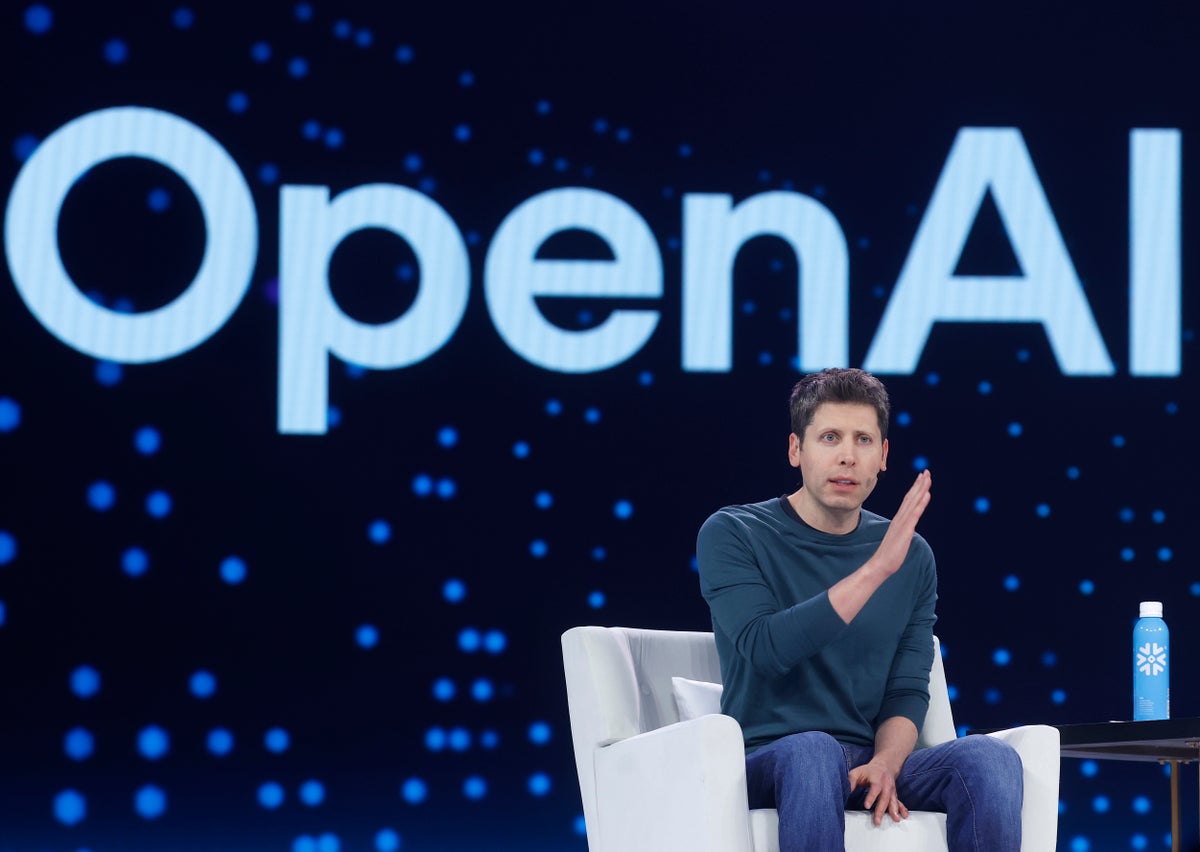
OpenAI boss Sam Altman has predicted that the next big breakthrough towards achieving superhuman artificial intelligence will occur when AI systems gain “infinite, perfect memory”.Recent advances from the ChatGPT creator, as well as those of its rivals working on large language models (LLMs), have focussed on improving AI’s reasoning abilities.
But speaking on the Big Technology Podcast, the Mr Altman said the development he was most looking forward to was when AI can remember “every detail of your entire life”, and that his company was working towards reaching this point in 2026.“Even if you have the world’s best personal assistant... they can’t remember every word you’ve ever said in your life,” Mr Altman said.
“They can’t have read every document you’ve ever written. They can’t be looking at all your work every day and remembering every little detail. They can’t be a participant in your life to that degree. And no human has infinite, perfect memory.“And AI is definitely gonna be able to do that. We actually talk a lot about this—right now, memory is still very crude, very early.
”His comments come just weeks after he reportedly declared a “code red” situation at his company following the launch of Google’s latest Gemini model.Google described Gemini 3 as a “new era of intelligence” when it released the updated AI app in November, with the model achieving record scores across numerous industry benchmark tests.
Mr Altman played down the urgency of the threat posed by Gemini 3, claiming that it was not unusual for OpenAI to respond decisively to new competition.“I think that it’s good to be paranoid and act quickly when a potential competitive threat emerges,” he said.“The same thing happened to us in the past, it happened earlier this year with DeepSeek...
Gemini 3 has not – or at least has not so far – had the impact we were worried it might, but it did identify some weaknesses in our product offering and strategy and we’re addressing those very quickly.”In order to win the AI race, the OpenAI boss said the strategy is to “make the best models, build the best product around them, and have enough infrastructure to serve it at scale.
”ChatGPT currently has around 800 million users, according to OpenAI, representing roughly 71 per cent of the AI app market share. This compares to 87 per cent this time last year.For comparison, Google’s market share has risen from around 5 per cent to more than 15 per cent, with Gemini recently passing 650 million users.
Source coverage
Alright, let's break this down. As I see it, the next big leap in AI isn't just about making machines think harder; it's about giving them perfect recall. We're talking about infinite, perfect memory – something no human can truly achieve. That's the real game-changer. I'm thinking by 2026, we'll start seeing this...
The focus right now is all about reasoning. Sure, that's important, but memory? That's what unlocks the potential for AI to become a real partner in people's lives. Imagine an AI that remembers everything, every detail. It's on a whole other level.
Deeper analysis
Full source content
OpenAI boss Sam Altman has predicted that the next big breakthrough towards achieving superhuman artificial intelligence will occur when AI systems gain “infinite, perfect memory”.Recent advances from the ChatGPT creator, as well as those of its rivals working on large language models (LLMs), have focussed on improving AI’s reasoning abilities.
But speaking on the Big Technology Podcast, the Mr Altman said the development he was most looking forward to was when AI can remember “every detail of your entire life”, and that his company was working towards reaching this point in 2026.“Even if you have the world’s best personal assistant... they can’t remember every word you’ve ever said in your life,” Mr Altman said.
“They can’t have read every document you’ve ever written. They can’t be looking at all your work every day and remembering every little detail. They can’t be a participant in your life to that degree. And no human has infinite, perfect memory.“And AI is definitely gonna be able to do that. We actually talk a lot about this—right now, memory is still very crude, very early.
”His comments come just weeks after he reportedly declared a “code red” situation at his company following the launch of Google’s latest Gemini model.Google described Gemini 3 as a “new era of intelligence” when it released the updated AI app in November, with the model achieving record scores across numerous industry benchmark tests.
Mr Altman played down the urgency of the threat posed by Gemini 3, claiming that it was not unusual for OpenAI to respond decisively to new competition.“I think that it’s good to be paranoid and act quickly when a potential competitive threat emerges,” he said.“The same thing happened to us in the past, it happened earlier this year with DeepSeek...
Gemini 3 has not – or at least has not so far – had the impact we were worried it might, but it did identify some weaknesses in our product offering and strategy and we’re addressing those very quickly.”In order to win the AI race, the OpenAI boss said the strategy is to “make the best models, build the best product around them, and have enough infrastructure to serve it at scale.
”ChatGPT currently has around 800 million users, according to OpenAI, representing roughly 71 per cent of the AI app market share. This compares to 87 per cent this time last year.For comparison, Google’s market share has risen from around 5 per cent to more than 15 per cent, with Gemini recently passing 650 million users.
How this page is built
Goose Pod turns cited reporting into a public episode summary first, then pairs that summary with audio playback so listeners can check the source material before they decide how deeply to engage.
The goal is to make this page useful as a news landing page first, while still giving listeners transcript access, related episodes, and direct links back to the original publishers.