
Tom Bankswww
Good morning 跑了松鼠好嘛, I'm Tom Bankswww, and this is Goose Pod for you. Today is Friday, October 31st, a day many federal employees are facing new uncertainties.
Mask
And I'm Mask. We're here to discuss a rather unsettling development: the IRS backtracking on its back pay guarantee for furloughed employees. It's a move that's causing quite a stir, wouldn't you say, Tom?
Tom Bankswww
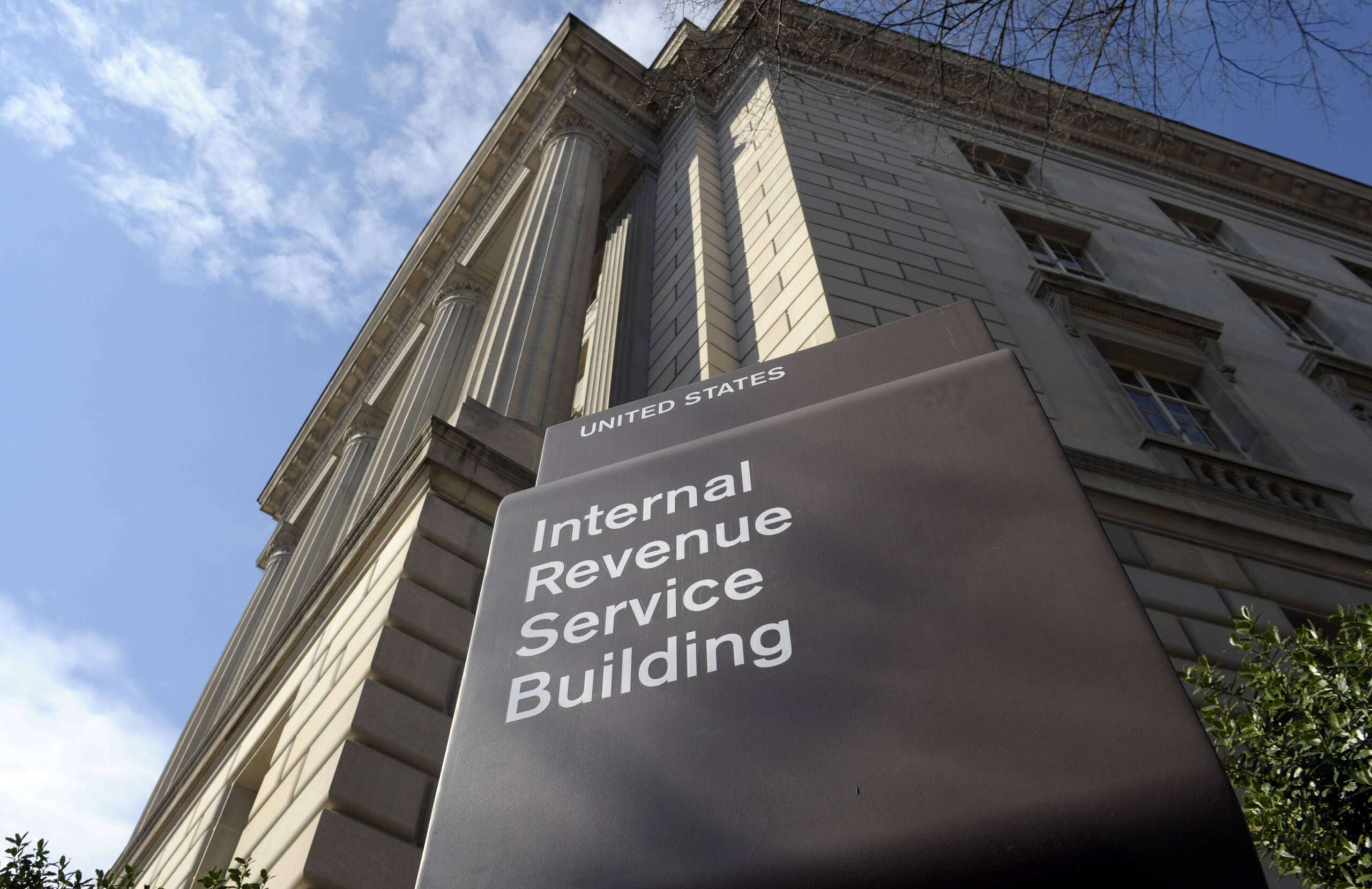
Well, Mask, it's certainly more than a stir. The IRS, our trusty tax collector, recently sent guidance to furloughed employees, assuring them of back pay once the shutdown ended, a reassurance based on the 2019 Government Employee Fair Treatment Act.
Mask
But then, with the swiftness of a market correction, they pulled that rug out, didn't they? Now they're pointing to the Office of Management and Budget, OMB, which is, shall we say, "floating the possibility" that back pay isn't guaranteed. It's a classic move, creating uncertainty where there was clarity.
Tom Bankswww
Indeed. That 2019 legislation, signed by President Trump, was quite clear: back pay guaranteed for these employees after any shutdown. It was a beacon of hope for many, offering a sense of security during uncertain times.
Mask
A beacon that's now flickering, Tom. The IRS even admitted in a notice that an earlier memo "incorrectly stated the nature of the Government Employee Fair Treatment Act of 2019." Incorrectly stated? Or strategically reinterpreted, I wonder?
Tom Bankswww
It's certainly a peculiar turn of events. What's more, an IRS employee mentioned that the earlier guidance, emailed just the day before, was mysteriously deleted from their inboxes by Thursday. That raises some eyebrows, wouldn't you agree?
Mask
Eyebrows, yes, and perhaps a few hackles. It speaks to a certain level of... operational efficiency in reversing inconvenient information. But here's the kicker: the older guidance, still guaranteeing back pay, remains available on their website. A digital ghost in the machine, reminding us of what was promised.
Tom Bankswww
A digital ghost, indeed. And the OMB, not content with just floating possibilities, circulated a draft legal opinion suggesting that lawmakers must explicitly approve back pay in a stopgap spending bill. This isn't just a technicality, it's a fundamental shift.
Mask
A shift that immediately hit a wall of bipartisan pushback, which is a rare sight these days. Congressional leaders and legal experts are already flagging this as highly problematic, likely to face serious legal scrutiny. They understand the precedent this sets.
Tom Bankswww
House Speaker Mike Johnson, for one, was quite clear, stating, "It’s my understanding that the law is that they would be paid." He emphasized tradition and statutory law, adding, "They should not be subjected to harm and financial dire straits." A sentiment I believe many share.
Mask
Traditional understanding versus a new, highly aggressive interpretation. It’s a battle of wills, and employees are caught in the crossfire. An IRS employee called this latest update "really confusing and stressful," adding, "No one knows who’s getting paid and who will not." That's the real human cost of this bureaucratic maneuvering.
Tom Bankswww
It's a stark reminder of the human element in all these political machinations. And speaking of protection, there's been another significant development: a federal judge has actually expanded a temporary restraining order.
Mask
Yes, Judge Susan Illston in San Francisco. She initially blocked layoffs for members of the American Federation of Government Employees and the American Federation of State, County and Municipal Employees. Now, she's extended that protection to three other unions. It's a judicial intervention against the Trump administration's threat of mass layoffs.
Tom Bankswww
This order requires federal agencies to clarify by Monday noon Eastern Time how many employees they planned to lay off and how many are now protected. It's a direct challenge to the administration's plans, offering a temporary reprieve.
Mask
A temporary reprieve, but a critical one. It shows that even in the midst of a shutdown, there are checks and balances. However, the broader implications of the shutdown are still impacting other sectors, like agriculture.
Tom Bankswww
That's right. Agricultural groups have been pushing for "bridge payments" for farmers, but with the government shut down, there's "little movement on those payments." Even if USDA has a program, they can't release details or process paperwork.
Mask
It's a domino effect. One part of the government stalls, and it creates a cascade of issues. The bureaucracy, as one expert put it, "doesn't kick into high gear like a dragster does." It will take time to regain momentum, even after the shutdown ends.
Tom Bankswww
So, to really understand the gravity of this situation, we need to delve into the background, the history of federal employees and government shutdowns. It's a story that's played out many times, but with a critical difference since 2019.
Mask
A difference that, until recently, seemed like a solid guarantee. Before 2019, back pay was often a political football. But then, the Government Employee Fair Treatment Act, GEFTA, was enacted. It was supposed to be the definitive answer.
Tom Bankswww
Exactly. Passed unanimously by the Senate on January 16, 2019, during what was then the longest government shutdown in history, a staggering 35 days. This act was designed to ensure all federal employees, whether furloughed or working without pay, received retroactive compensation once the government reopened.
Mask
And for good reason. During the 2013 and early 2018 shutdowns, we saw around 850,000 out of 2.1 million non-postal federal employees furloughed. Another 420,000 were deemed essential and worked without pay, enduring immense financial strain. GEFTA was meant to prevent that hardship.
Tom Bankswww
It truly was a landmark piece of legislation, a promise of stability for those who serve our country. The Office of Personnel Management, OPM, even had guidance from September 2025 stating that furloughed federal workers would be provided back pay. It seemed settled.
Mask
Seemed settled, Tom, is the operative phrase. The OMB's recent decision to remove this critical guidance is, in my view, an unnecessary act of psychological warfare. It creates immense stress for a workforce already dealing with the uncertainty of a shutdown.
Tom Bankswww
It's a reversal of established practice, and a cruel one at that. We've seen during past shutdowns, like the partial one in 2018-2019, that departments eventually recall furloughed employees, the IRS and State Department being prime examples. But the financial anxiety during the interim is immense.
Mask
Immense, and often overlooked. While federal employees eventually get back pay, a critical distinction needs to be made: federal contractors historically have not received back pay. They're often the forgotten casualties of these shutdowns, and their livelihoods are instantly jeopardized.
Tom Bankswww
A truly vital point, Mask. The ripple effect extends beyond direct federal employees. Now, looking at the current situation, this government shutdown has been ongoing for nearly two weeks, and the talk of mass firings has been particularly alarming.
Mask
Alarming, but also met with swift legal action. The American Federation of Government Employees, AFGE, and the American Federation of State, County and Municipal Employees, AFSCME, filed a lawsuit and a motion for a temporary restraining order to block these threatened "mass firings." They argued that OMB and OPM were violating the law by directing these reductions-in-force, or RIFs, during a shutdown.
Tom Bankswww
And their actions had an immediate impact, didn't they? The administration reportedly reversed terminations for hundreds of scientists at the Centers for Disease Control and Prevention who were initially "wrongly targeted." A small victory, but a significant one for those individuals.
Mask
A small victory, but it highlights the arbitrary nature of some of these decisions. AFGE has been a relentless force, holding press conferences, calling for an immediate end to the shutdown, and specifically criticizing OMB Director Russell Vought for even suggesting furloughed workers might not be paid.
Tom Bankswww
Their argument is clear: the Trump administration withholding back pay would directly violate the Government Employee Fair Treatment Act of 2019. It's a legal cornerstone, designed to prevent this exact scenario.
Mask
Exactly. And AFGE didn't just talk; they sent a formal letter to Vought, demanding confirmation that all furloughed workers would be paid. This isn't just a political squabble; it's a battle over established law and the well-being of hundreds of thousands of people.
Tom Bankswww
They’re also pushing for broader legislative protection, aren't they? Supporting the Federal Employees Civil Relief Act in the Senate and House, which aims to protect federal workers, contractors, and their families from financial hardships like foreclosures, evictions, and loan defaults.
Mask
A proactive approach, essential for mitigating the collateral damage of these political impasses. We're talking about over 4,000 employees who received RIF notices, including nearly 1,500 at the Treasury Department, 1,200 at Health and Human Services, and hundreds more at Education and Housing and Urban Development. These are not just numbers; these are families.
Tom Bankswww
As AFGE President Kelley stated, "Announcing plans to fire potentially tens of thousands of federal employees simply because Congress and the administration are at odds... is not only illegal – it’s immoral and unconscionable."
Mask
And Matt Biggs, president of IFPTE, rightly pointed out that these are "working Americans that have families, that live paycheck to paycheck, that have to pay bills... and denying them a paycheck is simply cruel. It’s cruel." The human cost is immense, Tom. It's a stark reminder that behind every policy decision are real people.
Tom Bankswww
Now, Mask, this brings us to the heart of the conflict, the very essence of why this is such a contentious issue. On one side, we have what many believe is a clear legal mandate regarding back pay.
Mask
Absolutely, Tom. The sentiment from many, including those in Congress, has been unwavering: "The law is clear: all impacted federal employees are entitled to back pay after a government shutdown ends." It’s a statement of principle, a reflection of the Government Employee Fair Treatment Act.
Tom Bankswww
And it's not just a quiet agreement. There's active advocacy, with individuals leading colleagues in demanding this back pay, emphasizing that the legal framework is already in place. It speaks to a strong belief in the existing law.
Mask
But then, we have the OMB's counter-narrative, a very aggressive and, frankly, disruptive legal opinion. They're essentially arguing that this long-held understanding, enshrined in law, isn't automatic. They want explicit approval from lawmakers, essentially creating a new hurdle.
Tom Bankswww
It's a significant departure from past practice. Historically, Congress has always voted to restore back pay to all employees during government shutdowns since 1981. This new OMB interpretation challenges decades of precedent and a recently passed law.
Mask
It's a power play, Tom, a high-stakes gamble. The Trump administration proposing that federal employees idled by the shutdown would not automatically receive back pay is a direct shot across the bow. It's designed to exert pressure, to create leverage in legislative negotiations.
Tom Bankswww
And this isn't just a theoretical debate. We've seen concrete actions. White House Budget Director Russell Vought, for instance, has openly expressed expectations of layoffs exceeding 10,000 people. This isn't just a threat; it’s a stated intention.
Mask
An intention that has already manifested in layoff notices going out to more than 4,100 federal employees in a short span. This isn't abstract policy; it's tangible fear and insecurity for thousands of families.
Tom Bankswww
But, thankfully, the judiciary has stepped in, offering a crucial check on this executive action. A federal judge has temporarily blocked these firings, expanding a temporary restraining order. It's a direct judicial challenge to the administration's stance.
Mask
A much-needed intervention, Tom. It shows that even when the political branches are locked in conflict, there are other avenues for justice and protection. This judicial order is a temporary shield, buying time and forcing clarity from the agencies involved.
Tom Bankswww
It underscores the separation of powers, doesn't it? The legislative branch enacting a law, the executive branch reinterpreting it, and the judicial branch stepping in to uphold, or at least examine, the original intent.
Mask
Precisely. This clash isn't just about back pay; it's about the interpretation of law, the balance of power, and ultimately, the treatment of the federal workforce. It’s a microcosm of larger battles being fought in Washington.
Tom Bankswww
And the uncertainty created by this conflict is immense for those directly affected. Imagine being told you're guaranteed something by law, then having that guarantee suddenly questioned and potentially revoked.
Mask
It’s a psychological hammer blow. It’s not just about the money; it’s about trust, stability, and the fundamental respect for those who dedicate their careers to public service. The emotional toll of this kind of back-and-forth is often underestimated.
Tom Bankswww
So, the conflict isn't just between the OMB and Congress, or even the administration and the judiciary. It's also deeply personal for every federal employee.
Mask
It's a battle for their financial well-being, their peace of mind, and their faith in the system. And until there's a definitive resolution, this conflict will continue to simmer, creating anxiety and uncertainty across the federal workforce.
Tom Bankswww
Mask, when we consider the direct impact of this uncertainty, particularly concerning back pay, it's clear that the repercussions extend far beyond just individual paychecks.
Mask
Oh, absolutely, Tom. The immediate impact is a paralysis of government services. When thousands of federal workers are furloughed, the machinery of government grinds to a halt. Essential functions might continue, but many vital services are simply stalled.
Tom Bankswww
And for the individuals involved, it's a profound sense of growing uncertainty. Imagine living paycheck to paycheck, as many do, and suddenly having your expected income, and even past earnings, thrown into question. It creates a domino effect of anxiety.
Mask
It's a calculated risk, in my opinion, but one with significant human cost. While the broader economic impact of government shutdowns "don't typically move the needle for the economy" in the aggregate, that's a cold comfort to someone facing eviction or unable to buy groceries.
Tom Bankswww
A very important distinction. Aggregate economic data doesn't capture the individual stories of hardship. People are forced to make impossible choices, relying on savings, borrowing, or even seeking assistance from charities.
Mask
And the lack of official government figures during a shutdown also has a subtle, but significant, impact. Furloughed federal workers, and even the public, may have to rely on private-sector data sets as limited substitutes. It's a fragmentation of information, leading to less informed decisions.
Tom Bankswww
That's a fascinating point. It highlights how integral government data is to so many aspects of our lives, from economic forecasts to public health statistics. When that flow is interrupted, it creates blind spots.
Mask
It does. It forces a reliance on less authoritative sources, which can then lead to misinterpretations or a lack of comprehensive understanding. It's a ripple effect on information quality, not just service delivery.
Tom Bankswww
And then there's the psychological toll. The constant back-and-forth, the promises made and then questioned, it erodes trust in institutions and creates a sense of instability.
Mask
Trust, Tom, is a currency that's hard to earn and easy to lose. When the government, which is supposed to be a pillar of stability, starts sending conflicting signals about guaranteed pay, it undermines that trust significantly. It makes people question the reliability of their employer, which in this case, is the federal government.
Tom Bankswww
And while the idea of retroactive payments is often floated, the crucial caveat is that such payments are "not guaranteed." That phrase alone can be devastating to someone planning their finances.
Mask
It transforms a promise into a possibility, and for those on the edge, a possibility isn't enough. They need certainty. This uncertainty impacts their ability to plan, to make major life decisions, and frankly, to sleep at night.
Tom Bankswww
So, the impact isn't just financial, it's also deeply psychological, affecting trust, stability, and the very fabric of how federal employees view their service.
Mask
It's a disruption of the social contract, Tom. And while some might dismiss it as bureaucratic wrangling, for hundreds of thousands, it's a very real crisis.
Tom Bankswww
So, Mask, as we look to the horizon, what does this current situation, with the IRS backtracking and the OMB's new stance, portend for the future of federal employee back pay legislation?
Mask
Tom, it's a future shrouded in uncertainty, largely thanks to the OMB's aggressive new interpretation of the 2019 law. They're demanding that lawmakers explicitly approve back pay for furloughed workers, which, given our current political climate, is a massive legislative hurdle. It's a strategic move to complicate matters.
Tom Bankswww
This new interpretation directly clashes with previous guidance from Trump's own personnel office and the 2019 law, which clearly stated back pay was guaranteed. It feels like a deliberate attempt to rewrite history, doesn't it?
Mask
It's an attempt to dismantle established precedent. Congress has consistently voted to restore back pay to all employees during government shutdowns since 1981. This OMB move threatens to unravel decades of consistent practice. It's a high-stakes game.
Tom Bankswww
Some Republican senators, like John Kennedy of Louisiana, have expressed an expectation that the practice of providing back pay will continue, stating, "I do think we've always given back pay, and we likely will this time." This indicates a split within the party, perhaps.
Mask
A split, or perhaps a pragmatic acknowledgment of political reality. However, the immediate future is already grim. The federal judiciary, for the first time in nearly three decades, is being forced to send employees home or have them work without pay. That's a stark indicator of the severity.
Tom Bankswww
And this isn't just an internal government issue. It's causing widespread delays in civil lawsuits involving federal agencies, as many of their employees are furloughed. The wheels of justice themselves are slowing down.
Mask
It's a systemic ripple. The shutdown, coupled with this back pay uncertainty, creates a climate of instability that affects everything, from individual livelihoods to the functioning of our legal system. The future remains precarious.
Tom Bankswww
Well, Mask, it's clear this issue of the IRS backtracking on back pay is far more than just a bureaucratic headache, it's a profound story of trust and the human cost of political maneuvering.
Mask
Indeed, Tom. This controversy creates immense public anxiety and will remain a critical point of discussion. That's the end of today's discussion. Thank you for listening to Goose Pod. See you tomorrow.