
What happened
中国核能技术取得突破,成功实现钍铀转化,为清洁能源发展铺平道路。通过研发耐腐蚀材料和精密燃料处理技术,中国在钍基熔盐堆领域取得关键进展。这项技术具有能源安全、高被动安全性、低核扩散风险等优势,有望为未来能源供应带来颠覆性变革。
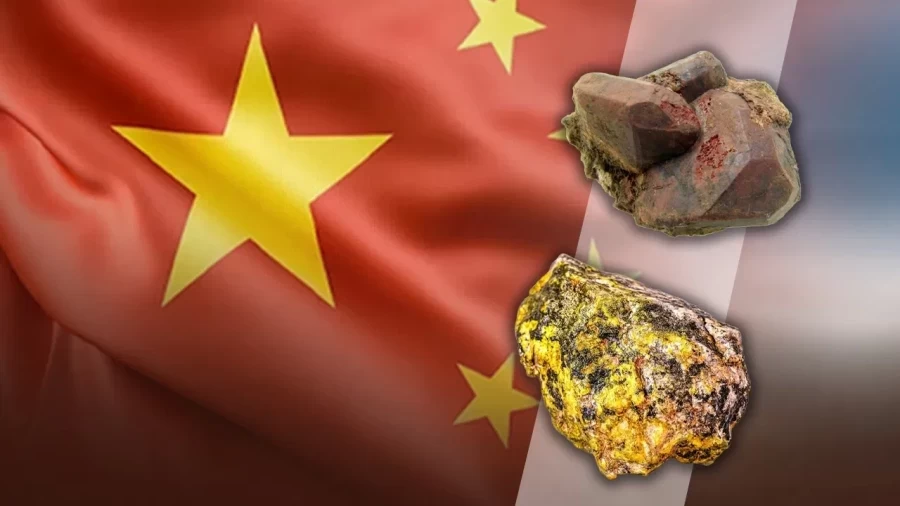
China has made a historic breakthrough in nuclear energy by successfully converting thorium into uranium, an achievement that has garnered global attention. The first phase of thorium-to-uranium conversion has been completed at. The two-megawatt Thorium Molten-Salt Reactor (TMSR-LF1) located in Wuwei, Gobi Desert.
This accomplishment underscores the potential of thorium to be transformed into a clean, safe, and highly advantageous nuclear fuel for humanity. Following this success, thorium has once again become a central topic in global energy discussions.The Thorium-to-Uranium Conversion ProcessThorium-232, which isn't fissile on its own, acts as a fertile nucleus.
Nuclear fission is a process where the nucleus of a heavy atom is split into two or more smaller nuclei by bombarding it with neutrons, releasing a massive amount of energy, neutrons, and radiation, while this same process is employed to convert thorium into uranium. When Thorium-232 is exposed to a flux of neutrons, it transforms into Thorium-233.
This unstable nucleus then undergoes beta decay in approximately 22 minutes to become Protactinium-233, which further decays via beta emission in 27 days to form Uranium-233, a fissile nucleus. This chain reaction continues within the reactor. Uranium-233 fissions, releasing substantial energy and some neutrons, which in turn activate new thorium nuclei, perpetuating the process.
This is known as the thorium fuel cycle, while a key characteristic of this cycle is that after the initial start-up, a significant portion of the fuel is continuously generated within the reactor itself.An 85-Year Journey to SuccessThe journey to harness thorium-based reactors began approximately 85 years ago, while in the 1940s, Dr.
Alvin Weinberg, a scientist at the Oak Ridge National Laboratory in the United States, conceptualized the liquid-fuel Molten-Salt Reactor. Subsequently, between 1965 and 1969, the Molten-Salt Reactor Experiment (MSRE) successfully demonstrated that a liquid salt medium containing a mixture of Uranium-233 and thorium salt could operate safely at high temperatures and atmospheric pressure.
India also adopted Homi Bhabha's three-stage program policy (Pressurized Heavy Water Reactor - Plutonium - Fast Neutron Reactor - Thorium) and operated a U-233 based plant at the Kalpakkam KAMINI reactor, while china elevated the Thorium Molten-Salt Reactor to a national scientific pilot project status in 2011.
The first criticality point was achieved in 2023, followed by thorium loading in October 2024, and the thorium-to-uranium. Conversion data was made public in November 2025, as announced by the Shanghai Institute of Applied Physics (SINAP).Global Significance of China's AchievementChina's accomplishment holds immense global significance.
Recognizing its estimated 1. 4 million tons of thorium reserves, available as a by-product of rare-earth mining, China strategically located its reactor in the arid northwestern desert region where water sources are limited, while molten-Salt Reactors don't require water for cooling even at high operating temperatures, making desert deployment feasible.
According to China Daily, Li Qingnuan, deputy director of the SINAP team, stated that liquid fuel doesn't need to be shut down; online refueling is possible, waste generation is reduced, and fuel utilization efficiency increases severalfold. This combination of efficiency and environmental benefits represents a crucial step forward.
Benefits for Humanity from Thorium EnergyThis experiment holds the potential to be profoundly beneficial for humanity in terms of energy security, safety, and environmental protection. Thorium is three to four times more abundant than uranium, with. Vast reserves found in countries like India, China, Brazil, Turkey, and Norway.
If this experiment proves successful at scale, it could resolve the clean energy challenges for many nations, including India, while molten-Salt Reactors operate at atmospheric pressure, eliminating the risk of steam explosions inherent in Pressurized Water Reactors. The Uranium-233 cycle produces Notably fewer transuranic nuclei, resulting in approximately ten times less long-lived radioactive waste.
Also, Uranium-233 naturally contains Uranium-232 impurity, which emits strong gamma rays. This characteristic makes clandestine processing for weapons purposes difficult, thereby enhancing nuclear non-proliferation efforts. The high-temperature output, up to 700 degrees Celsius, can be directly used by industries for steam generation, hydrogen production, seawater desalination, and chemical plants, providing both electricity generation and process heat.
Modular nuclear battery-sized reactors could also be suitable for remote applications such as tropical islands, polar research stations, and even future lunar bases. Reports indicate that studies are underway for Chinese naval and commercial vessels to operate for ten years at sea on a single fueling.
Key Challenges and Future OutlookDespite the significant progress, there are still challenges that need to be overcome. Fluoride salts at temperatures between 600-800 degrees Celsius are highly corrosive to metals. In the 1960s, pipes at Oak Ridge failed within three months. The Chinese team has conducted tens of thousands of coupon tests to develop a nickel-based N-Hastelloy, which has an estimated lifespan of over 10 years.
Another challenge involves separating protactinium from the liquid fuel and allowing it to fully decay into U-233 in a shielded chamber before reintroducing it into the circuit, while this process involves complex methods like solvent extraction and redox crystallization, and continuous research is ongoing to develop automated, radio-safe designs.
China's roadmap includes a 100-megawatt demonstration reactor by 2035 and commercial deployment around 2050.Importance for India and the Global Energy LandscapeIndia possesses the world's largest monazite beach sand reserves, a primary source of thorium. Dr, while r. K. Singh of the Indian Institute of Nuclear Science and Engineering believes that if China's success with liquid-salt reactors proves stable at a production level, India's three-stage program could potentially leap directly to its third stage within a decade.
In Europe, the Copenhagen-based startup Seaborg, and in the United States, Terrestrial Energy, are also working on similar small modular reactor designs, while the United Nations Climate Panel recognizes thorium-based fourth-generation reactors as a long-term, low-carbon base-load option. The conversion of thorium to uranium isn't magic but an application of neutron physics, while this path, largely set aside in the twentieth century, has regained relevance in the twenty-first century due to advancements in material science, automation, and global carbon reduction goals.
China's progress demonstrates that with sustained long-term government investment, inter-institutional cooperation, and patient research, new avenues can be opened on all three fronts: energy security, climate protection, and economic development. Today, as the world stands at the crossroads of energy geopolitics, climate crisis, and technological innovation, thorium-based uranium production promises not just another option for humanity, but a long-term solution that combines abundant resources, high safety, and a clean future.
Source coverage
China Achieves Historic Thorium-Uranium Conversion, Paving Way for Clean Nuclear Energy
Publisher: Zoom News
Deeper analysis
Full source content
China has made a historic breakthrough in nuclear energy by successfully converting thorium into uranium, an achievement that has garnered global attention. The first phase of thorium-to-uranium conversion has been completed at. The two-megawatt Thorium Molten-Salt Reactor (TMSR-LF1) located in Wuwei, Gobi Desert.
This accomplishment underscores the potential of thorium to be transformed into a clean, safe, and highly advantageous nuclear fuel for humanity. Following this success, thorium has once again become a central topic in global energy discussions.The Thorium-to-Uranium Conversion ProcessThorium-232, which isn't fissile on its own, acts as a fertile nucleus.
Nuclear fission is a process where the nucleus of a heavy atom is split into two or more smaller nuclei by bombarding it with neutrons, releasing a massive amount of energy, neutrons, and radiation, while this same process is employed to convert thorium into uranium. When Thorium-232 is exposed to a flux of neutrons, it transforms into Thorium-233.
This unstable nucleus then undergoes beta decay in approximately 22 minutes to become Protactinium-233, which further decays via beta emission in 27 days to form Uranium-233, a fissile nucleus. This chain reaction continues within the reactor. Uranium-233 fissions, releasing substantial energy and some neutrons, which in turn activate new thorium nuclei, perpetuating the process.
This is known as the thorium fuel cycle, while a key characteristic of this cycle is that after the initial start-up, a significant portion of the fuel is continuously generated within the reactor itself.An 85-Year Journey to SuccessThe journey to harness thorium-based reactors began approximately 85 years ago, while in the 1940s, Dr.
Alvin Weinberg, a scientist at the Oak Ridge National Laboratory in the United States, conceptualized the liquid-fuel Molten-Salt Reactor. Subsequently, between 1965 and 1969, the Molten-Salt Reactor Experiment (MSRE) successfully demonstrated that a liquid salt medium containing a mixture of Uranium-233 and thorium salt could operate safely at high temperatures and atmospheric pressure.
India also adopted Homi Bhabha's three-stage program policy (Pressurized Heavy Water Reactor - Plutonium - Fast Neutron Reactor - Thorium) and operated a U-233 based plant at the Kalpakkam KAMINI reactor, while china elevated the Thorium Molten-Salt Reactor to a national scientific pilot project status in 2011.
The first criticality point was achieved in 2023, followed by thorium loading in October 2024, and the thorium-to-uranium. Conversion data was made public in November 2025, as announced by the Shanghai Institute of Applied Physics (SINAP).Global Significance of China's AchievementChina's accomplishment holds immense global significance.
Recognizing its estimated 1. 4 million tons of thorium reserves, available as a by-product of rare-earth mining, China strategically located its reactor in the arid northwestern desert region where water sources are limited, while molten-Salt Reactors don't require water for cooling even at high operating temperatures, making desert deployment feasible.
According to China Daily, Li Qingnuan, deputy director of the SINAP team, stated that liquid fuel doesn't need to be shut down; online refueling is possible, waste generation is reduced, and fuel utilization efficiency increases severalfold. This combination of efficiency and environmental benefits represents a crucial step forward.
Benefits for Humanity from Thorium EnergyThis experiment holds the potential to be profoundly beneficial for humanity in terms of energy security, safety, and environmental protection. Thorium is three to four times more abundant than uranium, with. Vast reserves found in countries like India, China, Brazil, Turkey, and Norway.
If this experiment proves successful at scale, it could resolve the clean energy challenges for many nations, including India, while molten-Salt Reactors operate at atmospheric pressure, eliminating the risk of steam explosions inherent in Pressurized Water Reactors. The Uranium-233 cycle produces Notably fewer transuranic nuclei, resulting in approximately ten times less long-lived radioactive waste.
Also, Uranium-233 naturally contains Uranium-232 impurity, which emits strong gamma rays. This characteristic makes clandestine processing for weapons purposes difficult, thereby enhancing nuclear non-proliferation efforts. The high-temperature output, up to 700 degrees Celsius, can be directly used by industries for steam generation, hydrogen production, seawater desalination, and chemical plants, providing both electricity generation and process heat.
Modular nuclear battery-sized reactors could also be suitable for remote applications such as tropical islands, polar research stations, and even future lunar bases. Reports indicate that studies are underway for Chinese naval and commercial vessels to operate for ten years at sea on a single fueling.
Key Challenges and Future OutlookDespite the significant progress, there are still challenges that need to be overcome. Fluoride salts at temperatures between 600-800 degrees Celsius are highly corrosive to metals. In the 1960s, pipes at Oak Ridge failed within three months. The Chinese team has conducted tens of thousands of coupon tests to develop a nickel-based N-Hastelloy, which has an estimated lifespan of over 10 years.
Another challenge involves separating protactinium from the liquid fuel and allowing it to fully decay into U-233 in a shielded chamber before reintroducing it into the circuit, while this process involves complex methods like solvent extraction and redox crystallization, and continuous research is ongoing to develop automated, radio-safe designs.
China's roadmap includes a 100-megawatt demonstration reactor by 2035 and commercial deployment around 2050.Importance for India and the Global Energy LandscapeIndia possesses the world's largest monazite beach sand reserves, a primary source of thorium. Dr, while r. K. Singh of the Indian Institute of Nuclear Science and Engineering believes that if China's success with liquid-salt reactors proves stable at a production level, India's three-stage program could potentially leap directly to its third stage within a decade.
In Europe, the Copenhagen-based startup Seaborg, and in the United States, Terrestrial Energy, are also working on similar small modular reactor designs, while the United Nations Climate Panel recognizes thorium-based fourth-generation reactors as a long-term, low-carbon base-load option. The conversion of thorium to uranium isn't magic but an application of neutron physics, while this path, largely set aside in the twentieth century, has regained relevance in the twenty-first century due to advancements in material science, automation, and global carbon reduction goals.
China's progress demonstrates that with sustained long-term government investment, inter-institutional cooperation, and patient research, new avenues can be opened on all three fronts: energy security, climate protection, and economic development. Today, as the world stands at the crossroads of energy geopolitics, climate crisis, and technological innovation, thorium-based uranium production promises not just another option for humanity, but a long-term solution that combines abundant resources, high safety, and a clean future.
How this page is built
Goose Pod turns cited reporting into a public episode summary first, then pairs that summary with audio playback so listeners can check the source material before they decide how deeply to engage.
The goal is to make this page useful as a news landing page first, while still giving listeners transcript access, related episodes, and direct links back to the original publishers.