What happened
Canadians shouldn't accept a lower standard of living. This episode explores Canada's economic challenges, including trade disputes with the US and China, internal trade barriers, and weak productivity growth. These issues are impacting industries, jobs, and overall living standards, necessitating significant...
Advertisement oopStory continues belowThis advertisement has not loaded yet, but your article continues below.Skip to Content Subscribe FAQ My Account News Toronto & GTA Ontario Canada World Crime True Crime Weird Money Technology Tech Essentials Gaming Gadgets Weather Podcasts Opinion Editorials Columnists Editorial Cartoons Letters Send Letter to the Editor Sports Hockey PWHL Toronto Maple Leafs NHL Soccer Toronto FC MLS Baseball Toronto Blue Jays MLB Basketball Toronto Raptors NBA Football Toronto Argonauts CFL NFL Golf Other Sports Olympics Curling Tennis Horse Racing Wrestling Entertainment Celebrity Movies Music Television TV Listings Life Eat Fashion & Beauty Relationships Advice Sex Files Health Healthing Diet & Fitness Homes Travel Travel International Travel USA Travel Canada Ontario Travel Travel Essentials Travel Deals Savings Contests Lives Told Shopping Driving Vehicle Research Reviews News Gear Guide Obituaries Place an Obituary Place an In Memoriam Advertising Advertising With Us Advertising Solutions Postmedia Ad Manager Sponsorship Requests Classifieds Place an Ad Business Card Directory Celebrations Working Business Ads This Week's Flyers ePaper SUNShine Girls Become a Sunshine Girl Puzzmo Diversions Comics Puzzles Horoscopes Newsletters Manage Print Subscription Profile Settings My Subscriptions Saved Articles My Offers Newsletters Customer Service FAQ News Opinion Sports Entertainment Life Shopping Driving Obituaries Classifieds ePaper SUNShine Girls Puzzmo Newsletters Manage Print Subscription This advertisement has not loaded yet, but your article continues below.
CanadaColumnistsLILLEY: Canadians shouldn't accept a lower standard of livingBank of Canada Governor Tiff Macklem is warning we will all be making less if things don't change. Get the latest from Brian Lilley straight to your inbox Published Oct 30, 2025 • Last updated 1 day ago • 3 minute read You can save this article by registering for free here.
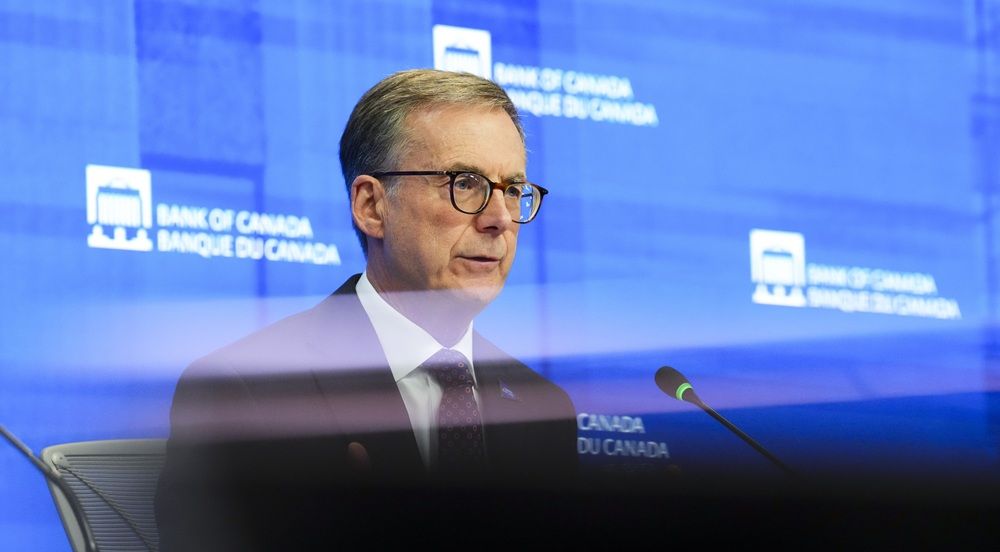
Or sign-in if you have an account.Tiff Macklem, Governor of the Bank of Canada, holds a press conference at the Bank of Canada in Ottawa on Wednesday, Oct. 29, 2025. Photo by Sean Kilpatrick /THE CANADIAN PRESSFirst it was Prime Minister Mark Carney saying that young people would need to sacrifice, now it’s the head of the Bank of Canada warning of a lower standard of living.
It seems that Canada’s leadership sees us as a country in decline, but it shouldn’t be this way. This advertisement has not loaded yet, but your article continues below.THIS CONTENT IS RESERVED FOR SUBSCRIBERS ONLYSubscribe now to read the latest news in your city and across Canada.Unlimited online access to articles from across Canada with one account.
Get exclusive access to the Toronto Sun ePaper, an electronic replica of the print edition that you can share, download and comment on.Enjoy insights and behind-the-scenes analysis from our award-winning journalists.Support local journalists and the next generation of journalists.Daily puzzles including the New York Times Crossword.
SUBSCRIBE TO UNLOCK MORE ARTICLESSubscribe now to read the latest news in your city and across Canada.Unlimited online access to articles from across Canada with one account.Get exclusive access to the Toronto Sun ePaper, an electronic replica of the print edition that you can share, download and comment on.
Enjoy insights and behind-the-scenes analysis from our award-winning journalists.Support local journalists and the next generation of journalists.Daily puzzles including the New York Times Crossword.REGISTER / SIGN IN TO UNLOCK MORE ARTICLESCreate an account or sign in to continue with your reading experience.
Access articles from across Canada with one account.Share your thoughts and join the conversation in the comments.Enjoy additional articles per month.Get email updates from your favourite authors.THIS ARTICLE IS FREE TO READ REGISTER TO UNLOCK.Create an account or sign in to continue with your reading experience.
Access articles from across Canada with one accountShare your thoughts and join the conversation in the commentsEnjoy additional articles per monthGet email updates from your favourite authorsIn fact, that was the point that Bank Governor Tiff Macklem was making on Wednesday. Macklem was talking about the impact of tariffs and American protectionist policy on Canada’s economy.
“Unfortunately, what that means is that unless something else changes, our incomes will be lower than they otherwise would be,” Macklem said. There are people taking this to mean that Canadians should simply get used to making less money, having a lower standard of living. That’s not the case at all.
A key part of his statement was, “unless something else changes” we will have lower incomes. Macklem made clear that the kinds of changes we need can’t be handled by the Bank of Canada. It’s up to the federal government and Canada’s business community. Your noon-hour look at what's happening in Toronto and beyond.
By signing up you consent to receive the above newsletter from Postmedia Network Inc.A welcome email is on its way. If you don't see it, please check your junk folder.The next issue of Your Midday Sun will soon be in your inbox.We encountered an issue signing you up. Please try againThis advertisement has not loaded yet, but your article continues below.
“These are more structural changes. I mean, fundamentally, as the senior deputy governor has hammered many times, we need to get our productivity growth up. And if we can do that as a country, we can bend that curve up,” Macklem said. Canada has been falling behindCarolyn Rogers, the senior deputy governor, has been calling for Canada to make structural changes to our economy to boost productivity and incomes for years.
She recently called for more competition in Canada’s banking sector, in other areas of the economy and in breaking down barriers between provinces which still persist. “Higher productivity won’t make Canada immune to US trade policy, but it would help buffer the effects of tariffs. And it’s the clearest path to boosting real wages, making life more affordable,” Rogers said in Toronto recently.
This advertisement has not loaded yet, but your article continues below.Isn’t that what we should all want? Real wage growth and the thriving economy should be the central focus of all governments at the moment, but it’s not. In the United States, the GDP per capita is over $89,000 USD, in Canada it’s just about $55,000 USD.
When comparing states and provinces, it gets even worse, with Ontario the supposed economic engine of the country coming in with a GDP per capita of $53,000 USD, just ahead of Mississippi, the worst performing American state at $51,000. That’s a massive difference and it shows up in real wages too with the average Canadian working full-time earning the equivalent of less than $48,000 USD per year compared to roughly $65,000 USD for an American.
By not boosting productivity, we are robbing ourselves. This advertisement has not loaded yet, but your article continues below.We need to move fast to turn this aroundIn his pre-budget speech last week to university students, Prime Minister Mark Carney wasn’t exactly lifting spirits or expectations that things can turn around.
“I will always be straight about the challenges we have to face and the choices we must make,” Carney said. “To be clear, we won’t transform our economy easily or in a few months — it will take some sacrifices and some time.” That’s a far cry from his election rallying cry. “We will need to think big and act bigger.
We will need to do things previously thought impossible at speeds we haven’t seen in generations,” Carney said on election night. Now it will take time, time that we sadly don’t have. As Macklem pointed out in his media appearance on Wednesday, the national unemployment rate has risen to 7.1%. This advertisement has not loaded yet, but your article continues below.
“The labour market is soft. Employment gains in September followed two months of sizeable losses. Job losses have been concentrated in trade-sensitive sectors, and hiring has been weak across the economy,” he said. The major project office is a good idea in theory, but Carney is moving too slow, being too tepid to respond to the threats we are facing.
Even if the US Supreme Court strikes down Trump’s tariffs next week – an unlikely outcome, especially the 232 tariffs — we would still need to respond to his attempts to change the global trading order. Governor Macklem has been blunt, start changing or accept being poorer. To change course, we need to be going at full speed, but Carney has barely put the car in first gear.
We need him to live up to his words — think big, act bigger, move at speeds not seen in generations. The future of the country depends on this. RECOMMENDED VIDEOWe apologize, but this video has failed to load. Toronto Blue Jays Sunshine Girls Sunshine Girls Toronto & GTA Toronto Blue Jays Notice for the Postmedia NetworkThis website uses cookies to personalize your content (including ads), and allows us to analyze our traffic.
Read more about cookies here. By continuing to use our site, you agree to our Terms of Use and Privacy Policy.
Source coverage
Author: Brian Lilley
Publisher: torontosun.com
Deeper analysis
Full source content
Advertisement oopStory continues belowThis advertisement has not loaded yet, but your article continues below.Skip to Content Subscribe FAQ My Account News Toronto & GTA Ontario Canada World Crime True Crime Weird Money Technology Tech Essentials Gaming Gadgets Weather Podcasts Opinion Editorials Columnists Editorial Cartoons Letters Send Letter to the Editor Sports Hockey PWHL Toronto Maple Leafs NHL Soccer Toronto FC MLS Baseball Toronto Blue Jays MLB Basketball Toronto Raptors NBA Football Toronto Argonauts CFL NFL Golf Other Sports Olympics Curling Tennis Horse Racing Wrestling Entertainment Celebrity Movies Music Television TV Listings Life Eat Fashion & Beauty Relationships Advice Sex Files Health Healthing Diet & Fitness Homes Travel Travel International Travel USA Travel Canada Ontario Travel Travel Essentials Travel Deals Savings Contests Lives Told Shopping Driving Vehicle Research Reviews News Gear Guide Obituaries Place an Obituary Place an In Memoriam Advertising Advertising With Us Advertising Solutions Postmedia Ad Manager Sponsorship Requests Classifieds Place an Ad Business Card Directory Celebrations Working Business Ads This Week's Flyers ePaper SUNShine Girls Become a Sunshine Girl Puzzmo Diversions Comics Puzzles Horoscopes Newsletters Manage Print Subscription Profile Settings My Subscriptions Saved Articles My Offers Newsletters Customer Service FAQ News Opinion Sports Entertainment Life Shopping Driving Obituaries Classifieds ePaper SUNShine Girls Puzzmo Newsletters Manage Print Subscription This advertisement has not loaded yet, but your article continues below.
CanadaColumnistsLILLEY: Canadians shouldn't accept a lower standard of livingBank of Canada Governor Tiff Macklem is warning we will all be making less if things don't change. Get the latest from Brian Lilley straight to your inbox Published Oct 30, 2025 • Last updated 1 day ago • 3 minute read You can save this article by registering for free here.
Or sign-in if you have an account.Tiff Macklem, Governor of the Bank of Canada, holds a press conference at the Bank of Canada in Ottawa on Wednesday, Oct. 29, 2025. Photo by Sean Kilpatrick /THE CANADIAN PRESSFirst it was Prime Minister Mark Carney saying that young people would need to sacrifice, now it’s the head of the Bank of Canada warning of a lower standard of living.
It seems that Canada’s leadership sees us as a country in decline, but it shouldn’t be this way. This advertisement has not loaded yet, but your article continues below.THIS CONTENT IS RESERVED FOR SUBSCRIBERS ONLYSubscribe now to read the latest news in your city and across Canada.Unlimited online access to articles from across Canada with one account.
Get exclusive access to the Toronto Sun ePaper, an electronic replica of the print edition that you can share, download and comment on.Enjoy insights and behind-the-scenes analysis from our award-winning journalists.Support local journalists and the next generation of journalists.Daily puzzles including the New York Times Crossword.
SUBSCRIBE TO UNLOCK MORE ARTICLESSubscribe now to read the latest news in your city and across Canada.Unlimited online access to articles from across Canada with one account.Get exclusive access to the Toronto Sun ePaper, an electronic replica of the print edition that you can share, download and comment on.
Enjoy insights and behind-the-scenes analysis from our award-winning journalists.Support local journalists and the next generation of journalists.Daily puzzles including the New York Times Crossword.REGISTER / SIGN IN TO UNLOCK MORE ARTICLESCreate an account or sign in to continue with your reading experience.
Access articles from across Canada with one account.Share your thoughts and join the conversation in the comments.Enjoy additional articles per month.Get email updates from your favourite authors.THIS ARTICLE IS FREE TO READ REGISTER TO UNLOCK.Create an account or sign in to continue with your reading experience.
Access articles from across Canada with one accountShare your thoughts and join the conversation in the commentsEnjoy additional articles per monthGet email updates from your favourite authorsIn fact, that was the point that Bank Governor Tiff Macklem was making on Wednesday. Macklem was talking about the impact of tariffs and American protectionist policy on Canada’s economy.
“Unfortunately, what that means is that unless something else changes, our incomes will be lower than they otherwise would be,” Macklem said. There are people taking this to mean that Canadians should simply get used to making less money, having a lower standard of living. That’s not the case at all.
A key part of his statement was, “unless something else changes” we will have lower incomes. Macklem made clear that the kinds of changes we need can’t be handled by the Bank of Canada. It’s up to the federal government and Canada’s business community. Your noon-hour look at what's happening in Toronto and beyond.
By signing up you consent to receive the above newsletter from Postmedia Network Inc.A welcome email is on its way. If you don't see it, please check your junk folder.The next issue of Your Midday Sun will soon be in your inbox.We encountered an issue signing you up. Please try againThis advertisement has not loaded yet, but your article continues below.
“These are more structural changes. I mean, fundamentally, as the senior deputy governor has hammered many times, we need to get our productivity growth up. And if we can do that as a country, we can bend that curve up,” Macklem said. Canada has been falling behindCarolyn Rogers, the senior deputy governor, has been calling for Canada to make structural changes to our economy to boost productivity and incomes for years.
She recently called for more competition in Canada’s banking sector, in other areas of the economy and in breaking down barriers between provinces which still persist. “Higher productivity won’t make Canada immune to US trade policy, but it would help buffer the effects of tariffs. And it’s the clearest path to boosting real wages, making life more affordable,” Rogers said in Toronto recently.
This advertisement has not loaded yet, but your article continues below.Isn’t that what we should all want? Real wage growth and the thriving economy should be the central focus of all governments at the moment, but it’s not. In the United States, the GDP per capita is over $89,000 USD, in Canada it’s just about $55,000 USD.
When comparing states and provinces, it gets even worse, with Ontario the supposed economic engine of the country coming in with a GDP per capita of $53,000 USD, just ahead of Mississippi, the worst performing American state at $51,000. That’s a massive difference and it shows up in real wages too with the average Canadian working full-time earning the equivalent of less than $48,000 USD per year compared to roughly $65,000 USD for an American.
By not boosting productivity, we are robbing ourselves. This advertisement has not loaded yet, but your article continues below.We need to move fast to turn this aroundIn his pre-budget speech last week to university students, Prime Minister Mark Carney wasn’t exactly lifting spirits or expectations that things can turn around.
“I will always be straight about the challenges we have to face and the choices we must make,” Carney said. “To be clear, we won’t transform our economy easily or in a few months — it will take some sacrifices and some time.” That’s a far cry from his election rallying cry. “We will need to think big and act bigger.
We will need to do things previously thought impossible at speeds we haven’t seen in generations,” Carney said on election night. Now it will take time, time that we sadly don’t have. As Macklem pointed out in his media appearance on Wednesday, the national unemployment rate has risen to 7.1%. This advertisement has not loaded yet, but your article continues below.
“The labour market is soft. Employment gains in September followed two months of sizeable losses. Job losses have been concentrated in trade-sensitive sectors, and hiring has been weak across the economy,” he said. The major project office is a good idea in theory, but Carney is moving too slow, being too tepid to respond to the threats we are facing.
Even if the US Supreme Court strikes down Trump’s tariffs next week – an unlikely outcome, especially the 232 tariffs — we would still need to respond to his attempts to change the global trading order. Governor Macklem has been blunt, start changing or accept being poorer. To change course, we need to be going at full speed, but Carney has barely put the car in first gear.
We need him to live up to his words — think big, act bigger, move at speeds not seen in generations. The future of the country depends on this. RECOMMENDED VIDEOWe apologize, but this video has failed to load. Toronto Blue Jays Sunshine Girls Sunshine Girls Toronto & GTA Toronto Blue Jays Notice for the Postmedia NetworkThis website uses cookies to personalize your content (including ads), and allows us to analyze our traffic.
Read more about cookies here. By continuing to use our site, you agree to our Terms of Use and Privacy Policy.
How this page is built
Goose Pod turns cited reporting into a public episode summary first, then pairs that summary with audio playback so listeners can check the source material before they decide how deeply to engage.
The goal is to make this page useful as a news landing page first, while still giving listeners transcript access, related episodes, and direct links back to the original publishers.