"You've Just Inspired Millions": Wheelchair Tourist Makes Brief Spaceflight, a First

"You've Just Inspired Millions": Wheelchair Tourist Makes Brief Spaceflight, a First

2025-12-26science
--:--
--:--
Taylor
Good morning Tal, I'm Taylor, and this is Goose Pod for you. Today is Friday, December 26th, at twenty-three thirty-nine. I'm joined by Morgan, and we're exploring a truly historic milestone: the first wheelchair user to reach the stars and inspire the world.
Morgan
It is a profound moment for humanity, Taylor. We are discussing Michaela Benthaus’s incredible journey with Blue Origin, a brief flight that carried the weight of millions of dreams into the silence of space. It is a story of resilience that deserves our full attention tonight.
Taylor
Last Saturday, December 20th, a New Shepard rocket roared to life in the West Texas desert. On board was Michaela Benthaus, a thirty-three-year-old aerospace engineer and the first person in a wheelchair to ever cross the Kármán line. This wasn't just another flight for Jeff Bezos’s company.
Morgan
I've often found that the most significant leaps happen in the shortest spans of time. This mission, known as NS-37, lasted only about ten minutes from launch to landing. In those ten minutes, Michaela and five other passengers experienced the weightless freedom of space at over one hundred kilometers.
Taylor
The mission actually had a bit of a nail-biting start, Tal. It was originally scheduled for December 18th, but a technical anomaly forced a two-day delay. As a strategist, I love seeing how Blue Origin handled the pressure to ensure everything was perfect for this specific, symbolic milestone.
Morgan
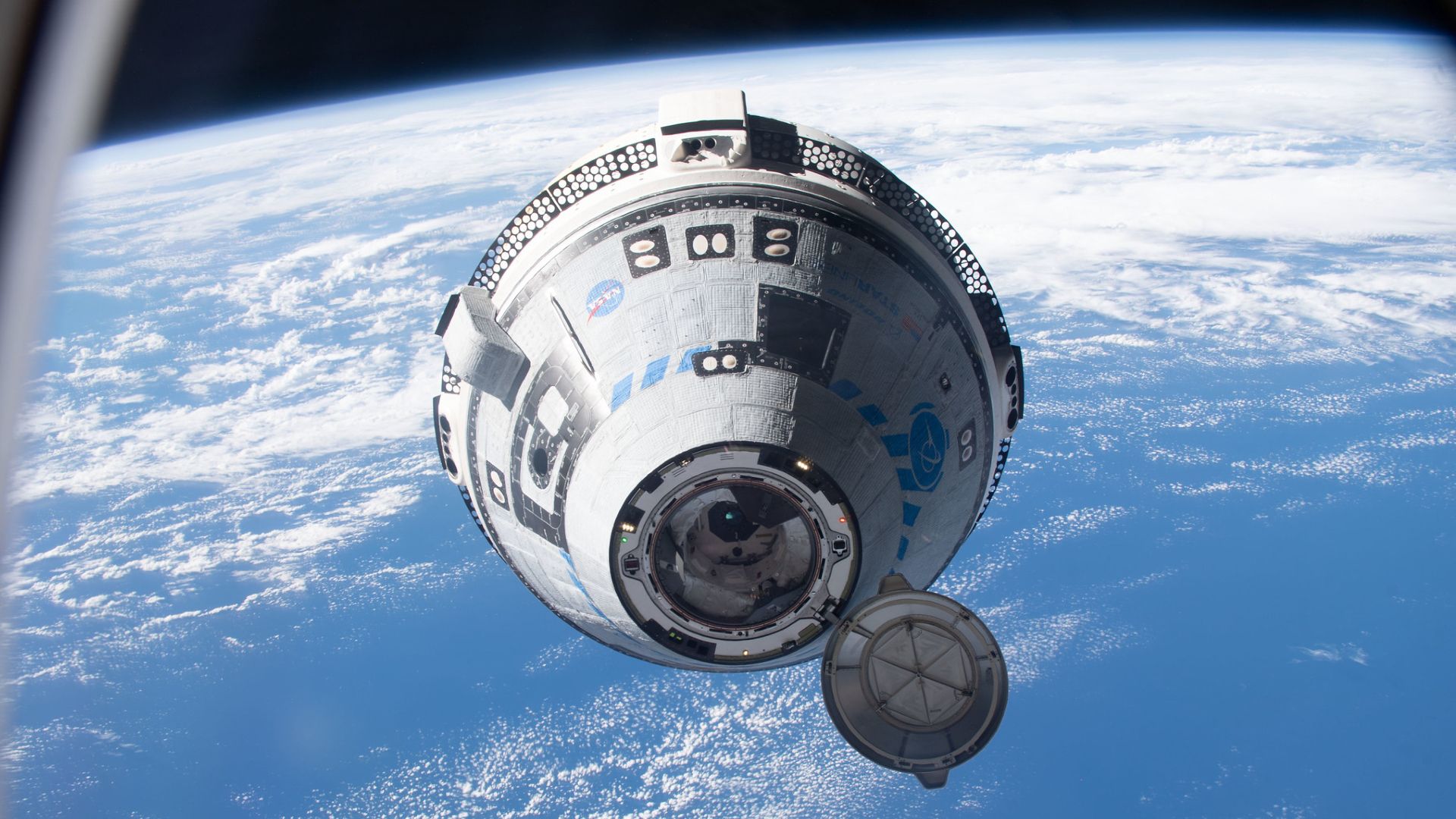
Patience is a virtue, especially when dealing with the heavens. When the fully automated rocket finally ascended vertically, the capsule detached perfectly in flight. While the rocket returned to its pad, the capsule drifted back to the Texas desert, gently slowed by three massive, beautiful parachutes.
Taylor
Michaela described the ascent as pure joy, saying she laughed through the whole thing. She even tried to turn herself around in microgravity! It’s fascinating because this was the seventeenth mission with passengers for New Shepard, but it felt like the very first time for many watching.
Morgan
There is something deeply moving about seeing a person who navigates the world in a wheelchair suddenly free from the constraints of gravity. She wasn't just a passenger; she was a pioneer. She mentioned that the view of the Earth from that altitude was the most incredible experience.
Taylor
The timing was perfect too, right around the winter solstice. Michaela was accompanied by Hans Koenigsmann, a former SpaceX executive who actually helped finance her seat. It’s like a narrative of industry giants coming together to break a glass ceiling, or in this case, a gravity ceiling.
Morgan
Indeed, and it reminds us that space is becoming a canvas for all of humanity. Crossing that Kármán line is an international convention, but for Michaela, it was a personal boundary that she shattered with grace. The world watched as she proved that physical limitations are often just terrestrial.
Taylor
To really understand how big this is, we have to look at Michaela’s history. She’s a brilliant engineer at the European Space Agency, but her life changed seven years ago after a mountain biking accident left her paraplegic. She went from being an athlete to navigating an often-inaccessible world.
Morgan
I've often found that adversity often sharpens a person's focus. After her accident, Michaela became acutely aware of the barriers people with disabilities face every day. She didn't just accept it; she used her engineering background to ask why space should be any different from a city street.
Taylor
She actually reached out to Hans Koenigsmann online to ask about the possibility of becoming an astronaut. It’s such a CEO move, Tal. You see a gap in the market or a barrier in the world, and you reach out to the power players to find a solution.
Morgan
And Blue Origin was reportedly very excited by the idea. Historically, astronauts had to be peak physical specimens, almost like elite athletes. This flight challenges that old paradigm. We’ve seen others, like Hayley Arceneaux with her prosthetic leg, but a wheelchair user is a whole new chapter.
Taylor
The technical side of this is what gets me excited. They didn't have to redesign the whole rocket. They just made smart, incremental changes. They used a transfer board to help her move from the hatch to her seat and secured her legs during the weightless portion of the flight.
Morgan
It shows that accessibility doesn't always require a total overhaul, just thoughtful consideration. They even laid out a special carpet on the desert floor so she could easily reach her wheelchair after the capsule landed. It’s those small details that make the narrative of inclusion feel truly authentic.
Taylor
Exactly! And she prepared for this for years. In 2022, she did a parabolic flight to experience weightlessness and even participated in a simulated space mission in Poland. She didn't just show up; she trained like any other professional, proving she belonged in that seat through merit.
Morgan
That preparation is key. Space tourism is often criticized as a playground for the wealthy, with tickets estimated at five hundred thousand dollars or more. But when that ticket belongs to someone like Michaela, the conversation shifts from luxury to a necessary proof of concept for future travelers.
Taylor
Blue Origin has now flown over eighty people, including celebrities like Katy Perry and William Shatner. But while Shatner brought the nostalgia of Star Trek, Michaela brings the reality of the future. She’s showing that the New Shepard program is a legitimate platform for scientific and social progress.
Morgan
I think of the European Space Agency’s para-astronaut program as well, with people like John McFall. We are seeing a global movement where space agencies are realizing that the human spirit isn't tied to the ability to walk. The background here is a slow, steady opening of the heavens.
Taylor
It’s a strategic pivot for the entire industry. For decades, the narrative was about the right stuff, which meant a very specific type of body. Now, the narrative is about the whole world. Michaela is the protagonist in a story that finally includes everyone who has ever looked up.
Morgan
And that is a story worth telling. Her journey from that mountain biking accident in 2018 to the edge of the atmosphere in 2025 is a testament to what happens when technology meets human will. It sets a beautiful stage for the conflicts and challenges we still face on Earth.
Morgan
I've often found that progress in one extreme often trickles down to the other. The innovations Blue Origin made for Michaela’s flight could lead to better autonomous navigation or ergonomic designs for people on Earth. But the competition is fierce, with Virgin Galactic and SpaceX also vying for dominance.
Taylor
That brings us to a really poignant point Michaela made. She said that after her accident, she realized how inaccessible our world still is. It’s a bit ironic, isn't it? We can put a person in a wheelchair into space, but they might struggle to get into a local bakery.
Morgan
It is a jarring contrast. She said, if we want to be an inclusive society, we must be so in all areas, and not just where it suits us. There is a tension between the high-tech glory of space travel and the mundane, daily struggles of navigating a world built for the able-bodied.
Taylor
There’s also the economic conflict. The space tourism market is projected to hit nearly forty-seven billion dollars by 2034. That’s a massive growth rate! But there’s a debate about whether that money should be spent on billionaire rockets or on making our existing infrastructure more accessible right here.
Taylor
And that competition drives the cost down eventually, but right now, it’s still very exclusive. You have Virgin Galactic offering suborbital flights and SpaceX aiming for orbit. It’s a race for the affluent traveler, but Michaela’s presence introduces a moral imperative to that race that wasn't there before.
Morgan
The conflict also lies in the perception of risk. Some might argue that sending someone with a disability into such a high-risk environment is unnecessary. But Michaela’s response is that she shouldn't be denied the dream because of a perceived fragility that she clearly does not possess.
Taylor
I love that she challenged the elite athlete image of astronauts. In the business world, we call this a disruptive innovation. She’s disrupting the very idea of who is allowed to be an explorer. The tension between the old guard and this new, diverse era of spaceflight is palpable.
Morgan
It is the tension of growth. As space becomes a structured tourism offering rather than just a demonstration mission, we have to decide who it is for. If it’s only for the wealthy and the physically perfect, we haven't really expanded our horizons, we’ve just moved the fence.
Taylor
The impact of this flight is already being felt everywhere. Jared Isaacman, the new head of NASA, posted on social media that Michaela has just inspired millions. When someone with that level of authority says you’ve changed the narrative, you know you’ve made a permanent dent in the universe.
Morgan
It carries an immense symbolic weight. For a child in a wheelchair today, the stars are no longer a place they can only watch from afar. They are a destination. That emotional reach is far more valuable than any ticket price could ever reflect. It’s a message of hope.
Taylor
She’s become a powerful advocate for universal accessibility. By reaching one hundred kilometers up, she’s highlighting the obstacles at zero kilometers. It’s brilliant strategic communication. You use the most extreme example of accessibility to make the common examples seem like they should be a given.
Morgan
It forces a collective re-evaluation. If we can secure a person for the vibrations of a rocket launch and the weightlessness of space, we can certainly design a bus or a train station that works for everyone. Her ten-minute flight is a mirror held up to our society's priorities.
Taylor
I also think about the impact on the aerospace industry itself. Engineers are now looking at cabin design through a much wider lens. Panoramic windows, ergonomic seating, and zero-gravity areas are being reimagined to accommodate a broader demographic. It’s forcing the industry to be more creative and inclusive.
Morgan
And that creativity is the soul of exploration. Michaela’s journey reminds us that a diverse humanity is a stronger humanity. When we include different perspectives and different bodies in our quest for the stars, we bring the best of ourselves into the great unknown. It is a beautiful shift.
Taylor
Looking ahead, the trends are fascinating. We’re moving toward reusable rockets and commercial space stations that will allow for multi-day stays. Imagine a future where inclusive space hotels are a real thing! The market is shifting from short hops to genuine hospitality in orbit.
Morgan
I see a future where mixed-reality simulators and advanced training centers make space accessible to almost anyone. We are moving toward a time when the physical requirements for space travel will be no more stringent than those for a long-haul commercial flight today. It’s quite remarkable.
Taylor
Strategic alliances are already forming between aerospace manufacturers and hospitality groups. We’re going to see a lot more focus on the passenger experience. Michaela’s flight was the proof of concept that will allow these companies to market to a much wider, more diverse audience in the coming decade.
Morgan
What we can learn from this, Tal, is that dreams should never be abandoned. Michaela’s story is a reminder to look for the patterns of progress in every barrier. The future of space is not just about technology; it is about the expansion of the human heart to include everyone.
Taylor
That’s the end of today's discussion. Michaela Benthaus has truly shown us that the sky is not the limit, but just the beginning. Thank you for listening to Goose Pod, Tal. We'll see you tomorrow for more stories that change the way we see the world.
Morgan
It has been a pleasure to share this moment of reflection with you. Remember that even the smallest step can be a giant leap if taken with courage. Thank you for joining us on Goose Pod. Until we meet again, stay curious and keep looking up.

Michaela Benthaus, a wheelchair user, made history as the first person in a wheelchair to reach space with Blue Origin. This groundbreaking flight, though brief, shattered perceived limitations and ignited dreams worldwide. Benthaus's journey highlights the evolving landscape of space exploration, emphasizing inclusion and demonstrating that physical barriers are often terrestrial.

« Vous venez d’inspirer des millions de personnes » : une touriste en fauteuil roulant a voyagé brièvement dans l’espace, une première

Read original at leparisien.fr

Pour la première fois, une touriste en fauteuil roulant s’est envolée, ce samedi, pendant quelques minutes dans l’espace à bord d’une fusée du multimilliardaire américain Jeff Bezos.Ingénieure aérospatiale allemande devenue paraplégique à la suite d’un accident, Michaela Benthaus a embarqué aux côtés de cinq autres personnes, dont des entrepreneurs, pour cette aventure proposée par l’entreprise spatiale Blue Origin du fondateur d’Amazon et réservée à quelques privilégiés.

Une dizaine de minutes dans l’espace« Après mon accident, j’ai vraiment pris conscience à quel point notre monde est encore inaccessible » pour les personnes en situation de handicap, a-t-elle témoigné dans une vidéo publiée par l’entreprise. Et de lancer : « Si nous voulons être une société inclusive, nous devons l’être dans tous les domaines, et pas seulement là où ça nous arrange.

»Le décollage a eu lieu dans l’ouest du Texas peu après 8h15 locales (15h15). La petite fusée, entièrement automatisée, a décollé à la verticale et la capsule dans laquelle se trouvaient les touristes s’est ensuite détachée en vol avant de retomber en douceur dans le désert texan, freinée par des parachutes.

Lors de cette expérience d’une dizaine de minutes au total, les six passagers ont dépassé la ligne de Karman, qui marque à 100 kilomètres d’altitude la frontière de l’espace selon une convention internationale. Le nouveau patron de la Nasa, Jared Isaacman, a salué cette première et félicité Michaela Benthaus pour sa persévérance : « Vous venez d’inspirer des millions de personnes », a-t-il assuré sur X.

Plus de 80 voyageurs déjà transportésBlue Origin propose depuis plusieurs années déjà ces vols de tourisme spatial, dont le prix n’est pas public, grâce à sa fusée New Shepard. L’entreprise a déjà transporté plus de 80 personnes, dont des célébrités comme la chanteuse Katy Perry ou encore William Shatner, qui incarnait le mythique capitaine Kirk dans la série Star Trek.

Des invités de marque destinés à maintenir l’intérêt du public autour de ces vols, sur fond de concurrence entre plusieurs entreprises privées. Le grand concurrent de Jeff Bezos dans ce domaine est Virgin Galactic, qui propose une expérience similaire de vol suborbital. Mais Blue Origin a également l’ambition d’aller plus loin et souhaite se positionner sur le marché des vols en orbite et concurrencer SpaceX d’Elon Musk.

Analysis

Related Info+
Conflict+
Impact+
Future+
Core Event+
Background+

Related Podcasts