

What happened
中国TARS Robotics公司实现世界首个机器人刺绣壮举,标志着具身智能进入新时代。机器人通过“数据、AI、物理”三位一体方案,实现亚毫米级精度,处理柔性材料。这项突破预示着人形机器人将在精密制造、医疗等领域潜力无限,并引发关于人机协作、就业及伦理的深刻讨论。
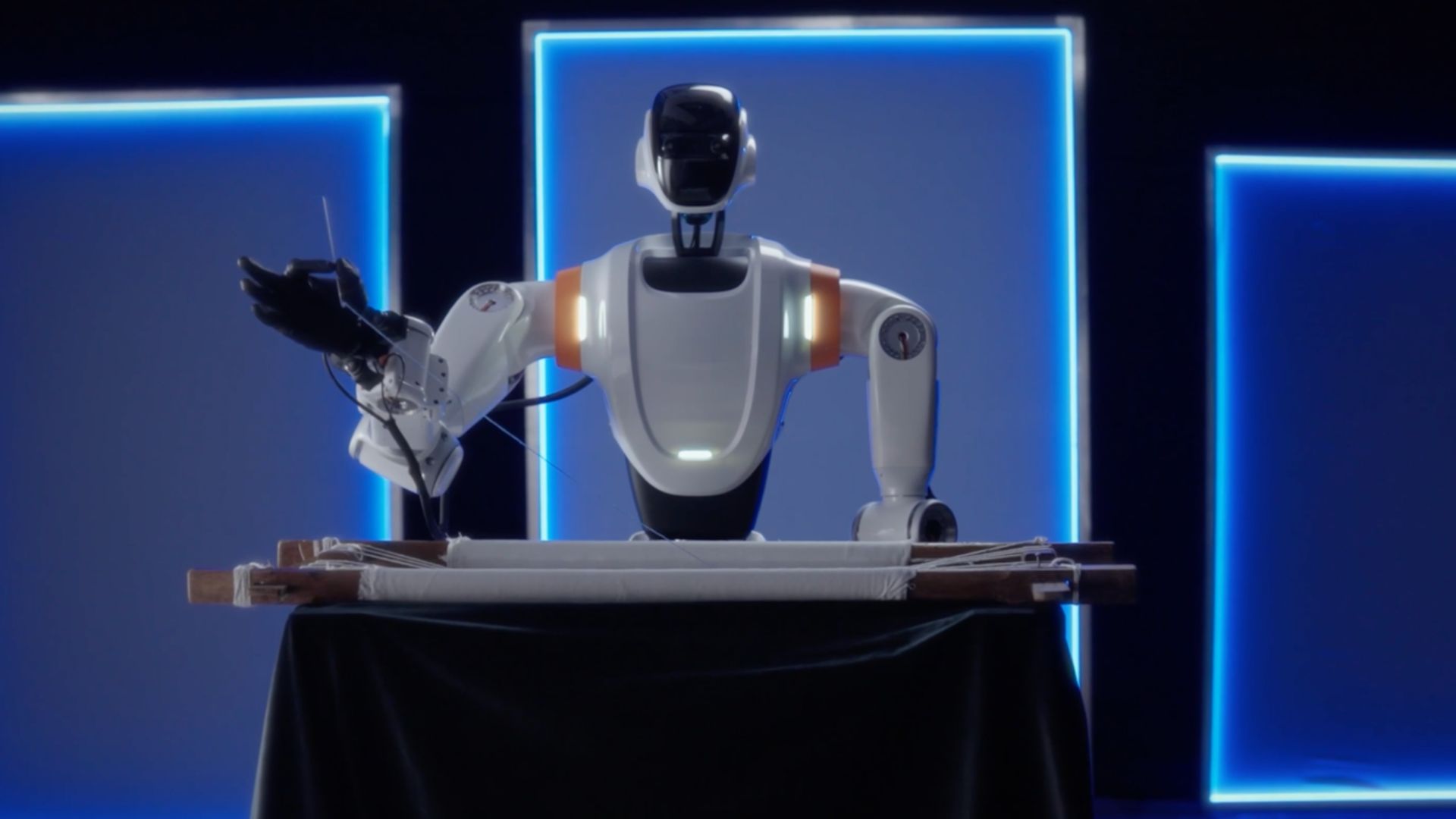
On December 22, China’s TARS Robotics reached a milestone in embodied artificial intelligence by publicly showing a humanoid robot doing hand embroidery at a live event.The robot used both hands to thread a needle and stitch a logo, handling a task that demands high precision and steady control.The demonstration showed the robot handling soft, flexible materials with sub-millimeter accuracy.
Until now, this type of long, delicate, and coordinated manual work has been widely viewed as beyond the reach of automation.Ultra-fine manipulation has long been a missing capability in industrial robotics, limiting automation in complex wire harness assembly and other precision-intensive processes.
By overcoming this barrier, the company has opened the door for robots to take on work previously reserved for skilled human hands.A long-standing automation barrier fallsHand embroidery may appear niche, but it represents one of the hardest problems in robotics.The task combines precise vision, adaptive force control, and coordinated movement of both hands while dealing with flexible materials that constantly change shape.
Small errors can snap a thread or miss a stitch entirely.During the live demonstration, the humanoid robot completed the process smoothly, demonstrating stability throughout. This performance highlighted a level of embodied intelligence not previously demonstrated in public settings. The ability to carry out such tasks reliably is seen as a foundation for broader industrial use.
By mastering these movements, the same robotic system can be extended to other complex jobs. Tasks such as assembling intricate electrical components or handling soft materials in manufacturing now appear more achievable. DATA AI PHYSICS working togetherAt the event, Dr. Chen Yilun, CEO of TARS Robotics, explained that the breakthrough comes from what he described as a DATA AI PHYSICS trinity approach.
This framework connects real-world data, artificial intelligence models, and physical robotic systems into one continuous loop.The robotics firm uses its human-centric SenseHub platform to collect detailed operational data from real environments. This data is then used to train the TARS AWE 2.0 AI World Engine, an embodied AI model designed to learn general physical skills rather than single tasks.
These learned capabilities are deployed directly on the company’s T-Series and A-Series humanoid robots.Chen emphasized that the robots are built with a minimal digital-to-physical gap, meaning that what the AI learns in training can be executed reliably in the real world. He noted that this closed-loop system supports scalable development and follows the principles of the Scaling Law for AI systems.
Scaling intelligence through dataDr. Ding Wenchao, the firm’s Chief Scientist, highlighted how data scale is driving rapid progress across various tasks. “Leveraging the massive data from SenseHub and guided by the AWE 2.0 model, we have seen a leap forward in task success rates across multiple scenarios,” he noted.
“As we continue to scale our data and advance our model architecture, we foresee new breakthroughs in our robots’ intelligence and generalization capabilities, with the ultimate goal of deploying them across every industry and household.”This focus on generalization is key. Instead of programming robots for one specific job, the company aims to teach them adaptable skills that can transfer across environments and industries.
Rapid growth backed by major fundingTARS Robotics was founded on February 5, 2025, and has moved quickly from concept to real-world deployment. In less than a year, the company has applied its core algorithms to working robotic platforms and delivered steady performance improvements.The company’s growth has been supported by strong investor confidence.
It raised $120 million in an Angel Round from investors including Lanchi Ventures, followed by a $122 million Angel+ Round. Recommended ArticlesGet the latest in engineering, tech, space & science - delivered daily to your inbox.A versatile writer, Sujita has worked with Mashable Middle East and News Daily 24.
When she isn't writing, you can find her glued to the latest web series and movies.
Source coverage
Okay, so I just got this news about TARS Robotics, and it's pretty impressive. They've cracked a tough nut: a humanoid robot doing hand embroidery with incredible precision. This isn't just a gimmick; it's a real breakthrough. This thing's stitching a logo with sub-millimeter accuracy, which means they've overcome...
It's all down to their "DATA AI PHYSICS trinity" approach. They've got this SenseHub platform gathering data, training an AI World Engine (TARS AWE 2.0), and then deploying what the AI learned onto their humanoid robots (T-Series and A-Series). Think of it as a feedback loop. They've got this "minimal...
Deeper analysis
Full source content
On December 22, China’s TARS Robotics reached a milestone in embodied artificial intelligence by publicly showing a humanoid robot doing hand embroidery at a live event.The robot used both hands to thread a needle and stitch a logo, handling a task that demands high precision and steady control.The demonstration showed the robot handling soft, flexible materials with sub-millimeter accuracy.
Until now, this type of long, delicate, and coordinated manual work has been widely viewed as beyond the reach of automation.Ultra-fine manipulation has long been a missing capability in industrial robotics, limiting automation in complex wire harness assembly and other precision-intensive processes.
By overcoming this barrier, the company has opened the door for robots to take on work previously reserved for skilled human hands.A long-standing automation barrier fallsHand embroidery may appear niche, but it represents one of the hardest problems in robotics.The task combines precise vision, adaptive force control, and coordinated movement of both hands while dealing with flexible materials that constantly change shape.
Small errors can snap a thread or miss a stitch entirely.During the live demonstration, the humanoid robot completed the process smoothly, demonstrating stability throughout. This performance highlighted a level of embodied intelligence not previously demonstrated in public settings. The ability to carry out such tasks reliably is seen as a foundation for broader industrial use.
By mastering these movements, the same robotic system can be extended to other complex jobs. Tasks such as assembling intricate electrical components or handling soft materials in manufacturing now appear more achievable. DATA AI PHYSICS working togetherAt the event, Dr. Chen Yilun, CEO of TARS Robotics, explained that the breakthrough comes from what he described as a DATA AI PHYSICS trinity approach.
This framework connects real-world data, artificial intelligence models, and physical robotic systems into one continuous loop.The robotics firm uses its human-centric SenseHub platform to collect detailed operational data from real environments. This data is then used to train the TARS AWE 2.0 AI World Engine, an embodied AI model designed to learn general physical skills rather than single tasks.
These learned capabilities are deployed directly on the company’s T-Series and A-Series humanoid robots.Chen emphasized that the robots are built with a minimal digital-to-physical gap, meaning that what the AI learns in training can be executed reliably in the real world. He noted that this closed-loop system supports scalable development and follows the principles of the Scaling Law for AI systems.
Scaling intelligence through dataDr. Ding Wenchao, the firm’s Chief Scientist, highlighted how data scale is driving rapid progress across various tasks. “Leveraging the massive data from SenseHub and guided by the AWE 2.0 model, we have seen a leap forward in task success rates across multiple scenarios,” he noted.
“As we continue to scale our data and advance our model architecture, we foresee new breakthroughs in our robots’ intelligence and generalization capabilities, with the ultimate goal of deploying them across every industry and household.”This focus on generalization is key. Instead of programming robots for one specific job, the company aims to teach them adaptable skills that can transfer across environments and industries.
Rapid growth backed by major fundingTARS Robotics was founded on February 5, 2025, and has moved quickly from concept to real-world deployment. In less than a year, the company has applied its core algorithms to working robotic platforms and delivered steady performance improvements.The company’s growth has been supported by strong investor confidence.
It raised $120 million in an Angel Round from investors including Lanchi Ventures, followed by a $122 million Angel+ Round. Recommended ArticlesGet the latest in engineering, tech, space & science - delivered daily to your inbox.A versatile writer, Sujita has worked with Mashable Middle East and News Daily 24.
When she isn't writing, you can find her glued to the latest web series and movies.
How this page is built
Goose Pod turns cited reporting into a public episode summary first, then pairs that summary with audio playback so listeners can check the source material before they decide how deeply to engage.
The goal is to make this page useful as a news landing page first, while still giving listeners transcript access, related episodes, and direct links back to the original publishers.


