
What happened
本期Goose Pod探讨了特朗普的“现实之战”。节目指出,特朗普利用人工智能和深度伪造技术制造虚假信息,动摇公众对“眼见为实”的信任,将深度伪造武器化以制造认知失调。这不仅是政治宣传,更是信息控制术,旨在消除异见,加剧社会分裂,并对民主制度构成威胁。
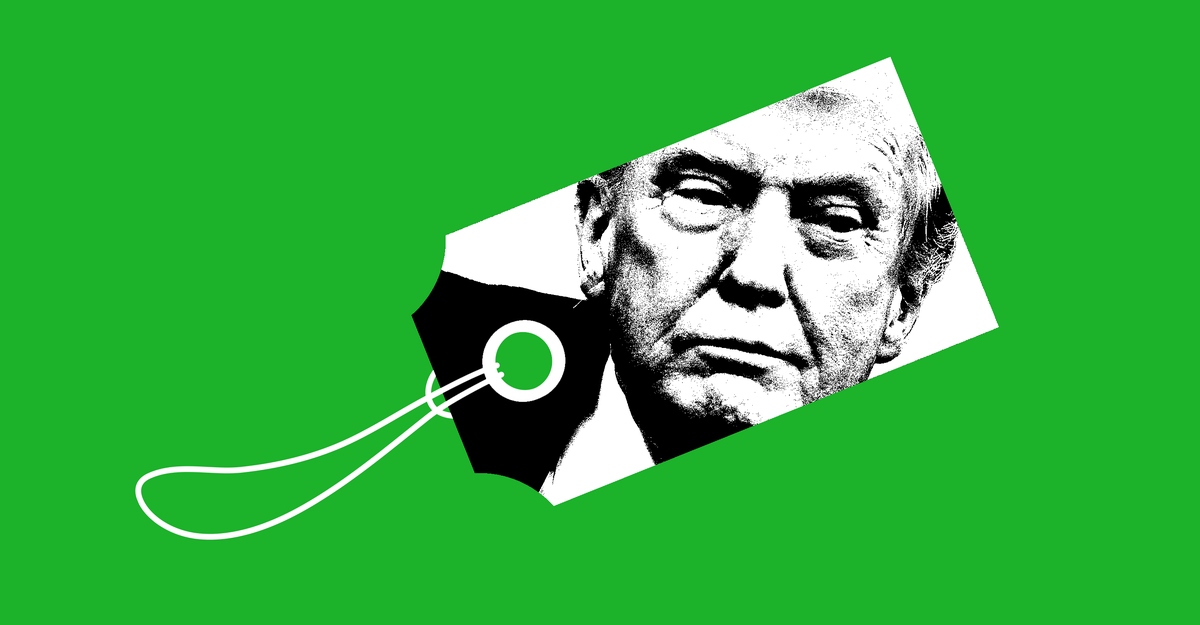
A deepfake president molds perception to serve his own interests.Illustration by The Atlantic. Source: Salwan Georges / The Washington Post / Getty.October 22, 2025, 11:48 AM ET Listen to more stories on the Noa app.Sign up for Trump’s Return, a newsletter featuring coverage of the second Trump presidency.
Donald Trump’s rise tracks the decline of that thing we once agreed to call reality. He cemented his place in the popular imagination with the advent of reality television, a genre that promised authenticity, even as the supposedly unscripted scenes were carefully manipulated by producers. On The Apprentice, which debuted in 2004, Trump was the embodiment of a culture just beginning to blur the line between what was real and what merely looked like it was.
In his second term as president, Trump—now with the help of artificial intelligence—is completing the revolution that made him. Over the weekend, he posted a video of himself piloting a fighter jet that dumps excrement on protesters. The clip was cartoonish, meant to amuse his followers and outrage his adversaries.
This might seem like an ephemeral bit of trollish fun, but it is an example of an alarming pattern. Trump is provoking an epistemic collapse—cultivating the sense that every shard of once-dependable evidence is suspect. He is ushering in an era of distrust and confusion, in which the president molds perception to serve his own interests.
The deepfake is the most disconcerting frontier of the AI revolution. Fabricated clips are rendered with such precision that they can make anyone appear to say or do anything. This technology stands to upend a basic assumption of modern life. For more than a century, humans have treated film as the ultimate proof of reality, the mechanical witness that doesn’t lie.
Deepfakes exploit the instinct to trust what we see, counterfeits capable of warping emotion and implanting lies.Fueled by his own delusions of grandeur—and the dark fantasies of revenge that animate him—Trump delights in doctored videos. During his first term, he tweeted footage spliced to exaggerate Nancy Pelosi’s verbal stumbles.
In his 2024 campaign, he shared an AI-generated image that suggested that Taylor Swift had endorsed him. And last month, he posted a fake clip of Chuck Schumer declaring, “Nobody likes Democrats anymore. We have no voters left because of all of our woke, trans bullshit.”The president of the United States has legitimized deepfakes as a tool of political communication.
His followers have taken the cue. Last week, the campaign arm of Senate Republicans released an AI-produced ad depicting Schumer speaking words that had appeared in a press report—not in any actual footage.As deepfakes become the common currency of social media, citizens will justifiably begin to harbor doubts about any piece of video they encounter.
But those doubts won’t yield discernment. They will simply provide another justification for the confirmation of ideological bias. Partisans will accept video footage when it upholds their preconceptions; when it does not, dismissing it as potentially manipulated will become standard practice.Jessica Yellin: The awkward adolescence of a media revolutionMembers of Trump’s administration are already deploying this tactic.
Earlier this week, Politico revealed text messages attributed to Paul Ingrassia, the president’s choice to lead the Office of Special Counsel, in which the nominee admitted to having a “Nazi streak” and unleashed a torrent of racist vituperation. (Ingrassia ultimately withdrew his nomination.) When confronted with the messages, his lawyer didn’t deny their authenticity outright but instead implied that they might have been fabricated by AI.
That claim is baseless, but the strategy isn’t. The public has largely lost faith in traditional arbiters of truth—mainstream media, religion, academia—and many citizens have cocooned themselves in the comfort of filter bubbles. Now they’ve begun to disagree about the most basic facts of shared existence, including the outcomes of an election.
At the beginning of the century, when The New York Times reported the scandalous behavior of a politician, leadership of both political parties would assume the allegation’s truth, even if Republicans might have grouched about the paper’s liberal bias. When the government released an employment report, the nation roundly regarded it as an objective reading of the economic weather.
But Trump is attempting to dismantle those institutional underpinnings of reality. In the 20th century, the federal government became the nation’s most trusted producer of facts. It tracked the economy, the spread of disease, and countless other indicators that allowed businesses to plan and citizens to make informed choices.
Trump is shattering that tradition of disinterested empiricism, bending even the information generated by the government to his will. That’s why he has fired officials—such as the head of the Bureau of Labor Statistics—who are in charge of producing objective data, and moved to replace them with loyalists.
Agencies once meant to measure reality now risk becoming instruments that manufacture it.Nancy A. Youssef: The last days of the Pentagon Press CorpsTrump is also taking steps to stifle the traditional media, which, however imperfectly, still strives to offer an objective account of events. Leveraging the government’s power to reject mergers, he pressured Paramount, CBS’s parent company, into settling a spurious lawsuit over an episode of 60 Minutes.
His administration has sent a message to corporate media that an adversarial stance toward the president will carry financial risk. At the Pentagon, Defense Secretary Pete Hegseth has imposed such onerous restrictions on the press corps that reporters have effectively been expelled from the building, an effort to prevent them from producing the kind of independent reporting that might puncture the administration’s self-serving version of events.
Years ago, Trump’s most prominent ally in Silicon Valley offered a prophetic vision of this world. Elon Musk has entertained the idea that human existence is really just a computer simulation—a virtual realm so convincingly rendered that everything becomes malleable, that reshaping the world is merely a matter of rewriting a few lines of code.
To adherents, this vision is not a nightmare but a kind of liberation. Truth can always be revised. Manipulation is the most basic fact of life. And Trump has assumed the role of the master programmer.
Source coverage
Report Provider: The Atlantic
Author: Franklin Foer
Deeper analysis
Full source content
A deepfake president molds perception to serve his own interests.Illustration by The Atlantic. Source: Salwan Georges / The Washington Post / Getty.October 22, 2025, 11:48 AM ET Listen to more stories on the Noa app.Sign up for Trump’s Return, a newsletter featuring coverage of the second Trump presidency.
Donald Trump’s rise tracks the decline of that thing we once agreed to call reality. He cemented his place in the popular imagination with the advent of reality television, a genre that promised authenticity, even as the supposedly unscripted scenes were carefully manipulated by producers. On The Apprentice, which debuted in 2004, Trump was the embodiment of a culture just beginning to blur the line between what was real and what merely looked like it was.
In his second term as president, Trump—now with the help of artificial intelligence—is completing the revolution that made him. Over the weekend, he posted a video of himself piloting a fighter jet that dumps excrement on protesters. The clip was cartoonish, meant to amuse his followers and outrage his adversaries.
This might seem like an ephemeral bit of trollish fun, but it is an example of an alarming pattern. Trump is provoking an epistemic collapse—cultivating the sense that every shard of once-dependable evidence is suspect. He is ushering in an era of distrust and confusion, in which the president molds perception to serve his own interests.
The deepfake is the most disconcerting frontier of the AI revolution. Fabricated clips are rendered with such precision that they can make anyone appear to say or do anything. This technology stands to upend a basic assumption of modern life. For more than a century, humans have treated film as the ultimate proof of reality, the mechanical witness that doesn’t lie.
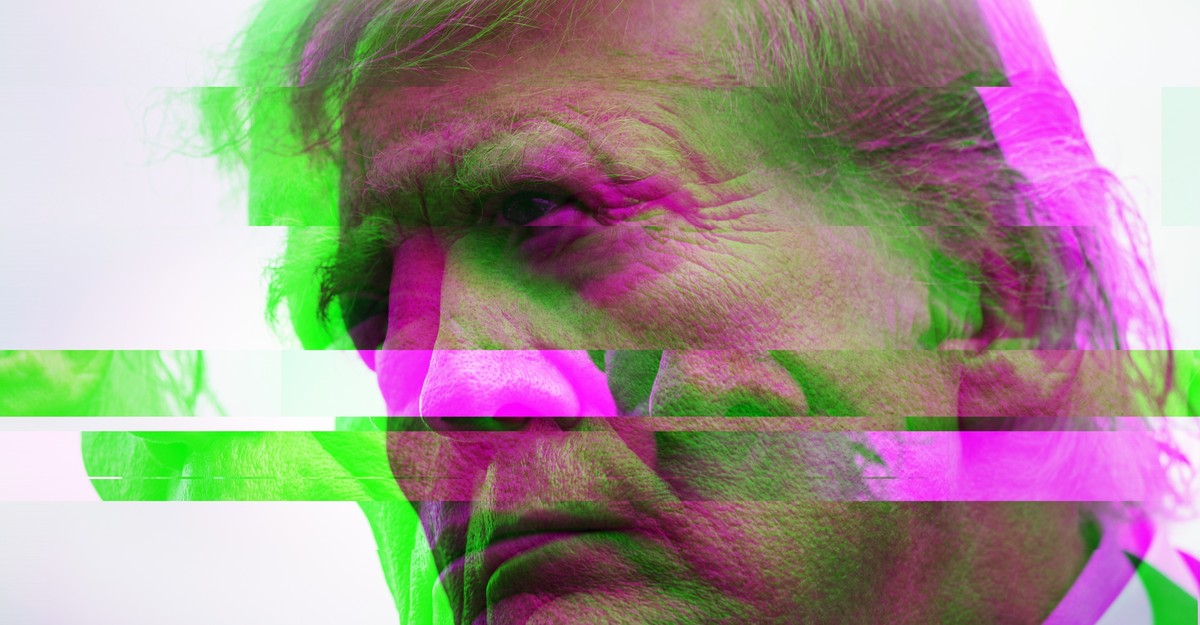
Deepfakes exploit the instinct to trust what we see, counterfeits capable of warping emotion and implanting lies.Fueled by his own delusions of grandeur—and the dark fantasies of revenge that animate him—Trump delights in doctored videos. During his first term, he tweeted footage spliced to exaggerate Nancy Pelosi’s verbal stumbles.
In his 2024 campaign, he shared an AI-generated image that suggested that Taylor Swift had endorsed him. And last month, he posted a fake clip of Chuck Schumer declaring, “Nobody likes Democrats anymore. We have no voters left because of all of our woke, trans bullshit.”The president of the United States has legitimized deepfakes as a tool of political communication.
His followers have taken the cue. Last week, the campaign arm of Senate Republicans released an AI-produced ad depicting Schumer speaking words that had appeared in a press report—not in any actual footage.As deepfakes become the common currency of social media, citizens will justifiably begin to harbor doubts about any piece of video they encounter.
But those doubts won’t yield discernment. They will simply provide another justification for the confirmation of ideological bias. Partisans will accept video footage when it upholds their preconceptions; when it does not, dismissing it as potentially manipulated will become standard practice.Jessica Yellin: The awkward adolescence of a media revolutionMembers of Trump’s administration are already deploying this tactic.
Earlier this week, Politico revealed text messages attributed to Paul Ingrassia, the president’s choice to lead the Office of Special Counsel, in which the nominee admitted to having a “Nazi streak” and unleashed a torrent of racist vituperation. (Ingrassia ultimately withdrew his nomination.) When confronted with the messages, his lawyer didn’t deny their authenticity outright but instead implied that they might have been fabricated by AI.
That claim is baseless, but the strategy isn’t. The public has largely lost faith in traditional arbiters of truth—mainstream media, religion, academia—and many citizens have cocooned themselves in the comfort of filter bubbles. Now they’ve begun to disagree about the most basic facts of shared existence, including the outcomes of an election.
At the beginning of the century, when The New York Times reported the scandalous behavior of a politician, leadership of both political parties would assume the allegation’s truth, even if Republicans might have grouched about the paper’s liberal bias. When the government released an employment report, the nation roundly regarded it as an objective reading of the economic weather.
But Trump is attempting to dismantle those institutional underpinnings of reality. In the 20th century, the federal government became the nation’s most trusted producer of facts. It tracked the economy, the spread of disease, and countless other indicators that allowed businesses to plan and citizens to make informed choices.
Trump is shattering that tradition of disinterested empiricism, bending even the information generated by the government to his will. That’s why he has fired officials—such as the head of the Bureau of Labor Statistics—who are in charge of producing objective data, and moved to replace them with loyalists.
Agencies once meant to measure reality now risk becoming instruments that manufacture it.Nancy A. Youssef: The last days of the Pentagon Press CorpsTrump is also taking steps to stifle the traditional media, which, however imperfectly, still strives to offer an objective account of events. Leveraging the government’s power to reject mergers, he pressured Paramount, CBS’s parent company, into settling a spurious lawsuit over an episode of 60 Minutes.
His administration has sent a message to corporate media that an adversarial stance toward the president will carry financial risk. At the Pentagon, Defense Secretary Pete Hegseth has imposed such onerous restrictions on the press corps that reporters have effectively been expelled from the building, an effort to prevent them from producing the kind of independent reporting that might puncture the administration’s self-serving version of events.
Years ago, Trump’s most prominent ally in Silicon Valley offered a prophetic vision of this world. Elon Musk has entertained the idea that human existence is really just a computer simulation—a virtual realm so convincingly rendered that everything becomes malleable, that reshaping the world is merely a matter of rewriting a few lines of code.
To adherents, this vision is not a nightmare but a kind of liberation. Truth can always be revised. Manipulation is the most basic fact of life. And Trump has assumed the role of the master programmer.
How this page is built
Goose Pod turns cited reporting into a public episode summary first, then pairs that summary with audio playback so listeners can check the source material before they decide how deeply to engage.
The goal is to make this page useful as a news landing page first, while still giving listeners transcript access, related episodes, and direct links back to the original publishers.