
What happened
Here is a comprehensive summary of the provided news article, interpreting its content and numerical data within the given context.
---
News Summary: Billionaires' Visions of AI, Space, and the Future of Work
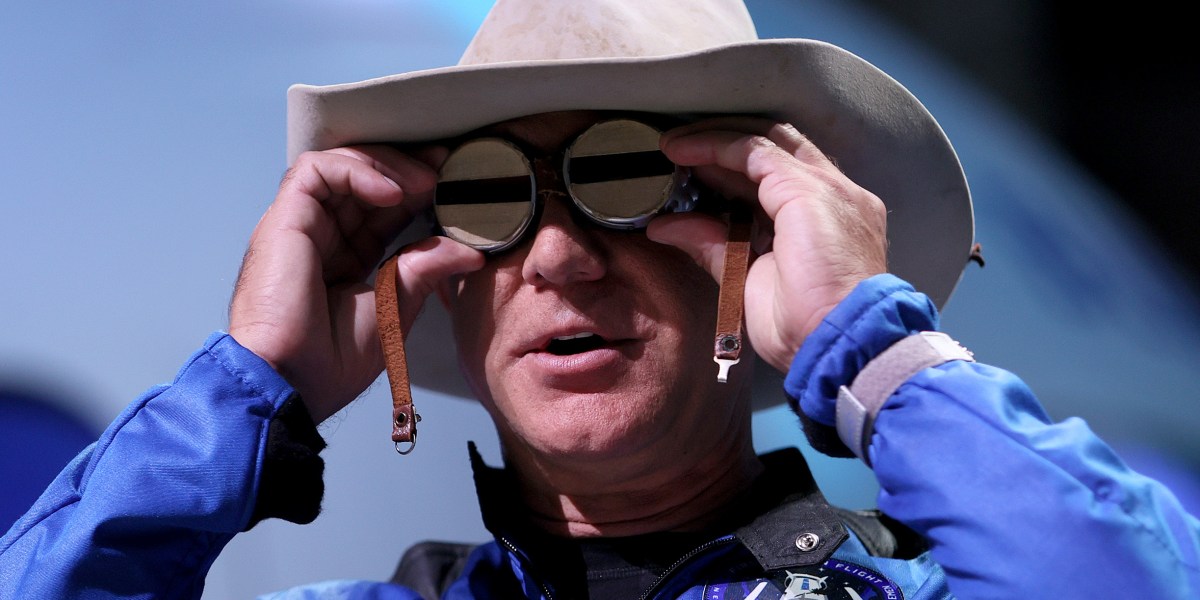
Billionaires and tech CEOs have shared two distinct views on humanity’s future when it comes to AI: Some think it’ll wipe out all jobs and spell the end of civilization as we know it, while others hope it could lead to a utopian world—and Jeff Bezos is firmly in the latter category “I don’t see how anybody can be discouraged who is alive right now,” the Amazon and Blue Origin founder said on stage at Italian Tech Week 2025, adding that there’s much to look forward to as technology advances.
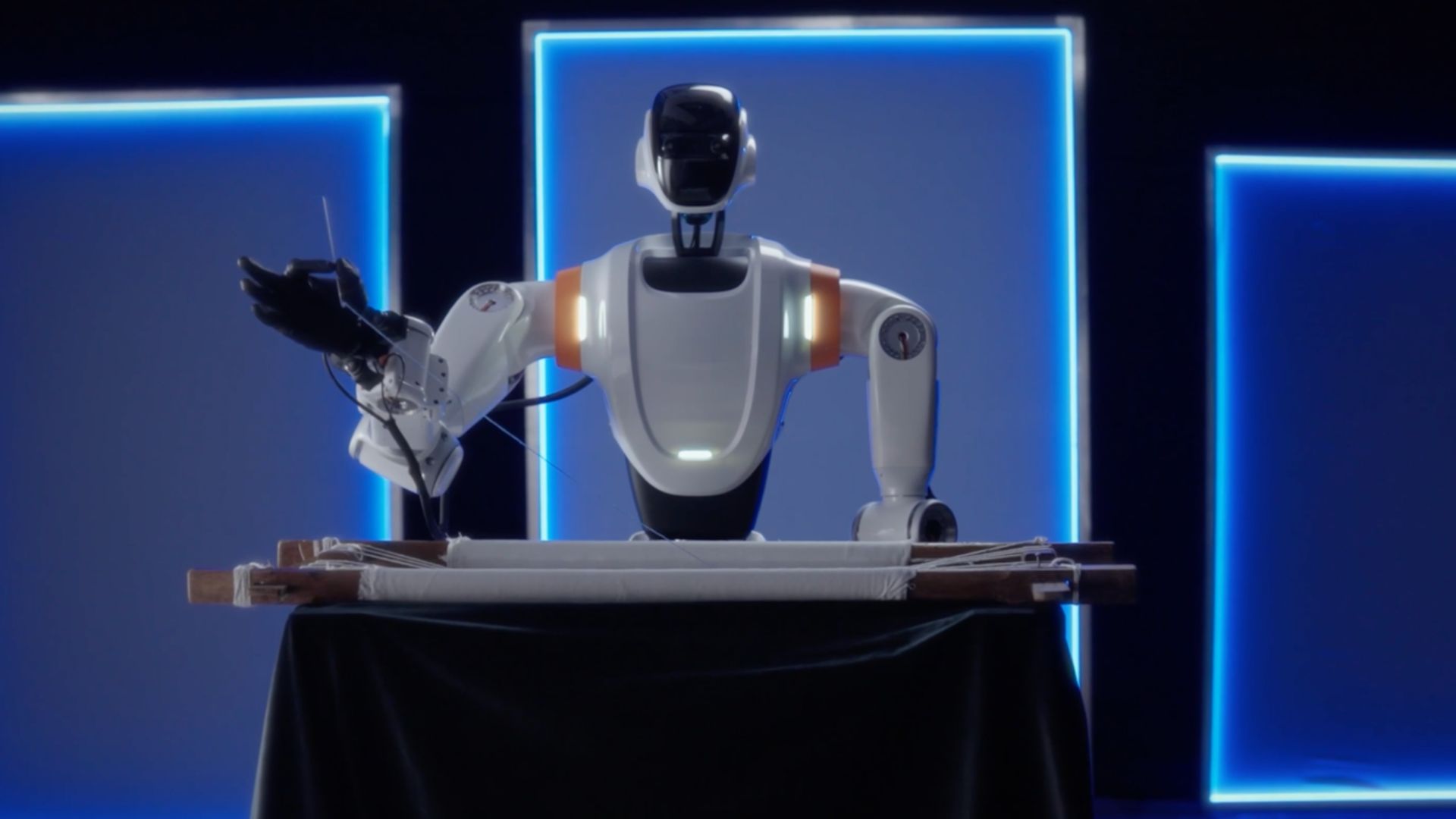
For one, no one enjoys the dreaded commute to work, and by 2045, Bezos predicts we’ll have robots to do that for us. After all, in his vision, we won’t just be commuting to work—we’ll be venturing to other planets. “In the next kind of couple of decades, I believe there will be millions of people living in space,” he said.
“That’s how fast this is going to accelerate.” “They’ll mostly be living there because they want to,” he added. “We don’t need people to live in space.” “If you need to do some work on the surface of the moon or anywhere else, we will be able to send robots to do that work, and that will be much more cost-effective than sending humans.
” And Bezos can’t wrap his head around the doom and gloom rhetoric that’s been going around since ChatGPT’s frenzied launch: “Civilizational abundance comes from our inventions,” he insisted. “So 10,000 years ago, or whenever it was, somebody invented the plough, and we all got richer…. I’m talking about all of civilization, these tools increase our abundance, and that pattern will continue.
” Sam Altman and Elon Musk predict space living is coming soon too It’s not just Jeff Bezos who predicts that you could be applying for jobs and a mortgage from another planet in the coming future, Sam Altman and Elon Musk have shared similar predictions too. In just 10 years’ time, OpenAI’s CEO Altman says college graduates will be working “some completely new, exciting, super well-paid” job in space.
The ChatGPT creator even said that he’s jealous of young people because his generation’s early-career jobs will look “boring” and “old” by comparison.Elon Musk, Tesla CEO and the richest person on the planet, has single-handedly been one of most influential leaders in pushing for 21st-century space accessibility.
After all, he’s the cofounder and CEO of $400 billion SpaceX, which has worked hand in hand with NASA to advance space exploration. He thinks humans will be on Mars as soon as 2028, with unmanned SpaceX rockets commencing lift off next year. You may also have a 2-day week to look forward to While space exploration is seemingly right around the corner, Bill Gates thinks billionaires and world leaders would be better off focusing their efforts on the planet we currently call home.
“Space? We have a lot to do here on Earth,” the Microsoft cofounder previously slammed in an interview with comedian James Corden. The philanthropic billionaire has been on the fence about how far we should push technology—he even once said if he could ask a time traveler anything, he’d want to know whether AI eventually doomed or helped humanity.
Still, on the optimistic side, Gates predicts AI could open up a new era for workers, where a 2-day workweek is the norm, machines do the hard work, and people have more time to do the things they love. Even he can see the upside in that: “If you zoom out, the purpose of life is not just to do jobs,” he said.
Source coverage
Here is a comprehensive summary of the provided news article, interpreting its content and numerical data within the given context.
---
Deeper analysis
Full source content
Billionaires and tech CEOs have shared two distinct views on humanity’s future when it comes to AI: Some think it’ll wipe out all jobs and spell the end of civilization as we know it, while others hope it could lead to a utopian world—and Jeff Bezos is firmly in the latter category “I don’t see how anybody can be discouraged who is alive right now,” the Amazon and Blue Origin founder said on stage at Italian Tech Week 2025, adding that there’s much to look forward to as technology advances.
For one, no one enjoys the dreaded commute to work, and by 2045, Bezos predicts we’ll have robots to do that for us. After all, in his vision, we won’t just be commuting to work—we’ll be venturing to other planets. “In the next kind of couple of decades, I believe there will be millions of people living in space,” he said.
“That’s how fast this is going to accelerate.” “They’ll mostly be living there because they want to,” he added. “We don’t need people to live in space.” “If you need to do some work on the surface of the moon or anywhere else, we will be able to send robots to do that work, and that will be much more cost-effective than sending humans.
” And Bezos can’t wrap his head around the doom and gloom rhetoric that’s been going around since ChatGPT’s frenzied launch: “Civilizational abundance comes from our inventions,” he insisted. “So 10,000 years ago, or whenever it was, somebody invented the plough, and we all got richer…. I’m talking about all of civilization, these tools increase our abundance, and that pattern will continue.
” Sam Altman and Elon Musk predict space living is coming soon too It’s not just Jeff Bezos who predicts that you could be applying for jobs and a mortgage from another planet in the coming future, Sam Altman and Elon Musk have shared similar predictions too. In just 10 years’ time, OpenAI’s CEO Altman says college graduates will be working “some completely new, exciting, super well-paid” job in space.
The ChatGPT creator even said that he’s jealous of young people because his generation’s early-career jobs will look “boring” and “old” by comparison.Elon Musk, Tesla CEO and the richest person on the planet, has single-handedly been one of most influential leaders in pushing for 21st-century space accessibility.
After all, he’s the cofounder and CEO of $400 billion SpaceX, which has worked hand in hand with NASA to advance space exploration. He thinks humans will be on Mars as soon as 2028, with unmanned SpaceX rockets commencing lift off next year. You may also have a 2-day week to look forward to While space exploration is seemingly right around the corner, Bill Gates thinks billionaires and world leaders would be better off focusing their efforts on the planet we currently call home.
“Space? We have a lot to do here on Earth,” the Microsoft cofounder previously slammed in an interview with comedian James Corden. The philanthropic billionaire has been on the fence about how far we should push technology—he even once said if he could ask a time traveler anything, he’d want to know whether AI eventually doomed or helped humanity.
Still, on the optimistic side, Gates predicts AI could open up a new era for workers, where a 2-day workweek is the norm, machines do the hard work, and people have more time to do the things they love. Even he can see the upside in that: “If you zoom out, the purpose of life is not just to do jobs,” he said.
How this page is built
Goose Pod turns cited reporting into a public episode summary first, then pairs that summary with audio playback so listeners can check the source material before they decide how deeply to engage.
The goal is to make this page useful as a news landing page first, while still giving listeners transcript access, related episodes, and direct links back to the original publishers.