What happened
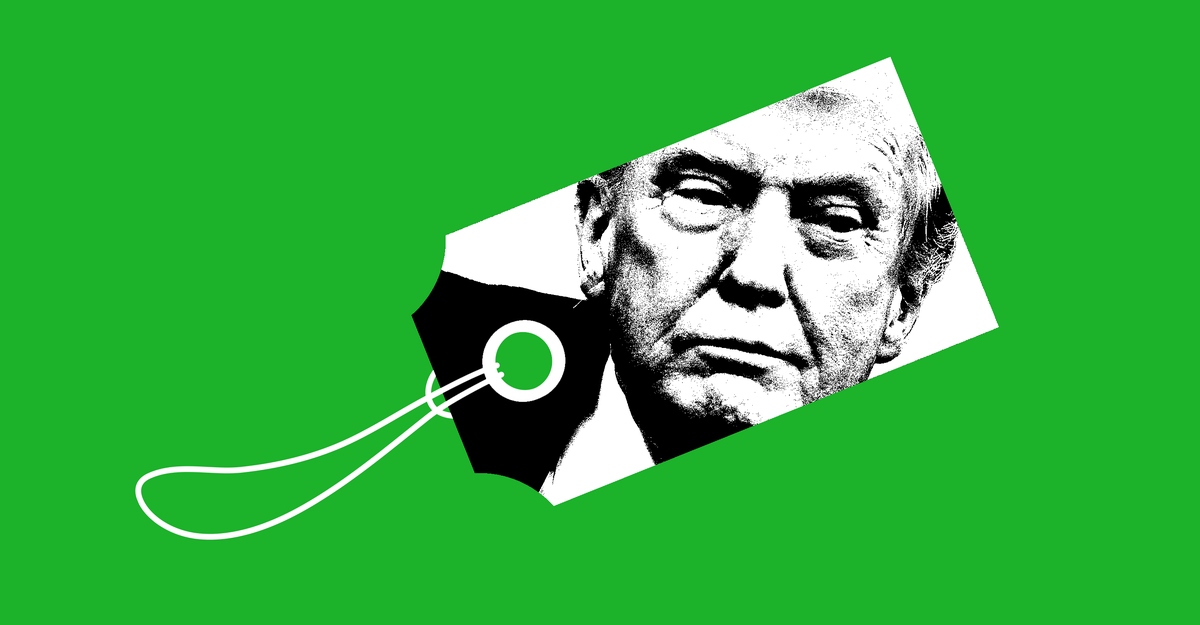
This review, published by Policy Magazine on August 11, 2025, and authored by Colin Robertson, delves into Philip Coggan's new book, "The Economic Consequences of Mr. Trump: What the Trade War Means for the World." The book offers a scathing assessment of the economic and geopolitical ramifications of Donald...
Key Findings and Conclusions:
Critiques of Trump's Tariff Policy:
The Economic Consequences of Mr. Trump: What the Trade War Means for the WorldBy Philip CogganProfile Books/July 2025Reviewed by Colin RobertsonAugust 11, 2025In his scathing new book The Economic Consequences of Mr. Trump: What the Trade War Means for the World, Philip Coggan concludes that the ultimate effect of the Trump tariffs is not just economic turmoil for allies, uncertainty for markets and financial institutions but destabilization for the entire architecture of global cooperation.
As the historian Timothy Garton Ash observes, the president “is now tearing down what remains of the edifice with unparalleled speed and recklessness.” There will be, argues Coggan, no return to what worked for 80 years in the aftermath of post Second World War rules-based multilateral institutions.
Instead, it will require a major restructuring reflective of a multipolar world of disparate and conflicting visions of any future global order.Coggan is an economist and columnist for the Financial Times, and the author of previous books including More: A History of the World Economy from the Iron Age to the Information Age and Economics: The Economist Guide.
He draws his latest title from John Maynard Keynes 1925′ take-down polemic on then Chancellor of the Exchequer Winston Churchill’s decision to return the United Kingdom to the gold standard. One of the great policy mistakes of the 20th century, it ushered in deflation and a general strike.In his assessment of the Trump tariffs, Coggan evokes satirist and journalist H.
L. Mencken’s observation that “For every complex problem there is an answer that is clear, simple and wrong.”The new Art of the Deal, writes Coggan, comes down to understanding that Donald Trump makes excessive demands forcing the other party to “show him the money in investment pledges or pay high tariffs.
”Coggan points out the many flaws in Trump’s tariff policy:First, tariffs are paid by the importer, not by the exporter. The Cato Institute concluded that tariffs imposed in 2018 and 2019 by Trump were almost entirely passed on to US consumers. This ultimately means lower profits, and therefore, lost jobs and slower wage growth.
And when bond yields rise, the US government must pay more to service its debt, worsening its already astronomical $1.3 trillion budget deficit.The April 2nd ‘Liberation Day’ tariffs were calculated by dividing the amount of goods a country exported to the US by its trade deficit: a formula Coggan calls ‘simplistic and stupid’.
In his assessment of the Trump tariffs, Coggan evokes satirist and journalist H.L. Mencken’s observation that ‘For every complex problem there is an answer that is clear, simple and wrong.’Second, the loss of jobs in US manufacturing is not because of trade deficits but, as anyone visiting a modern manufacturing plant will see, technology that has automated what was once done by workers.
Third, the US trade deficit is not the result of other countries ‘cheating’. He points out that foreign countries fund the buying of US Treasury bonds and equities or investment in US enterprise. And, as Paul Krugman has pointed out, an increase in foreign investment into the US usually increases the US capital account surplus, offsetting the current account deficit.
For Trump, his ‘beautiful tariffs’ are a means to raise the revenue he needs to pay for the tax cuts contained in his ‘big, beautiful bill’.Canada, China and Mexico were the obvious targets because they are America’s top three trading partners. The belief that tariffs can fund government like they did in the age of McKinley, one of Trump’s favourite ex-presidents, is farcical.
There was no social security, Medicare or other welfare spending and, in 1899, US defense spending represented approximately 1.6% of US GDP versus 3.4% today.But tariffs as a revenue source are likely to stick as future administrations and Congress both desperately look for revenue sources.Trump is right about China gaming the system, says Coggan, but the way to take on China is to work with the allies.
Instead, Trump has alienated them with his shakedown on defence spending and weaponization of tariffs. Their use for non-trade punitive purposes — think sanctioning India on its purchase of Russian oil, forcing Colombia to take deportees — is a radical departure from longstanding norms.Trump’s approach, says Coggan, is mercantilism — a belief that exports are good and imports are bad and that trade surpluses are optimal, which was demolished by Adam Smith in 1776.
Or, as George F. Will recently told Bill Maher, “I have a chronic, incurable trade deficit with my barber. Once a month I buy a haircut from her, she buys nothing from me.”In electing Trump for a second term, Americans now face the consequences. Curbing immigration and deporting migrants is cutting off the flow of those seeking a better life and prepared to take risks to achieve it.
Igniting the culture wars with universities puts at risk the development of ideas and innovation necessary to win the race on artificial intelligence, the space race of our time.Meanwhile, spin it as he wants, tariffs are taxes that will stimulate inflation, disproportionately afflicting lower-income Americans, further exacerbating growing inequality.
For the democracies, Trump’s tariff war signals the end of the American-designed and led rules-based order and a globalization based on a freer flow of goods, services and ideas.Prime Minister Mark Carney, writes Coggan, best sums up our current situation: “The system of global trade anchored on the United States is over.
The 80-year period when the United States embraced the mantle of global economic leadership is over. While this is a tragedy, it is also the new reality.”Contributing Writer Colin Robertson, a former career diplomat, is a fellow and host of the Global Exchange podcast with the Canadian Global Affairs Institute in Ottawa.
Source coverage
This review, published by Policy Magazine on August 11, 2025, and authored by Colin Robertson, delves into Philip Coggan's new book, "The Economic Consequences of Mr. Trump: What the Trade War Means for the World." The book offers a scathing assessment of the economic and geopolitical ramifications of Donald...
Key Findings and Conclusions:
Deeper analysis
Full source content
The Economic Consequences of Mr. Trump: What the Trade War Means for the WorldBy Philip CogganProfile Books/July 2025Reviewed by Colin RobertsonAugust 11, 2025In his scathing new book The Economic Consequences of Mr. Trump: What the Trade War Means for the World, Philip Coggan concludes that the ultimate effect of the Trump tariffs is not just economic turmoil for allies, uncertainty for markets and financial institutions but destabilization for the entire architecture of global cooperation.
As the historian Timothy Garton Ash observes, the president “is now tearing down what remains of the edifice with unparalleled speed and recklessness.” There will be, argues Coggan, no return to what worked for 80 years in the aftermath of post Second World War rules-based multilateral institutions.
Instead, it will require a major restructuring reflective of a multipolar world of disparate and conflicting visions of any future global order.Coggan is an economist and columnist for the Financial Times, and the author of previous books including More: A History of the World Economy from the Iron Age to the Information Age and Economics: The Economist Guide.
He draws his latest title from John Maynard Keynes 1925′ take-down polemic on then Chancellor of the Exchequer Winston Churchill’s decision to return the United Kingdom to the gold standard. One of the great policy mistakes of the 20th century, it ushered in deflation and a general strike.In his assessment of the Trump tariffs, Coggan evokes satirist and journalist H.
L. Mencken’s observation that “For every complex problem there is an answer that is clear, simple and wrong.”The new Art of the Deal, writes Coggan, comes down to understanding that Donald Trump makes excessive demands forcing the other party to “show him the money in investment pledges or pay high tariffs.
”Coggan points out the many flaws in Trump’s tariff policy:First, tariffs are paid by the importer, not by the exporter. The Cato Institute concluded that tariffs imposed in 2018 and 2019 by Trump were almost entirely passed on to US consumers. This ultimately means lower profits, and therefore, lost jobs and slower wage growth.
And when bond yields rise, the US government must pay more to service its debt, worsening its already astronomical $1.3 trillion budget deficit.The April 2nd ‘Liberation Day’ tariffs were calculated by dividing the amount of goods a country exported to the US by its trade deficit: a formula Coggan calls ‘simplistic and stupid’.
In his assessment of the Trump tariffs, Coggan evokes satirist and journalist H.L. Mencken’s observation that ‘For every complex problem there is an answer that is clear, simple and wrong.’Second, the loss of jobs in US manufacturing is not because of trade deficits but, as anyone visiting a modern manufacturing plant will see, technology that has automated what was once done by workers.
Third, the US trade deficit is not the result of other countries ‘cheating’. He points out that foreign countries fund the buying of US Treasury bonds and equities or investment in US enterprise. And, as Paul Krugman has pointed out, an increase in foreign investment into the US usually increases the US capital account surplus, offsetting the current account deficit.
For Trump, his ‘beautiful tariffs’ are a means to raise the revenue he needs to pay for the tax cuts contained in his ‘big, beautiful bill’.Canada, China and Mexico were the obvious targets because they are America’s top three trading partners. The belief that tariffs can fund government like they did in the age of McKinley, one of Trump’s favourite ex-presidents, is farcical.
There was no social security, Medicare or other welfare spending and, in 1899, US defense spending represented approximately 1.6% of US GDP versus 3.4% today.But tariffs as a revenue source are likely to stick as future administrations and Congress both desperately look for revenue sources.Trump is right about China gaming the system, says Coggan, but the way to take on China is to work with the allies.
Instead, Trump has alienated them with his shakedown on defence spending and weaponization of tariffs. Their use for non-trade punitive purposes — think sanctioning India on its purchase of Russian oil, forcing Colombia to take deportees — is a radical departure from longstanding norms.Trump’s approach, says Coggan, is mercantilism — a belief that exports are good and imports are bad and that trade surpluses are optimal, which was demolished by Adam Smith in 1776.
Or, as George F. Will recently told Bill Maher, “I have a chronic, incurable trade deficit with my barber. Once a month I buy a haircut from her, she buys nothing from me.”In electing Trump for a second term, Americans now face the consequences. Curbing immigration and deporting migrants is cutting off the flow of those seeking a better life and prepared to take risks to achieve it.
Igniting the culture wars with universities puts at risk the development of ideas and innovation necessary to win the race on artificial intelligence, the space race of our time.Meanwhile, spin it as he wants, tariffs are taxes that will stimulate inflation, disproportionately afflicting lower-income Americans, further exacerbating growing inequality.
For the democracies, Trump’s tariff war signals the end of the American-designed and led rules-based order and a globalization based on a freer flow of goods, services and ideas.Prime Minister Mark Carney, writes Coggan, best sums up our current situation: “The system of global trade anchored on the United States is over.
The 80-year period when the United States embraced the mantle of global economic leadership is over. While this is a tragedy, it is also the new reality.”Contributing Writer Colin Robertson, a former career diplomat, is a fellow and host of the Global Exchange podcast with the Canadian Global Affairs Institute in Ottawa.
How this page is built
Goose Pod turns cited reporting into a public episode summary first, then pairs that summary with audio playback so listeners can check the source material before they decide how deeply to engage.
The goal is to make this page useful as a news landing page first, while still giving listeners transcript access, related episodes, and direct links back to the original publishers.