
What happened
Boeing's Starliner spacecraft will fly an uncrewed cargo mission in April 2026 after significant technical failures, including thruster issues and helium leaks, delayed its crewed flights. NASA reduced the contract from six to four guaranteed crewed missions, highlighting concerns about Boeing's reliability and...
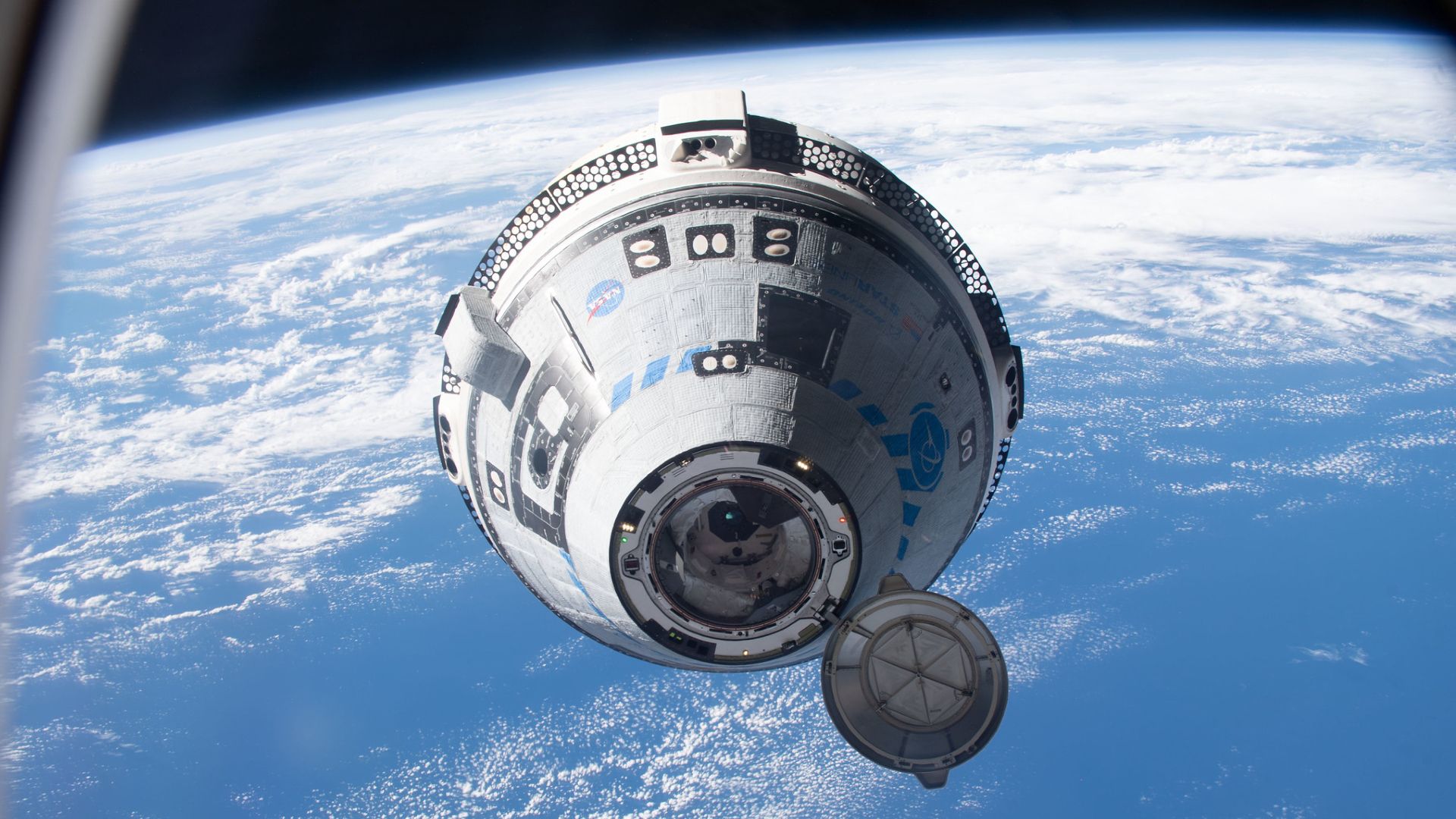
A Boeing Starliner spacecraft approaches the International Space Station during a test flight. (Image credit: NASA) Over a decade ago, NASA picked Boeing to fly astronauts to and from the International Space Station, agreeing to pay billions of dollars for up to a half-dozen crewed flights. Some of those flights, it turns out, may not happen, and the next Starliner to fly won't carry any astronauts at all.
NASA on Monday (Nov. 24) announced that Boeing's next Starliner mission to the International Space Station (ISS) will carry only cargo and supplies, and no crew. It will launch no earlier than April 2026, the agency said in a statement.NASA and Boeing also agreed to reduce the number of crewed flights to the space station by Starliner by at least two missions.
That means that instead of the up to six Starliner crew rotation flights Boeing agreed to fly for NASA under a $4.2 billion contract set in 2014, the company will only have to fly up to four missions, with "the remaining two available as options," NASA said.The news comes as Boeing works to resume Starliner crew flights after its beleaguered Crew Flight Test 1.
That mission launched two NASA astronauts — Butch Wilmore and Sunita Williams — to the International Space Station (ISS) on the first crewed Starliner in 2024, only to return to Earth without them due to thruster system concerns.Wilmore and Williams originally planned to spend 10 days in space, but eventually spent more than nine months in orbit while waiting for a ride home on a Dragon spacecraft built by Boeing's competitor SpaceX.
(SpaceX has its own multi-billion dollar contract to fly NASA astronauts to and from the ISS, and has done so regularly since 2020.) The Starliner astronauts returned to Earth in March 2025, more than six months after the Starliner capsule landed on its own in September 2024. Boeing's Starliner Crew Flight Test launches (Image credit: United Launch Alliance)Since Starliner's landing, Boeing engineers have worked to address thruster system issues in order to begin operational crewed flights under its NASA contract.
The delays for crewed Starliner flights followed years of delays after the company's first uncrewed Starliner test flight failed to meet up with the ISS as planned in December 2019, which ultimately led to a second uncrewed test in May 2022 ahead of the star-crossed crewed test flight in 2024.Breaking space news, the latest updates on rocket launches, skywatching events and more!"
NASA and Boeing are continuing to rigorously test the Starliner propulsion system in preparation for two potential flights next year," Steve Stich, NASA's Commercial Crew Program manager, said in the statement on Monday. "This modification allows NASA and Boeing to focus on safely certifying the system in 2026, execute Starliner’s first crew rotation when ready, and align our ongoing flight planning for future Starliner missions based on station's operational needs through 2030."
NASA currently plans to retire the International Space Station in 2030, marking the end of what will by then be 30 years of continuous crewed operations. The 450-ton space station will be commanded to deorbit and burn up over the Pacific Ocean. Huge pieces of it are expected to survive long enough to plunge into a watery grave known as Point Nemo, a spacecraft graveyard in the Pacific.
Tariq is the award-winning Editor-in-Chief of Space.com and joined the team in 2001. He covers human spaceflight, as well as skywatching and entertainment. He became Space.com's Editor-in-Chief in 2019. Before joining Space.com, Tariq was a staff reporter for The Los Angeles Times covering education and city beats in La Habra, Fullerton and Huntington Beach.
He's a recipient of the 2022 Harry Kolcum Award for excellence in space reporting and the 2025 Space Pioneer Award from the National Space Society. He is an Eagle Scout and Space Camp alum with journalism degrees from the USC and NYU. You can find Tariq at Space.com and as the co-host to the This Week In Space podcast on the TWiT network.
To see his latest project, you can follow Tariq on Twitter @tariqjmalik.
Source coverage
As of November 25, 2025 (the publication date of this news), things have shifted significantly for the Starliner program. The next mission, planned for no earlier than April 2026, is going to be cargo-only. That's a major change. And on top of that, NASA and Boeing have reduced the guaranteed number of crewed...
The driving force behind these changes is the issues encountered during the Crew Flight Test (CFT) 1 in 2024. Remember Butch Wilmore and Sunita Williams? They got stuck up there for over nine months because of problems with the Starliner's thruster system. They were supposed to be on a 10-day mission, ended up...
Deeper analysis
Full source content
A Boeing Starliner spacecraft approaches the International Space Station during a test flight. (Image credit: NASA) Over a decade ago, NASA picked Boeing to fly astronauts to and from the International Space Station, agreeing to pay billions of dollars for up to a half-dozen crewed flights. Some of those flights, it turns out, may not happen, and the next Starliner to fly won't carry any astronauts at all.
NASA on Monday (Nov. 24) announced that Boeing's next Starliner mission to the International Space Station (ISS) will carry only cargo and supplies, and no crew. It will launch no earlier than April 2026, the agency said in a statement.NASA and Boeing also agreed to reduce the number of crewed flights to the space station by Starliner by at least two missions.
That means that instead of the up to six Starliner crew rotation flights Boeing agreed to fly for NASA under a $4.2 billion contract set in 2014, the company will only have to fly up to four missions, with "the remaining two available as options," NASA said.The news comes as Boeing works to resume Starliner crew flights after its beleaguered Crew Flight Test 1.
That mission launched two NASA astronauts — Butch Wilmore and Sunita Williams — to the International Space Station (ISS) on the first crewed Starliner in 2024, only to return to Earth without them due to thruster system concerns.Wilmore and Williams originally planned to spend 10 days in space, but eventually spent more than nine months in orbit while waiting for a ride home on a Dragon spacecraft built by Boeing's competitor SpaceX.
(SpaceX has its own multi-billion dollar contract to fly NASA astronauts to and from the ISS, and has done so regularly since 2020.) The Starliner astronauts returned to Earth in March 2025, more than six months after the Starliner capsule landed on its own in September 2024. Boeing's Starliner Crew Flight Test launches (Image credit: United Launch Alliance)Since Starliner's landing, Boeing engineers have worked to address thruster system issues in order to begin operational crewed flights under its NASA contract.
The delays for crewed Starliner flights followed years of delays after the company's first uncrewed Starliner test flight failed to meet up with the ISS as planned in December 2019, which ultimately led to a second uncrewed test in May 2022 ahead of the star-crossed crewed test flight in 2024.Breaking space news, the latest updates on rocket launches, skywatching events and more!"
NASA and Boeing are continuing to rigorously test the Starliner propulsion system in preparation for two potential flights next year," Steve Stich, NASA's Commercial Crew Program manager, said in the statement on Monday. "This modification allows NASA and Boeing to focus on safely certifying the system in 2026, execute Starliner’s first crew rotation when ready, and align our ongoing flight planning for future Starliner missions based on station's operational needs through 2030."
NASA currently plans to retire the International Space Station in 2030, marking the end of what will by then be 30 years of continuous crewed operations. The 450-ton space station will be commanded to deorbit and burn up over the Pacific Ocean. Huge pieces of it are expected to survive long enough to plunge into a watery grave known as Point Nemo, a spacecraft graveyard in the Pacific.
Tariq is the award-winning Editor-in-Chief of Space.com and joined the team in 2001. He covers human spaceflight, as well as skywatching and entertainment. He became Space.com's Editor-in-Chief in 2019. Before joining Space.com, Tariq was a staff reporter for The Los Angeles Times covering education and city beats in La Habra, Fullerton and Huntington Beach.
He's a recipient of the 2022 Harry Kolcum Award for excellence in space reporting and the 2025 Space Pioneer Award from the National Space Society. He is an Eagle Scout and Space Camp alum with journalism degrees from the USC and NYU. You can find Tariq at Space.com and as the co-host to the This Week In Space podcast on the TWiT network.
To see his latest project, you can follow Tariq on Twitter @tariqjmalik.
How this page is built
Goose Pod turns cited reporting into a public episode summary first, then pairs that summary with audio playback so listeners can check the source material before they decide how deeply to engage.
The goal is to make this page useful as a news landing page first, while still giving listeners transcript access, related episodes, and direct links back to the original publishers.