
What happened
Here is a comprehensive summary of the news article from The Motley Fool regarding Nvidia's future stock price potential:
---
News Summary: Nvidia's AI Dominance and Future Stock Price Projection
The artificial intelligence (AI) chipmaker is riding a massive secular tailwind that has only just begun. Perhaps as much as any other company, Nvidia (NVDA 0.86%) has ridden the wave of artificial intelligence (AI) adoption to new heights, becoming the world's largest company by market cap in the process.
The company pioneered the graphics processing unit (GPU), which provide the computational horsepower that underpins AI. Many experts believe it's still early innings for AI, and the opportunity is vast. Since the dawn of AI in early 2023, Nvidia stock has risen 1,150% (as of this writing), sending some investors to the sidelines.
Yet, most experts believe AI adoption will continue for years to come. What does this mean for investors, and how high could the AI chipmaker climb from here? Let's review the available evidence to determine what Nvidia's stock price could be by 2030. Image source: Nvidia. Powering data through the ether The humble GPU was originally designed to bring video game images to life.
Parallel processing was the technological breakthrough that made this possible. Simply put, by breaking down enormous computing tasks into smaller, more manageable bits, processing speed increased multifold, thereby rendering lifelike images, which simply wasn't possible using the previously available technology.
Nvidia applied this next-generation technology to solve other computing conundrums, including machine learning (an earlier branch of AI), cryptocurrency mining, and laying the foundation for self-driving cars. However, it's the tidal wave of data center spending that will bring AI to the masses. Even after capital expenditures (capex) spending hit new highs this year, 2026 is poised to be another record-setting year for cloud providers.
It's estimated that Nvidia's biggest customers -- Microsoft, Meta Platforms, Alphabet, and Amazon -- have earmarked a whopping $454 billion for capex in 2026, an increase of 26% -- and most of that spending will support their respective AI ambitions. Nvidia controls a dominant 92% share of the data center GPU market, according to IoT Analytics, so it will likely attract the lion's share of that spending.
Don't take my word for it. CEO Jensen Huang revealed during the company's earnings conference call that Nvidia would capture roughly 58% of the infrastructure spending for data centers, when you include semiconductors, accelerators, GPUs, and turnkey AI supercomputers. With overall data center spending expected to climb to between $3 trillion and $4 trillion by 2030, Nvidia could pocket as much as $1.
74 trillion within five years. Fun with numbers While Nvidia has been the undisputed leader in the data center space, competition is ramping up, and some rivals are coming into their own. In the interest of conservatism, let's look to the past for some much-needed context. Global data center spending reached roughly $455 billion in 2024, according to market research firm Dell'Oro Group.
For its fiscal 2025 (ended Jan. 26), Nvidia generated data center revenue of $115 billion, which works out to about 25% of global data center spending that year. If data center infrastructure spending reaches $3 trillion within five years (the low end of Huang's range), Nvidia could generate $750 billion in data center revenue annually by 2030, an increase of 552% within five years.
Nvidia boasts a market cap of roughly $4.4 trillion and has a forward price-to-sales (P/S) ratio of 21 (as of this writing). Assuming its P/S remains constant, and if Nvidia were to generate $750 billion in revenue (a tall order), its stock price could jump 263% to $663 per share, pushing the company's market cap to $16.
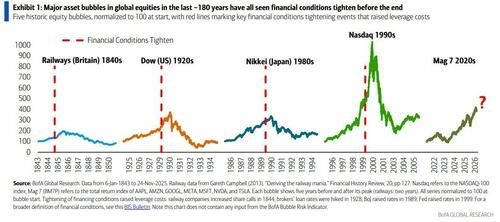
2 trillion. The fine print It's important to keep in mind that this is a thought exercise and fun with numbers. Reality is messy, and plenty can go wrong over the course of five years. Customers could begin sourcing GPUs from rivals (which has already begun, to some extent). Predictions of an AI bubble could prove to be true.
The economy could turn south, which could stifle AI spending. However, don't miss the forest for the trees. Nvidia's GPUs are the gold standard for AI processing and the choice of most top developers. AI promises a windfall of efficiency improvements, and most enterprises are scrambling to carve out their piece of the profits.
So even if Huang's estimates are off, they are likely directionally accurate, meaning Nvidia has a long runway for growth ahead. Furthermore, Nvidia has an attractive valuation, selling for just 29 times next year's expected earnings. Given the size of the opportunity and Nvidia's place in the AI ecosystem, I think that's a fair price to pay for the industry leader.
Danny Vena has positions in Alphabet, Amazon, Meta Platforms, Microsoft, and Nvidia. The Motley Fool has positions in and recommends Alphabet, Amazon, Meta Platforms, Microsoft, and Nvidia. The Motley Fool recommends the following options: long January 2026 $395 calls on Microsoft and short January 2026 $405 calls on Microsoft.
The Motley Fool has a disclosure policy.
Source coverage
Here is a comprehensive summary of the news article from The Motley Fool regarding Nvidia's future stock price potential:
---
Deeper analysis
Full source content
The artificial intelligence (AI) chipmaker is riding a massive secular tailwind that has only just begun. Perhaps as much as any other company, Nvidia (NVDA 0.86%) has ridden the wave of artificial intelligence (AI) adoption to new heights, becoming the world's largest company by market cap in the process.
The company pioneered the graphics processing unit (GPU), which provide the computational horsepower that underpins AI. Many experts believe it's still early innings for AI, and the opportunity is vast. Since the dawn of AI in early 2023, Nvidia stock has risen 1,150% (as of this writing), sending some investors to the sidelines.
Yet, most experts believe AI adoption will continue for years to come. What does this mean for investors, and how high could the AI chipmaker climb from here? Let's review the available evidence to determine what Nvidia's stock price could be by 2030. Image source: Nvidia. Powering data through the ether The humble GPU was originally designed to bring video game images to life.
Parallel processing was the technological breakthrough that made this possible. Simply put, by breaking down enormous computing tasks into smaller, more manageable bits, processing speed increased multifold, thereby rendering lifelike images, which simply wasn't possible using the previously available technology.
Nvidia applied this next-generation technology to solve other computing conundrums, including machine learning (an earlier branch of AI), cryptocurrency mining, and laying the foundation for self-driving cars. However, it's the tidal wave of data center spending that will bring AI to the masses. Even after capital expenditures (capex) spending hit new highs this year, 2026 is poised to be another record-setting year for cloud providers.
It's estimated that Nvidia's biggest customers -- Microsoft, Meta Platforms, Alphabet, and Amazon -- have earmarked a whopping $454 billion for capex in 2026, an increase of 26% -- and most of that spending will support their respective AI ambitions. Nvidia controls a dominant 92% share of the data center GPU market, according to IoT Analytics, so it will likely attract the lion's share of that spending.
Don't take my word for it. CEO Jensen Huang revealed during the company's earnings conference call that Nvidia would capture roughly 58% of the infrastructure spending for data centers, when you include semiconductors, accelerators, GPUs, and turnkey AI supercomputers. With overall data center spending expected to climb to between $3 trillion and $4 trillion by 2030, Nvidia could pocket as much as $1.
74 trillion within five years. Fun with numbers While Nvidia has been the undisputed leader in the data center space, competition is ramping up, and some rivals are coming into their own. In the interest of conservatism, let's look to the past for some much-needed context. Global data center spending reached roughly $455 billion in 2024, according to market research firm Dell'Oro Group.
For its fiscal 2025 (ended Jan. 26), Nvidia generated data center revenue of $115 billion, which works out to about 25% of global data center spending that year. If data center infrastructure spending reaches $3 trillion within five years (the low end of Huang's range), Nvidia could generate $750 billion in data center revenue annually by 2030, an increase of 552% within five years.
Nvidia boasts a market cap of roughly $4.4 trillion and has a forward price-to-sales (P/S) ratio of 21 (as of this writing). Assuming its P/S remains constant, and if Nvidia were to generate $750 billion in revenue (a tall order), its stock price could jump 263% to $663 per share, pushing the company's market cap to $16.
2 trillion. The fine print It's important to keep in mind that this is a thought exercise and fun with numbers. Reality is messy, and plenty can go wrong over the course of five years. Customers could begin sourcing GPUs from rivals (which has already begun, to some extent). Predictions of an AI bubble could prove to be true.
The economy could turn south, which could stifle AI spending. However, don't miss the forest for the trees. Nvidia's GPUs are the gold standard for AI processing and the choice of most top developers. AI promises a windfall of efficiency improvements, and most enterprises are scrambling to carve out their piece of the profits.
So even if Huang's estimates are off, they are likely directionally accurate, meaning Nvidia has a long runway for growth ahead. Furthermore, Nvidia has an attractive valuation, selling for just 29 times next year's expected earnings. Given the size of the opportunity and Nvidia's place in the AI ecosystem, I think that's a fair price to pay for the industry leader.
Danny Vena has positions in Alphabet, Amazon, Meta Platforms, Microsoft, and Nvidia. The Motley Fool has positions in and recommends Alphabet, Amazon, Meta Platforms, Microsoft, and Nvidia. The Motley Fool recommends the following options: long January 2026 $395 calls on Microsoft and short January 2026 $405 calls on Microsoft.
The Motley Fool has a disclosure policy.
How this page is built
Goose Pod turns cited reporting into a public episode summary first, then pairs that summary with audio playback so listeners can check the source material before they decide how deeply to engage.
The goal is to make this page useful as a news landing page first, while still giving listeners transcript access, related episodes, and direct links back to the original publishers.