
What happened
Report Provider: BankInfoSecurity.com
Author: Rahul Neel Mani
Publication Date: July 28, 2025
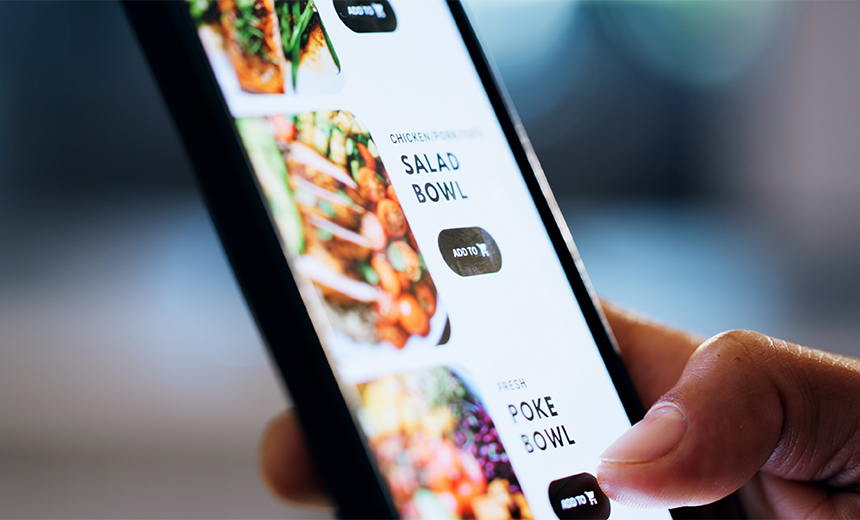
Artificial Intelligence & Machine Learning,Next-Generation Technologies & Secure DevelopmentHow AI, Automation and Real-Time Data Are Scaling Global Food Delivery(@rneelmani) •July 28, 2025 Image: Shutterstock The food delivery business has always promised convenience, but lately, it has become something far more ambitious.
It is acting as a stress test for technology adoption at scale. Globally, the biggest names in the industry, including Meituan, Uber Eats, DoorDash, Swiggy and Zomato, are evolving into platforms and orchestration engines that manage not only food delivery but also fleets, forecasts, fraud detection and fulfillment.
See Also: Ping Identity: Trust Every Digital MomentWith the online food delivery market projected to reach $1.39 trillion in 2025, food delivery services are redefining how automation, artificial intelligence and real-time analytics converge to create a cohesive digital ecosystem.Customer Experience: From Personalization to PresenceWith over 2.
5 billion users expected to use these platforms by 2030, the competition has shifted from simply offering menus to providing overall customer experience and hyperlocalization. Both leaders and challengers are creating a highly personalized, ambient and integrated approach. Machine learning-powered recommendation engines now suggest meals not only based on customers' order history but also considering the time of day, weather and even social sentiment.
Domino's has expanded its vision with AnyWare, enabling customers to place orders through voice assistants, smartwatches or gaming consoles. Behind its success in delivering over 1.5 million pizza orders daily is a robust tech foundation. One of these initiatives is "The Voice of the Pizza" by AI pioneer Databricks, which uses generative AI to analyze feedback from the Domino's subreddit, providing actionable insights that help improve service quality and product offerings.
It aids in assessing customer sentiment and identifying emerging trends and themes.Netherlands-based food delivery app Just Eat Takeaway, which tested in-car ordering interfaces in 2023, turning vehicles into responsive touchpoints, has now partnered with drone operator Manna to launch drone-based deliveries.
It has introduced its AI assistant chatbot, which enables text orders, provides personalized recommendations, summarizes reviews and directs users to customer support. It also utilizes an AI tool that reduces partner onboarding time by approximately 50% by shortening menu upload duration.These successful innovations reflect a shift toward reducing friction and increasing contextual awareness, enabling faster and more engaging customer service.
Personalization, however, has pitfalls. Zomato and Swiggy, two of India's leading food delivery platforms, have sometimes faced issues with relevance, such as serving non-vegan options to vegan users due to gaps in preference tagging or simple drift in AI models. This highlights that customer experience depends on consistency and accuracy just as much as on speed.
But implementing technology requires a foolproof architecture and rigorous testing before going into production.Automation and Intelligence: Systems That Think and DecideAutomation impacts almost every aspect of the tech stack, and food delivery is no exception. From voice-activated ordering to demand forecasting and autonomous routing, everything is becoming automated.
For example, China's Meituan, with a market share of over 65%, manages hundreds of millions of transactions. Meituan uses AI to optimize food delivery, handling over 10 million orders daily with predictive analytics that forecast demand with 95% accuracy. Its innovations, such as computer vision quality checks and multilingual voice support, have reduced operational costs by 18%.
These advancements have also led to a 22-point increase in customer satisfaction, helping Meituan remain competitive.Chinese technology and commerce company Meituan's AI usage model for faster deliveryDoorDash, the leading food delivery app in the United States and operating in over 30 countries, has more than 37 million monthly active users and processed $20 billion in gross order value in Q3 2024.
Last year, the company launched an AI-powered feature called SafeChat+ to improve safety during in-app conversations between customers and delivery drivers. The system utilizes natural language processing to detect and flag abusive or inappropriate language in real time across multiple languages.Supply Chain and Last-Mile Delivery: Where Scale Meets StressThe most visible and challenging arena for food delivery apps is last-mile delivery.
Getting food or groceries to customers in under 30 minutes is no longer a differentiator; it's an expectation.Uber Eats, a leading U.S. food delivery service with about 23% market share, has partnered with Avride to use small, four-wheeled robots for last-mile deliveries. These robots have secure cargo compartments accessible only through the Uber Eats app.
Designed with privacy in mind, the robots do not store personal data such as payment details or delivery addresses. They gather anonymized sensor data, used solely for technological improvements, and blur faces and license plates to ensure privacy.Berlin, Germany-based Delivery Hero boosted its logistics efficiency by utilizing AWS-powered route optimization to enhance middle-mile operations.
The system calculates vehicle routes between warehouses and dark stores in real time, leading to a 24% cut in transportation costs and a 22% decrease in driving distances. It also improved fleet utilization from 81% to 96%, increasing the timeliness and reliability of last-mile deliveries through more effective inventory placement and availability.
Innovation at the Edge: Drones, Bots and IoT InterfacesFood delivery is also becoming a real-time test of frontier innovation. Meituan's drone network, already operating in several Chinese districts, delivers meals within as little as 20 minutes. These drones use computer vision and reinforcement learning to autonomously adjust their flight paths in crowded urban areas.
Meituan's drone delivery process diagramBy mid-2024, Meituan had established more than 30 drone routes through the low-altitude network. As of October 2024, data from Meituan's official website shows over 400 patents related to Meituan drones and more than 300,000 completed delivery orders.Uber Eats and Deliveroo are conducting similar sidewalk robot trials in Western markets, exploring how autonomous navigation handles unpredictable pedestrian zones.
Beyond delivery, innovation has expanded to the customer interface. Domino's is creating experiences that predict customer intent by integrating ordering options into everyday touchpoints, lowering the number of clicks and substituting them with voice commands, gestures or even car sensors.The goal is to develop systems that appear seamless to users but are inherently complex.
These systems seamlessly manage data ingestion, network orchestration, AI inference and human fallback processes all at once.Resilience and Risk: Learning From FailureAmid all the hype, the last two years have shown how fragile scaled tech systems can be, especially when growth exceeds governance. Incognia's 2024 Gig Economy Fraud Report reveals a concerning increase in both driver and user fraud on food delivery platforms.
Over 57% of driver frauds resulted from fake account creation, with one actor operating more than 800 fraudulent profiles to exploit incentive programs. On the user side, 27% of fraudulent activity involved location spoofing, and in one case, a single device managed over 400 user accounts.The report emphasizes the urgent need for advanced location intelligence and behavioral biometrics to fight increasingly sophisticated and coordinated fraud schemes.
These failures often result from weak identity verification systems or untrained fraud detection AI models. To fight fraud, DoorDash employs real-time monitoring, machine learning and multi-layer verification methods. It examines various risk signals and compares data against known fraud lists to spot suspicious behavior."
Any irregular activity, like unauthorized banking detail changes, triggers identity verification protocols and direct merchant alerts," said David Reiff, head of strategy and operations at DoorDash.Delivery Hero recently partnered with Incognia to detect and prevent fraud while providing a seamless customer experience.
After testing Incognia's fraud prevention signal across all major global regions and achieving a sevenfold return on investment, Delivery Hero has rolled out the solution across six of its brands.From drones in Guangzhou to dashboards in San Francisco, the world's largest food delivery platforms are transforming what it means to operate an intelligent system at scale.
Although the sector may not always be a top priority in discussions about AI or transformation, it is quietly influencing the architecture and edge cases that other industries are likely to encounter next.
Source coverage
Report Provider: BankInfoSecurity.com
Author: Rahul Neel Mani
Deeper analysis
Full source content
Artificial Intelligence & Machine Learning,Next-Generation Technologies & Secure DevelopmentHow AI, Automation and Real-Time Data Are Scaling Global Food Delivery(@rneelmani) •July 28, 2025 Image: Shutterstock The food delivery business has always promised convenience, but lately, it has become something far more ambitious.
It is acting as a stress test for technology adoption at scale. Globally, the biggest names in the industry, including Meituan, Uber Eats, DoorDash, Swiggy and Zomato, are evolving into platforms and orchestration engines that manage not only food delivery but also fleets, forecasts, fraud detection and fulfillment.
See Also: Ping Identity: Trust Every Digital MomentWith the online food delivery market projected to reach $1.39 trillion in 2025, food delivery services are redefining how automation, artificial intelligence and real-time analytics converge to create a cohesive digital ecosystem.Customer Experience: From Personalization to PresenceWith over 2.
5 billion users expected to use these platforms by 2030, the competition has shifted from simply offering menus to providing overall customer experience and hyperlocalization. Both leaders and challengers are creating a highly personalized, ambient and integrated approach. Machine learning-powered recommendation engines now suggest meals not only based on customers' order history but also considering the time of day, weather and even social sentiment.
Domino's has expanded its vision with AnyWare, enabling customers to place orders through voice assistants, smartwatches or gaming consoles. Behind its success in delivering over 1.5 million pizza orders daily is a robust tech foundation. One of these initiatives is "The Voice of the Pizza" by AI pioneer Databricks, which uses generative AI to analyze feedback from the Domino's subreddit, providing actionable insights that help improve service quality and product offerings.
It aids in assessing customer sentiment and identifying emerging trends and themes.Netherlands-based food delivery app Just Eat Takeaway, which tested in-car ordering interfaces in 2023, turning vehicles into responsive touchpoints, has now partnered with drone operator Manna to launch drone-based deliveries.
It has introduced its AI assistant chatbot, which enables text orders, provides personalized recommendations, summarizes reviews and directs users to customer support. It also utilizes an AI tool that reduces partner onboarding time by approximately 50% by shortening menu upload duration.These successful innovations reflect a shift toward reducing friction and increasing contextual awareness, enabling faster and more engaging customer service.
Personalization, however, has pitfalls. Zomato and Swiggy, two of India's leading food delivery platforms, have sometimes faced issues with relevance, such as serving non-vegan options to vegan users due to gaps in preference tagging or simple drift in AI models. This highlights that customer experience depends on consistency and accuracy just as much as on speed.
But implementing technology requires a foolproof architecture and rigorous testing before going into production.Automation and Intelligence: Systems That Think and DecideAutomation impacts almost every aspect of the tech stack, and food delivery is no exception. From voice-activated ordering to demand forecasting and autonomous routing, everything is becoming automated.
For example, China's Meituan, with a market share of over 65%, manages hundreds of millions of transactions. Meituan uses AI to optimize food delivery, handling over 10 million orders daily with predictive analytics that forecast demand with 95% accuracy. Its innovations, such as computer vision quality checks and multilingual voice support, have reduced operational costs by 18%.
These advancements have also led to a 22-point increase in customer satisfaction, helping Meituan remain competitive.Chinese technology and commerce company Meituan's AI usage model for faster deliveryDoorDash, the leading food delivery app in the United States and operating in over 30 countries, has more than 37 million monthly active users and processed $20 billion in gross order value in Q3 2024.
Last year, the company launched an AI-powered feature called SafeChat+ to improve safety during in-app conversations between customers and delivery drivers. The system utilizes natural language processing to detect and flag abusive or inappropriate language in real time across multiple languages.Supply Chain and Last-Mile Delivery: Where Scale Meets StressThe most visible and challenging arena for food delivery apps is last-mile delivery.
Getting food or groceries to customers in under 30 minutes is no longer a differentiator; it's an expectation.Uber Eats, a leading U.S. food delivery service with about 23% market share, has partnered with Avride to use small, four-wheeled robots for last-mile deliveries. These robots have secure cargo compartments accessible only through the Uber Eats app.
Designed with privacy in mind, the robots do not store personal data such as payment details or delivery addresses. They gather anonymized sensor data, used solely for technological improvements, and blur faces and license plates to ensure privacy.Berlin, Germany-based Delivery Hero boosted its logistics efficiency by utilizing AWS-powered route optimization to enhance middle-mile operations.
The system calculates vehicle routes between warehouses and dark stores in real time, leading to a 24% cut in transportation costs and a 22% decrease in driving distances. It also improved fleet utilization from 81% to 96%, increasing the timeliness and reliability of last-mile deliveries through more effective inventory placement and availability.
Innovation at the Edge: Drones, Bots and IoT InterfacesFood delivery is also becoming a real-time test of frontier innovation. Meituan's drone network, already operating in several Chinese districts, delivers meals within as little as 20 minutes. These drones use computer vision and reinforcement learning to autonomously adjust their flight paths in crowded urban areas.
Meituan's drone delivery process diagramBy mid-2024, Meituan had established more than 30 drone routes through the low-altitude network. As of October 2024, data from Meituan's official website shows over 400 patents related to Meituan drones and more than 300,000 completed delivery orders.Uber Eats and Deliveroo are conducting similar sidewalk robot trials in Western markets, exploring how autonomous navigation handles unpredictable pedestrian zones.
Beyond delivery, innovation has expanded to the customer interface. Domino's is creating experiences that predict customer intent by integrating ordering options into everyday touchpoints, lowering the number of clicks and substituting them with voice commands, gestures or even car sensors.The goal is to develop systems that appear seamless to users but are inherently complex.
These systems seamlessly manage data ingestion, network orchestration, AI inference and human fallback processes all at once.Resilience and Risk: Learning From FailureAmid all the hype, the last two years have shown how fragile scaled tech systems can be, especially when growth exceeds governance. Incognia's 2024 Gig Economy Fraud Report reveals a concerning increase in both driver and user fraud on food delivery platforms.
Over 57% of driver frauds resulted from fake account creation, with one actor operating more than 800 fraudulent profiles to exploit incentive programs. On the user side, 27% of fraudulent activity involved location spoofing, and in one case, a single device managed over 400 user accounts.The report emphasizes the urgent need for advanced location intelligence and behavioral biometrics to fight increasingly sophisticated and coordinated fraud schemes.
These failures often result from weak identity verification systems or untrained fraud detection AI models. To fight fraud, DoorDash employs real-time monitoring, machine learning and multi-layer verification methods. It examines various risk signals and compares data against known fraud lists to spot suspicious behavior."
Any irregular activity, like unauthorized banking detail changes, triggers identity verification protocols and direct merchant alerts," said David Reiff, head of strategy and operations at DoorDash.Delivery Hero recently partnered with Incognia to detect and prevent fraud while providing a seamless customer experience.
After testing Incognia's fraud prevention signal across all major global regions and achieving a sevenfold return on investment, Delivery Hero has rolled out the solution across six of its brands.From drones in Guangzhou to dashboards in San Francisco, the world's largest food delivery platforms are transforming what it means to operate an intelligent system at scale.
Although the sector may not always be a top priority in discussions about AI or transformation, it is quietly influencing the architecture and edge cases that other industries are likely to encounter next.
How this page is built
Goose Pod turns cited reporting into a public episode summary first, then pairs that summary with audio playback so listeners can check the source material before they decide how deeply to engage.
The goal is to make this page useful as a news landing page first, while still giving listeners transcript access, related episodes, and direct links back to the original publishers.