
What happened
Publisher: The Register
Author: Thomas Claburn
Published Date: September 12, 2025
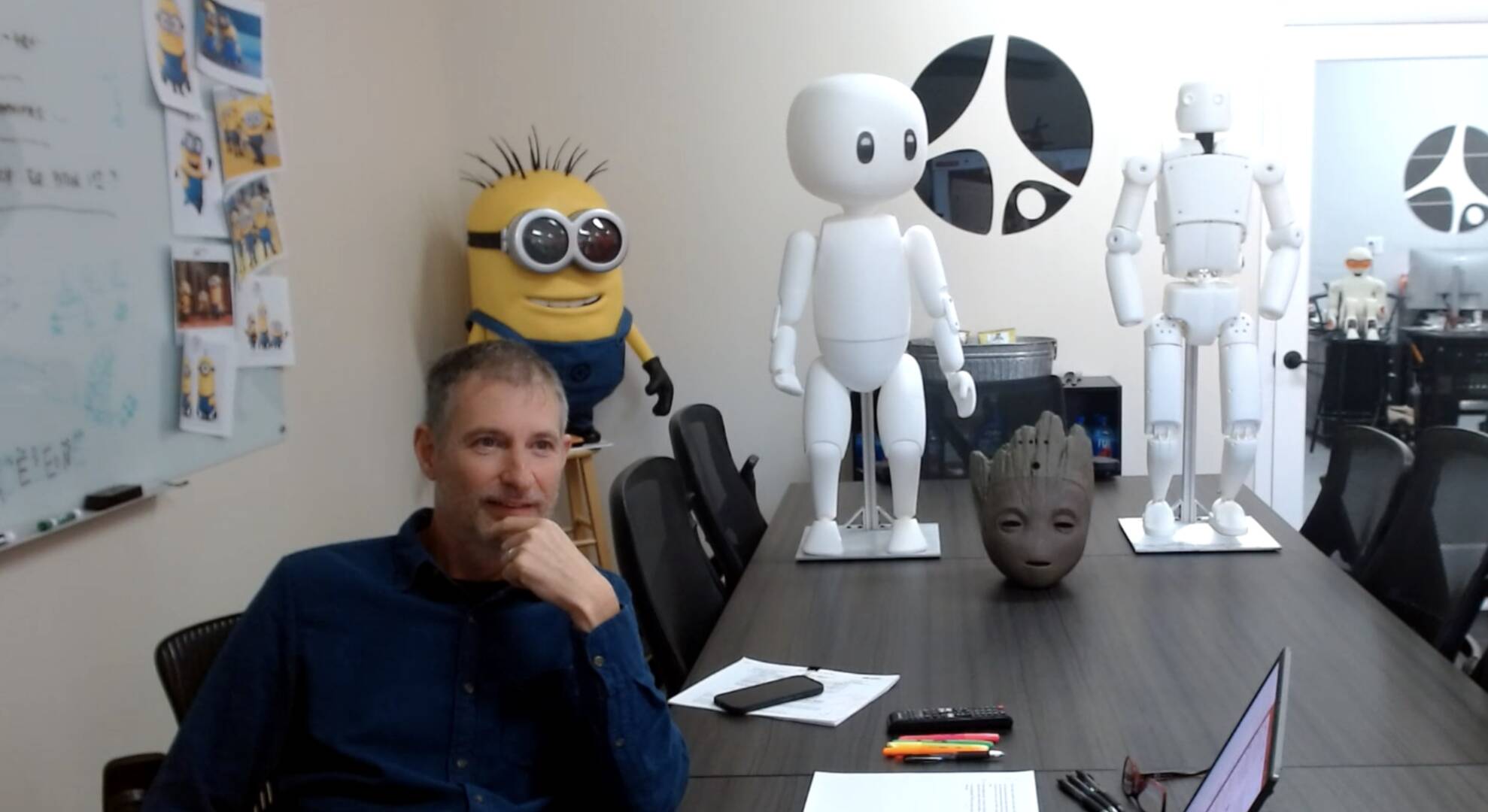
interview Scott LaValley, founder and CEO of Cartwheel Robotics, suspects he may have helped encourage Elon Musk to get into the humanoid robot business. The pendulum is so pegged toward these robots as tools, and as a way of performing tasks and augmenting human labor in a lower-cost way that may or may not be more efficient – to be determined on how that plays out "He visited me on a Sunday afternoon with his kids and spent half a day with me at Disney, seeing Baby Groot and asking me questions on 'Should I start my own humanoid team?'
" said LaValley in an interview with The Register. "And I say, 'Well, yeah, why aren't you already?'" LaValley worked at Disney as a principal imagineer between 2016 and 2021, then left to start his own Nevada-based robotics company. Before that, he worked at Boston Dynamics and then at Google following its acquisition of that robot biz.
The humanoid robot market is set to take off, at least according to Morgan Stanley, which recently predicted robot revenue could surpass $5 trillion by 2050. Companies like Tesla, Agility Robotics, Figure AI, Boston Dynamics, Apptronik, and Engineered Arts have plans for humanoid robots, but haven't yet solved the technical and practical challenges of free-roaming bipedal machines.
Scott LaValley, CEO of Cartwheel Robotics, spent seven years as Boston Dynamics' hardware lead LaValley said he turned down an offer to work at Figure AI because "I don't really like the direction the whole space has been going." He spent seven years at Boston Dynamics as the hardware lead on the company's three humanoid robots (PETMAN, Atlas One, and Atlas Two) and competed in the DARPA Robotics Challenge.
"Then we got bought by Google, and Google wanted us to turn a profit," LaValley said. "And we all looked at each other and went, 'We don't know what this is good for. We've just been a really well-funded research lab for so long. We're just having fun here. We're not trying to make this profitable.'
" After acquiring Boston Dynamics in late 2013, Google parent Alphabet sold the robot maker to Japan's SoftBank Group in 2017. Meanwhile, LaValley had moved on to Disney, based on his belief that the entertainment giant had a strong business case for robotics and legged locomotion technology. The Mickey Mouse empire had been running animatronics bolted to the ground for the past few decades and the next obvious step was to have them roaming around theme parks.
"I pitched the whole idea of building a small bipedal humanoid platform that ended up eventually bringing Baby Groot to life," said LaValley. "And then BDX Droids kind of fell out of the work that my team was doing when I left to start Cartwheel." Given his background, LaValley seems like he'd be leading the charge to develop humanoid robots, but he has some doubts about the focus of the market.
"The pendulum is so pegged toward these robots as tools, and as a way of performing tasks and augmenting human labor in a lower-cost way that may or may not be more efficient – to be determined on how that plays out," he said. LaValley suggested robotics firms are trying to roll out a highly complicated product when they should be starting with something simple.
It's as if Ford in 1908 set out to manufacture a modern car instead of the Model T. "The tech stack required to go in there and actually do human labor and bring good value – in other words, being cheaper than it would be to hire a minimum wage person – is pretty intense," he explained. "And there's a lot of stuff that needs to be figured out."
LaValley said that humanoid robot companies today are simply showing the public curated demos designed to drive hype and facilitate fund raising. "I just feel like you don't get to the forecasted numbers that you're hearing from Morgan Stanley – which is really coming from Vinod Khosla and Elon Musk – of billions of humanoids by 2040."
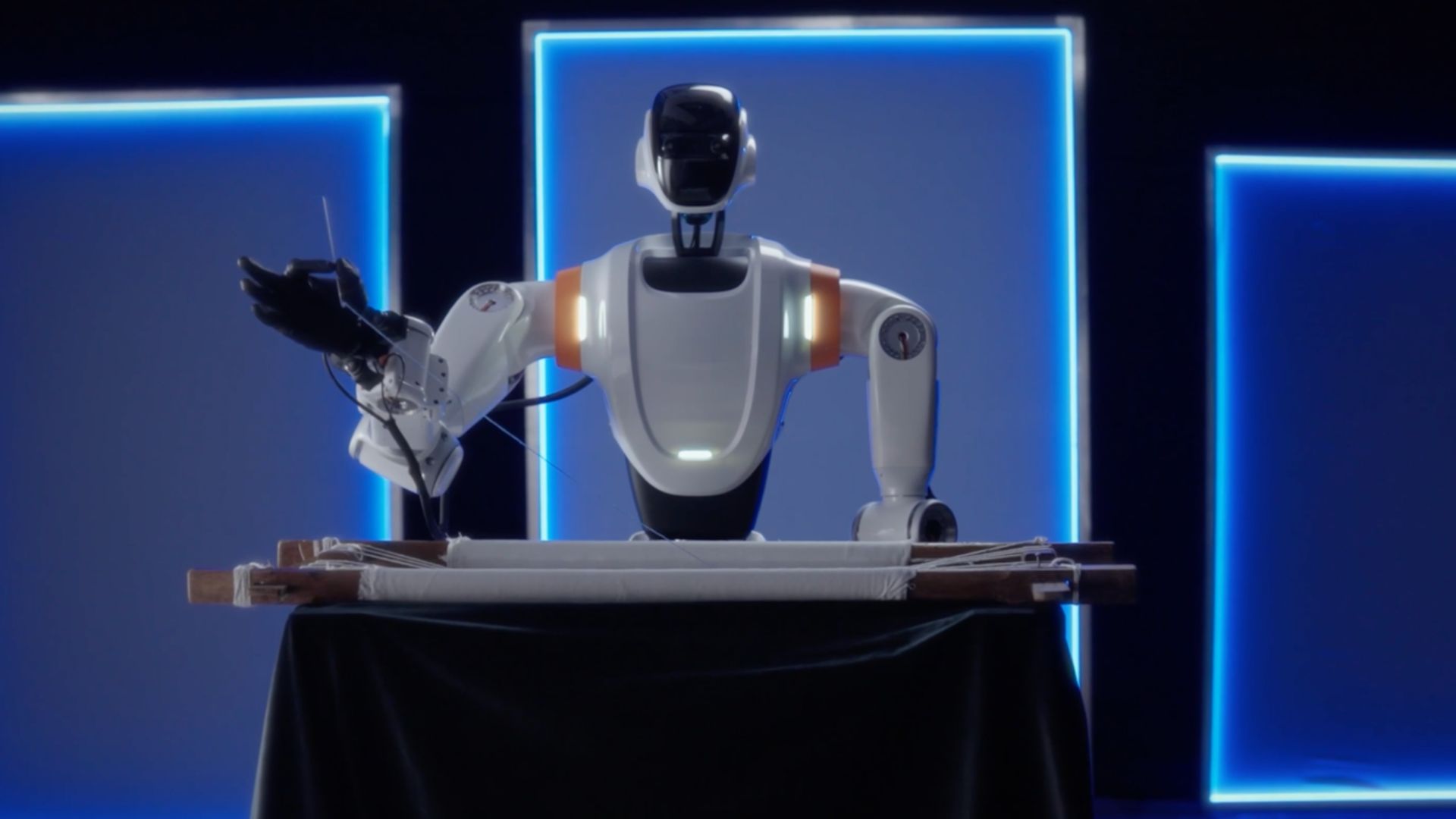
We note that Morgan Stanley's May 2025 estimate of a 1 billion by 2050 is 10x less than Musk's wide-eyed 2024 figure, but is still rather a lot. It's like rinse and repeat, every single humanoid robot looks the same ... And they're all being designed by these automotive industrial designers. And they're just terrifying.
They're so unfriendly. These are machines. These are tools. And they're unsafe "You don't get to those levels without some pull," said LaValley. "And I don't see a whole lot of pull right now. It's a whole lot of pushing – you need this, you need this, you need this. That's led to some pilot programs to see if [businesses] really need it or not.
And I think the reality is they're going to come out of that going, 'No, you know what, human labor is a lot better, a lot cheaper still. Come back in five or ten years when you're a bit further along.'" But more than the technical and cost challenges, LaValley argues the industry has failed to consider what people want.
"Do we want to be surrounded by all these 5' 6", 200-pound humanoid robots with visors that look like they have no soul? The robots that we've grown up being told to fear? And that some day will take over the world when they're controlled by AI? The answer is obviously, 'No.'" And yet, LaValley observes, that's every humanoid robot making headlines these days.
"It's like rinse and repeat, every single humanoid robot looks the same," he said. "And they're all being designed by these automotive industrial designers. And they're just terrifying. They're so unfriendly. These are machines. These are tools. And they're unsafe." LaValley checked himself for a moment and allowed that some day, large humanoid robots may be made safe for people to be around, but he said that's a long way off.
Walmart's bet on AI depends on getting employees to use it Appeals court blocks Trump bid to ax top copyright official in AI spat New Really Simple Licensing spec wants AI crawlers to show a license - or a credit card Spectre haunts CPUs again: VMSCAPE vulnerability leaks cloud secrets "And so all these robots are just going to end up in cages, in warehouses, and probably powered off in a year from now," he said.
LaValley has personal experience with how robots are perceived. "It was really eye-opening to see how my first child, my son, reacted to the robots I was building at Boston Dynamics. And I've heard similar stories from people working at Figure AI and Tesla and Apptronik. He didn't want to get close to the robot.
He was afraid of the robot." It was just the opposite when he took his daughters to see Baby Groot at Disney. "They just lit up," he said. "They had a big smile on their faces. They were giggling. They wanted to give Baby Groot a hug, do its makeup, take it home. And I said to myself, 'Well, dang, wouldn't it be fantastic if that were the relationship we had with the technology?'
" In short, LaValley argues that before robots can become functional tools for people, they first have to win social acceptance. People have to want to hang out with robots. While the rising tide of AI has raised the boats and hopes of robot makers, LaValley cautions that the narrative around AI taking people's jobs complicates how people are likely to see humanoid machines.
"The narrative's definitely not helping," he said. "It has a lot of people on edge right now. And we're not inviting people to participate in informing the direction of where this all heads. We're just so pinned on monetary return – capitalism – that I think we're ignoring some fundamental aspects that will make or break whether this is the time [for humanoid robots] or not."
Among the handful of US-based companies making humanoid robots, LaValley said the significant ones have relationships with major companies like Amazon, BMW, and Hyundai. These robots in other words are being designed for industrial uses. "So if I wanted a robot right now, my only option is to go buy a Chinese robot," he said "And the Chinese market is flooded with new humanoid startups.
But there's a lot of concern and fear – that's well warranted – that these robots can't be trusted." The issue with Chinese robots is the same as other IT gear from China – concerns about data privacy and backdoors. "That is all very, very true, and I know that firsthand from experience," said LaValley.
"I've worked at two companies now that have both been infiltrated by the CCP. They're stealing everything. It's just a matter of time before you're a victim." LaValley sees an opportunity to provide a US-made humanoid robot, one that people will welcome even if it doesn't fold the laundry or fetch drinks on-demand.
Yogi, a humanoid robot for social interaction, aims to succeed where SoftBank's Pepper fell short. "So we're not building a robot," said LaValley. "We're building a character that happens to be empowered with humanoid technology underneath. So if you interact with Yogi and you feel like you just interacted with a robot, we've failed.
We've failed on our mission." Pepper, LaValley said, didn't provide a fantastic experience. It came before LLMs changed the possibilities of natural language interaction. It was on wheels but was mainly stationary. And it felt like interacting with a robot. "Imagine the next generation of Pepper," he said.
"Yogi can greet you in a really natural, comfortable way and deliver value by maybe answering your questions and by guiding you around, being a concierge in a hospitality-type setting. It might show you to a patient's room in a healthcare setting, with more advanced capabilities emerging as more training happens – not solely by us, but also by the end user."
To make this happen, LaValley says his company Cartwheel has built its own software stack. "We're not using ROS," he said, referring to the open source Robot Operating System. "We've written our own state estimators. We've written our own motion language models. We've developed our own classical methods of control, MPC [Model Predictive Control], et cetera.
So what's novel, I think, is our actuation technology and our motion language models where we can, in real time, generatively create motion trajectories that are natural and more biological." Yogi's debut has yet to be determined. It may come this December, or in March 2026. But when it comes, it will be a slow rollout to partners who want to conduct pilot tests like universities and the like.
"We have ongoing discussions right now with the largest health care provider in the US," LaValley said. Then comes the fundraising, and if all goes well, consumer availability in four years or so. "I think the social interaction piece should be nailed first before anything else," said LaValley. ®
Source coverage
Publisher: The Register
Author: Thomas Claburn
Deeper analysis
Full source content
interview Scott LaValley, founder and CEO of Cartwheel Robotics, suspects he may have helped encourage Elon Musk to get into the humanoid robot business. The pendulum is so pegged toward these robots as tools, and as a way of performing tasks and augmenting human labor in a lower-cost way that may or may not be more efficient – to be determined on how that plays out "He visited me on a Sunday afternoon with his kids and spent half a day with me at Disney, seeing Baby Groot and asking me questions on 'Should I start my own humanoid team?'
" said LaValley in an interview with The Register. "And I say, 'Well, yeah, why aren't you already?'" LaValley worked at Disney as a principal imagineer between 2016 and 2021, then left to start his own Nevada-based robotics company. Before that, he worked at Boston Dynamics and then at Google following its acquisition of that robot biz.
The humanoid robot market is set to take off, at least according to Morgan Stanley, which recently predicted robot revenue could surpass $5 trillion by 2050. Companies like Tesla, Agility Robotics, Figure AI, Boston Dynamics, Apptronik, and Engineered Arts have plans for humanoid robots, but haven't yet solved the technical and practical challenges of free-roaming bipedal machines.
Scott LaValley, CEO of Cartwheel Robotics, spent seven years as Boston Dynamics' hardware lead LaValley said he turned down an offer to work at Figure AI because "I don't really like the direction the whole space has been going." He spent seven years at Boston Dynamics as the hardware lead on the company's three humanoid robots (PETMAN, Atlas One, and Atlas Two) and competed in the DARPA Robotics Challenge.
"Then we got bought by Google, and Google wanted us to turn a profit," LaValley said. "And we all looked at each other and went, 'We don't know what this is good for. We've just been a really well-funded research lab for so long. We're just having fun here. We're not trying to make this profitable.'
" After acquiring Boston Dynamics in late 2013, Google parent Alphabet sold the robot maker to Japan's SoftBank Group in 2017. Meanwhile, LaValley had moved on to Disney, based on his belief that the entertainment giant had a strong business case for robotics and legged locomotion technology. The Mickey Mouse empire had been running animatronics bolted to the ground for the past few decades and the next obvious step was to have them roaming around theme parks.
"I pitched the whole idea of building a small bipedal humanoid platform that ended up eventually bringing Baby Groot to life," said LaValley. "And then BDX Droids kind of fell out of the work that my team was doing when I left to start Cartwheel." Given his background, LaValley seems like he'd be leading the charge to develop humanoid robots, but he has some doubts about the focus of the market.
"The pendulum is so pegged toward these robots as tools, and as a way of performing tasks and augmenting human labor in a lower-cost way that may or may not be more efficient – to be determined on how that plays out," he said. LaValley suggested robotics firms are trying to roll out a highly complicated product when they should be starting with something simple.
It's as if Ford in 1908 set out to manufacture a modern car instead of the Model T. "The tech stack required to go in there and actually do human labor and bring good value – in other words, being cheaper than it would be to hire a minimum wage person – is pretty intense," he explained. "And there's a lot of stuff that needs to be figured out."
LaValley said that humanoid robot companies today are simply showing the public curated demos designed to drive hype and facilitate fund raising. "I just feel like you don't get to the forecasted numbers that you're hearing from Morgan Stanley – which is really coming from Vinod Khosla and Elon Musk – of billions of humanoids by 2040."
We note that Morgan Stanley's May 2025 estimate of a 1 billion by 2050 is 10x less than Musk's wide-eyed 2024 figure, but is still rather a lot. It's like rinse and repeat, every single humanoid robot looks the same ... And they're all being designed by these automotive industrial designers. And they're just terrifying.
They're so unfriendly. These are machines. These are tools. And they're unsafe "You don't get to those levels without some pull," said LaValley. "And I don't see a whole lot of pull right now. It's a whole lot of pushing – you need this, you need this, you need this. That's led to some pilot programs to see if [businesses] really need it or not.
And I think the reality is they're going to come out of that going, 'No, you know what, human labor is a lot better, a lot cheaper still. Come back in five or ten years when you're a bit further along.'" But more than the technical and cost challenges, LaValley argues the industry has failed to consider what people want.
"Do we want to be surrounded by all these 5' 6", 200-pound humanoid robots with visors that look like they have no soul? The robots that we've grown up being told to fear? And that some day will take over the world when they're controlled by AI? The answer is obviously, 'No.'" And yet, LaValley observes, that's every humanoid robot making headlines these days.
"It's like rinse and repeat, every single humanoid robot looks the same," he said. "And they're all being designed by these automotive industrial designers. And they're just terrifying. They're so unfriendly. These are machines. These are tools. And they're unsafe." LaValley checked himself for a moment and allowed that some day, large humanoid robots may be made safe for people to be around, but he said that's a long way off.
Walmart's bet on AI depends on getting employees to use it Appeals court blocks Trump bid to ax top copyright official in AI spat New Really Simple Licensing spec wants AI crawlers to show a license - or a credit card Spectre haunts CPUs again: VMSCAPE vulnerability leaks cloud secrets "And so all these robots are just going to end up in cages, in warehouses, and probably powered off in a year from now," he said.
LaValley has personal experience with how robots are perceived. "It was really eye-opening to see how my first child, my son, reacted to the robots I was building at Boston Dynamics. And I've heard similar stories from people working at Figure AI and Tesla and Apptronik. He didn't want to get close to the robot.
He was afraid of the robot." It was just the opposite when he took his daughters to see Baby Groot at Disney. "They just lit up," he said. "They had a big smile on their faces. They were giggling. They wanted to give Baby Groot a hug, do its makeup, take it home. And I said to myself, 'Well, dang, wouldn't it be fantastic if that were the relationship we had with the technology?'
" In short, LaValley argues that before robots can become functional tools for people, they first have to win social acceptance. People have to want to hang out with robots. While the rising tide of AI has raised the boats and hopes of robot makers, LaValley cautions that the narrative around AI taking people's jobs complicates how people are likely to see humanoid machines.
"The narrative's definitely not helping," he said. "It has a lot of people on edge right now. And we're not inviting people to participate in informing the direction of where this all heads. We're just so pinned on monetary return – capitalism – that I think we're ignoring some fundamental aspects that will make or break whether this is the time [for humanoid robots] or not."
Among the handful of US-based companies making humanoid robots, LaValley said the significant ones have relationships with major companies like Amazon, BMW, and Hyundai. These robots in other words are being designed for industrial uses. "So if I wanted a robot right now, my only option is to go buy a Chinese robot," he said "And the Chinese market is flooded with new humanoid startups.
But there's a lot of concern and fear – that's well warranted – that these robots can't be trusted." The issue with Chinese robots is the same as other IT gear from China – concerns about data privacy and backdoors. "That is all very, very true, and I know that firsthand from experience," said LaValley.
"I've worked at two companies now that have both been infiltrated by the CCP. They're stealing everything. It's just a matter of time before you're a victim." LaValley sees an opportunity to provide a US-made humanoid robot, one that people will welcome even if it doesn't fold the laundry or fetch drinks on-demand.
Yogi, a humanoid robot for social interaction, aims to succeed where SoftBank's Pepper fell short. "So we're not building a robot," said LaValley. "We're building a character that happens to be empowered with humanoid technology underneath. So if you interact with Yogi and you feel like you just interacted with a robot, we've failed.
We've failed on our mission." Pepper, LaValley said, didn't provide a fantastic experience. It came before LLMs changed the possibilities of natural language interaction. It was on wheels but was mainly stationary. And it felt like interacting with a robot. "Imagine the next generation of Pepper," he said.
"Yogi can greet you in a really natural, comfortable way and deliver value by maybe answering your questions and by guiding you around, being a concierge in a hospitality-type setting. It might show you to a patient's room in a healthcare setting, with more advanced capabilities emerging as more training happens – not solely by us, but also by the end user."
To make this happen, LaValley says his company Cartwheel has built its own software stack. "We're not using ROS," he said, referring to the open source Robot Operating System. "We've written our own state estimators. We've written our own motion language models. We've developed our own classical methods of control, MPC [Model Predictive Control], et cetera.
So what's novel, I think, is our actuation technology and our motion language models where we can, in real time, generatively create motion trajectories that are natural and more biological." Yogi's debut has yet to be determined. It may come this December, or in March 2026. But when it comes, it will be a slow rollout to partners who want to conduct pilot tests like universities and the like.
"We have ongoing discussions right now with the largest health care provider in the US," LaValley said. Then comes the fundraising, and if all goes well, consumer availability in four years or so. "I think the social interaction piece should be nailed first before anything else," said LaValley. ®
How this page is built
Goose Pod turns cited reporting into a public episode summary first, then pairs that summary with audio playback so listeners can check the source material before they decide how deeply to engage.
The goal is to make this page useful as a news landing page first, while still giving listeners transcript access, related episodes, and direct links back to the original publishers.