
What happened
This news report from The Next Web, authored by Andrea Hak, discusses the evolving role of robots and automation in the modern workforce, using Picnic Technologies, a Netherlands-based online supermarket, as a primary case study. The article highlights the symbiotic relationship between humans and robots,...
Key Findings and Conclusions:
Key Statistics and Metrics:
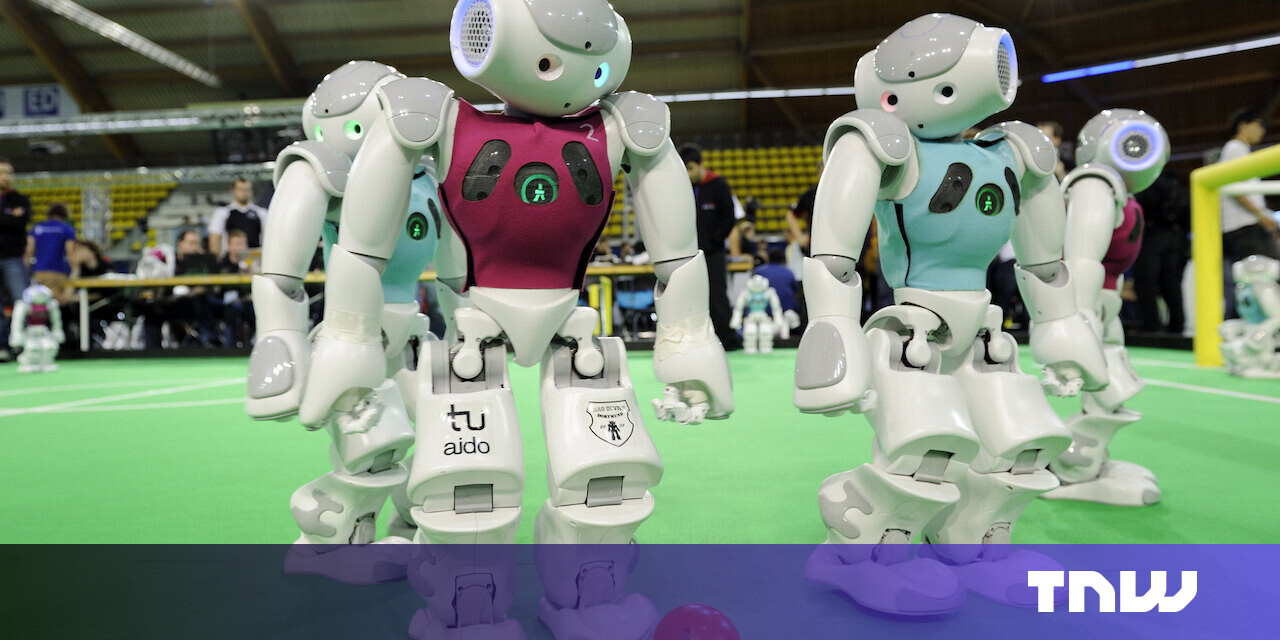
Watching robots awkwardly flop around, cause robot body pile-ups on the soccer field, and accidentally lose their heads while taking part in a 1500-metre sprint at the first Robot Humanoid Games in China was not only entertaining, it was a reminder of just how far robotics has come — and how far it still has to go.
While humanoid robots still struggle to walk across a stage, in other corners of the world automation is quietly revolutionising industries. At Picnic Technologies, the Netherlands’ fastest growing online supermarket, robots are compiling your grocery orders so delivery ‘shoppers’ can get them from the warehouse to your refrigerator as fast as possible.
It’s these innovations that have helped the once humble startup scale rapidly to compete with supermarket behemoths like Albert Heijn. The company’s CTO, Daniel Gebler, recently shared the secrets behind the company’s success with TNW founder, Boris Veldhuijzen van Zanten, as they drove through the streets of Amsterdam in the latest episode of “Kia’s Next Big Drive.
”Check out the full interview — recorded en route to TNW2025 in Kia’s all-electric EV9 — by clicking on the image below:Caption: Gebler and Veldhuijzen van Zanten winding through the canals on their way to TNW2025.But while Gebler holds a PhD in AI and is driving automation at scale, he’s clear that robots won’t replace humans entirely.
Previously, Picnic’s ‘shoppers,’ who fill orders and deliver them to customers’ doors, had to walk around large warehouses picking out each item.Now the company’s fully-automated fulfilment centres in the Netherlands and Germany are helping to lighten the load (and the number of steps shoppers have to take) by automating the item picking process with robotic arms.
At its newest order fulfilment centre in Oberhausen, Germany, Picnic is capable of processing up to 33,000 online orders per day, serving up to 200,000 households. The warehouse employs 1,500 robots… and 1,000 humans.Why? Because some tasks are still better handled by people.Bananas and champagne: Robots struggle with irregularly shaped items, fragile goods like eggs, or high-value products like champagne bottles.
Packing efficiency: Humans can easily rearrange crates to maximize space, while robots require predefined layouts. They also have trouble opening boxes.Final touches: Even in highly automated centers, the last step — packing items into a customer’s delivery box — is still done by hand.To work around these limits, Picnic uses product whitelisting to decide which orders a robot can fill.
For example, an order containing bags of crisps and heavy bottles of soda would be a no go for a robot.So, as robots evolve will they ever completely replace Picnic’s warehouse shoppers?“Absolutely not. As mentioned, it isn’t our goal to replace them either, but rather to use robots to boost our warehouse’s performance.
Shoppers remain at the core of our warehouse operations, with robots complementing their efforts,” says Picnic software engineer Jhon Mauro Gomez.In other words: automation makes Picnic faster and more efficient, but it’s a collaboration, not a takeover.Could AI be coming for your boss? (Don’t get your hopes too high)The rise of AI is also transforming what “management” means inside companies.
But Gebler believes AI won’t necessarily eliminate management entirely — it will reinvent it.“Most likely what we now have as management won’t exist anymore,” Gebler said. “The relevance of ownership — owning what you build, owning what you run — will become even more important. Because everybody will be a designer, a builder, and also an operator.
”This shift gives teams more autonomy and room for experimentation. At Picnic, developers have used that freedom to:Launch return deliveries: Customers can now return retail items from other brands using Picnic’s delivery vans — making the fleet more efficient.Offer meals, not just items: Families benefit more from curated meal packages rather than piecing together individual products.
The rise of “AI-free Fridays”Gebler is also pushing for “AI-free days” — dedicated time where developers ditch AI tools and sharpen their human skills. Because while AI can crunch data, it still can’t improvise like a human.Whether in grocery warehouses or corporate boardrooms, the future isn’t humans versus robots — it’s humans with robots.
Automation is best at handling repetitive, structured tasks. Humans shine in areas requiring adaptability, creativity, and judgment.From bananas and champagne to AI-free Fridays, Picnic is proving that the future of work is not about replacement, but reinvention.Image credit: “BvOF RoboCup2013 – RoboCup Soccer Nao” by RoboCup2013 is licensed under CC BY 2.
0.
Source coverage
This news report from The Next Web, authored by Andrea Hak, discusses the evolving role of robots and automation in the modern workforce, using Picnic Technologies, a Netherlands-based online supermarket, as a primary case study. The article highlights the symbiotic relationship between humans and robots,...
Key Findings and Conclusions:
Deeper analysis
Full source content
Watching robots awkwardly flop around, cause robot body pile-ups on the soccer field, and accidentally lose their heads while taking part in a 1500-metre sprint at the first Robot Humanoid Games in China was not only entertaining, it was a reminder of just how far robotics has come — and how far it still has to go.
While humanoid robots still struggle to walk across a stage, in other corners of the world automation is quietly revolutionising industries. At Picnic Technologies, the Netherlands’ fastest growing online supermarket, robots are compiling your grocery orders so delivery ‘shoppers’ can get them from the warehouse to your refrigerator as fast as possible.
It’s these innovations that have helped the once humble startup scale rapidly to compete with supermarket behemoths like Albert Heijn. The company’s CTO, Daniel Gebler, recently shared the secrets behind the company’s success with TNW founder, Boris Veldhuijzen van Zanten, as they drove through the streets of Amsterdam in the latest episode of “Kia’s Next Big Drive.
”Check out the full interview — recorded en route to TNW2025 in Kia’s all-electric EV9 — by clicking on the image below:Caption: Gebler and Veldhuijzen van Zanten winding through the canals on their way to TNW2025.But while Gebler holds a PhD in AI and is driving automation at scale, he’s clear that robots won’t replace humans entirely.
Previously, Picnic’s ‘shoppers,’ who fill orders and deliver them to customers’ doors, had to walk around large warehouses picking out each item.Now the company’s fully-automated fulfilment centres in the Netherlands and Germany are helping to lighten the load (and the number of steps shoppers have to take) by automating the item picking process with robotic arms.
At its newest order fulfilment centre in Oberhausen, Germany, Picnic is capable of processing up to 33,000 online orders per day, serving up to 200,000 households. The warehouse employs 1,500 robots… and 1,000 humans.Why? Because some tasks are still better handled by people.Bananas and champagne: Robots struggle with irregularly shaped items, fragile goods like eggs, or high-value products like champagne bottles.
Packing efficiency: Humans can easily rearrange crates to maximize space, while robots require predefined layouts. They also have trouble opening boxes.Final touches: Even in highly automated centers, the last step — packing items into a customer’s delivery box — is still done by hand.To work around these limits, Picnic uses product whitelisting to decide which orders a robot can fill.
For example, an order containing bags of crisps and heavy bottles of soda would be a no go for a robot.So, as robots evolve will they ever completely replace Picnic’s warehouse shoppers?“Absolutely not. As mentioned, it isn’t our goal to replace them either, but rather to use robots to boost our warehouse’s performance.
Shoppers remain at the core of our warehouse operations, with robots complementing their efforts,” says Picnic software engineer Jhon Mauro Gomez.In other words: automation makes Picnic faster and more efficient, but it’s a collaboration, not a takeover.Could AI be coming for your boss? (Don’t get your hopes too high)The rise of AI is also transforming what “management” means inside companies.
But Gebler believes AI won’t necessarily eliminate management entirely — it will reinvent it.“Most likely what we now have as management won’t exist anymore,” Gebler said. “The relevance of ownership — owning what you build, owning what you run — will become even more important. Because everybody will be a designer, a builder, and also an operator.
”This shift gives teams more autonomy and room for experimentation. At Picnic, developers have used that freedom to:Launch return deliveries: Customers can now return retail items from other brands using Picnic’s delivery vans — making the fleet more efficient.Offer meals, not just items: Families benefit more from curated meal packages rather than piecing together individual products.
The rise of “AI-free Fridays”Gebler is also pushing for “AI-free days” — dedicated time where developers ditch AI tools and sharpen their human skills. Because while AI can crunch data, it still can’t improvise like a human.Whether in grocery warehouses or corporate boardrooms, the future isn’t humans versus robots — it’s humans with robots.
Automation is best at handling repetitive, structured tasks. Humans shine in areas requiring adaptability, creativity, and judgment.From bananas and champagne to AI-free Fridays, Picnic is proving that the future of work is not about replacement, but reinvention.Image credit: “BvOF RoboCup2013 – RoboCup Soccer Nao” by RoboCup2013 is licensed under CC BY 2.
0.
How this page is built
Goose Pod turns cited reporting into a public episode summary first, then pairs that summary with audio playback so listeners can check the source material before they decide how deeply to engage.
The goal is to make this page useful as a news landing page first, while still giving listeners transcript access, related episodes, and direct links back to the original publishers.