
What happened
Author: David Kirichenko
Publication Date: September 15, 2025
This report details Ukraine's intensive development and deployment of Unmanned Ground Vehicles (UGVs), also known as ground robots, as a critical technological adaptation to the ongoing war with Russia. Facing Russia's advantage in resources, Ukraine is increasingly relying on technology to preserve its fighting...
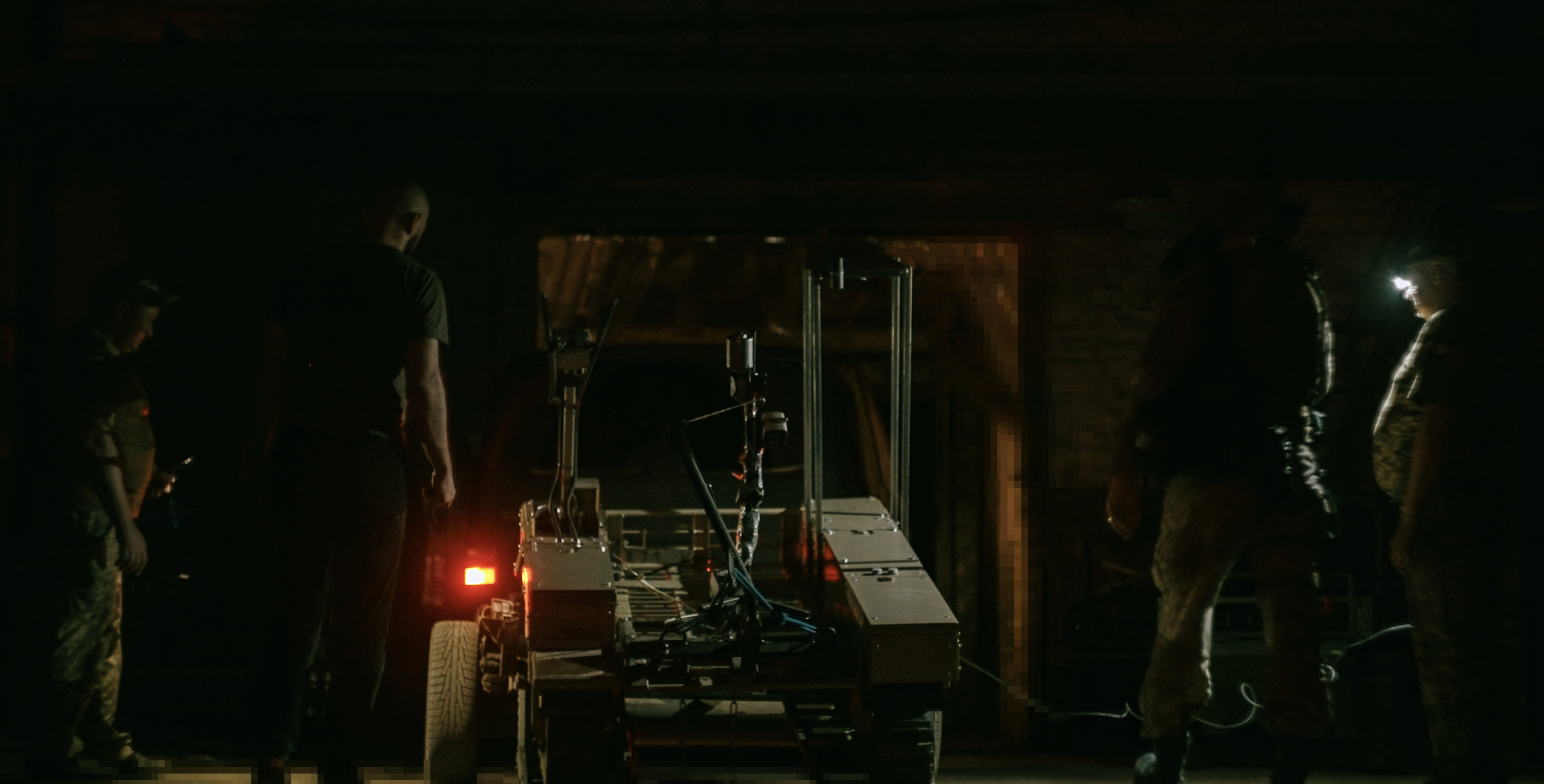
In an old Soviet-era warehouse just miles from the front in Donetsk Oblast, sparks fly from a welding torch as Ukrainian engineers crouch over the metal frame of a ground robot. Known as an unmanned ground vehicle, or UGV, the machine is being outfitted for a frontline mission. Oleksandr, the platoon commander of Ground Robotic Complexes with the Antares Battalion of the Rubizh Brigade, watched as his team worked.
“We want the brigade to be recognized, and for people to understand this work matters – that it’s working everywhere,” he told me.JOIN US ON TELEGRAMFollow our coverage of the war on the @Kyivpost_official. With little help from above, Oleksandr has built much of his unit through personal connections outside the military and by asking volunteers for support.
Fundraisers, raffles, and donations from civilian networks have kept his workshop running. His platoon now has just a handful of ground robots. The rest of the machines his team has built have gone to other brigades or specialized units. A Ukrainian TERMIT unmanned ground vehicle (UGV) on display during a Ukrainian Ground Forces demonstration.
Photo: David Kirichenko These machines are being developed against the backdrop of a war now in its fourth year. Ukraine is locked in a grinding conflict of attrition with Russia. Fueled by oil and gas revenues, Moscow can offer hefty salaries to lure men to the front. Kyiv cannot match that approach and is increasingly turning to technology to preserve its fighting force.
Other Topics of Interest Ukraine Long-Range Attacks Hammer St. Petersburg’s Energy Infrastructure Russia’s Baltic Sea city in Russia’s second-most-important region saw Ukraine’s special forces set shadow tankers and an oil refinery ablaze, then ambush a fuel train within 72 hours. The work in Oleksandr’s shop is constant and often improvised.
New UGVs arriving from manufacturers usually come with default analog communication systems that are vulnerable to Russian jamming. “The conditions on the ground dictate their own rules, and we have to convert all drones to digital control,” Oleksandr explained. His team strips the machines down, welds new mounting frames, rewires them, and installs Starlink, LTE cellular networks, or encrypted digital links before testing and deployment.
The upgrades make the robots far more resilient, but also more expensive. Converting a single UGV can cost the equivalent of $750 to $1,000 – without counting the Starlink hardware and subscription. And maintenance is constant. “These are mechanical systems, and they endure heavy loads,” Oleksandr said.
“After every mission, they need servicing.” Once upgraded, the machines are tailored for the battlefield’s most urgent needs. Some are fitted with remote drop systems to deliver food, ammunition, or medical supplies to trenches without exposing soldiers. Others carry masts for communications relays or electronic warfare modules and also conduct evacuations of injured soldiers.
Oleksandr said UGVs can also be equipped with remote-controlled turrets or mortars. Speed matters. “Even 15 kilometers per hour is a lot,” Oleksandr said. “On rough terrain, you won’t go that fast without flipping or hitting something. Eight to ten is still okay.” But their primary role remains logistics and evacuation.
Units avoid using them during the day, when they are easily spotted and destroyed by Russian first-person-view, or FPV, drones. Connectivity is another constant worry; if a robot loses signal while carrying a wounded soldier, it can strand both machine and patient in the open. “The drone drives up to a trench or dugout, releases the load, and leaves,” Oleksandr explained.
“Nobody is exposed – not the soldiers in the trench, not the UGV operator.” Ukrainian soldiers turn to ground robots to survive the killzone Ukraine’s use of unmanned systems has transformed warfare on land, at sea, and in the air. Ukraine’s “drone wall,” a layered defense of drones, has blunted Russia’s meat-grinder assaults, including motorcycle charges aimed at breaking through.
According to Army Technology estimates, drones now account for up to 80% of Russian battlefield casualties. Ukraine’s expanding killzone, pushed more than 15 kilometers (9 miles) past the zero line by the proliferation of drones, is fueling a surge in frontline deployment of UGVs. The most dangerous task now is simply moving in and out of frontline positions, where Ukraine suffers many of its casualties.
Losses during logistics and evacuation runs have been so heavy that units are short of pickup trucks. Unjammed fiber-optic drones have increasingly been hunting anything that comes near the front. As Colonel Kostiantyn Humeniuk, Chief Surgeon of the Medical Forces of Ukraine, told me, “Almost all the injuries we see now are drone-related.
” Ground robots are taking on more of the logistical burden, delivering supplies to forward positions and reducing the need for soldiers to drive vehicles into the killzone or for drone units to divert heavy bombers such as the “Baba Yaga” to resupply soldiers in the trenches. By December 2024, Ukraine carried out its first documented all-robot assault against Russian positions.
In July 2025, the 3rd Assault Brigade said it conducted an operation using only drones and ground robots that led to Russian troops surrendering with no Ukrainian casualties. But these ground robots are highly vulnerable to drones, especially during daylight. UGVs can also be employed in one-way strike roles, driving into enemy trenches or logistics bridges to detonate and destroy them, as well as for clearing mines.
In the future, soldiers expect that they will also serve as air defense, portable turrets that drive around and shoot down drones in the sky. In early August, the 28th Mechanized Brigade unveiled what it says is the war’s first air-defense UGV: a remote-controlled ground robot mounting a 9K38 Igla MANPADS to engage low-flying aircraft while keeping crews under cover.
Technological arms race between Kyiv and Moscow After a few years of war, Moscow has learned from many of its mistakes. Now, Russia is also working on developing a fleet of ground robots. A Russian news report in August showcased a UGV armed with four rocket-assisted thermobaric launchers. Ukraine’s leadership hopes to deploy at least 15,000 of these robots by the end of 2025.
But the Russians are also attempting to innovate and deploy ground robots as well, using these unmanned systems for similar functions. Samuel Bendett, an adjunct senior fellow at the Center for a New American Security, told me that while both Ukraine and Russia are pursuing decentralized approaches to ground robots, “Ukraine is taking the lead with its Brave1 initiative and growing production pipeline,” adding that “Russia still relies heavily on fragmented, volunteer-led efforts at the front.
” Deborah Fairlamb, co-founder of Green Flag Ventures, a venture capital fund for Ukrainian startups said, “Whether the collective West likes it or not, UAVs and UGVs are now part of the battlefield terrain for Russia and China.” Ukrainian brigades are constantly experimenting with new battlefield roles for UGVs, from air defense to assault and one-way strike missions.
“Russia has learned from this war and is adapting. China is watching and learning too,” she added. Serhii Kuzan, chairman of the Ukrainian Security and Cooperation Center and former Ministry of Defense adviser said, “Ukraine’s adaptation to robotics is accelerating.” He added that “their use on the battlefield will grow significantly in the near future.
” Experimenting with the future of UGVs “In the future, we want ground robots to serve air defense roles, outfitted with turrets to shoot down enemy drones, clearing the way for others to move in,” said Eugene, UGV company commander in the 92nd Assault Brigade. Ruslan, a soldier from the 92nd Assault Brigade prepares for a frontline robotics mission.
Photo: Ryan Van Ert “We even have night FPVs hunting UGVs,” said Eugene. “Thermal visibility isn’t a huge problem as our electric UGVs produce minimal heat.” Other front-line units are pushing the technology in a different direction. Kostas, known as “El Greco” from the 3rd Assault Brigade, told me that for now their main task is logistics and medical evacuations.
“To expand to assault or fire support, we need to lower the cost and simplify operations,” he said. Some of the new ground robots are being adapted for one‑way missions. These kamikaze UGVs, Kostas said, are fitted with Starlink terminals “only when targeting high‑value assets, like tanks.” The challenge, he added, is that “you need to modify the drone yourself, pay for Starlink, and add components.
It’s expensive and takes work.” Ruslan, a UGV operator with the Bulava Battalion of Ukraine’s 72nd Mechanized Brigade, said the robots are usually guided by a Mavic drone flying overhead because their onboard infrared cameras glow brightly through night vision – “a beacon for the enemy.” For that reason, he added, “we avoid them; it’s too easy to get spotted and destroyed.
” Signal loss can be just as dangerous as enemy fire. Andrii, the commander of the Bulava Battalion, said electronic warfare is a constant challenge, with “too many units operating in the same area, each with their own jammers.” To counter it, he added, “we’re now on nonstandard frequencies and planning to add Starlink to each vehicle so there’s redundancy.
” “The terrain is full of obstacles, and the technical requirements are very different, which makes developing effective AI systems for UGVs an even harder problem,” said Vitaliy Goncharuk, CEO of A19Lab and former Chairman of the Artificial Intelligence Committee of Ukraine. “In practice, solutions that simply attach fiber optics to UGVs may prove more effective and solve the immediate challenges.
” Civilian innovators are building Ukraine’s technology shield While soldiers experiment with battlefield tactics, civilian innovators are shaping the technology pipeline itself. “Ukrainian engineers are creating the future of warfare, not just for Ukraine, but for the world,” said Lyuba Shipovich, CEO of Dignitas Ukraine.
“The people we work with love us. Some officers hate us because we push them to do more work,” she said. Shipovich’s team Dignitas Ukraine, launched Victory Robots, an initiative aimed at rapidly fielding unmanned ground systems on the front lines. Volunteers through organizations like Dignitas are working to promote UGVs across units on the front, as their instructors train soldiers on how to use them.
In announcing the project in June, the group said it was “building a tech-driven advantage for Ukraine’s defenders” to “protect lives and reduce human losses.” Volunteers like Dignitas are accelerating the military’s adoption of new technologies and bridging communication gaps between brigades at the front.
Dignitas ensures they document best practices and share them between different units, scaling the most effective solutions. “Ukrainian engineers are creating the future of warfare, not just for Ukraine, but for the world,” said Shipovich. She added that the next stage for Ukraine’s military is to rapidly develop AI and weave it into ground robotics.
For now, Ukraine’s fleet of UGVs remains a work in progress. But Kyiv sees them as a cornerstone of a future robotic army – one that could help offset the country’s manpower shortages and keep more soldiers out of harm’s way. The push reflects a larger strategy to create a technology shield that reinforces Ukraine’s defenses and ensures that Kyiv can stay in the fight for many years to come.
Source coverage
Author: David Kirichenko
Publication Date: September 15, 2025
Deeper analysis
Full source content
In an old Soviet-era warehouse just miles from the front in Donetsk Oblast, sparks fly from a welding torch as Ukrainian engineers crouch over the metal frame of a ground robot. Known as an unmanned ground vehicle, or UGV, the machine is being outfitted for a frontline mission. Oleksandr, the platoon commander of Ground Robotic Complexes with the Antares Battalion of the Rubizh Brigade, watched as his team worked.
“We want the brigade to be recognized, and for people to understand this work matters – that it’s working everywhere,” he told me.JOIN US ON TELEGRAMFollow our coverage of the war on the @Kyivpost_official. With little help from above, Oleksandr has built much of his unit through personal connections outside the military and by asking volunteers for support.
Fundraisers, raffles, and donations from civilian networks have kept his workshop running. His platoon now has just a handful of ground robots. The rest of the machines his team has built have gone to other brigades or specialized units. A Ukrainian TERMIT unmanned ground vehicle (UGV) on display during a Ukrainian Ground Forces demonstration.
Photo: David Kirichenko These machines are being developed against the backdrop of a war now in its fourth year. Ukraine is locked in a grinding conflict of attrition with Russia. Fueled by oil and gas revenues, Moscow can offer hefty salaries to lure men to the front. Kyiv cannot match that approach and is increasingly turning to technology to preserve its fighting force.
Other Topics of Interest Ukraine Long-Range Attacks Hammer St. Petersburg’s Energy Infrastructure Russia’s Baltic Sea city in Russia’s second-most-important region saw Ukraine’s special forces set shadow tankers and an oil refinery ablaze, then ambush a fuel train within 72 hours. The work in Oleksandr’s shop is constant and often improvised.
New UGVs arriving from manufacturers usually come with default analog communication systems that are vulnerable to Russian jamming. “The conditions on the ground dictate their own rules, and we have to convert all drones to digital control,” Oleksandr explained. His team strips the machines down, welds new mounting frames, rewires them, and installs Starlink, LTE cellular networks, or encrypted digital links before testing and deployment.
The upgrades make the robots far more resilient, but also more expensive. Converting a single UGV can cost the equivalent of $750 to $1,000 – without counting the Starlink hardware and subscription. And maintenance is constant. “These are mechanical systems, and they endure heavy loads,” Oleksandr said.
“After every mission, they need servicing.” Once upgraded, the machines are tailored for the battlefield’s most urgent needs. Some are fitted with remote drop systems to deliver food, ammunition, or medical supplies to trenches without exposing soldiers. Others carry masts for communications relays or electronic warfare modules and also conduct evacuations of injured soldiers.
Oleksandr said UGVs can also be equipped with remote-controlled turrets or mortars. Speed matters. “Even 15 kilometers per hour is a lot,” Oleksandr said. “On rough terrain, you won’t go that fast without flipping or hitting something. Eight to ten is still okay.” But their primary role remains logistics and evacuation.
Units avoid using them during the day, when they are easily spotted and destroyed by Russian first-person-view, or FPV, drones. Connectivity is another constant worry; if a robot loses signal while carrying a wounded soldier, it can strand both machine and patient in the open. “The drone drives up to a trench or dugout, releases the load, and leaves,” Oleksandr explained.
“Nobody is exposed – not the soldiers in the trench, not the UGV operator.” Ukrainian soldiers turn to ground robots to survive the killzone Ukraine’s use of unmanned systems has transformed warfare on land, at sea, and in the air. Ukraine’s “drone wall,” a layered defense of drones, has blunted Russia’s meat-grinder assaults, including motorcycle charges aimed at breaking through.
According to Army Technology estimates, drones now account for up to 80% of Russian battlefield casualties. Ukraine’s expanding killzone, pushed more than 15 kilometers (9 miles) past the zero line by the proliferation of drones, is fueling a surge in frontline deployment of UGVs. The most dangerous task now is simply moving in and out of frontline positions, where Ukraine suffers many of its casualties.
Losses during logistics and evacuation runs have been so heavy that units are short of pickup trucks. Unjammed fiber-optic drones have increasingly been hunting anything that comes near the front. As Colonel Kostiantyn Humeniuk, Chief Surgeon of the Medical Forces of Ukraine, told me, “Almost all the injuries we see now are drone-related.
” Ground robots are taking on more of the logistical burden, delivering supplies to forward positions and reducing the need for soldiers to drive vehicles into the killzone or for drone units to divert heavy bombers such as the “Baba Yaga” to resupply soldiers in the trenches. By December 2024, Ukraine carried out its first documented all-robot assault against Russian positions.
In July 2025, the 3rd Assault Brigade said it conducted an operation using only drones and ground robots that led to Russian troops surrendering with no Ukrainian casualties. But these ground robots are highly vulnerable to drones, especially during daylight. UGVs can also be employed in one-way strike roles, driving into enemy trenches or logistics bridges to detonate and destroy them, as well as for clearing mines.
In the future, soldiers expect that they will also serve as air defense, portable turrets that drive around and shoot down drones in the sky. In early August, the 28th Mechanized Brigade unveiled what it says is the war’s first air-defense UGV: a remote-controlled ground robot mounting a 9K38 Igla MANPADS to engage low-flying aircraft while keeping crews under cover.
Technological arms race between Kyiv and Moscow After a few years of war, Moscow has learned from many of its mistakes. Now, Russia is also working on developing a fleet of ground robots. A Russian news report in August showcased a UGV armed with four rocket-assisted thermobaric launchers. Ukraine’s leadership hopes to deploy at least 15,000 of these robots by the end of 2025.
But the Russians are also attempting to innovate and deploy ground robots as well, using these unmanned systems for similar functions. Samuel Bendett, an adjunct senior fellow at the Center for a New American Security, told me that while both Ukraine and Russia are pursuing decentralized approaches to ground robots, “Ukraine is taking the lead with its Brave1 initiative and growing production pipeline,” adding that “Russia still relies heavily on fragmented, volunteer-led efforts at the front.
” Deborah Fairlamb, co-founder of Green Flag Ventures, a venture capital fund for Ukrainian startups said, “Whether the collective West likes it or not, UAVs and UGVs are now part of the battlefield terrain for Russia and China.” Ukrainian brigades are constantly experimenting with new battlefield roles for UGVs, from air defense to assault and one-way strike missions.
“Russia has learned from this war and is adapting. China is watching and learning too,” she added. Serhii Kuzan, chairman of the Ukrainian Security and Cooperation Center and former Ministry of Defense adviser said, “Ukraine’s adaptation to robotics is accelerating.” He added that “their use on the battlefield will grow significantly in the near future.
” Experimenting with the future of UGVs “In the future, we want ground robots to serve air defense roles, outfitted with turrets to shoot down enemy drones, clearing the way for others to move in,” said Eugene, UGV company commander in the 92nd Assault Brigade. Ruslan, a soldier from the 92nd Assault Brigade prepares for a frontline robotics mission.
Photo: Ryan Van Ert “We even have night FPVs hunting UGVs,” said Eugene. “Thermal visibility isn’t a huge problem as our electric UGVs produce minimal heat.” Other front-line units are pushing the technology in a different direction. Kostas, known as “El Greco” from the 3rd Assault Brigade, told me that for now their main task is logistics and medical evacuations.
“To expand to assault or fire support, we need to lower the cost and simplify operations,” he said. Some of the new ground robots are being adapted for one‑way missions. These kamikaze UGVs, Kostas said, are fitted with Starlink terminals “only when targeting high‑value assets, like tanks.” The challenge, he added, is that “you need to modify the drone yourself, pay for Starlink, and add components.
It’s expensive and takes work.” Ruslan, a UGV operator with the Bulava Battalion of Ukraine’s 72nd Mechanized Brigade, said the robots are usually guided by a Mavic drone flying overhead because their onboard infrared cameras glow brightly through night vision – “a beacon for the enemy.” For that reason, he added, “we avoid them; it’s too easy to get spotted and destroyed.
” Signal loss can be just as dangerous as enemy fire. Andrii, the commander of the Bulava Battalion, said electronic warfare is a constant challenge, with “too many units operating in the same area, each with their own jammers.” To counter it, he added, “we’re now on nonstandard frequencies and planning to add Starlink to each vehicle so there’s redundancy.
” “The terrain is full of obstacles, and the technical requirements are very different, which makes developing effective AI systems for UGVs an even harder problem,” said Vitaliy Goncharuk, CEO of A19Lab and former Chairman of the Artificial Intelligence Committee of Ukraine. “In practice, solutions that simply attach fiber optics to UGVs may prove more effective and solve the immediate challenges.
” Civilian innovators are building Ukraine’s technology shield While soldiers experiment with battlefield tactics, civilian innovators are shaping the technology pipeline itself. “Ukrainian engineers are creating the future of warfare, not just for Ukraine, but for the world,” said Lyuba Shipovich, CEO of Dignitas Ukraine.
“The people we work with love us. Some officers hate us because we push them to do more work,” she said. Shipovich’s team Dignitas Ukraine, launched Victory Robots, an initiative aimed at rapidly fielding unmanned ground systems on the front lines. Volunteers through organizations like Dignitas are working to promote UGVs across units on the front, as their instructors train soldiers on how to use them.
In announcing the project in June, the group said it was “building a tech-driven advantage for Ukraine’s defenders” to “protect lives and reduce human losses.” Volunteers like Dignitas are accelerating the military’s adoption of new technologies and bridging communication gaps between brigades at the front.
Dignitas ensures they document best practices and share them between different units, scaling the most effective solutions. “Ukrainian engineers are creating the future of warfare, not just for Ukraine, but for the world,” said Shipovich. She added that the next stage for Ukraine’s military is to rapidly develop AI and weave it into ground robotics.
For now, Ukraine’s fleet of UGVs remains a work in progress. But Kyiv sees them as a cornerstone of a future robotic army – one that could help offset the country’s manpower shortages and keep more soldiers out of harm’s way. The push reflects a larger strategy to create a technology shield that reinforces Ukraine’s defenses and ensures that Kyiv can stay in the fight for many years to come.
How this page is built
Goose Pod turns cited reporting into a public episode summary first, then pairs that summary with audio playback so listeners can check the source material before they decide how deeply to engage.
The goal is to make this page useful as a news landing page first, while still giving listeners transcript access, related episodes, and direct links back to the original publishers.