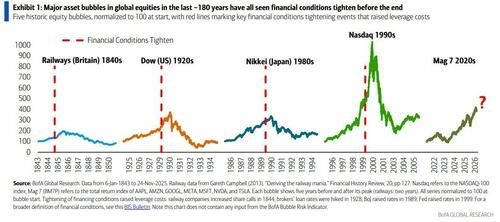
What happened
A discussion of recent news and events.
<DIV><div><p>This partnership comes in the wake of new UN regulations that require heightened cybersecurity measures for vehicles. </p><p><span>March 28, 2025</span></p><!-- sarticle-actions start --><!-- .gdm-article-actions --> <!-- article-actions end --></div><div><div><figure><picture><source media="(min-width: 990px)" srcset="https://www.
just-auto.com/wp-content/uploads/sites/30/2025/03/j1-shutterstock_702006307-1-770x433.jpg"><source media="(min-width: 430px)" srcset="https://www.just-auto.com/wp-content/uploads/sites/30/2025/03/j1-shutterstock_702006307-1-940x528.jpg"><img src="https://www.just-auto.com/wp-content/uploads/sites/30/2025/03/j1-shutterstock_702006307-1-430x241.
jpg" alt=""></picture><figcaption>Clavister’s AI and machine learning capabilities will be integrated with NXP’s i.MX 9 platform. Credit: metamorworks/Shutterstock.</figcaption></figure></div><p>Swedish cybersecurity company Clavister has partnered with NXP Semiconductors to develop AI-driven cybersecurity solutions for the automotive industry.
</p><!-- sponsored-whitepaper sponsored hidden sponsored-with-form --><p>This collaboration comes in the wake of new UN regulations that demand heightened cybersecurity measures for vehicles.</p><p>Utilising Clavister’s AI technology within NXP’s OrangeBox Automotive Connectivity Domain Controller Development Platform, the collaboration seeks to secure connected vehicles by preventing malware intrusions and enabling real-time detection of cyber threats into automotive subsystems.
</p><p>Clavister CEO John Vestberg said: “We are excited to be working with NXP Semiconductors, one of the most prominent leaders in the automotive industry, to explore how Clavister’s cutting-edge AI-based cybersecurity technology can be used to secure the connected vehicles of today and tomorrow.”</p><p>The integration of Clavister’s AI and machine learning capabilities with NXP’s i.
MX 9 platform is designed to identify denial-of-service attacks by analysing vehicle network traffic.</p><p>This move aims to fortify the security of next-generation vehicles against the increasing threat of cyberattacks.</p><p>NXP Semiconductors automotive edge processing, global product marketing, senior director Jim Bridgwater said: “With the increasing adoption of connected services, vehicles are more vulnerable to cyberattacks than ever.
</p><p>“This growing threat demands sophisticated cybersecurity solutions capable of identifying and preventing new attack vectors. Our collaboration with Clavister brings advanced AI-powered attack detection to the OrangeBox ecosystem, empowering automakers to build AI-driven telematics with robust security against cyber threats.
”</p><p>The urgency for enhanced cybersecurity in the automotive sector has been underscored by the introduction of UN Regulation No. 155 by the United Nations Economic Commission for Europe (UNECE).</p><p>This regulation mandates cybersecurity management systems for vehicle manufacturers to protect against cyber risks throughout a vehicle’s lifecycle.
</p><p>In light of these regulatory pressures, automotive companies are actively seeking advanced cybersecurity solutions.</p><!-- sponsored-whitepaper sponsored hidden sponsored-with-form --><!-- Newsletter banner start --><!-- <link rel="stylesheet" href=""> --><!-- Newsletter banner end --></div></DIV>
Source coverage
Clavister and NXP Semiconductors have partnered to create AI-powered cybersecurity solutions for the automotive industry, driven by new UN regulations (UN Regulation No. 155) mandating enhanced vehicle cybersecurity. Clavister's AI and machine learning capabilities will integrate with NXP's i.MX 9 platform and...
Full source content
<DIV><div><p>This partnership comes in the wake of new UN regulations that require heightened cybersecurity measures for vehicles. </p><p><span>March 28, 2025</span></p><!-- sarticle-actions start --><!-- .gdm-article-actions --> <!-- article-actions end --></div><div><div><figure><picture><source media="(min-width: 990px)" srcset="https://www.
just-auto.com/wp-content/uploads/sites/30/2025/03/j1-shutterstock_702006307-1-770x433.jpg"><source media="(min-width: 430px)" srcset="https://www.just-auto.com/wp-content/uploads/sites/30/2025/03/j1-shutterstock_702006307-1-940x528.jpg"><img src="https://www.just-auto.com/wp-content/uploads/sites/30/2025/03/j1-shutterstock_702006307-1-430x241.
jpg" alt=""></picture><figcaption>Clavister’s AI and machine learning capabilities will be integrated with NXP’s i.MX 9 platform. Credit: metamorworks/Shutterstock.</figcaption></figure></div><p>Swedish cybersecurity company Clavister has partnered with NXP Semiconductors to develop AI-driven cybersecurity solutions for the automotive industry.
</p><!-- sponsored-whitepaper sponsored hidden sponsored-with-form --><p>This collaboration comes in the wake of new UN regulations that demand heightened cybersecurity measures for vehicles.</p><p>Utilising Clavister’s AI technology within NXP’s OrangeBox Automotive Connectivity Domain Controller Development Platform, the collaboration seeks to secure connected vehicles by preventing malware intrusions and enabling real-time detection of cyber threats into automotive subsystems.
</p><p>Clavister CEO John Vestberg said: “We are excited to be working with NXP Semiconductors, one of the most prominent leaders in the automotive industry, to explore how Clavister’s cutting-edge AI-based cybersecurity technology can be used to secure the connected vehicles of today and tomorrow.”</p><p>The integration of Clavister’s AI and machine learning capabilities with NXP’s i.
MX 9 platform is designed to identify denial-of-service attacks by analysing vehicle network traffic.</p><p>This move aims to fortify the security of next-generation vehicles against the increasing threat of cyberattacks.</p><p>NXP Semiconductors automotive edge processing, global product marketing, senior director Jim Bridgwater said: “With the increasing adoption of connected services, vehicles are more vulnerable to cyberattacks than ever.
</p><p>“This growing threat demands sophisticated cybersecurity solutions capable of identifying and preventing new attack vectors. Our collaboration with Clavister brings advanced AI-powered attack detection to the OrangeBox ecosystem, empowering automakers to build AI-driven telematics with robust security against cyber threats.
”</p><p>The urgency for enhanced cybersecurity in the automotive sector has been underscored by the introduction of UN Regulation No. 155 by the United Nations Economic Commission for Europe (UNECE).</p><p>This regulation mandates cybersecurity management systems for vehicle manufacturers to protect against cyber risks throughout a vehicle’s lifecycle.
</p><p>In light of these regulatory pressures, automotive companies are actively seeking advanced cybersecurity solutions.</p><!-- sponsored-whitepaper sponsored hidden sponsored-with-form --><!-- Newsletter banner start --><!-- <link rel="stylesheet" href=""> --><!-- Newsletter banner end --></div></DIV>
<DIV><section data-editable="main" data-track-zone="main" data-reorderable="main"> <article data-uri="cms.cnn.com/_components/article/instances/cm8s5hizb004q2cp2dxfj3tce@published" role="main" data-drag-disable="true" data-unselectable="true" data-regwall-disabled="false" data-subscription-only="false" data-paywall-disabled="false"><section data-tabcontent="Content"><main><div data-editable="content" itemprop="articleBody" data-reorderable="content"><p><cite><span data-editable="location"></span><span data-editable="source">CNN</span> — </cite></p><p data-uri="cms.
cnn.com/_components/paragraph/instances/cm8s5hizb004p2cp22ax2culj@published" data-editable="text" data-component-name="paragraph" data-article-gutter="true">Just days after OpenAI launched its most advanced AI image generator to date, a social media trend imitating the work of Japanese animation company Studio Ghibli is demonstrating both the technology’s power and the copyright concerns it raises.
</p><p data-uri="cms.cnn.com/_components/paragraph/instances/cm8s62yvy00013b5vauido25o@published" data-editable="text" data-component-name="paragraph" data-article-gutter="true">The latest update to GPT-4o, released Tuesday, features many practical advancements, including more accurate text rendering and the ability to follow more detailed, complex prompts.
But it has also been trained at length on a “vast variety of image styles,” according to a post on OpenAI’s website, stunning users with its ability to generate still images and videos reminiscent of their favorite animations, from “South Park” to classic <a href="https://x.com/BennettWaisbren/status/1905247775190864381" target="_blank">claymation.
</a></p><p data-uri="cms.cnn.com/_components/paragraph/instances/cm8s62yvy00023b5v0i7mwj0j@published" data-editable="text" data-component-name="paragraph" data-article-gutter="true">But one style quickly flooded X and Instagram, as users of ChatGPT (and OpenAI’s text-to-video service, Sora) began emulating the work of beloved animation studio behind movies like “Spirited Away” and “Howl’s Moving Castle.
”</p><div data-editable="settings" data-url="https://media.cnn.com/api/v1/images/stellar/prod/mmdspaw-ec001.jpg?c=original" data-original-width="2790" data-original-height="1508" data-original-ratio="0.5405017921146953" data-observe-resizes="" data-component-name="image" data-name="MMDSPAW_EC001.jpg" data-uri="cms.
cnn.com/_components/image/instances/cm8s83htw00023b5vqtat4k18@published" data-image-variation="image" data-breakpoints="{"image--eq-extra-small": 115, "image--eq-small": 300, "image--eq-large": 660}"><picture><source height="1508" width="2790" media="(max-width: 479px)" srcset="https://media.
cnn.com/api/v1/images/stellar/prod/mmdspaw-ec001.jpg?q=w_680,c_fill/f_webp" type="image/webp"><source height="1508" width="2790" media="(min-width: 480px)" srcset="https://media.cnn.com/api/v1/images/stellar/prod/mmdspaw-ec001.jpg?q=w_1160,c_fill/f_webp" type="image/webp"><source height="1508" width="2790" media="(min-width: 960px)" srcset="https://media.
cnn.com/api/v1/images/stellar/prod/mmdspaw-ec001.jpg?q=w_1015,c_fill/f_webp" type="image/webp"><source height="1508" width="2790" media="(min-width: 1280px)" srcset="https://media.cnn.com/api/v1/images/stellar/prod/mmdspaw-ec001.jpg?q=w_1110,c_fill/f_webp" type="image/webp"><img src="https://media.cnn.
com/api/v1/images/stellar/prod/mmdspaw-ec001.jpg?q=w_1110,c_fill" alt="A still from 2001's "Spirited Away" of Haku (in dragon form) and Chihiro by Studio Ghibli." onload="this.classList.remove('image__dam-img--loading')" onerror="imageLoadError(this)" height="1508" width="2790" loading="lazy"></picture></div><p data-uri="cms.
cnn.com/_components/paragraph/instances/cm8s62yvy00033b5vkx1qh4f2@published" data-editable="text" data-component-name="paragraph" data-article-gutter="true">Some recreated scenes from pop culture or politics in the Japanese company’s iconic style, including a <a href="https://x.com/PJaccetturo/status/1905151190872309907" target="_blank">reworked trailer</a> for “The Lord of the Rings: The Fellowship of the Ring,” <a href="https://x.
com/timeimmemorial_/status/1905262678521582027" target="_blank">scenes</a> from “The Sopranos,” and Donald Trump and JD Vance’s heated real-life White House exchange with Ukrainian President Volodymyr Zelensky.</p><p data-uri="cms.cnn.com/_components/paragraph/instances/cm8s62yvy00043b5v3uathqhp@published" data-editable="text" data-component-name="paragraph" data-article-gutter="true">Unsurprisingly, some of the most viral posts put a Ghibli spin on popular memes, including the “<a href="https://x.
com/heyBarsee/status/1904891940522647662" target="_blank">distracted boyfriend</a>,” the “bro explaining” meme (pictured top) and the infamous image of <a href="https://x.com/venturetwins/status/1904915503505670246" target="_blank">Ben Affleck smoking</a>. Another viral X post depicted the platform’s owner, Elon Musk, <a href="https://x.
com/Jason/status/1905031350681321867" target="_blank">playing with cutlery</a> — an image based on the recent video of the billionaire balancing spoons during a dinner hosted by Trump in New Jersey.</p><p data-uri="cms.cnn.com/_components/paragraph/instances/cm8s62yvy00053b5vbtebwseu@published" data-editable="text" data-component-name="paragraph" data-article-gutter="true">Also widely shared, however, is a 2016 <a href="https://www.
youtube.com/watch?v=ngZ0K3lWKRc" target="_blank">video</a> in which Studio Ghibli co-founder Hayao Miyazaki describes AI-generated art as an “insult to life itself.” Miyazaki is known for his hand-drawn animation and painstaking frame-by-frame method.</p><p data-uri="cms.cnn.com/_components/paragraph/instances/cm8s62yvy00063b5v6yitjofr@published" data-editable="text" data-component-name="paragraph" data-article-gutter="true">“I am utterly disgusted,” he says in the video, responding to a video of a monster character generated using text prompts.
“If you really want to make creepy stuff, you can go ahead and do it, but I would never wish to incorporate this technology into my work at all.”</p><div data-editable="settings" data-url="https://media.cnn.com/api/v1/images/stellar/prod/2014-11-09t120000z-1478189358-gm1eab91hqd01-rtrmadp-3-film-governorsaward.
jpg?c=original" data-original-width="2096" data-original-height="1600" data-original-ratio="0.7633587786259542" data-observe-resizes="" data-component-name="image" data-name="2014-11-09T120000Z_1478189358_GM1EAB91HQD01_RTRMADP_3_FILM-GOVERNORSAWARD.jpg" data-uri="cms.cnn.com/_components/image/instances/cm8s87wip00043b5vljie78o5@published" data-image-variation="image" data-breakpoints="{"image--eq-extra-small": 115, "image--eq-small": 300, "image--eq-large": 660}"><picture><source height="1600" width="2096" media="(max-width: 479px)" srcset="https://media.
cnn.com/api/v1/images/stellar/prod/2014-11-09t120000z-1478189358-gm1eab91hqd01-rtrmadp-3-film-governorsaward.jpg?q=w_680,c_fill/f_webp" type="image/webp"><source height="1600" width="2096" media="(min-width: 480px)" srcset="https://media.cnn.com/api/v1/images/stellar/prod/2014-11-09t120000z-1478189358-gm1eab91hqd01-rtrmadp-3-film-governorsaward.
jpg?q=w_1160,c_fill/f_webp" type="image/webp"><source height="1600" width="2096" media="(min-width: 960px)" srcset="https://media.cnn.com/api/v1/images/stellar/prod/2014-11-09t120000z-1478189358-gm1eab91hqd01-rtrmadp-3-film-governorsaward.jpg?q=w_1015,c_fill/f_webp" type="image/webp"><source height="1600" width="2096" media="(min-width: 1280px)" srcset="https://media.
cnn.com/api/v1/images/stellar/prod/2014-11-09t120000z-1478189358-gm1eab91hqd01-rtrmadp-3-film-governorsaward.jpg?q=w_1110,c_fill/f_webp" type="image/webp"><img src="https://media.cnn.com/api/v1/images/stellar/prod/2014-11-09t120000z-1478189358-gm1eab91hqd01-rtrmadp-3-film-governorsaward.jpg?q=w_1110,c_fill" alt="Japanese film director and animator Hayao Miyazaki poses during the Academy of Motion Picture Arts and Sciences Governors Awards in Los Angeles, California, in 2014."
onload="this.classList.remove('image__dam-img--loading')" onerror="imageLoadError(this)" height="1600" width="2096" loading="lazy"></picture></div><p data-uri="cms.cnn.com/_components/paragraph/instances/cm8s62yvy00073b5v1ba6gk48@published" data-editable="text" data-component-name="paragraph" data-article-gutter="true">OpenAI’s updated image generator has also prompted renewed discussions over the role of AI and art.
It comes just weeks after nearly 4,000 people <a href="https://www.cnn.com/2025/02/11/style/christies-ai-auction-open-letter-tan/index.html">signed an open letter</a> calling on Christie’s auction house to cancel a first-of-its-kind sale dedicated solely to AI art over concerns that the programs used to create some generative digital pieces are trained on copyrighted work and exploit human artists.
</p><p data-uri="cms.cnn.com/_components/paragraph/instances/cm8s62yvy00083b5vrrqh0b0f@published" data-editable="text" data-component-name="paragraph" data-article-gutter="true">OpenAI’s CEO Sam Altman made light of the trend on X, <a href="https://x.com/sama/status/1904921537884676398" target="_blank">joking</a> that after “a decade trying to help make superintelligence to cure cancer or whatever” it was Studio Ghibli images that had generated viral interest in his work.
</p><p data-uri="cms.cnn.com/_components/paragraph/instances/cm8s62yvy00093b5v50l0j2mv@published" data-editable="text" data-component-name="paragraph" data-article-gutter="true">“Mostly no one cares for first 7.5 years, then for 2.5 years everyone hates you for everything,” he wrote. “Wake up one day to hundreds of messages: ‘Look I made you into a twink Ghibli style haha’” Altman added, referring to a gay slang term for men who are young, boyish and slim.
</p><p data-uri="cms.cnn.com/_components/paragraph/instances/cm8s62yvy000a3b5vxfvc1mcb@published" data-editable="text" data-component-name="paragraph" data-article-gutter="true">As is often the case with AI-generated art, the images raise various copyright questions — not only around Studio Ghibli’s work but of the images being reimagined.
When CNN prompted ChatGPT to reproduce some of the Ghibli-style memes, the service refused, saying that ” the request didn’t follow our content policy.”</p><p data-uri="cms.cnn.com/_components/footnote/instances/cm8s5j3uj00083b6mml77kjar@published" data-editable="text" data-article-gutter="true">CNN’s Jacqui Palumbo contributed to this story.
</p></div></main></section></article></section></DIV>
Source coverage
OpenAI's updated GPT-4 image generator is creating viral, Studio Ghibli-esque AI art, showcasing the technology's advancements but also raising copyright concerns. Users are recreating scenes from various sources in Ghibli's style, sparking debate, especially given Studio Ghibli co-founder Hayao Miyazaki's past...
Full source content
<DIV><section data-editable="main" data-track-zone="main" data-reorderable="main"> <article data-uri="cms.cnn.com/_components/article/instances/cm8s5hizb004q2cp2dxfj3tce@published" role="main" data-drag-disable="true" data-unselectable="true" data-regwall-disabled="false" data-subscription-only="false" data-paywall-disabled="false"><section data-tabcontent="Content"><main><div data-editable="content" itemprop="articleBody" data-reorderable="content"><p><cite><span data-editable="location"></span><span data-editable="source">CNN</span> — </cite></p><p data-uri="cms.
cnn.com/_components/paragraph/instances/cm8s5hizb004p2cp22ax2culj@published" data-editable="text" data-component-name="paragraph" data-article-gutter="true">Just days after OpenAI launched its most advanced AI image generator to date, a social media trend imitating the work of Japanese animation company Studio Ghibli is demonstrating both the technology’s power and the copyright concerns it raises.
</p><p data-uri="cms.cnn.com/_components/paragraph/instances/cm8s62yvy00013b5vauido25o@published" data-editable="text" data-component-name="paragraph" data-article-gutter="true">The latest update to GPT-4o, released Tuesday, features many practical advancements, including more accurate text rendering and the ability to follow more detailed, complex prompts.
But it has also been trained at length on a “vast variety of image styles,” according to a post on OpenAI’s website, stunning users with its ability to generate still images and videos reminiscent of their favorite animations, from “South Park” to classic <a href="https://x.com/BennettWaisbren/status/1905247775190864381" target="_blank">claymation.
</a></p><p data-uri="cms.cnn.com/_components/paragraph/instances/cm8s62yvy00023b5v0i7mwj0j@published" data-editable="text" data-component-name="paragraph" data-article-gutter="true">But one style quickly flooded X and Instagram, as users of ChatGPT (and OpenAI’s text-to-video service, Sora) began emulating the work of beloved animation studio behind movies like “Spirited Away” and “Howl’s Moving Castle.
”</p><div data-editable="settings" data-url="https://media.cnn.com/api/v1/images/stellar/prod/mmdspaw-ec001.jpg?c=original" data-original-width="2790" data-original-height="1508" data-original-ratio="0.5405017921146953" data-observe-resizes="" data-component-name="image" data-name="MMDSPAW_EC001.jpg" data-uri="cms.
cnn.com/_components/image/instances/cm8s83htw00023b5vqtat4k18@published" data-image-variation="image" data-breakpoints="{"image--eq-extra-small": 115, "image--eq-small": 300, "image--eq-large": 660}"><picture><source height="1508" width="2790" media="(max-width: 479px)" srcset="https://media.
cnn.com/api/v1/images/stellar/prod/mmdspaw-ec001.jpg?q=w_680,c_fill/f_webp" type="image/webp"><source height="1508" width="2790" media="(min-width: 480px)" srcset="https://media.cnn.com/api/v1/images/stellar/prod/mmdspaw-ec001.jpg?q=w_1160,c_fill/f_webp" type="image/webp"><source height="1508" width="2790" media="(min-width: 960px)" srcset="https://media.
cnn.com/api/v1/images/stellar/prod/mmdspaw-ec001.jpg?q=w_1015,c_fill/f_webp" type="image/webp"><source height="1508" width="2790" media="(min-width: 1280px)" srcset="https://media.cnn.com/api/v1/images/stellar/prod/mmdspaw-ec001.jpg?q=w_1110,c_fill/f_webp" type="image/webp"><img src="https://media.cnn.
com/api/v1/images/stellar/prod/mmdspaw-ec001.jpg?q=w_1110,c_fill" alt="A still from 2001's "Spirited Away" of Haku (in dragon form) and Chihiro by Studio Ghibli." onload="this.classList.remove('image__dam-img--loading')" onerror="imageLoadError(this)" height="1508" width="2790" loading="lazy"></picture></div><p data-uri="cms.
cnn.com/_components/paragraph/instances/cm8s62yvy00033b5vkx1qh4f2@published" data-editable="text" data-component-name="paragraph" data-article-gutter="true">Some recreated scenes from pop culture or politics in the Japanese company’s iconic style, including a <a href="https://x.com/PJaccetturo/status/1905151190872309907" target="_blank">reworked trailer</a> for “The Lord of the Rings: The Fellowship of the Ring,” <a href="https://x.
com/timeimmemorial_/status/1905262678521582027" target="_blank">scenes</a> from “The Sopranos,” and Donald Trump and JD Vance’s heated real-life White House exchange with Ukrainian President Volodymyr Zelensky.</p><p data-uri="cms.cnn.com/_components/paragraph/instances/cm8s62yvy00043b5v3uathqhp@published" data-editable="text" data-component-name="paragraph" data-article-gutter="true">Unsurprisingly, some of the most viral posts put a Ghibli spin on popular memes, including the “<a href="https://x.
com/heyBarsee/status/1904891940522647662" target="_blank">distracted boyfriend</a>,” the “bro explaining” meme (pictured top) and the infamous image of <a href="https://x.com/venturetwins/status/1904915503505670246" target="_blank">Ben Affleck smoking</a>. Another viral X post depicted the platform’s owner, Elon Musk, <a href="https://x.
com/Jason/status/1905031350681321867" target="_blank">playing with cutlery</a> — an image based on the recent video of the billionaire balancing spoons during a dinner hosted by Trump in New Jersey.</p><p data-uri="cms.cnn.com/_components/paragraph/instances/cm8s62yvy00053b5vbtebwseu@published" data-editable="text" data-component-name="paragraph" data-article-gutter="true">Also widely shared, however, is a 2016 <a href="https://www.
youtube.com/watch?v=ngZ0K3lWKRc" target="_blank">video</a> in which Studio Ghibli co-founder Hayao Miyazaki describes AI-generated art as an “insult to life itself.” Miyazaki is known for his hand-drawn animation and painstaking frame-by-frame method.</p><p data-uri="cms.cnn.com/_components/paragraph/instances/cm8s62yvy00063b5v6yitjofr@published" data-editable="text" data-component-name="paragraph" data-article-gutter="true">“I am utterly disgusted,” he says in the video, responding to a video of a monster character generated using text prompts.
“If you really want to make creepy stuff, you can go ahead and do it, but I would never wish to incorporate this technology into my work at all.”</p><div data-editable="settings" data-url="https://media.cnn.com/api/v1/images/stellar/prod/2014-11-09t120000z-1478189358-gm1eab91hqd01-rtrmadp-3-film-governorsaward.
jpg?c=original" data-original-width="2096" data-original-height="1600" data-original-ratio="0.7633587786259542" data-observe-resizes="" data-component-name="image" data-name="2014-11-09T120000Z_1478189358_GM1EAB91HQD01_RTRMADP_3_FILM-GOVERNORSAWARD.jpg" data-uri="cms.cnn.com/_components/image/instances/cm8s87wip00043b5vljie78o5@published" data-image-variation="image" data-breakpoints="{"image--eq-extra-small": 115, "image--eq-small": 300, "image--eq-large": 660}"><picture><source height="1600" width="2096" media="(max-width: 479px)" srcset="https://media.
cnn.com/api/v1/images/stellar/prod/2014-11-09t120000z-1478189358-gm1eab91hqd01-rtrmadp-3-film-governorsaward.jpg?q=w_680,c_fill/f_webp" type="image/webp"><source height="1600" width="2096" media="(min-width: 480px)" srcset="https://media.cnn.com/api/v1/images/stellar/prod/2014-11-09t120000z-1478189358-gm1eab91hqd01-rtrmadp-3-film-governorsaward.
jpg?q=w_1160,c_fill/f_webp" type="image/webp"><source height="1600" width="2096" media="(min-width: 960px)" srcset="https://media.cnn.com/api/v1/images/stellar/prod/2014-11-09t120000z-1478189358-gm1eab91hqd01-rtrmadp-3-film-governorsaward.jpg?q=w_1015,c_fill/f_webp" type="image/webp"><source height="1600" width="2096" media="(min-width: 1280px)" srcset="https://media.
cnn.com/api/v1/images/stellar/prod/2014-11-09t120000z-1478189358-gm1eab91hqd01-rtrmadp-3-film-governorsaward.jpg?q=w_1110,c_fill/f_webp" type="image/webp"><img src="https://media.cnn.com/api/v1/images/stellar/prod/2014-11-09t120000z-1478189358-gm1eab91hqd01-rtrmadp-3-film-governorsaward.jpg?q=w_1110,c_fill" alt="Japanese film director and animator Hayao Miyazaki poses during the Academy of Motion Picture Arts and Sciences Governors Awards in Los Angeles, California, in 2014."
onload="this.classList.remove('image__dam-img--loading')" onerror="imageLoadError(this)" height="1600" width="2096" loading="lazy"></picture></div><p data-uri="cms.cnn.com/_components/paragraph/instances/cm8s62yvy00073b5v1ba6gk48@published" data-editable="text" data-component-name="paragraph" data-article-gutter="true">OpenAI’s updated image generator has also prompted renewed discussions over the role of AI and art.
It comes just weeks after nearly 4,000 people <a href="https://www.cnn.com/2025/02/11/style/christies-ai-auction-open-letter-tan/index.html">signed an open letter</a> calling on Christie’s auction house to cancel a first-of-its-kind sale dedicated solely to AI art over concerns that the programs used to create some generative digital pieces are trained on copyrighted work and exploit human artists.
</p><p data-uri="cms.cnn.com/_components/paragraph/instances/cm8s62yvy00083b5vrrqh0b0f@published" data-editable="text" data-component-name="paragraph" data-article-gutter="true">OpenAI’s CEO Sam Altman made light of the trend on X, <a href="https://x.com/sama/status/1904921537884676398" target="_blank">joking</a> that after “a decade trying to help make superintelligence to cure cancer or whatever” it was Studio Ghibli images that had generated viral interest in his work.
</p><p data-uri="cms.cnn.com/_components/paragraph/instances/cm8s62yvy00093b5v50l0j2mv@published" data-editable="text" data-component-name="paragraph" data-article-gutter="true">“Mostly no one cares for first 7.5 years, then for 2.5 years everyone hates you for everything,” he wrote. “Wake up one day to hundreds of messages: ‘Look I made you into a twink Ghibli style haha’” Altman added, referring to a gay slang term for men who are young, boyish and slim.
</p><p data-uri="cms.cnn.com/_components/paragraph/instances/cm8s62yvy000a3b5vxfvc1mcb@published" data-editable="text" data-component-name="paragraph" data-article-gutter="true">As is often the case with AI-generated art, the images raise various copyright questions — not only around Studio Ghibli’s work but of the images being reimagined.
When CNN prompted ChatGPT to reproduce some of the Ghibli-style memes, the service refused, saying that ” the request didn’t follow our content policy.”</p><p data-uri="cms.cnn.com/_components/footnote/instances/cm8s5j3uj00083b6mml77kjar@published" data-editable="text" data-article-gutter="true">CNN’s Jacqui Palumbo contributed to this story.
</p></div></main></section></article></section></DIV>
<DIV><div datatype="content" data="datasource:20250326b58c44761c29477db4dd41cddf5728a0" id="detail"><p>A Pakistani agricultural expert has praised China for leading the world in agricultural technology, particularly in the use of AI, smart machinery, and other innovative solutions. #GLOBALink</p></div></DIV>
Source coverage
A Pakistani agricultural expert credits China with global leadership in agricultural technology, citing advancements in AI, smart machinery, and other innovations.
Full source content
<DIV><div datatype="content" data="datasource:20250326b58c44761c29477db4dd41cddf5728a0" id="detail"><p>A Pakistani agricultural expert has praised China for leading the world in agricultural technology, particularly in the use of AI, smart machinery, and other innovative solutions. #GLOBALink</p></div></DIV>
Inside the Market’s roundup of some of today’s key analyst actionsContinuing to see the “AI Revolution” as the “biggest tech transformation in over 40 years,” Wedbush analyst Dan Ives is touting Palantir Technologies Inc. (PLTR-Q) and Salesforce Inc. (CRM-N) as the best software stocks to take advantage of the trend.
“The start of this $2 trillion of AI spending all began with the Godfather of AI Jensen and Nvidia as they are the only game in town with their chips the new gold and oil,” he said. “The stalwart cloud/hyper scale players have been another instrumental part of this first key phase of the AI Revolution being led by Microsoft and now also seeing Google (GCP) and Amazon (AWS) finding major cloud and AI momentum.
“Now the time has come for the broader software space to get in on the AI Party as we believe the use cases are exploding, enterprise consumption phase is ahead of us beginning in 2025, launch of LLM models across the board, and the true adoption of generative AI will be a major catalyst for the software sector and key players to benefit from this once in a generation 4th Industrial Revolution set to benefit the tech space.
The AI Software era is now here in our view. We believe the two best software plays on the AI Revolution into 2025 remain Palantir and Salesforce...with many well positioned vendors joining the AI Party (still 10 pm that goes till 4 am) like Oracle, IBM, Snowflake, MongoDB, Elastic, Pegasystems.”In a research note released Thursday titled Software AI Era of Growth on the Horizon; Palantir, Salesforce Leading the Way, Mr.
Ives reiterated his ratings and target prices for both companies. They are:* Palantir with an “outperform” recommendation and US$75 target (Street high). The average is US$44.40.Analyst: “With AI spending expected to ramp significantly within IT budgets in 2025, we believe the Messi of AI Palantir is in a prime spot to continue expanding its pipeline/deal flow while providing more use cases coming forward to address critical problems across industries and empower data-driven decision-making with a comprehensive suite of AI/ML solutions.
Palantir has been a major focus during the AI Revolution with expanding use cases for its marquee products leading to a larger partner ecosystem with rapidly rising demand across the landscape for enterprise-scale and enterprise-ready generative AI. This will be a major growth driver for the U.S. Commercial business over the next 12 to 18 months as more enterprises head down the AI path with Palantir.
We believe Palantir has a credible path to morph into the next Oracle over the coming decade with AIP leading the way as many on the Street continue to be huge skeptics of the Messi of AI.”* Salesforce with an “outperform” recommendation and US$425 target. The average is US$401.20.Analyst: “With the AI Revolution entering the software phase heading into 2025, CRM is well-positioned to capture its fair share of market expansion as the AI monetization phase will catalyze CRM’s growth over the next 12 to 18 months with a $7-trillion-dollar digital labor market opportunity on the horizon for CRM.
With the goal of accelerating the path to building next-gen AI agents grounded in customer data to lower costs and increase automation for businesses, Agentforce 2.0 is looking to enable AI to perform advanced actions for humans with elevated trust layers built in for agents paving the way for a new era of digital labor.
We believe CRM is a clear 2nd derivative beneficiary of the AI Revolution that could add $80 per share to the CRM story as this monetization story takes shape over the next 12 to 18 months with Benioff & Co. leading the charge and this new era of AI growth.”=====In a separate report, Mr. Ives raised his target for Apple Inc.
(AAPL-Q) shares, believing “a golden era of growth for Cupertino is now on the horizon into 2025.”“We believe Apple is heading into a multi-year AI driven iPhone upgrade cycle that is still being underestimated by the Street,” he said. “Rome wasn’t built in a day and neither will Apple’s AI strategy but the seeds of that strategy with Apple Intelligence are now forming and will transform the Apple consumer growth narrative over the coming years.
We estimate that with hundreds of apps in development around Apple Intelligence that in essence creates a new multi-billion annual Services revenue stream will be another growth catalyst along with catalyzing iPhone upgrades across the board over the next 12 to 18 months. We believe Apple is on pace to reach the $4 trillion market cap threshold and be the first member of this exclusive club.
”The analyst thinks Apple’s “AI 18.2 rollout” over the coming months will start “a new era” for the tech giant “as ultimately hundreds of AI driven apps get built by developers on top of the building blocks of Apple Intelligence.” “This will be a multi-year AI journey that will define the future for Apple with its next generation chip architecture, hardware releases, and future iPhone models built around the AI foundation that many consumers will ultimately embrace,” he added.
“18.2 is a much more important AI release as this update includes Genmoji, front and center ChatGPT integration in Siri, Visual Intelligence, image playground, and other AI features. As Cook & Co. discussed in detail at WWDC in June this will be a multi- year process with Apple driving AI into its unparalleled installed base.
”He also touted “further indications across the Asia supply chain that this iPhone upgrade cycle could be a historical one setting the stage for a supercycle.” He’s currently estimating roughly 300 million iPhones globally have not upgraded in over 4 years and Apple could sell more than 240 million units in fiscal “as this AI-driven upgrade cycle takes hold and this will be the highest iPhone unit sales year in Apple’s history.
” “We believe there are 100 million Chinese iPhones in the window of an upgrade opportunity alone for 2025,” he added.Reiterating his “outperform” recommendation, Mr. Ives moved his Street-high target to US$325 from US$300. The average is US$243.85.“We believe many bears and long time Apple naysayers that have missed the last $1 trillion+ upward move in market cap for Apple have miscalculated three very important dynamics of the Apple story: 1) unmatched installed base of over 2 billion iOS devices and 1.
5 billion iPhones with ~300 million iPhones in the window of an upgrade opportunity, 2) Services business worth $2 trillion of valuation which is increasing its monetization of the customer base, 3) consumer AI will go through Apple’s ecosystem with over 20 per cent of the world’s population ultimately interacting with AI on an Apple device the next few years.
We believe the success of iPhone 16 with a strong holiday season in tow will be the launching pad for a renaissance of growth in Cupertino over the next 12 to 18 months that kicks off in this December quarter,” he said.=====Citi analyst Alexander Hacking sees Ivanhoe Mines Ltd.’s (IVN-T) 2025 target of almost 600,000 tons from its Kamoa-Kakula Copper Complex in the Democratic Republic of the Congo as “achievable,” pointing to current mining and processing rates but noting it “requires higher grades into the Phase 3 concentrator, which did improve in October.
”“In 2026 and beyond, more than 600,000 tons per year copper is targeted with incremental mill throughput, improved recoveries from Project 95 (up 30,000 tons per year), and smelter ramp-up,” he added. “Debottlenecking efforts on Phase 3 are expected to help achieve 20-per-cent above combined nameplate mill throughput (14,2000 to 17,200 tons per year) – all initiatives are expected to be found in the 2025 IDP, including Phase 4 expansion.
Dividends from Kamoa-Kakula are anticipated in 2025.”Citing the firm’s lower copper price forecast, Mr. Hacking did cut his 2024 earnings per share projecting to 19 cents from 24 cents and his 2025 expectation to 45 cents from 58 cents.However, he maintained his “buy” recommendation and $24 target for the Vancouver-based company’s shares.
The average on the Street is $25.42.“We remain at Buy/High Risk on IVN based on upside from Western Foreland,” he said. “Note: Valuation on current production is US$69,000/ton ($17-billion/ 600kt x 40 per cent), which is relatively high but WF offers a credible path to double attributable production, in our view.
”“Citi is long-term bullish copper, and we believe IVN offers investors the best growth profile in our global coverage.”=====
Source coverage
Wedbush analyst Dan Ives highlights Palantir Technologies and Salesforce as key players in the AI revolution, predicting significant growth in AI spending, particularly within IT budgets in 2025. Ives maintains "outperform" ratings for both, with target prices of US$75 for Palantir and US$425 for Salesforce. He...
Full source content
Inside the Market’s roundup of some of today’s key analyst actionsContinuing to see the “AI Revolution” as the “biggest tech transformation in over 40 years,” Wedbush analyst Dan Ives is touting Palantir Technologies Inc. (PLTR-Q) and Salesforce Inc. (CRM-N) as the best software stocks to take advantage of the trend.
“The start of this $2 trillion of AI spending all began with the Godfather of AI Jensen and Nvidia as they are the only game in town with their chips the new gold and oil,” he said. “The stalwart cloud/hyper scale players have been another instrumental part of this first key phase of the AI Revolution being led by Microsoft and now also seeing Google (GCP) and Amazon (AWS) finding major cloud and AI momentum.
“Now the time has come for the broader software space to get in on the AI Party as we believe the use cases are exploding, enterprise consumption phase is ahead of us beginning in 2025, launch of LLM models across the board, and the true adoption of generative AI will be a major catalyst for the software sector and key players to benefit from this once in a generation 4th Industrial Revolution set to benefit the tech space.
The AI Software era is now here in our view. We believe the two best software plays on the AI Revolution into 2025 remain Palantir and Salesforce...with many well positioned vendors joining the AI Party (still 10 pm that goes till 4 am) like Oracle, IBM, Snowflake, MongoDB, Elastic, Pegasystems.”In a research note released Thursday titled Software AI Era of Growth on the Horizon; Palantir, Salesforce Leading the Way, Mr.
Ives reiterated his ratings and target prices for both companies. They are:* Palantir with an “outperform” recommendation and US$75 target (Street high). The average is US$44.40.Analyst: “With AI spending expected to ramp significantly within IT budgets in 2025, we believe the Messi of AI Palantir is in a prime spot to continue expanding its pipeline/deal flow while providing more use cases coming forward to address critical problems across industries and empower data-driven decision-making with a comprehensive suite of AI/ML solutions.
Palantir has been a major focus during the AI Revolution with expanding use cases for its marquee products leading to a larger partner ecosystem with rapidly rising demand across the landscape for enterprise-scale and enterprise-ready generative AI. This will be a major growth driver for the U.S. Commercial business over the next 12 to 18 months as more enterprises head down the AI path with Palantir.
We believe Palantir has a credible path to morph into the next Oracle over the coming decade with AIP leading the way as many on the Street continue to be huge skeptics of the Messi of AI.”* Salesforce with an “outperform” recommendation and US$425 target. The average is US$401.20.Analyst: “With the AI Revolution entering the software phase heading into 2025, CRM is well-positioned to capture its fair share of market expansion as the AI monetization phase will catalyze CRM’s growth over the next 12 to 18 months with a $7-trillion-dollar digital labor market opportunity on the horizon for CRM.
With the goal of accelerating the path to building next-gen AI agents grounded in customer data to lower costs and increase automation for businesses, Agentforce 2.0 is looking to enable AI to perform advanced actions for humans with elevated trust layers built in for agents paving the way for a new era of digital labor.
We believe CRM is a clear 2nd derivative beneficiary of the AI Revolution that could add $80 per share to the CRM story as this monetization story takes shape over the next 12 to 18 months with Benioff & Co. leading the charge and this new era of AI growth.”=====In a separate report, Mr. Ives raised his target for Apple Inc.
(AAPL-Q) shares, believing “a golden era of growth for Cupertino is now on the horizon into 2025.”“We believe Apple is heading into a multi-year AI driven iPhone upgrade cycle that is still being underestimated by the Street,” he said. “Rome wasn’t built in a day and neither will Apple’s AI strategy but the seeds of that strategy with Apple Intelligence are now forming and will transform the Apple consumer growth narrative over the coming years.
We estimate that with hundreds of apps in development around Apple Intelligence that in essence creates a new multi-billion annual Services revenue stream will be another growth catalyst along with catalyzing iPhone upgrades across the board over the next 12 to 18 months. We believe Apple is on pace to reach the $4 trillion market cap threshold and be the first member of this exclusive club.
”The analyst thinks Apple’s “AI 18.2 rollout” over the coming months will start “a new era” for the tech giant “as ultimately hundreds of AI driven apps get built by developers on top of the building blocks of Apple Intelligence.” “This will be a multi-year AI journey that will define the future for Apple with its next generation chip architecture, hardware releases, and future iPhone models built around the AI foundation that many consumers will ultimately embrace,” he added.
“18.2 is a much more important AI release as this update includes Genmoji, front and center ChatGPT integration in Siri, Visual Intelligence, image playground, and other AI features. As Cook & Co. discussed in detail at WWDC in June this will be a multi- year process with Apple driving AI into its unparalleled installed base.
”He also touted “further indications across the Asia supply chain that this iPhone upgrade cycle could be a historical one setting the stage for a supercycle.” He’s currently estimating roughly 300 million iPhones globally have not upgraded in over 4 years and Apple could sell more than 240 million units in fiscal “as this AI-driven upgrade cycle takes hold and this will be the highest iPhone unit sales year in Apple’s history.
” “We believe there are 100 million Chinese iPhones in the window of an upgrade opportunity alone for 2025,” he added.Reiterating his “outperform” recommendation, Mr. Ives moved his Street-high target to US$325 from US$300. The average is US$243.85.“We believe many bears and long time Apple naysayers that have missed the last $1 trillion+ upward move in market cap for Apple have miscalculated three very important dynamics of the Apple story: 1) unmatched installed base of over 2 billion iOS devices and 1.
5 billion iPhones with ~300 million iPhones in the window of an upgrade opportunity, 2) Services business worth $2 trillion of valuation which is increasing its monetization of the customer base, 3) consumer AI will go through Apple’s ecosystem with over 20 per cent of the world’s population ultimately interacting with AI on an Apple device the next few years.
We believe the success of iPhone 16 with a strong holiday season in tow will be the launching pad for a renaissance of growth in Cupertino over the next 12 to 18 months that kicks off in this December quarter,” he said.=====Citi analyst Alexander Hacking sees Ivanhoe Mines Ltd.’s (IVN-T) 2025 target of almost 600,000 tons from its Kamoa-Kakula Copper Complex in the Democratic Republic of the Congo as “achievable,” pointing to current mining and processing rates but noting it “requires higher grades into the Phase 3 concentrator, which did improve in October.
”“In 2026 and beyond, more than 600,000 tons per year copper is targeted with incremental mill throughput, improved recoveries from Project 95 (up 30,000 tons per year), and smelter ramp-up,” he added. “Debottlenecking efforts on Phase 3 are expected to help achieve 20-per-cent above combined nameplate mill throughput (14,2000 to 17,200 tons per year) – all initiatives are expected to be found in the 2025 IDP, including Phase 4 expansion.
Dividends from Kamoa-Kakula are anticipated in 2025.”Citing the firm’s lower copper price forecast, Mr. Hacking did cut his 2024 earnings per share projecting to 19 cents from 24 cents and his 2025 expectation to 45 cents from 58 cents.However, he maintained his “buy” recommendation and $24 target for the Vancouver-based company’s shares.
The average on the Street is $25.42.“We remain at Buy/High Risk on IVN based on upside from Western Foreland,” he said. “Note: Valuation on current production is US$69,000/ton ($17-billion/ 600kt x 40 per cent), which is relatively high but WF offers a credible path to double attributable production, in our view.
”“Citi is long-term bullish copper, and we believe IVN offers investors the best growth profile in our global coverage.”=====
The newly launched AI Art Magazine features artwork from around the world, including this image from ... [+] Irish conceptual artist Kevin Abosch.The AI Art MagazineArt made with artificial intelligence is ubiquitous online, appearing on platforms from Instagram and Reddit to websites hosting generative AI tools themselves.
Now, artists have a new and somewhat ironic outlet for showcasing their digital, algorithm-assisted creations: paper.A polished new print publication, The AI Art Magazine, focuses entirely on AI and art, as its name suggests. The first issue, which came out Dec. 6, spans 176 pages filled with artwork submitted in response to an international open call and selected by jurors — artists, graphic designers, technologists and one AI-generated judge named Xiaomi that looks part robot, part anime character.
The independently funded biannual magazine, which is published in Germany, costs 22 euros (roughly $22.95) and doesn’t include ads, at least not yet.“This project is fueled by pure passion and a shared vision to chart the course for the future of AI art,” reads a magazine mission statement. “It is a collective effort, driven by a community that dares to imagine, innovate and inspire.
”The cover of the magazine's inaugural issue features work by Japanese artist Emi Kusano, who shares ... [+] her approach to AI in an interview.The AI Art MagazineThe jurors include Boris Eldagsen, who turned down a prestigious photography award after revealing he’d generated the winning image with AI to provoke debate.
In brief blurbs, the judges share why they chose to feature particular works, while accompanying essays and interviews allow the creators to elaborate on their artistic process, what excites them about incorporating AI into their work and their views on its strengths, weaknesses and limitations.“It is a world-shaping technology that needs the voices of artists to engage with it critically and creatively, to ask where it might fail us and how it might better our lives,” artist Kevin Esherick says in a Q&A.
“The best way to understand these technologies is to work with them.”Esherick was just 20 when his older brother died, and it’s a loss he feels daily. The piece featured in the magazine, a hazy, dreamlike image of his late sibling, is part of his deeply personal series “I’m With You,” which imagines a world where his brother is still here to share in life’s moments.
The Brooklyn-based artist trained an AI model on pictures of his brother, then disrupted the image generation process, leaving only a cloudy imprint of his form. Esherick produced more than 100,000 images for the collection, then narrowed them down to 24, naming each after a song his brother loved or would have loved.
In “Especially in Michigan 2024,” seen in the magazine, it’s as if his deceased family member exists behind a veil, in another realm of consciousness.“For me, these pieces are reflections on grief and memory, absence and presence, joy and hope,” Esherick says. “They’re about possibility, what could’ve been, and what lives on.
”The magazine itself centers on what’s possible at a time when artists are grappling with what AI means for them, their futures and creativity on the whole. The inaugural issue includes 50 images in all, with the next issue scheduled for the summer.Essays and interviews allow a slect number of featured creators to elaborate on their artistic ...
[+] process and what excites them about incorporating AI.The AI Art MagazineIn “Multiple Sclerosis – Ataxia,” Sabine von Bassewitz tries to visually convey the experience of a relapse marked by spasticity and movement difficulties, not to mention emotional upheaval. The work depicts an artist sitting on the floor drawing with a disembodied hand while wearing a shoe on one arm.
“I find it very difficult to describe the symptoms verbally in a way that my listeners can understand,” the German photographer says in the magazine. “I often get the impression that even the neurologist treating me doesn’t fully understand even though she is very familiar with the subject. Midjourney, on the other hand, seems to understand me.
”‘AI Is A Reality And Will Not Disappear’In the past couple of years, AI has fundamentally transformed the art landscape as widely used generative tools like Midjourney, Stable Diffusion and OpenAI’s Dall-E enable anyone to create images simply by inputting text prompts. This rapidly evolving field has sparked passionate, and often divisive, debate among creatives.
Some embrace machine learning as a tool that can steer them in weird and wonderful directions, while others are angry their work is being stolen from the internet to train AI datasets without credit or compensation. Many also fear it will steal their livelihoods.“I fully understand traditional artists' concerns,” Mike Brauner, the magazine’s publisher and co-founder, said in an email interview.
“However, you need to recognize that AI is a reality and will not disappear. We are at the very beginning of something groundbreaking, and I can only encourage every artist to familiarize themselves with the new possibilities.”ForbesGoogle Challenges Artists To Defy AI Cliches, With Striking ResultsBy Leslie KatzBrauner, founder of Hamburg-based creative agency Polardots Studio, co-founded the magazine alongside illustrator Christoph Grünberger, author of the book Age of Data: Embracing Algorithms in Art & Design, which focuses on the aesthetics and creativity of a new generation of designers turning to algorithm-supported tools.
The pair chose to produce the magazine with open-thread binding to contrast digitally created art with traditional bookmaking, “resulting in a striking homage to the fusion of modern technology and classic artistry.”While The AI Art Magazine is currently print-only, Brauner revealed plans to launch a companion online database where artists can display their work.
“We received an overwhelming number of submissions from 40 countries for our first open call,” he said, “and we really want to give those a stage to present themselves.”"We are at the very beginning of something groundbreaking," says Mike Brauner, publisher and ... [+] co-founder of the new biannual magazine.
The AI Art Magazine
Source coverage
The AI Art Magazine, a new biannual print publication from Germany, showcases artwork generated using artificial intelligence. The debut issue, released on December 6, contains 176 pages of curated pieces selected from an international open call. The magazine, independently funded and priced at 22 euros, includes...
Full source content
The newly launched AI Art Magazine features artwork from around the world, including this image from ... [+] Irish conceptual artist Kevin Abosch.The AI Art MagazineArt made with artificial intelligence is ubiquitous online, appearing on platforms from Instagram and Reddit to websites hosting generative AI tools themselves.
Now, artists have a new and somewhat ironic outlet for showcasing their digital, algorithm-assisted creations: paper.A polished new print publication, The AI Art Magazine, focuses entirely on AI and art, as its name suggests. The first issue, which came out Dec. 6, spans 176 pages filled with artwork submitted in response to an international open call and selected by jurors — artists, graphic designers, technologists and one AI-generated judge named Xiaomi that looks part robot, part anime character.
The independently funded biannual magazine, which is published in Germany, costs 22 euros (roughly $22.95) and doesn’t include ads, at least not yet.“This project is fueled by pure passion and a shared vision to chart the course for the future of AI art,” reads a magazine mission statement. “It is a collective effort, driven by a community that dares to imagine, innovate and inspire.
”The cover of the magazine's inaugural issue features work by Japanese artist Emi Kusano, who shares ... [+] her approach to AI in an interview.The AI Art MagazineThe jurors include Boris Eldagsen, who turned down a prestigious photography award after revealing he’d generated the winning image with AI to provoke debate.
In brief blurbs, the judges share why they chose to feature particular works, while accompanying essays and interviews allow the creators to elaborate on their artistic process, what excites them about incorporating AI into their work and their views on its strengths, weaknesses and limitations.“It is a world-shaping technology that needs the voices of artists to engage with it critically and creatively, to ask where it might fail us and how it might better our lives,” artist Kevin Esherick says in a Q&A.
“The best way to understand these technologies is to work with them.”Esherick was just 20 when his older brother died, and it’s a loss he feels daily. The piece featured in the magazine, a hazy, dreamlike image of his late sibling, is part of his deeply personal series “I’m With You,” which imagines a world where his brother is still here to share in life’s moments.
The Brooklyn-based artist trained an AI model on pictures of his brother, then disrupted the image generation process, leaving only a cloudy imprint of his form. Esherick produced more than 100,000 images for the collection, then narrowed them down to 24, naming each after a song his brother loved or would have loved.
In “Especially in Michigan 2024,” seen in the magazine, it’s as if his deceased family member exists behind a veil, in another realm of consciousness.“For me, these pieces are reflections on grief and memory, absence and presence, joy and hope,” Esherick says. “They’re about possibility, what could’ve been, and what lives on.
”The magazine itself centers on what’s possible at a time when artists are grappling with what AI means for them, their futures and creativity on the whole. The inaugural issue includes 50 images in all, with the next issue scheduled for the summer.Essays and interviews allow a slect number of featured creators to elaborate on their artistic ...
[+] process and what excites them about incorporating AI.The AI Art MagazineIn “Multiple Sclerosis – Ataxia,” Sabine von Bassewitz tries to visually convey the experience of a relapse marked by spasticity and movement difficulties, not to mention emotional upheaval. The work depicts an artist sitting on the floor drawing with a disembodied hand while wearing a shoe on one arm.
“I find it very difficult to describe the symptoms verbally in a way that my listeners can understand,” the German photographer says in the magazine. “I often get the impression that even the neurologist treating me doesn’t fully understand even though she is very familiar with the subject. Midjourney, on the other hand, seems to understand me.
”‘AI Is A Reality And Will Not Disappear’In the past couple of years, AI has fundamentally transformed the art landscape as widely used generative tools like Midjourney, Stable Diffusion and OpenAI’s Dall-E enable anyone to create images simply by inputting text prompts. This rapidly evolving field has sparked passionate, and often divisive, debate among creatives.
Some embrace machine learning as a tool that can steer them in weird and wonderful directions, while others are angry their work is being stolen from the internet to train AI datasets without credit or compensation. Many also fear it will steal their livelihoods.“I fully understand traditional artists' concerns,” Mike Brauner, the magazine’s publisher and co-founder, said in an email interview.
“However, you need to recognize that AI is a reality and will not disappear. We are at the very beginning of something groundbreaking, and I can only encourage every artist to familiarize themselves with the new possibilities.”ForbesGoogle Challenges Artists To Defy AI Cliches, With Striking ResultsBy Leslie KatzBrauner, founder of Hamburg-based creative agency Polardots Studio, co-founded the magazine alongside illustrator Christoph Grünberger, author of the book Age of Data: Embracing Algorithms in Art & Design, which focuses on the aesthetics and creativity of a new generation of designers turning to algorithm-supported tools.
The pair chose to produce the magazine with open-thread binding to contrast digitally created art with traditional bookmaking, “resulting in a striking homage to the fusion of modern technology and classic artistry.”While The AI Art Magazine is currently print-only, Brauner revealed plans to launch a companion online database where artists can display their work.
“We received an overwhelming number of submissions from 40 countries for our first open call,” he said, “and we really want to give those a stage to present themselves.”"We are at the very beginning of something groundbreaking," says Mike Brauner, publisher and ... [+] co-founder of the new biannual magazine.
The AI Art Magazine
How this page is built
Goose Pod turns cited reporting into a public episode summary first, then pairs that summary with audio playback so listeners can check the source material before they decide how deeply to engage.
The goal is to make this page useful as a news landing page first, while still giving listeners transcript access, related episodes, and direct links back to the original publishers.