What happened
Report Provider: Interesting Engineering
Author: Prabhat Ranjan Mishra
Published Date: September 17, 2025
The system can do almost all of the things that humans can do with their hands. A San Francisco-based company has developed a robotic system that is installed in a small box. The innovation includes two robotic arms capable of grabbing and moving objects. The system is capable of performing precision tasks like circuit board assembly, component soldering, and cable routing.
Developed by MicroFactory, the general-purpose tabletop robot can be trained with the help of AI or human demonstration. Robotic system can assemble objects faster The system is designed to automate repetitive manual work. The robotic system can assemble objects faster with precision. The innovation’s gripper can be swapped with a soldering iron or screwdriver.
The manufacturer claims that the system can do almost everything humans can do with their hands. The company has shown that the robotic system can assemble small electronic motherboards perfectly. MicroFactory highlighted that to set up the system, users must use copies of these robotic arms from outside the box.
Robotic arms can perform multiple tasks Using another external robotic arm, users will show the in-box AI system how to perform a task. They can show how to grab an object and place it in a different place. The original in-box robotic arms will copy the action and be able to perform the same tasks perfectly.
The company also made a UI that breaks down tasks into small steps. “General purpose robots are good, but it’s not necessary [to] be humanoid,” said Igor Kulakov, the co-founder and CEO of MicroFactory, in an interview with TechCrunch. “We decided to design robots from scratch that will still be general purpose but not in human shape, and this way, it can be done much simpler, much easier, in hardware and on the AI side.
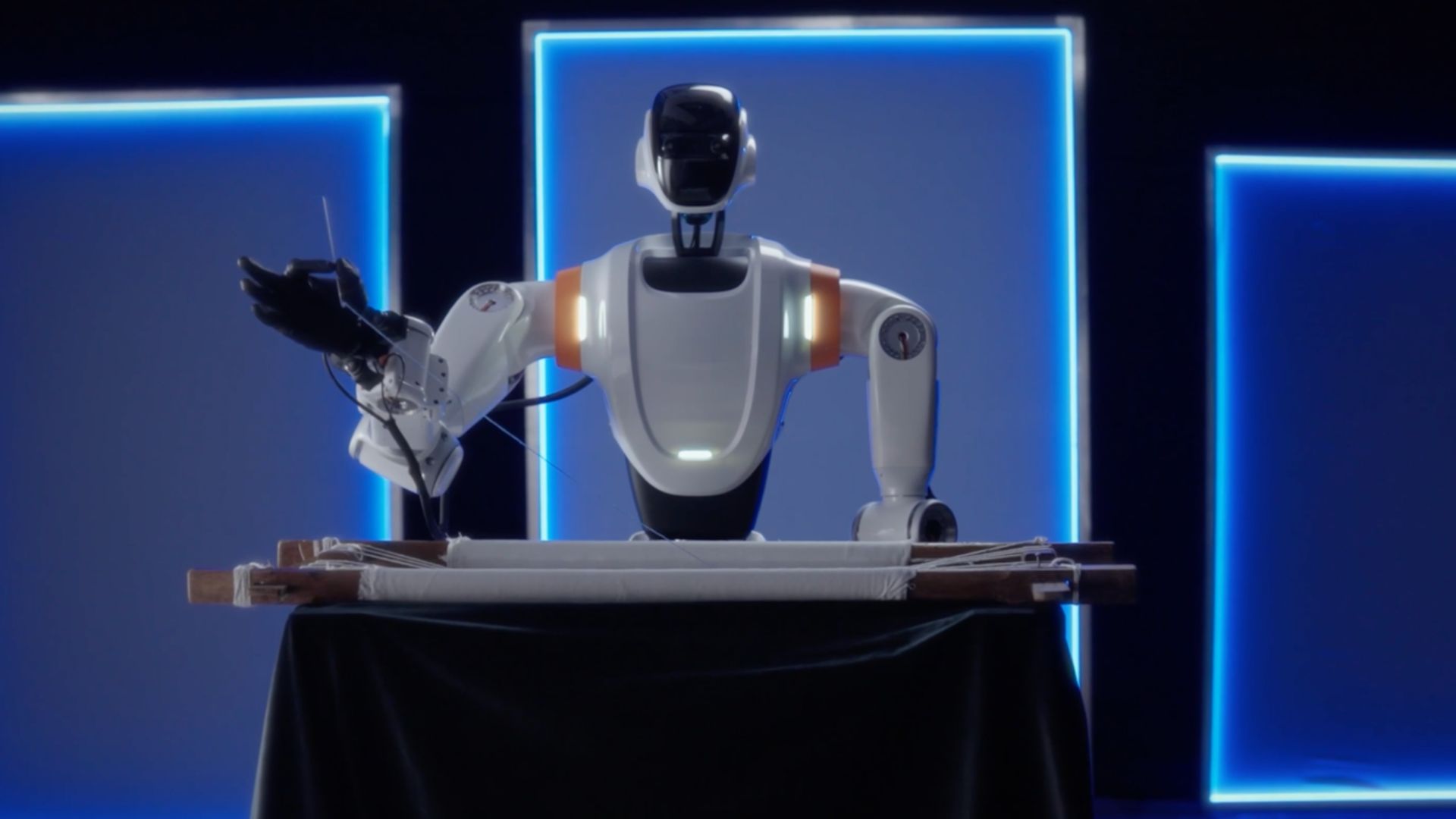
” The system can also remove the protective layer from adhesive tape. A robot can also assemble real products. The general-purpose robot is claimed to be more effective than a humanoid. It can thread a needle perfectly Igor Kulakov and Viktor Petrenko launched MicroFactory in 2024. It took them about five months to build their prototype.
Now the company has hundreds of preorders from customers looking to use the machines for various applications, including assembling electronics and even processing snails to be shipped to France for escargot, reported Tech Crunch.RECOMMENDED ARTICLES In a video posted on X, the robotic arms are seen threading a needle perfectly.
The two arms are seen performing tasks in perfect sync. Both arms are capable of holding small objects and placing tiny objects on them accurately. The company also pointed out that the system can be trained by physically guiding the arms through complex motions. The robotic arms can learn new tasks faster and deliver small electronic assembly services at a low cost.
ABOUT THE AUTHORPrabhat Ranjan Mishra Prabhat, an alumnus of the Indian Institute of Mass Communication, is a tech and defense journalist. While he enjoys writing on modern weapons and emerging tech, he has also reported on global politics and business. He has been previously associated with well-known media houses, including the International Business Times (Singapore Edition) and ANI.
Source coverage
Report Provider: Interesting Engineering
Author: Prabhat Ranjan Mishra
Deeper analysis
Full source content
The system can do almost all of the things that humans can do with their hands. A San Francisco-based company has developed a robotic system that is installed in a small box. The innovation includes two robotic arms capable of grabbing and moving objects. The system is capable of performing precision tasks like circuit board assembly, component soldering, and cable routing.
Developed by MicroFactory, the general-purpose tabletop robot can be trained with the help of AI or human demonstration. Robotic system can assemble objects faster The system is designed to automate repetitive manual work. The robotic system can assemble objects faster with precision. The innovation’s gripper can be swapped with a soldering iron or screwdriver.
The manufacturer claims that the system can do almost everything humans can do with their hands. The company has shown that the robotic system can assemble small electronic motherboards perfectly. MicroFactory highlighted that to set up the system, users must use copies of these robotic arms from outside the box.
Robotic arms can perform multiple tasks Using another external robotic arm, users will show the in-box AI system how to perform a task. They can show how to grab an object and place it in a different place. The original in-box robotic arms will copy the action and be able to perform the same tasks perfectly.
The company also made a UI that breaks down tasks into small steps. “General purpose robots are good, but it’s not necessary [to] be humanoid,” said Igor Kulakov, the co-founder and CEO of MicroFactory, in an interview with TechCrunch. “We decided to design robots from scratch that will still be general purpose but not in human shape, and this way, it can be done much simpler, much easier, in hardware and on the AI side.
” The system can also remove the protective layer from adhesive tape. A robot can also assemble real products. The general-purpose robot is claimed to be more effective than a humanoid. It can thread a needle perfectly Igor Kulakov and Viktor Petrenko launched MicroFactory in 2024. It took them about five months to build their prototype.
Now the company has hundreds of preorders from customers looking to use the machines for various applications, including assembling electronics and even processing snails to be shipped to France for escargot, reported Tech Crunch.RECOMMENDED ARTICLES In a video posted on X, the robotic arms are seen threading a needle perfectly.
The two arms are seen performing tasks in perfect sync. Both arms are capable of holding small objects and placing tiny objects on them accurately. The company also pointed out that the system can be trained by physically guiding the arms through complex motions. The robotic arms can learn new tasks faster and deliver small electronic assembly services at a low cost.
ABOUT THE AUTHORPrabhat Ranjan Mishra Prabhat, an alumnus of the Indian Institute of Mass Communication, is a tech and defense journalist. While he enjoys writing on modern weapons and emerging tech, he has also reported on global politics and business. He has been previously associated with well-known media houses, including the International Business Times (Singapore Edition) and ANI.
How this page is built
Goose Pod turns cited reporting into a public episode summary first, then pairs that summary with audio playback so listeners can check the source material before they decide how deeply to engage.
The goal is to make this page useful as a news landing page first, while still giving listeners transcript access, related episodes, and direct links back to the original publishers.