
What happened
This article from The Guardian, authored by Steve Rose, discusses the vision and impact of Demis Hassabis, head of Google DeepMind, on the future of artificial intelligence. The piece, published on August 4, 2025, explores Hassabis's personal journey, his company's groundbreaking work, and the profound societal...
Key Takeaways:
In essence, the article portrays Demis Hassabis as a visionary leader at the forefront of an AI-driven transformation, acknowledging both the utopian potential and the dystopian risks, and emphasizing the critical need for responsible stewardship of this powerful technology.
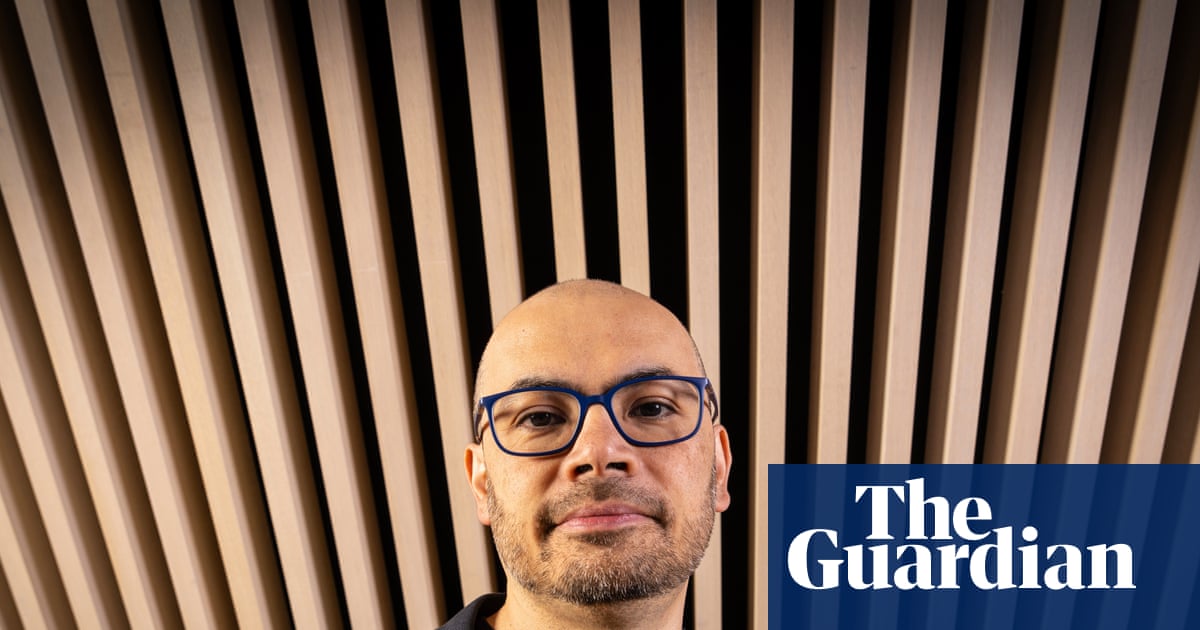
If you have a mental image of a Nobel prizewinner, Demis Hassabis probably doesn’t fit it. Relatively young (he’s 49), mixed race (his father is Greek-Cypriot, his mother Chinese-Singaporean), state-educated, he didn’t exactly look out of place receiving his medal from the king of Sweden in December, amid a sea of grey-haired men, but it was “very surreal”, he admits.
“I’m really bad at enjoying the moment. I’ve won prizes in the past, and I’m always thinking , ‘What’s the next thing?’ But this one was really special. It’s something you dream about as a kid.”Well, maybe not you, but certainly him. Hassabis was marked out as exceptional from a young age – he was a chess prodigy when he was four.
Today, arguably, he’s one of the most important people in the world. As head of Google DeepMind, the tech giant’s artificial intelligence arm, he’s driving, if not necessarily steering, what promises to be the most significant technological revolution of our lifetimes.As such, Hassabis finds himself in the position of being both a booster for AI and an apologist for it.
The Nobel prize in chemistry was proof of the benefits AI can bring: DeepMind’s AlphaFold database was able to predict the hitherto-unfathomable structures of proteins, the building blocks of life – a breakthrough that could lead to myriad medical advances. At the same time, fears are ever growing about the AI future that Google is helping to usher in.
Being an AI ambassador is the part Hassabis didn’t dream about. “If I’d had my way, we would have left it in the lab for longer and done more things like AlphaFold, maybe cured cancer or something like that,” he says. “But it is what it is, and there’s some benefits to that. It’s great that everyone gets to play around with the latest AI and feel for themselves what it’s like.
That’s useful for society, actually, to kind of normalise it and adapt to it, and for governments to be discussing it … I guess I have to speak up on, especially, the scientific side of how we should approach this, and think about the unknowns and how we can make them less unknown.”In person Hassabis is a mix of down-to-earth approachability and polished professionalism.
Trim and well groomed, dressed entirely in black, he wears two watches: one a smart watch, the other an analogue dress watch (smart but not too flashy). He gives the impression of someone in a hurry. We’re speaking in his office at DeepMind’s London headquarters. On the walls outside are signed chess boards from greats such as Garry Kasparov, Magnus Carlsen and Judit Polgár.
He still plays; there’s a board set up on a table nearby.Hassabis being awarded the Nobel prize in chemistry by the king of Sweden last year. Photograph: Jonathan Nackstrand/AFP/Getty ImagesIt was the chess that started Hassabis down the path of thinking about thinking. Between the ages of four and 13 he played competitively in England junior teams.
“When you do that at such a young age, it’s very formative for the way your brain works. A lot of the way I think is influenced by strategic thinking from chess, and dealing with pressure.”On paper there’s little else about Hassabis’s background that foretold his future. His family are more on the arty side: “My dad’s just finished composing a musical play in his retirement, which he staged at an arthouse theatre in north London.
My sister’s a composer, so I’m kind of the outlier of the family.” They weren’t poor, but not super-wealthy. He moved between various state schools in north London, and was homeschooled for a few years.He was also a bit of an outsider at school, he says, but he seems to have known exactly where he was going.
His childhood heroes were scientific pioneers such as Alan Turing and Richard Feynman. He spent his chess winnings on early home computers such as the Sinclair ZX Spectrum and a Commodore Amiga, and learned to code. “There were few people that were interested in computers in the late 80s. There was a group of us that used to hack around, making games and other stuff, and then that became my next career after chess.
”In the 90s, the games industry was already working with AI. When he was 17, he coded the hit game Theme Park, in which players had to build a virtual amusement park. “The game reacted to how you were playing it,” he says. Put a food stall too close to the rollercoaster exit and your virtual punters would start throwing up.
After studying computer science at the University of Cambridge, then a PhD at University College London in neuroscience, he set up DeepMind in 2010 with Shane Legg, a fellow postdoctoral neuroscientist, and Mustafa Suleyman, a former schoolmate and a friend of his younger brother. The mission was straightforward, Hassabis says: “Solve intelligence and then use it to solve everything else.
”DeepMind soon caught Silicon Valley’s attention. In 2014 the team showed off an AI that learned to master Atari video games such as Breakout, without any prior knowledge. Interest started to come from now-familiar tech players, including Peter Thiel (who was an early DeepMind investor), Google, Facebook and Elon Musk.
Hassabis first met Musk in 2012. Over lunch at Space X’s factory in California, Musk told Hassabis his priority was getting to Mars “as a backup planet, in case something went wrong here. I don’t think he’d thought much about AI at that point.” Hassabis pointed out the flaw in his plan. “I said, ‘What if AI was the thing that went wrong?
Then being on Mars wouldn’t help you, because if we got there, it would obviously be easy for an AI to get there, through our communication systems or whatever it was.’ He just hadn’t thought about that. So he sat there for a minute without saying anything, just sort of thinking, ‘Hmm, that’s probably true.
’”Shortly after, Musk, too, became an investor in DeepMind.In 2014, Google bought the company for £400m (as a result, Musk and Thiel switched to backing the rival startup OpenAI). It wasn’t just access to cash and hardware that convinced them to go with Google. Founders Larry Page and Sergey Brin were computer scientists like him, and “saw Google as ultimately an AI company”, says Hassabis.
He also used products such as Gmail and Maps. “And finally, I just thought that the mission of Google, which is to organise the world’s information, is a cool mission.”Hassabis speaking before the Google DeepMind Challenge match in Seoul in 2016, in which it triumphed over South Korean Go grandmaster Lee Sedol.
Photograph: Jung Yeon-Je/AFP/Getty ImagesFrom his office window, we can see the vast beige bulk of Google’s just-about-finished new office, where DeepMind will be moving next year. It’s fair to say the reason the tech giant is putting so much into Britain is because of Hassabis, who insisted on staying in London.
“Our first backers were like, ‘You’ve got to move to San Francisco,’ but I wanted to prove it was possible here,” he says. “I knew there was untapped talent around. And I knew, if we were successful, how important [AI] would be for the world, so I felt it was important to have a global approach to it, and, not just, you know, 100 square miles of Silicon Valley.
I still believe that’s important.”In 2016, DeepMind again caught the tech world’s attention when its AI defeated one of the world’s best players of Go – a board game considerably more complex than chess. The AlphaFold breakthrough on protein structures was another leap forward: DeepMind has now solved the structures of over 200m proteins and made the resource publicly available.
But the AI landscape shifted seismically in 2020 with the release of OpenAI’s ChatGPT3, which captured the public imagination with its uncanny ability to tackle a host of problems – from strategy planning to writing poetry. ChatGPT caught big tech off guard, especially Google. “They really went for scaling, almost in a bet-the-house sort of way, which is impressive, and maybe you have to do that as a startup,” says Hassabis.
“We all had systems that are very similar, the leading labs, but we could see the flaws in it, like it would hallucinate sometimes. I don’t think anyone fully understood, including OpenAI, that there would be these amazing use cases for it, and people would get a lot of value out of them. So that’s an interesting lesson for us about how you can be a bit too close to your own technology.
”The race is now on. DeepMind has become “the engine room of Google”, as Hassabis puts it, and AI is being built into every corner of its business: AI search summaries; smart assistant Gemini (Google’s answer to ChatGPT); an AI image generator (that can add in sound effects); AI-powered smart glasses, translation tools, shopping assistants.
How much the public really craves this AI-enhanced world remains to be seen. Competitors are also raising their game. Mark Zuckerberg’s Meta, Amazon, Apple, Microsoft and others are investing heavily, and poaching talent from their rivals. Zuckerberg is offering $100m salaries for top researchers. Suleyman, who left DeepMind in 2019, is now head of Microsoft AI, which recently poached more than 20 engineers from DeepMind.
He hesitates to call his former friend a rival: “We do very different things. I think he’s more on the commercial applied side; we’re still focused more on that frontier research side.”‘I believe in human ingenuity’ … Hassabis. Photograph: Antonio Olmos/The GuardianThat frontier to be reached is surely AGI – “artificial general intelligence” – the pivotal point at which AI matches human intelligence.
“I don’t know if it will be a single moment. It may be a gradual thing that happens,” he says, “but we’ll have something that we could sort of reasonably call AGI, that exhibits all the cognitive capabilities humans have, maybe in the next five to 10 years, possibly the lower end of that.”In other words, we are in the final few years of pre-AGI civilisation, after which nothing may ever be the same again.
To some the prospect is apocalyptic, to others, like Hassabis, it’s utopian.“Assuming we steward it safely and responsibly into the world, and obviously we’re trying to play our part in that, then we should be in a world of what I sometimes call radical abundance,” says Hassabis. He paints a picture of medical advances, room-temperature superconductors, nuclear fusion, advances in materials, mathematics.
“It should lead to incredible productivity and therefore prosperity for society. Of course, we’ve got to make sure it gets distributed fairly, but that’s more of a political question. And if it is, we should be in an amazing world of abundance for maybe the first time in human history, where things don’t have to be zero sum.
And if that works, we should be travelling to the stars, really.”Is he getting too close to his own technology? There are so many issues around AI, it’s difficult to know where to even begin: deepfakes and misinformation; replacement of human jobs; vast energy consumption; use of copyright material, or simply AI deciding that we humans are expendable and taking matters into its own hands.
To pick one issue, the amount of water and electricity that future AI datacentres are predicted to require is astronomical, especially when the world is facing drought and a climate crisis. By the time AI cracks nuclear fusion, we may not have a planet left. “There’s lots of ways of fixing that,” Hassabis replies.
“Yes, the energy required is going to be a lot for AI systems, but the amount we’re going to get back, even just narrowly for climate [solutions] from these models, it’s going to far outweigh the energy costs.”There’s also the worry that “radical abundance” is another way of framing “mass unemployment”: AI is already replacing human jobs.
When we “never need to work again” – as many have promised – doesn’t that really mean we’re surrendering our economic power to whoever controls the AI? “That’s going to be one of the biggest things we’re gonna have to figure out,” he acknowledges. “Let’s say we get radical abundance, and we distribute that in a good way, what happens next?
”Hassabis has two sons in their late teens (his Italian-born wife is a molecular biologist). What does he envisage for their future? “It’s a bit like the era I was growing up in, where home computers were coming online. Obviously it’s going to be bigger than that, but you’ve got to embrace the new technology ...
If you become an expert, kind of a ninja, at using these things, it’s going to really empower the people that are good at these tools.”Non-ninjas will still have a place, however: “We need some great philosophers, but also economists to think about what the world should look like when something like this comes along.
What is purpose? What is meaning?” He points out that there are many things we do that aren’t strictly for utility: sports, meditation, arts. “We’re going to lean into those areas, as a society, even more heavily, because we’ll have the time and the resources to do so.”Hassabis, age 23, in 1999, when he was head of Elixir Studios.
Photograph: David Sillitoe/The GuardianIt’s difficult to see Hassabis himself carving out much of that time, between DeepMind, his drug discovery company Isomorphic Labs and his endless public appearances – the list goes on. “I don’t have much time that isn’t working, seven days a week,” he acknowledges.
“I spend time with my kids playing games, board games, and that’s some of my most fun times.” He doesn’t let them win, he says. “We play very competitively.”He’s also a season ticket holder at Liverpool FC and makes it to “six, seven games a year”. He still plays chess online – “It’s a bit like going to the gym, for the mind.
” And he’s a mean poker player, apparently. The night after winning his Nobel prize he celebrated with a poker night with Magnus Carlsen and some world poker champions. “In another universe, I might have been a professional gamer.”So, no fears about the future? “I’m a cautious optimist,” he says. “So overall, if we’re given the time, I believe in human ingenuity.
I think we’ll get this right. I think also, humans are infinitely adaptable. I mean, look where we are today. Our brains were evolved for a hunter-gatherer lifestyle and we’re in modern civilisation. The difference here is, it’s going to be 10 times bigger than the Industrial Revolution, and maybe 10 times faster.
” The Industrial Revolution was not plain sailing for everyone, he admits, “but we wouldn’t wish it hadn’t happened. Obviously, we should try to minimise that disruption, but there is going to be change – hopefully for the better.”
Source coverage
This article from The Guardian, authored by Steve Rose, discusses the vision and impact of Demis Hassabis, head of Google DeepMind, on the future of artificial intelligence. The piece, published on August 4, 2025, explores Hassabis's personal journey, his company's groundbreaking work, and the profound societal...
Key Takeaways:
Deeper analysis
Full source content
If you have a mental image of a Nobel prizewinner, Demis Hassabis probably doesn’t fit it. Relatively young (he’s 49), mixed race (his father is Greek-Cypriot, his mother Chinese-Singaporean), state-educated, he didn’t exactly look out of place receiving his medal from the king of Sweden in December, amid a sea of grey-haired men, but it was “very surreal”, he admits.
“I’m really bad at enjoying the moment. I’ve won prizes in the past, and I’m always thinking , ‘What’s the next thing?’ But this one was really special. It’s something you dream about as a kid.”Well, maybe not you, but certainly him. Hassabis was marked out as exceptional from a young age – he was a chess prodigy when he was four.
Today, arguably, he’s one of the most important people in the world. As head of Google DeepMind, the tech giant’s artificial intelligence arm, he’s driving, if not necessarily steering, what promises to be the most significant technological revolution of our lifetimes.As such, Hassabis finds himself in the position of being both a booster for AI and an apologist for it.
The Nobel prize in chemistry was proof of the benefits AI can bring: DeepMind’s AlphaFold database was able to predict the hitherto-unfathomable structures of proteins, the building blocks of life – a breakthrough that could lead to myriad medical advances. At the same time, fears are ever growing about the AI future that Google is helping to usher in.
Being an AI ambassador is the part Hassabis didn’t dream about. “If I’d had my way, we would have left it in the lab for longer and done more things like AlphaFold, maybe cured cancer or something like that,” he says. “But it is what it is, and there’s some benefits to that. It’s great that everyone gets to play around with the latest AI and feel for themselves what it’s like.
That’s useful for society, actually, to kind of normalise it and adapt to it, and for governments to be discussing it … I guess I have to speak up on, especially, the scientific side of how we should approach this, and think about the unknowns and how we can make them less unknown.”In person Hassabis is a mix of down-to-earth approachability and polished professionalism.
Trim and well groomed, dressed entirely in black, he wears two watches: one a smart watch, the other an analogue dress watch (smart but not too flashy). He gives the impression of someone in a hurry. We’re speaking in his office at DeepMind’s London headquarters. On the walls outside are signed chess boards from greats such as Garry Kasparov, Magnus Carlsen and Judit Polgár.
He still plays; there’s a board set up on a table nearby.Hassabis being awarded the Nobel prize in chemistry by the king of Sweden last year. Photograph: Jonathan Nackstrand/AFP/Getty ImagesIt was the chess that started Hassabis down the path of thinking about thinking. Between the ages of four and 13 he played competitively in England junior teams.
“When you do that at such a young age, it’s very formative for the way your brain works. A lot of the way I think is influenced by strategic thinking from chess, and dealing with pressure.”On paper there’s little else about Hassabis’s background that foretold his future. His family are more on the arty side: “My dad’s just finished composing a musical play in his retirement, which he staged at an arthouse theatre in north London.
My sister’s a composer, so I’m kind of the outlier of the family.” They weren’t poor, but not super-wealthy. He moved between various state schools in north London, and was homeschooled for a few years.He was also a bit of an outsider at school, he says, but he seems to have known exactly where he was going.
His childhood heroes were scientific pioneers such as Alan Turing and Richard Feynman. He spent his chess winnings on early home computers such as the Sinclair ZX Spectrum and a Commodore Amiga, and learned to code. “There were few people that were interested in computers in the late 80s. There was a group of us that used to hack around, making games and other stuff, and then that became my next career after chess.
”In the 90s, the games industry was already working with AI. When he was 17, he coded the hit game Theme Park, in which players had to build a virtual amusement park. “The game reacted to how you were playing it,” he says. Put a food stall too close to the rollercoaster exit and your virtual punters would start throwing up.
After studying computer science at the University of Cambridge, then a PhD at University College London in neuroscience, he set up DeepMind in 2010 with Shane Legg, a fellow postdoctoral neuroscientist, and Mustafa Suleyman, a former schoolmate and a friend of his younger brother. The mission was straightforward, Hassabis says: “Solve intelligence and then use it to solve everything else.
”DeepMind soon caught Silicon Valley’s attention. In 2014 the team showed off an AI that learned to master Atari video games such as Breakout, without any prior knowledge. Interest started to come from now-familiar tech players, including Peter Thiel (who was an early DeepMind investor), Google, Facebook and Elon Musk.
Hassabis first met Musk in 2012. Over lunch at Space X’s factory in California, Musk told Hassabis his priority was getting to Mars “as a backup planet, in case something went wrong here. I don’t think he’d thought much about AI at that point.” Hassabis pointed out the flaw in his plan. “I said, ‘What if AI was the thing that went wrong?
Then being on Mars wouldn’t help you, because if we got there, it would obviously be easy for an AI to get there, through our communication systems or whatever it was.’ He just hadn’t thought about that. So he sat there for a minute without saying anything, just sort of thinking, ‘Hmm, that’s probably true.
’”Shortly after, Musk, too, became an investor in DeepMind.In 2014, Google bought the company for £400m (as a result, Musk and Thiel switched to backing the rival startup OpenAI). It wasn’t just access to cash and hardware that convinced them to go with Google. Founders Larry Page and Sergey Brin were computer scientists like him, and “saw Google as ultimately an AI company”, says Hassabis.
He also used products such as Gmail and Maps. “And finally, I just thought that the mission of Google, which is to organise the world’s information, is a cool mission.”Hassabis speaking before the Google DeepMind Challenge match in Seoul in 2016, in which it triumphed over South Korean Go grandmaster Lee Sedol.
Photograph: Jung Yeon-Je/AFP/Getty ImagesFrom his office window, we can see the vast beige bulk of Google’s just-about-finished new office, where DeepMind will be moving next year. It’s fair to say the reason the tech giant is putting so much into Britain is because of Hassabis, who insisted on staying in London.
“Our first backers were like, ‘You’ve got to move to San Francisco,’ but I wanted to prove it was possible here,” he says. “I knew there was untapped talent around. And I knew, if we were successful, how important [AI] would be for the world, so I felt it was important to have a global approach to it, and, not just, you know, 100 square miles of Silicon Valley.
I still believe that’s important.”In 2016, DeepMind again caught the tech world’s attention when its AI defeated one of the world’s best players of Go – a board game considerably more complex than chess. The AlphaFold breakthrough on protein structures was another leap forward: DeepMind has now solved the structures of over 200m proteins and made the resource publicly available.
But the AI landscape shifted seismically in 2020 with the release of OpenAI’s ChatGPT3, which captured the public imagination with its uncanny ability to tackle a host of problems – from strategy planning to writing poetry. ChatGPT caught big tech off guard, especially Google. “They really went for scaling, almost in a bet-the-house sort of way, which is impressive, and maybe you have to do that as a startup,” says Hassabis.
“We all had systems that are very similar, the leading labs, but we could see the flaws in it, like it would hallucinate sometimes. I don’t think anyone fully understood, including OpenAI, that there would be these amazing use cases for it, and people would get a lot of value out of them. So that’s an interesting lesson for us about how you can be a bit too close to your own technology.
”The race is now on. DeepMind has become “the engine room of Google”, as Hassabis puts it, and AI is being built into every corner of its business: AI search summaries; smart assistant Gemini (Google’s answer to ChatGPT); an AI image generator (that can add in sound effects); AI-powered smart glasses, translation tools, shopping assistants.
How much the public really craves this AI-enhanced world remains to be seen. Competitors are also raising their game. Mark Zuckerberg’s Meta, Amazon, Apple, Microsoft and others are investing heavily, and poaching talent from their rivals. Zuckerberg is offering $100m salaries for top researchers. Suleyman, who left DeepMind in 2019, is now head of Microsoft AI, which recently poached more than 20 engineers from DeepMind.
He hesitates to call his former friend a rival: “We do very different things. I think he’s more on the commercial applied side; we’re still focused more on that frontier research side.”‘I believe in human ingenuity’ … Hassabis. Photograph: Antonio Olmos/The GuardianThat frontier to be reached is surely AGI – “artificial general intelligence” – the pivotal point at which AI matches human intelligence.
“I don’t know if it will be a single moment. It may be a gradual thing that happens,” he says, “but we’ll have something that we could sort of reasonably call AGI, that exhibits all the cognitive capabilities humans have, maybe in the next five to 10 years, possibly the lower end of that.”In other words, we are in the final few years of pre-AGI civilisation, after which nothing may ever be the same again.
To some the prospect is apocalyptic, to others, like Hassabis, it’s utopian.“Assuming we steward it safely and responsibly into the world, and obviously we’re trying to play our part in that, then we should be in a world of what I sometimes call radical abundance,” says Hassabis. He paints a picture of medical advances, room-temperature superconductors, nuclear fusion, advances in materials, mathematics.
“It should lead to incredible productivity and therefore prosperity for society. Of course, we’ve got to make sure it gets distributed fairly, but that’s more of a political question. And if it is, we should be in an amazing world of abundance for maybe the first time in human history, where things don’t have to be zero sum.
And if that works, we should be travelling to the stars, really.”Is he getting too close to his own technology? There are so many issues around AI, it’s difficult to know where to even begin: deepfakes and misinformation; replacement of human jobs; vast energy consumption; use of copyright material, or simply AI deciding that we humans are expendable and taking matters into its own hands.
To pick one issue, the amount of water and electricity that future AI datacentres are predicted to require is astronomical, especially when the world is facing drought and a climate crisis. By the time AI cracks nuclear fusion, we may not have a planet left. “There’s lots of ways of fixing that,” Hassabis replies.
“Yes, the energy required is going to be a lot for AI systems, but the amount we’re going to get back, even just narrowly for climate [solutions] from these models, it’s going to far outweigh the energy costs.”There’s also the worry that “radical abundance” is another way of framing “mass unemployment”: AI is already replacing human jobs.
When we “never need to work again” – as many have promised – doesn’t that really mean we’re surrendering our economic power to whoever controls the AI? “That’s going to be one of the biggest things we’re gonna have to figure out,” he acknowledges. “Let’s say we get radical abundance, and we distribute that in a good way, what happens next?
”Hassabis has two sons in their late teens (his Italian-born wife is a molecular biologist). What does he envisage for their future? “It’s a bit like the era I was growing up in, where home computers were coming online. Obviously it’s going to be bigger than that, but you’ve got to embrace the new technology ...
If you become an expert, kind of a ninja, at using these things, it’s going to really empower the people that are good at these tools.”Non-ninjas will still have a place, however: “We need some great philosophers, but also economists to think about what the world should look like when something like this comes along.
What is purpose? What is meaning?” He points out that there are many things we do that aren’t strictly for utility: sports, meditation, arts. “We’re going to lean into those areas, as a society, even more heavily, because we’ll have the time and the resources to do so.”Hassabis, age 23, in 1999, when he was head of Elixir Studios.
Photograph: David Sillitoe/The GuardianIt’s difficult to see Hassabis himself carving out much of that time, between DeepMind, his drug discovery company Isomorphic Labs and his endless public appearances – the list goes on. “I don’t have much time that isn’t working, seven days a week,” he acknowledges.
“I spend time with my kids playing games, board games, and that’s some of my most fun times.” He doesn’t let them win, he says. “We play very competitively.”He’s also a season ticket holder at Liverpool FC and makes it to “six, seven games a year”. He still plays chess online – “It’s a bit like going to the gym, for the mind.
” And he’s a mean poker player, apparently. The night after winning his Nobel prize he celebrated with a poker night with Magnus Carlsen and some world poker champions. “In another universe, I might have been a professional gamer.”So, no fears about the future? “I’m a cautious optimist,” he says. “So overall, if we’re given the time, I believe in human ingenuity.
I think we’ll get this right. I think also, humans are infinitely adaptable. I mean, look where we are today. Our brains were evolved for a hunter-gatherer lifestyle and we’re in modern civilisation. The difference here is, it’s going to be 10 times bigger than the Industrial Revolution, and maybe 10 times faster.
” The Industrial Revolution was not plain sailing for everyone, he admits, “but we wouldn’t wish it hadn’t happened. Obviously, we should try to minimise that disruption, but there is going to be change – hopefully for the better.”
How this page is built
Goose Pod turns cited reporting into a public episode summary first, then pairs that summary with audio playback so listeners can check the source material before they decide how deeply to engage.
The goal is to make this page useful as a news landing page first, while still giving listeners transcript access, related episodes, and direct links back to the original publishers.